Tag: history

  • The Lie About The Lie: White House Officials Caught In Web Of Deceit Over Epstein Files Meeting

    Blue Press Journal – Remember the uproar last week? The swift dismissals and vehement denials surrounding reports of a secret meeting involving high-profile figures to discuss the ongoing cover-up of the Jeffrey Epstein files? It was branded as “fake news,” a baseless conspiracy theory designed to sow distrust. Now, it appears the truth is far more unsettling than the initial “fabrication” suggested: the meeting did happen.

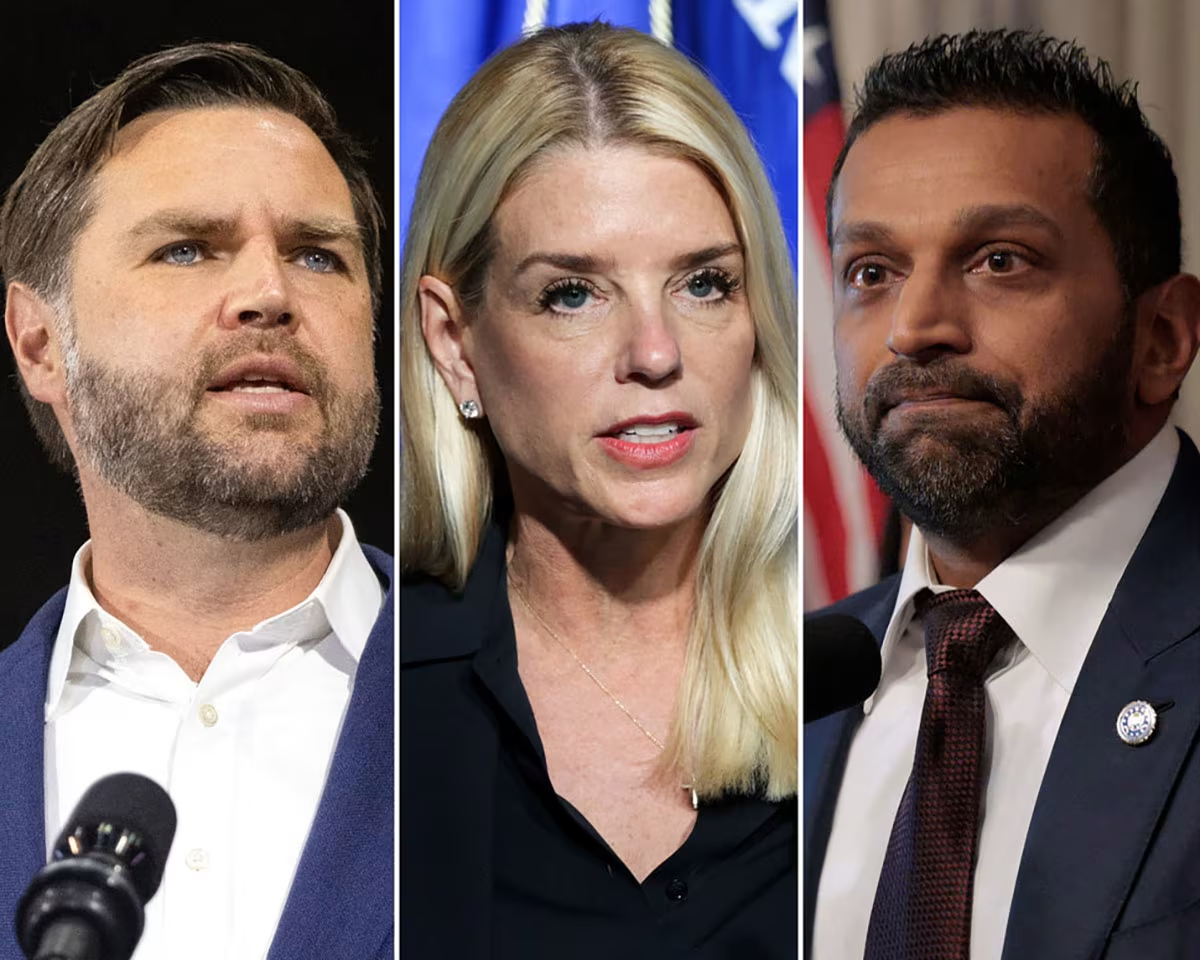
    Just weeks ago, news outlets reported on an alleged clandestine gathering involving Todd Blanche, FBI Director Kash Patel, and White House Chief of Staff Susie Wiles. The purpose of this purported meeting was chilling: to discuss the continuing suppression of information related to Jeffrey Epstein’s vast network and the files connected to his crimes. The report even specified a location – the Vice President’s residence.

    Official sources, however, were quick to shut down the narrative. Spokespersons for the individuals and the administration vehemently denied the claims, categorizing them as unsubstantiated rumors and a deliberate spread of misinformation. The message was clear: no such meeting took place.

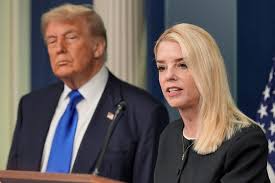
    However, sources now confirm what many suspected: the substance of the initial report was chillingly accurate. Todd Blanche, FBI Director Kash Patel, and White House Chief of Staff Susie Wiles did indeed convene. The only significant deviation from the initial leak was the location. Far from the Vice President’s residence, the meeting was held discreetly at the heavily guarded White House.

    The agenda, according to further revelations, was precisely what was denied: “to discuss the ongoing coverup of the Epstein files.”

    This isn’t merely a simple misstatement or a change of venue; it’s a deliberate act of deception by those in power. It suggests a profound level of coordination to control information and, more disturbingly, to manage the narrative surrounding one of the most explosive and sensitive cases in recent memory.

    The very act of lying about a meeting that was allegedly convened to discuss a cover-up only deepens the public’s suspicions about what exactly is being suppressed in the Epstein case. Why would high-ranking officials risk their credibility to deny a meeting if its purpose was innocuous or unrelated to the controversies surrounding Epstein? The logical conclusion, for many observers, is that the contents of the Epstein files are so damaging, and the network of implicated individuals so extensive, that extraordinary measures are being taken to keep them out of public view.

    The public deserves to know the full truth, not just about the contents of the Epstein files, but about who is actively working to suppress that truth, and why. The saga of the Epstein files continues to unfold, not just in the shadows of past crimes, but in the glaring light of present-day deception.


  • Senator John Cornyn Sparks Outrage with Unconstitutional Request to FBI

    Blue Press Journal: In a shocking and widely condemned move, U.S. Senator John Cornyn (R-TX) has asked the FBI to arrest Democratic state legislators who fled Texas to prevent the passage of a congressional map that would likely give the GOP a significant advantage in the U.S. House of Representatives.

    Cornyn’s letter to the FBI, sent on Tuesday, demanded that the agency intervene to “locate or arrest potential lawbreakers” who have left the state, referring to the Democratic lawmakers who departed to block the Republican-led effort to redraw district lines. The proposed map, which is part of a broader effort to gerrymander congressional districts, would likely net the GOP five more U.S. House seats.

    Constitutional law experts have slammed Cornyn’s request as “entirely unhinged” and “unconstitutional.” According to Robert Kreis, a legal expert, “They have not committed a crime. They are not fugitives. There’s no offense against the United States.” Kreis added that Cornyn’s request is an egregious example of a politician seeking to use federal power to silence and intimidate his opponents.

    The proposed congressional map, which is rooted in the Trump administration’s policies, aims to reshape district lines in a way that would dismantle districts with Black and Latino majorities. The move is widely seen as a naked attempt to suppress minority voting power and entrench Republican dominance in the state.

    Cornyn’s request has sparked outrage among civil rights advocates and Democrats, who argue that it represents a blatant abuse of power and a threat to the democratic process. “This is a chilling example of a senator using his office to intimidate and silence his opponents,” said one Democratic legislator. “It’s a clear attempt to undermine the rule of law and the principles of democracy.”

  • Breaking News: Corporation for Public Broadcasting to Shut Down After Trump-GOP Defunding

    Blue Press Journal: In a devastating blow to public media, the Corporation for Public Broadcasting (CPB) has announced that it will begin an orderly wind-down of its operations following the passage of a federal rescissions package that clawed back more than $1 billion in previously approved funding. The move comes after President Donald Trump signed the package into law last month, effectively defunding the organization.

    For nearly 60 years, CPB has carried out its congressional mission to build and sustain a trusted public media system that informs, educates, and serves communities across the country. Public media has been one of the most trusted institutions in American life, providing educational opportunities, emergency alerts, civil discourse, and cultural connections to every corner of the country.

    The closure of CPB will have far-reaching consequences, particularly in rural areas where local public media stations are often the only source of news and emergency notifications. Many of these stations will be forced to shut down, leaving communities without access to vital information and services.

    Critics have been quick to condemn the move, with many accusing Republican lawmakers of being out of touch with the needs and concerns of their constituents. Rep. Elise Stefanik, in particular, has come under fire for celebrating the cuts to public radio in her own district. Commentators have accused her of lying and misrepresenting the work of North Country Public Radio (NCPR), and of ignoring the devastating impact that the cuts will have on her constituents.

    “It is extremely concerning that at a time when so many people across rural America are struggling to make ends meet, she would be celebrating the almost certain job losses that will be a result of these cuts,” said one commentator.

    The shutdown of CPB is a significant loss for American democracy, and will have a profound impact on the ability of communities to access accurate and unbiased information. As the country grapples with the consequences of this decision, many are left wondering what the future holds for public media and the communities that rely on it.

    In a statement, CPB said that it will work to ensure a smooth transition and minimize the impact on its employees and the communities it serves. However, the closure of CPB marks a sad day for public media and a significant setback for the country’s ability to inform, educate, and serve its citizens.

  • Trump Unveils Plans for $200 Million Ballroom Addition to White House, Sparking Concerns and Criticism

    In a move that has raised eyebrows and sparked controversy, President Trump has unveiled plans for a lavish $200 million ballroom addition to the White House. The proposed expansion, which was announced on Thursday, has been met with criticism and skepticism, with many questioning the need for such an opulent upgrade.

    According to renderings provided by the White House, the new ballroom will feature a vast space adorned with gold and crystal chandeliers, gilded Corinthian columns, a coffered ceiling with gold inlays, gold floor lamps, and a checkered marble floor. The design has been likened to the grand ballroom at Trump’s Mar-a-Lago resort, a comparison that has not been taken as a compliment.

    Trump has insisted that the $200 million cost of the project will be borne by himself and private donors, claiming that it will be his “gift to the country.” However, critics argue that this is just another opportunity for Trump to solicit donations and curry favor with wealthy backers. They point to his history of using his position to raise funds for his own personal projects and interests, such as his presidential library and his failed cryptocurrency venture.

    Many have expressed concerns that the ballroom addition is just the latest example of Trump’s insatiable need for adulation and self-aggrandizement. The project has been compared to his infamous birthday military parade, which was widely criticized as a waste of taxpayer dollars and a blatant attempt to feed Trump’s ego. Additionally, Trump’s efforts to pressure the Smithsonian to remove references to his two impeachments from its exhibits have been seen as a further attempt to rewrite history and boost his own image.

    “This is just another example of Trump’s reckless disregard for the public’s interests and his own insatiable need for praise and attention,” said one critic. “The fact that he’s trying to pass this off as a ‘gift to the country’ is just laughable.”

    The ballroom addition has also raised questions about the use of private donations to fund projects at the White House. While Trump has claimed that the project will be funded entirely by himself and private donors, many are skeptical about the true source of the funds and the potential quid pro quos that may be involved.

    As the project moves forward, it is likely to face intense scrutiny and criticism from lawmakers, watchdog groups, and the public at large. Whether or not the ballroom addition will ultimately become a reality remains to be seen, but one thing is certain: it will be a highly contentious and closely watched development in the world of politics.

  • Trump Administration Accused of Trying to Erase History as Smithsonian Museum Removes Impeachment Label

    In a move that has sparked widespread criticism, the Smithsonian’s American History Museum has removed a label from its exhibit that highlighted former President Donald Trump’s historic distinction as the only U.S. president to be impeached twice. The label, which was added in 2021, was taken down in July as part of a “content review” that the museum had agreed to undertake under pressure from the White House, according to a report by The Washington Post.

    The removal of the label has been met with outrage from critics, who accuse the Trump administration of attempting to rewrite history and erase the former president’s controversial legacy. “Trump can pretend it didn’t happen all he wants, but the facts don’t lie — he was impeached twice,” said Rep. Mark Pocan, D-Wisc., who was a member of Congress during Trump’s presidency. “I know. I was there.”

    This is not the first time that the Trump administration has clashed with the Smithsonian Institution this year. In March, Trump signed Executive Order 14253, which aimed to shape how the story of American history is told. The order claimed that the Smithsonian had come under the influence of a “divisive, race-centered ideology” and sought to “remove improper ideology from such properties.” Critics argue that the order is an attempt to censor and manipulate the narrative of American history, and that the removal of the impeachment label is just the latest example of this effort.

    The controversy has raised questions about the role of museums and cultural institutions in preserving and presenting historical facts, and the extent to which they should be subject to political pressure and influence. “Museums have a responsibility to tell the truth and preserve history, not to erase it or distort it for political gain,” said a spokesperson for the American Historical Association. “The removal of this label is a disturbing example of the politicization of history and the erosion of trust in our cultural institutions.”

    The Smithsonian Institution has not commented publicly on the removal of the label, citing its policy of not discussing internal decisions or controversies. However, the incident has sparked a wider debate about the importance of preserving historical accuracy and the dangers of attempts to manipulate or erase the past for political purposes. As one historian noted, “History is not a partisan issue, and it’s not something that can be rewritten or erased to suit the interests of a particular individual or ideology. The facts are the facts, and they should be presented honestly and accurately, without fear or favor.”

  • Concerns of a Potential Cover-Up: Justice Department’s Meeting with Ghislaine Maxwell

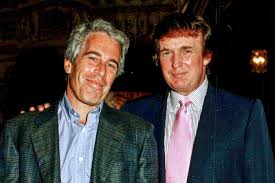
    In a development that has raised eyebrows and sparked intense speculation, the Justice Department has announced plans to meet with Ghislaine Maxwell, the imprisoned former girlfriend of the late Jeffrey Epstein. This move comes at a peculiar time, given the recent revelation that former President Donald Trump’s name has been mentioned in the files possessed by the Department of Justice (DOJ) related to the Epstein case.

    As the world grapples with this shocking turn of events, many are rightfully questioning if the Justice Department’s meeting with Maxwell is nothing more than a sinister cover-up. With Trump’s name popping up in the DOJ’s files, it’s hard not to be skeptical about the timing and the ulterior motives driving the Justice Department’s decision to cozy up with Maxwell at such a critical moment.

    The Justice Department’s audacious decision to meet with Ghislaine Maxwell raises a red flag about a potential cover-up. Could it be that the Justice Department is scrambling to contain the fallout and stifle any further incriminating revelations about Trump’s entanglement in the Epstein scandal? Adding fuel to the fire, none other than Trump’s former lawyer, Deputy Attorney General Todd Blanche, will be the one meeting her. This blatant conflict of interest raises serious questions about the integrity of the investigation.

    By cozying up to Maxwell, the Justice Department seems hell-bent on curtailing the investigation’s scope and choking off any additional bombshells about Trump’s murky connections to Epstein.

  • President Trump’s Claim About Uncle and Unabomber Debunked: Experts Question Decline in Cognitive Ability

    In a series of recent statements, President Donald Trump has repeatedly made claims about his uncle, John Trump, a professor at the Massachusetts Institute of Technology (MIT). One of the most notable assertions made by Trump is that his uncle taught Ted Kaczynski, also known as the Unabomber, a domestic terrorist who carried out a series of bombings that killed three people and injured 23 others.

    However, fact-checkers and experts have thoroughly debunked this claim, raising questions about the former President’s credibility and mental acuity. According to MIT records, John Trump was indeed a professor at the institution, but there is no evidence to suggest that he ever taught Ted Kaczynski.

    Kaczynski, who carried out his bombing campaign between 1978 and 1995, was a student at Harvard University, not MIT. He graduated from Harvard in 1962 and went on to earn his Ph.D. in mathematics from the University of Michigan in 1967.

    Timeline Conflict: John Trump died in 1985. Kaczynski was identified as the Unabomber by the FBI in 1996, and his bombing campaign occurred between 1978 and 1995,This makes it impossible for John Trump to have known Kaczynski was the Unabomber or to have discussed Kaczynski’s studies with Donald Trump after Kaczynski’s identity became known

    “This claim has been thoroughly debunked, and it’s surprising that the former President continues to repeat it,” said Professor Peter Donaldson, a historian at MIT. “John Trump was a respected professor at MIT, but there is no record of him teaching Ted Kaczynski. It’s possible that Trump is misremembering or exaggerating his uncle’s connections.”

    The debunking of Trump’s claim has led some experts to question his mental state and ability to recall facts accurately. “This is not the first time that Trump has made false or misleading claims, and it’s concerning that he continues to do so,” said Dr. Philip Zimbardo, a psychologist at Stanford University. “While it’s impossible to diagnose someone without a thorough evaluation, Trump’s behavior suggests a possible decline in cognitive function or a willingness to manipulate facts for his own purposes.”

    Trump’s repeated claims about his uncle and the Unabomber have also sparked debate about the former President’s honesty and trustworthiness. “This is a classic example of Trump’s tendency to embellish or invent facts to suit his own narrative,” said Professor Kathleen Hall Jamieson, a communications expert at the University of Pennsylvania. “It’s essential for the public to be aware of these distortions and to fact-check information carefully to avoid spreading misinformation.”

    As the debate surrounding Trump’s claims continues, one thing is clear: the President’s assertion about his uncle and the Unabomber is entirely without merit.

  • Critics Point to Lack of Leadership as Trump Administration’s Defense Strategy Under Fire

    While the Trump Administration often touts its unwavering commitment to a powerful national defense and a formidable military, internal assessments and expert analyses starkly reveal a troubling chasm between its grandiose rhetoric and the harsh reality of its long-term strategic vision and budgetary commitments. This alarming absence of decisive leadership from the White House, especially regarding the critical stance on our nation’s defense posture, has ignited fervent criticism and raised urgent questions about our security future.

    A key source of concern stems from the administration’s proposed $1 trillion defense budget for 2026. While the headline figure is substantial, critics argue that the White House is failing to account for the impact of inflation. When adjusted for rising costs, the proposed budget actually represents a cut, rather than an increase, in real spending power. This trend, if left unaddressed and without consistent annual GOP legislative support – could see defense spending dwindle to approximately 2.65 percent of the U.S. economy by the close of Trump’s term in 2029. Such a level is tellingly comparable to the very European defense spending figures that Mr. Trump has previously condemned as “pathetic.”

    The administration’s approach to shipbuilding offers another stark illustration of perceived inadequacy. Despite a stated goal to deter China, the U.S. Navy fleet is reportedly 60 ships short of its operational target. Yet, the Trump 2026 budget request proposes funding for a mere three new U.S. Navy ships. While a separate GOP budget bill includes provisions for an additional 16 ships, experts warn that this piecemeal approach hinders long-term strategic planning. As one expert noted, “No contractor puts up long-term capital to expand production for a one-year plan,” underscoring the need for consistent, multi-year commitments to rebuild the fleet effectively.

    The critical area of submarine production faces similar challenges. To meet both domestic requirements and fulfill commitments like providing submarine parts to Australia, the U.S. needs to produce 2.33 new attack submarines annually. Currently, production rates sit at a concerning 1.1 submarines per year, falling significantly short of demand.

    While Congress has shown a readiness to step in and “fill some of the Trump defense potholes,” as one assessment insightfully notes, the overwhelming view among defense analysts is that revitalizing the U.S. military demands unwavering and bold leadership from the White House. Critics assert that to date, “Mr. Trump isn’t supplying it,” which leaves our nation’s defense strategy not just vulnerable, but painfully under-resourced in critical domains.

  • AG Pam Bondi’s Apparent Flip-Flop on Jeffrey Epstein Case Sparks Outrage and Controversy

    The Jeffrey Epstein sex trafficking investigation has taken a dramatic turn, with Attorney General Pam Bondi’s apparent flip-flop on the existence of a “client list” sparking outrage and controversy. The Department of Justice, led by President Donald Trump, has concluded that there is no evidence to suggest that Epstein kept a “client list” or that he was murdered in his jail cell. This revelation has left many questioning the administration’s handling of the case and the veracity of Bondi’s previous claims.

    In February, Bondi had intimated that a “client list” was sitting on her desk, fueling speculation and anticipation among far-right conservative personalities and influential members of President Trump’s base. However, the Justice Department and FBI have now stated that no such document exists. This abrupt reversal has led to a contentious conversation between Bondi and FBI Deputy Director Dan Bongino at the White House, threatening to permanently damage relations between the two officials.

    The decision to withhold records from the Epstein investigation has sparked a cascade of disappointment and disbelief, highlighting the struggles of FBI and Justice Department leaders to contain the fallout from conspiracy theories and amped-up expectations. The administration’s own claims of a cover-up and hidden evidence have contributed to the frenzy, making it increasingly difficult to resolve the matter.

    Bondi had previously ordered the FBI to provide the “full and complete Epstein files” after an FBI “source” informed her of the existence of thousands of pages of previously undisclosed documents. However, the DOJ’s latest statement suggests that these documents may not be as revelatory as initially thought.

    The inconsistency between Bondi’s previous statements and the DOJ’s current stance has raised eyebrows, with many questioning the attorney general’s credibility. The fact that Bondi claimed the Epstein client list was “sitting on my desk” for review, only for the DOJ to later declare it non-existent, has sparked accusations of a flip-flop.

    This is not the first time that Trump administration officials have failed to fulfill their pledge to deliver evidence that supporters had come to expect. The Epstein case has become a lightning rod for conspiracy theories and speculation, with many believing that the administration is hiding something. The DOJ’s decision to withhold records has only added fuel to the fire, ensuring that the controversy will continue to simmer.

    The American public deserves transparency and accountability, particularly in cases involving high-profile figures and allegations of sex trafficking. The DOJ and FBI must work to restore faith in their institutions and provide a thorough and impartial investigation into the Epstein case.

  • Newly Released Documents Support Whistleblower Claims Against Trump’s Judicial Nominee Emil Bove

    In a shocking turn of events, newly released emails and texts have corroborated allegations made by a whistleblower against Emil Bove, President Donald Trump’s nominee for a lifetime seat on the U.S. Court of Appeals for the 3rd Circuit. The documents, released by Senator Dick Durbin (D-Ill.) on Thursday, suggest that Bove led an effort within the Justice Department to disobey court orders and mislead a federal court.

    The allegations against Bove were first made by former DOJ lawyer Erez Reuveni, who filed a complaint last month claiming that Bove had instructed DOJ lawyers to tell judges who ruled against them to “fuck you.” Reuveni also alleged that Deputy Assistant Attorney General Drew Ensign willfully lied to the court in a removal case, and that he was repeatedly pressured to lie to the court and ultimately fired for refusing to do so.

    Bove, who previously served as Trump’s personal attorney, denied the allegations during his judicial nomination hearing before the Senate Judiciary Committee last month. He claimed that he “can’t recall” doing any of the things Reuveni accused him of doing. However, the newly released documents appear to contradict Bove’s testimony, in short he lied.

    According to Senator Durbin, the communications show “that the Department of Justice misled a federal court and disregarded a court order.” Durbin also stated that the documents demonstrate that Bove “spearheaded this effort, which demanded attorneys violate their ethical duty of candor to the court.”

    The revelations have significant implications for Bove’s nomination, as they raise serious questions about his integrity and fitness to serve on the federal bench. As a judicial nominee, Bove is expected to uphold the highest standards of ethics and integrity, and the allegations against him suggest that he may have fallen short of these expectations.

    Furthermore, the documents also reveal that Bove has made questionable statements about the Constitution. In one instance, he referred to a third-term president as an “abstract hypothetical scenario,” despite the fact that the 22nd Amendment explicitly forbids a president from serving more than two terms. This statement has raised concerns about Bove’s understanding of and respect for the Constitution.

    The release of these documents is a significant development in the controversy surrounding Bove’s nomination. The American people deserve judges who will uphold the law and act with integrity, and it is the Senate’s responsibility to ensure that only the most qualified and ethical candidates are confirmed to these important positions.