Tag: history

  • Dictator Trump: Patriotic Americans Must Stand for the Constution

    Over the weekend, President Trump ordered the deployment of thousands of National Guard troops to Los Angeles in an effort to suppress protests against his aggressive and unlawful mass deportation campaign. This decision ignited a clash with California’s state government, which neither requested the military assistance nor supported the deployment.

    The largely peaceful protests in Los Angeles against the Trump administration’s deportation policies have now entered their fourth day, but the response to them is generating significant controversy. Specifically, the decision to potentially deploy up to 2,000 troops under federal control to the streets of LA has drawn sharp criticism, particularly from former top military figures. They argue that this move constitutes a violation of the military’s long-held commitment to remain separate from domestic politics, except in the most extreme and justifiable circumstances.

    California Governor Gavin Newsom, a Democrat, announced his intention to sue Trump, labeling the president a “dictator” who is deliberately “fanning the flames” of tension and potential violence in Los Angeles. Newsom also highlighted the broader implications of the June 7 memorandum Trump signed, emphasizing that its reach extends beyond California.

    The memorandum, titled Department of Defense Security for the Protection of Department of Homeland Security Functions, grants Pentagon Secretary Pete Hegseth the authority to “employ any other members of the regular Armed Forces as necessary to augment and support the protection of Federal functions and property in any number determined appropriate in his discretion.” This marks an unprecedented assertion of federal military power across the nation.

    The core concern is the perceived politicization of the armed forces. Critics argue that deploying troops against the wishes of the state’s governor, and in the absence of a clear and genuine civil emergency, appears to be a politically motivated action by the Trump administration. This has triggered alarm within military circles, where the ideal of remaining apolitical is deeply ingrained. As one source noted, the deployment “seems like a political forcing – a forced use of the military by Trump because he can.”

    Recognizing the profound and far-reaching consequences of Trump’s actions, courageous demonstrators across the United States—from Portland, Maine, to the vibrant streets of Houston, Texas, and the resilient heart of Salt Lake City, Utah—rallied with unyielding solidarity alongside the brave protesters in California who are courageously facing military repression.

    Governor Newsom underscored the illegality and immorality of commandeering a state’s National Guard without the governor’s consent, and he confirmed plans to file a lawsuit against the president on Monday in response to the extraordinary deployment. 

    Trump himself has previously made no secret of his willingness to utilize the military for domestic purposes. During his reelection campaign last year, he repeatedly told supporters that, if re-elected, he would deploy the armed forces against what he termed “the enemy within.” This history further fuels the perception that the troop deployment is not a response to a genuine emergency, but rather an attempt to use the military to suppress dissent and further a political agenda.

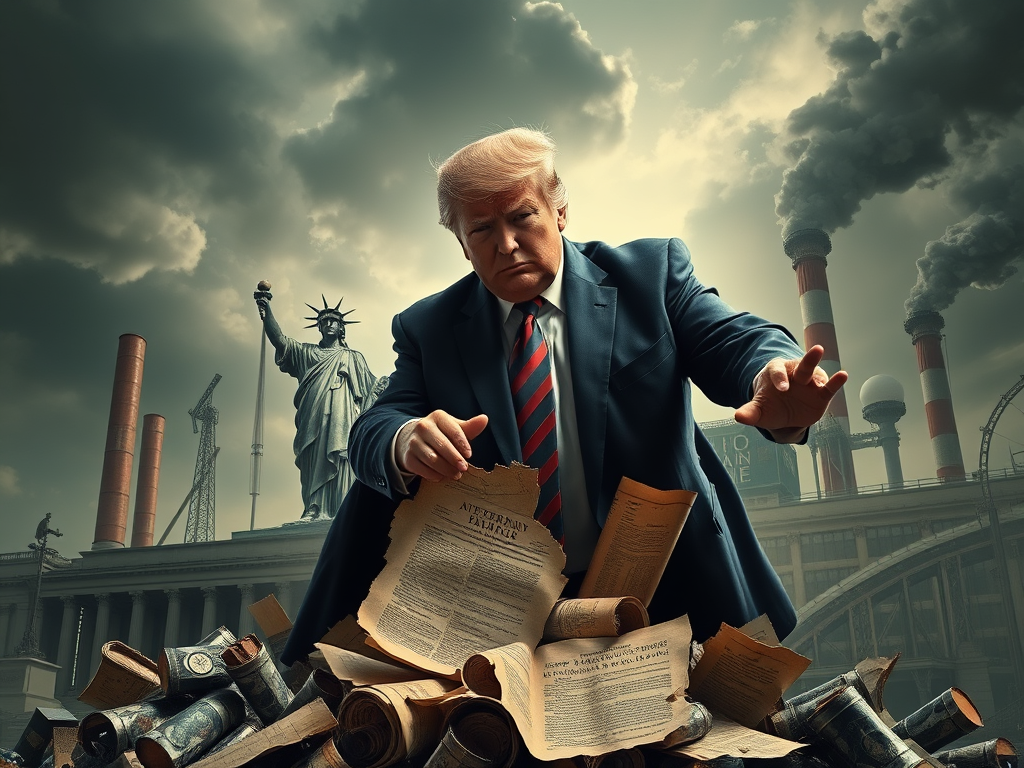
    Trump’s use of force and intimidation tactics reflects authoritarian tendencies, signaling a constitutional crisis in the United States.
  • Supreme Court Slams Door on Trump Administration

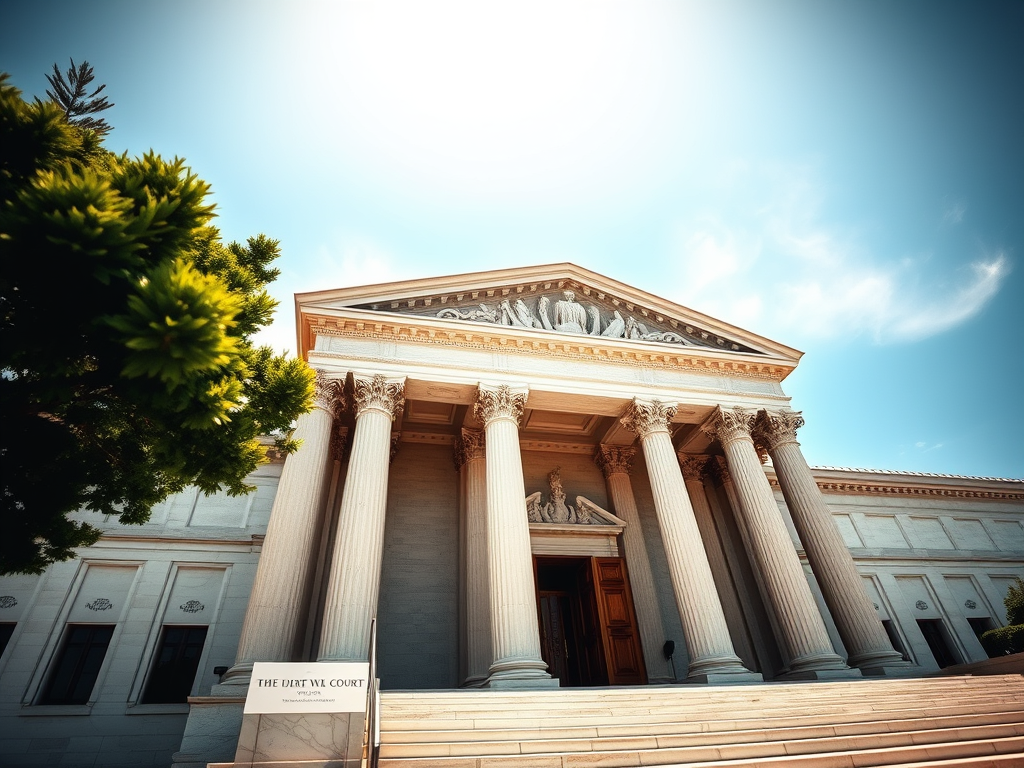
    The Supreme Court has made it abundantly clear that it is fed up with the Trump administration’s blatant disregard for its orders in cases involving the Alien Enemies Act. In a decisive ruling concerning a group of Venezuelan detainees who were at imminent risk of being sent to a notorious prison in El Salvador, the Court took a strong stand against the administration’s actions.

    In an eight-page unsigned opinion, with Justices Samuel Alito and Clarence Thomas dissenting, the Court emphatically rejected the administration’s practice of providing these detainees with a mere 24 hours’ notice before their removal. The ruling not only condemned the administration’s misuse of the Alien Enemies Act to expedite the removal of Venezuelan and Salvadoran immigrants with minimal due process, but it also implicitly accused the administration of dishonesty.

    Evidence presented in the case indicates that, on the afternoon of April 18, the government was actively preparing to remove detainees under the Alien Enemies Act—transporting them from their detention facility to an airport, only to return them later. The Court noted, “Had the detainees been removed from the United States to the custody of a foreign sovereign on April 19, the Government may have argued, as it has previously argued, that no U.S. court had jurisdiction to order relief.”

    The Court’s ruling underscores the administration’s attempts to deny due process to detained immigrants by offering only the most rudimentary notice of removal. This strategy is further undermined by their efforts to eliminate any possibility of due process altogether by sending these individuals to a foreign prison. The Court’s assertion that these detainees face “indefinite detention” highlights the severity of the situation; no one held at CECOT has ever seen a day in court, and the only known prisoner to have stepped outside its walls is a chilling testament to the lack of justice.

    It is evident that the Supreme Court is deeply appalled by the administration’s blatant attempt to circumvent due process. This ruling is a resounding testament to the enduring significance of the US Constitution, and it is imperative that Trump adhere to its principles with unwavering commitment.

  • What’s 92 million dollars down the drain? Trump’s lavish scheme for a military parade!

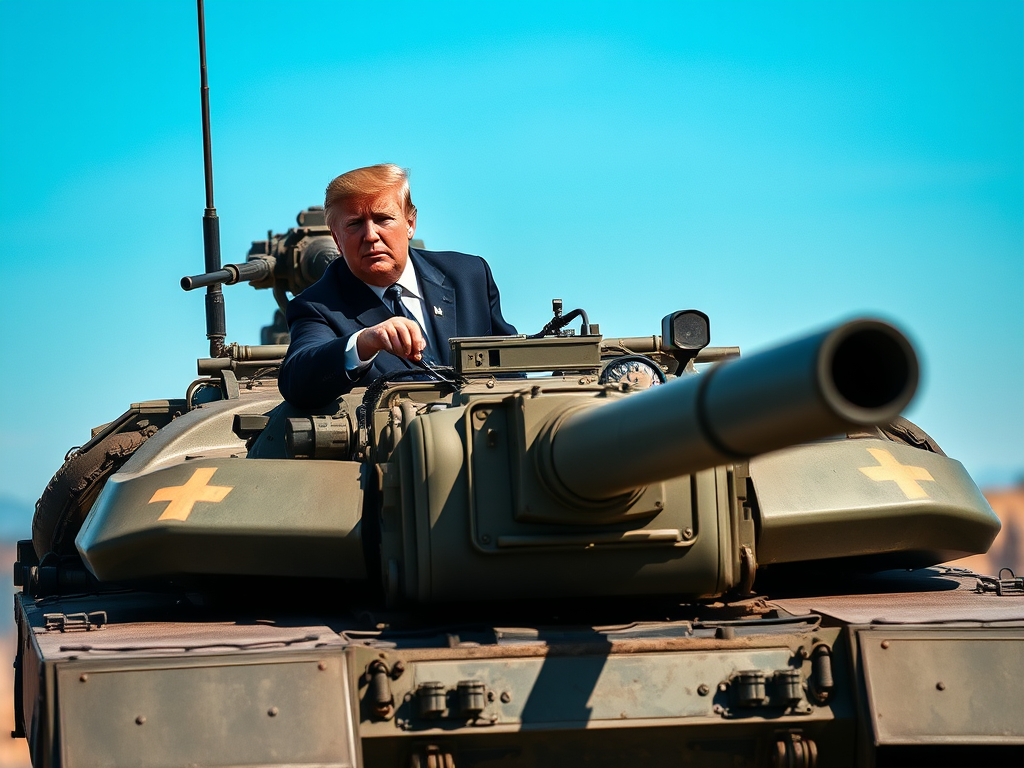
    What’s 92 million dollars down the drain? Oh, just Trump’s lavish scheme for a military parade! Because what screams “patriotism” louder than a jaw-dropping spectacle of tanks and troops strutting in formation, huh? Just imagine what 92 million could do for middle-class programs—the possibilities are endless!

    Trump has been drooling over the idea of a massive military spectacle for years, inspired by a parade he saw in France back in 2018. But alas, the $92 million price tag put a damper on his dreams.

    It’s quite the sight to see Trump throwing himself a lavish birthday bash while claiming to be cracking down on government waste. He’s cutting budgets left and right, slashing grants, and punishing anyone who dares to disagree with him. But hey, who needs essential services when you can have tanks and fireworks, right?

    Forget about kids having fewer toys for Christmas or higher food prices – the president needs his tanks and fireworks. And let’s not forget the additional millions needed to transport all that equipment and house thousands of service members for the event. Who cares about repairing roads when you can have a military parade, right?

    The thought of military tanks rolling down our streets is just what we need, right? Maybe we should throw in a few more million dollars to fix the roads they’ll inevitably destroy. Because nothing says patriotism like a multimillion-dollar birthday party for Trump, all while dismantling crucial government programs and silencing dissenting voices.

    Who needs to worry about a little thing like a recession when Trump is busy dreaming up extravagant ways to spend your hard-earned cash on his birthday bash? It seems like the only thing bigger than his ego is his party budget. Get ready to see your tax dollars put to good use – in the form of balloons, cake, and maybe even a golden statue of himself. Because who needs financial stability when you can have a lavish celebration fit for a king? Happy birthday, Mr. President.

  • Trump’s Mission: Dismantling America’s 20th Century Achievements

    Trump is on a mission to become the anti-FDR, aiming to dismantle the very foundation of the country that was built during the 20th century. The repercussions of his actions are already being felt, with the U.S. economy shrinking by 0.3% in the first quarter due to the uncertainty surrounding Trump’s policies.

    In his first 100 days in office, President Donald Trump has launched a relentless attack on the government, civil society, civil rights laws, desegregation efforts, foreign alliances, anti-corruption laws, and the global economy. He is tearing apart the very fabric of America’s identity, rooted in the belief that “all men are created equal.”

    As Trump embarks on his second term, the U.S. economy has already taken a hit, contracting in the first three months of 2025 due to a surge in imports triggered by his reckless trade war. This marks the first quarter of negative growth since 2022, signaling a dangerous path ahead.

    The 20th century was a time of unparalleled prosperity and influence for the United States, fueled by initiatives like the New Deal and the Civil Rights Movement. These efforts made America richer, more equal, more educated, and more successful than ever before. However, Trump’s administration is determined to reverse this progress, disregarding the principles of democracy and the rule of law in favor of a regressive agenda.

    Trump’s ultimate goal is to dismantle the achievements of the 20th century and replace them with a society that is isolated, unequal, impoverished, uneducated, and undemocratic. The destruction of scientific research under his administration is just one example of his relentless efforts to undermine progress and knowledge.

    As the country stands at a crossroads, the stakes could not be higher. Will America succumb to Trump’s destructive vision, or will it rise up to defend the values that have defined it for generations? The future of the nation hangs in the balance.

  • In Defense of Judge Dugan and the Rule of Law

    Have we crossed the line of disregard for the rule of law? The arrest of sitting state Judge Hannah Dugan outside of her courthouse was a shocking move by the Trump administration, showing a blatant attack on the judiciary and sanctuary jurisdictions. Targeting a state judge for arrest over an alleged obstruction of detaining an undocumented migrant may not raise the same constitutional concerns as defying federal court judges, but the handling of this case is part of a larger campaign to intimidate and erode the rule of law.

    FBI Director Kash Patel’s actions were highly unusual, tweeting, deleting, and reposting about the arrest, then taking it a step further by posting a photo of the arrest on social media. This behavior is not normal, appropriate, or okay.

    Attorney General Pam Bondi also crossed a line by appearing on Fox News to comment extensively on the case and launch attacks on the defendant and the judiciary as a whole. These public statements about pending cases are typically prohibited by DOJ policy and legal ethics rules, but Bondi ignored them to cater to a Trump-friendly media outlet.

    It is clear that the top law enforcement officials in the United States are playing politics and trying to spin a false narrative about the Judge to taint the Wisconsin judge’s case. This behavior is unacceptable and undermines the integrity of our legal system.

    Why the Federal Case will Fall Apart

    The allegations against Judge Dugan arise from an incident on April 18, during which federal agents sought to apprehend a defendant, Eduardo Flores-Ruiz, outside her courtroom. It is crucial to note that the agents were in possession of an “administrative warrant” issued by Immigration and Customs Enforcement (ICE), rather than a judicial warrant.

    An administrative warrant lacks the legal authority of a court order and does not require cooperation from judges or local law enforcement. It is an internal document that does not impose any legal obligations under the Constitution.

    Despite the circumstances, Judge Dugan took appropriate measures to safeguard the integrity of her courtroom proceedings. She instructed the federal agents to address their concerns with the Chief Judge and ensured that the defendant’s hearing proceeded without interference from external sources.

    The recent statements made by the FBI Director regarding this case are concerning, as they appear to prejudge the defendant and undermine the principles of due process. Such extrajudicial comments have the potential to bias the case, infringe upon the defendant’s rights, and erode public trust in the judicial system.

    In accordance with standard procedures and in respect of judicial independence, felony charges against a member of the judiciary are typically presented to a grand jury for review. By circumventing this process and arresting Judge Dugan without following established protocols, the prosecutors have raised questions about the political motivations behind the case.

    Furthermore, it is important to consider the limitations of administrative warrants, which do not authorize forced entry or detention without judicial oversight. The context in which the warrant was issued must not be overlooked in evaluating the legality of the actions taken.

    The assertion that Judge Dugan should have regarded an administrative warrant as binding authority is a significant misinterpretation of the law, reflecting more on political agendas than on actual violations of federal statutes. Judge Dugan’s legal predicament is part of a larger pattern that has characterized Trump’s political career: the deliberate targeting and disparagement of strong, independent women who resist submitting to his control.

    The arrest of Judge Dugan highlights a double standard that persists in the Trump era. While a local judge faces federal prosecution for actions aimed at upholding constitutional boundaries, the Trump administration itself has displayed blatant disregard for legal standards. Enforcement is applied selectively, used to punish dissenters and shield allies.

    It is crucial for the public to perceive the case against Judge Dugan not as an isolated conflict, but as a cautionary tale. If the Trump administration can detain a judge for her handling of a defendant’s movements within a courthouse, what constraints remain?

    Could a judge be apprehended for challenging the legitimacy of an executive order? For postponing a hearing to allow a defendant to seek legal counsel? For suppressing unlawfully obtained evidence? Each of these fundamental judicial functions could be reinterpreted as “obstruction” under the current aggressive, politically charged approach.

    The nation must not become desensitized to these tactics. They signify a departure from democratic governance towards authoritarian practices where legal pretext supersedes due process.

    Judge Dugan’s case calls for a thorough and transparent examination of the facts, as well as a call to action for all who believe in the primacy of the law over politics, rather than bending it to serve political interests.

    The arrest was a clear message. The nation’s response will determine whether the messenger succeeds in stifling independent judgment.

  • Jimmy Carter a life well lived

    Jimmy Carter was a compassionate individual who genuinely cared about people. Growing up in a liberal environment in a racist, rural town in Georgia, while also being a businessman, made him sensitive to the struggles of all individuals.

    Despite being deeply religious, he was not rigid in his beliefs. His experience in the Navy made him tough yet pragmatic. Above all, Carter was known for his humanity, a quality that shone through in his post-presidential years.

    During his presidency, Carter achieved numerous successes, particularly in domestic affairs. He established the Department of Education and the U.S. Department of Energy, and implemented an energy plan during the 1979 oil crisis that boosted oil production by deregulating prices. He also preserved over 50 million acres of Alaskan wilderness as federally protected national monuments. Carter’s administration was marked by inclusivity, as he appointed a record number of Hispanic, Black, and Asian officials to high-ranking positions, as well as being the first president to have openly gay officials in the White House.

    In terms of foreign policy, Carter played a pivotal role in bringing peace to the Middle East by facilitating the Camp David Accords between Israel and Egypt. Following his presidency, Carter embarked on a remarkable post-presidential career. He and his wife, Rosalynn, dedicated themselves to volunteering for Habitat for Humanity and established the Carter Center, a non-profit organization focused on promoting human rights and enhancing the lives of individuals in over 80 countries.

    In addition to his philanthropic efforts, Carter served as a scholar and teacher at Emory University and was awarded the Nobel Peace Prize in 2002 for his work with the Carter Center. His commitment to supervising elections and providing disaster relief in various regions across the globe further solidified his legacy as a humanitarian.

    When reflecting on Jimmy Carter’s legacy, it is essential to remember his unwavering dedication to serving others, his remarkable achievements in both domestic and foreign affairs, and his enduring commitment to promoting peace and human rights worldwide.