Tag: news

  • Trump’s Latest Attack on Consumer Protections Gets Blocked — For Now

    Why this matters for Americans

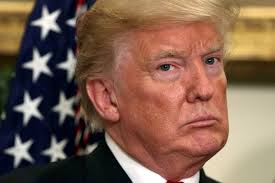
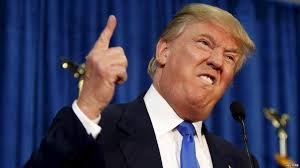
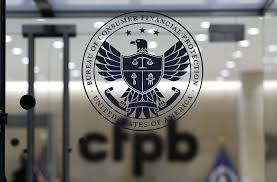
    Blue Press Journal (DC) Dec 30, 2025 – In yet another attempt to undermine protections for ordinary Americans, the Trump administration tried to starve the Consumer Financial Protection Bureau (CFPB) of its funding — a move that could have effectively shut down the agency and laid off its entire staff. This time, the scheme came through Trump’s budget director, Russell Vought, who sought to kneecap the watchdog by cutting off its budget. 

    But on Tuesday, federal district court Judge Amy Berman Jackson slammed the brakes on that plan. She ruled that the White House cannot allow the CFPB’s funding to lapse, and that the agency can continue to receive money from the Federal Reserve — even though the Fed itself is operating at a loss. The administration’s new legal theory for blocking the CFPB’s funding, Jackson made clear, simply doesn’t hold water. 

    Why This Matters
    The CFPB was created in the wake of the 2008 financial crisis to protect consumers from predatory banks, payday lenders, and other financial scams. Gutting it is a dream for Wall Street lobbyists — and a nightmare for working families. Trump’s effort to quietly pull the plug on the agency is part of a long-running Republican campaign to weaken or dismantle it entirely, handing more power back to the very industries it was designed to police. 

    How the CFPB Is Funded
    Unlike most federal agencies, the CFPB does not rely on the annual Congressional appropriations process. Instead, it draws its budget directly from the Federal Reserve, up to a capped amount set by law. This structure was intentional: it insulates the CFPB from political interference and allows it to pursue investigations and enforcement actions without worrying about Congress or the White House using the budget as leverage. 

    The Bottom Line
    Trump’s team knew they probably couldn’t kill the CFPB outright without a fight, so they tried to choke off its funding instead. Judge Jackson’s ruling is a win for consumers — but it’s also a reminder of how far this administration was willing to go to dismantle protections for the public in service of corporate interests.

  • A Federal Monument or a Trump Family Fiefdom? The Dubious Legality of Renaming the Kennedy Center

    Blue Press Journal – There’s a word that gets thrown around a lot these days: “unprecedented.” It’s often used to describe the chaotic political landscape, but sometimes, a single action manages to feel uniquely jarring, a break not just with recent norms but with the very fabric of American tradition. The latest case in point? The apparent attempt to rebrand the John F. Kennedy Center for the Performing Arts by adding Donald J. Trump name to the center.

    This isn’t just another bizarre headline or a simple act of vanity. This is an attack on a federal institution, a desecration of a national memorial, and an action that legal experts are already calling profoundly, unequivocally illegal.

    It’s a Federal Law, Not a Real Estate Deal

    Let’s be perfectly clear about what the Kennedy Center is. It is not a private venue that can be bought, sold, or rebranded at the whim of its management. It is a living memorial, established by a specific act of Congress, the National Cultural Center Act of 1958, which was later amended and signed into law by President Lyndon B. Johnson in 1964, just months after President Kennedy’s assassination.

    The law itself codifies the institution’s name: the “John F. Kennedy Center for the Performing Arts.” This name is not a suggestion; it is a legal mandate passed by the legislative branch of the U.S. government to honor a slain president.

    As legal scholars and government ethics experts have pointed out, a president cannot simply issue an executive order or exert influence to unilaterally alter a federal law. The power to rename a federal memorial of this stature rests exclusively with Congress. To attempt to change it through administrative pressure or a deal with the center’s board is to bypass the fundamental American principle of separation of powers. It is, in a word, illegal.

    An Assault on National Memory

    Beyond the legalities, there’s the profound disrespect this move shows. The Kennedy Center was created to be a non-partisan, national institution—a monument to a president’s vision for arts and culture in America. It stands as a symbol of a bygone era of national aspiration.

    To change the centers name and add that of a contentious modern political figure is nothing short of a political upheaval. It aims to obliterate a fragment of our collective national memory while driving a partisan wedge into a monument that should serve as a beacon for all Americans. It would be akin to defacing the Lincoln Memorial with a crude spray-painting of a new name. Such an act is a profound desecration of its sacred purpose.

    A Presidency as a Brand

    This move is part of a larger, more troubling pattern. We have seen the president’s name stamped on everything from stimulus checks to federal buildings, blurring the line between public service and personal branding. Federal law actually prohibits government officials from using their office for self-promotion, but the norms have been systematically eroded.

    Turning the Kennedy Center into “the Trump Center” would be the ultimate expression of this ethos. It’s an attempt to secure a legacy not through historical achievement, but through the forceful rebranding of public property. It turns a national monument into a personal monument, a federal building into a family business asset.

    Where Do We Draw the Line?

    If this can happen to the Kennedy Center—a landmark enshrined in federal law—what is next? The Lincoln Memorial? The Jefferson Memorial? Are they all subject to the political whims of the person in the Oval Office?

    This isn’t about one president or another. It’s about whether we are a nation of laws and shared heritage, or a nation of personalities and brand loyalty. The Kennedy Center is more than a building; it’s a promise—a promise that some things in America are bigger than any one of us, and that they belong to all of us. We cannot allow that promise to be broken.

  • “The Trump Administration’s War on Science: How RFK Jr. is Undermining Public Health”

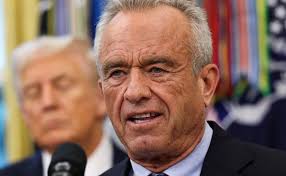
    Blue Press Journal – The Trump administration’s second term has been marked by controversy, but one of the most alarming developments has been the transformation of the Department of Health and Human Services under the leadership of Robert F. Kennedy Jr. Since taking office in February, Kennedy has been on a mission to reshape the department in his image, rejecting the medical establishment and promoting his own brand of pseudoscience.

    One of the most significant changes has been the elimination of thousands of jobs within the department, a move that has been widely criticized by experts and lawmakers alike. According to a report by the Washington Post, the cuts have “decimated” the department’s capacity to respond to public health crises. The Post reported that the department had lost over 3,000 employees since Kennedy took office, with many more facing uncertainty about their future.

    In addition to the job cuts, Kennedy has also frozen or canceled billions of dollars in scientific research, a move that has been denounced by the scientific community. The New York Times reported that the cancellations have “halted or delayed research into some of the most pressing health issues of our time, including cancer, Alzheimer’s disease, and infectious diseases”.

    Kennedy’s Make America Healthy Again movement has been the driving force behind these changes, and has been characterized by a rejection of established medical wisdom. He has used his position to promote discredited ideas about vaccines, seed oils, fluoride, and Tylenol, often citing debunked research and conspiracy theories to support his claims.

    For example, Kennedy has repeatedly used his authority to promote the false claim that vaccines are linked to autism, a claim that has been thoroughly debunked by the scientific community. The Centers for Disease Control and Prevention (CDC) and the World Health Organization (WHO) have both concluded that there is no evidence to support a link between vaccines and autism.

    The consequences of Kennedy’s actions are already being felt. The department’s abandonment of evidence-based medicine has created confusion and uncertainty among the public, and has undermined trust in the medical establishment. As Dr. Eric Widera, a professor of medicine at the University of California, San Francisco, told the New York Times, “When you have a government that’s not grounded in science, it’s a recipe for disaster”.

    The Trump administration’s decision to put Robert F. Kennedy Jr. in charge of the Department of Health and Human Services has been a disaster for public health. By rejecting the medical establishment and promoting pseudoscience, Kennedy has undermined the department’s ability to respond to public health crises and has put the health and well-being of Americans at risk.

  • Donald Trump’s Christmas Meltdown: A Disturbing Sign of Mental Decline

    BLUE PRESS JOURNAL – While most Americans were spending Christmas Eve with family, friends, and traditions steeped in warmth, Donald Trump was doing something else entirely: furiously posting online well past midnight. In a torrent of over 100 posts, the former president lashed out at his usual list of perceived enemies — Democrats, people of color, and anyone who dares question his legacy. He even went so far as to once again rage about the 2020 election, a grievance he has refused to let go more than three years later.

    The language was particularly ugly. Trump referred to his political opponents as “Radical Left Scum,” a phrase that, aside from its cruelty, underscores his inability to engage in the kind of unifying rhetoric expected from a national leader. It was a performance not of strength, but of bitterness, pettiness, and obsession.

    An Unraveling in Public View

    Trump’s late-night posting spree is part of a broader pattern that has become more visible over the past year: an almost compulsive need to relitigate the past, settle scores, and portray himself as a perpetual victim. Instead of presenting coherent policy ideas or offering a positive vision for the future, his public communication is increasingly dominated by personal vendettas and conspiracy-laden grievances.

    It’s not simply that these angry outbursts are unbecoming — they are politically self-destructive. Every minute spent rehashing old battles is a minute not spent persuading undecided voters, articulating solutions to real-world problems, or showing leadership in moments of national challenge. For someone seeking (or holding) high office, that’s a glaring red flag.

    The Epstein Cloud

    One of the more telling aspects of this latest meltdown is the apparent sensitivity Trump shows whenever Jeffrey Epstein’s name comes up. While public records confirm that Trump and Epstein knew each other in the late 1980s and early 1990s, Trump has since tried to distance himself. Yet, his social media eruptions suggest the mere mention of Epstein still touches a nerve. The defensiveness is striking — and it fuels curiosity about why this particular topic provokes such an intense reaction.

    Why It Matters

    Even if one sets aside the moral and ethical concerns about Trump’s rhetoric, the practical political consequences are significant. A leader who spends Christmas Eve in a rage spiral online is not projecting stability, discipline, or focus. Instead, he is reinforcing an image of someone consumed by grudges, unable to move forward, and increasingly out of step with the broader electorate.

    For his base, these moments might feel like evidence of “fighting” against the establishment. But for everyone else — including moderates and independents — they serve as a reminder of why Trump remains one of the most polarizing and exhausting figures in American politics.

    If this pattern continues, it won’t simply be a problem for Trump’s public image. It will raise deeper questions about his capacity to lead — questions that grow louder every time he chooses rage over reason.

  • Washington Chaos: Why the GOP’s Gridlock is Costing Taxpayers Dear

    BLUE PRESS JOURNAL – As the holiday decorations come down, the political climate in Washington is heating up. While American families are trying to plan their year, the Congressional GOP, the Senate, and the Trump administration (whose influence remains heavy within the party) are once again steering the country toward a fiscal cliff.

    If you are a taxpayer, you should be worried. Not because of political tribalism, but because the cost of this incompetence is measured in billions of wasted dollars and economic instability.

    Here is why the current dysfunction is a raw deal for the American taxpayer.

    1. The High Cost of Political Brinkmanship

    The most immediate threat is another government shutdown. Following a contentious health care debate and a two-week holiday recess, the House legislative calendar is dangerously thin.

    As it stands, lawmakers have passed only three of the 12 appropriations bills required to fund the government. With the January 30 deadline looming, they have barely any time left to finish the job.

    Why does this matter to your wallet? Every time Republicans force a shutdown showdown to score political points, the American economy pays a price. According to an analysis by S&P Global, the 2018 shutdown alone cost the U.S. economy $6 billion—far more than the savings from the shutdown itself. That is money that evaporated from the economy, lost productivity, and wasted government resources. By dragging their feet and creating artificial crises, the GOP is risking your tax dollars on a game of chicken.

    2. Health Care Instability and the Broken Promises

    The House GOP is currently paralyzed by a civil war over health care subsidies. Specifically, subsidies for the Affordable Care Act (ACA) are set to expire at the end of the month.

    The chaos is so bad that four Republican lawmakers broke ranks to sign a discharge petition to force a vote on a three-year extension of these subsidies, bypassing their own leadership.

    The instability caused by this hesitation directly impacts taxpayers. If these subsidies expire, premiums will skyrocket for millions of Americans. Furthermore, this uncertainty wreaks havoc on the insurance markets. When the government creates artificial scarcity and uncertainty, it drives up costs for everyone—including the federal government, which ultimately has to step in to mitigate the damage. The GOP’s inability to govern effectively puts the financial health of American families at risk.

    3. Democrats are Forced to Play Hardball

    The situation has become so toxic that Democrats are preparing to use the January 30 funding deadline as leverage. If the GOP fails to resolve the subsidy issue before the funding deadline, Democrats plan to oppose any funding package that doesn’t address the issue.

    This is a recipe for a total government shutdown. The Republicans control the White House and both chambers of Congress, yet they cannot unite to keep the lights on or keep insurance premiums stable. By failing to lead, they are forcing a showdown that will inevitably result in wasted taxpayer money on “stopgap measures” and emergency funding.

    The Bottom Line

    The Congressional GOP, Senate leadership, and the lingering influence of the Trump administration are proving once again that they are incapable of managing the basic duties of governance. From threatening shutdowns that cost billions to creating chaos in the healthcare market, their dysfunction is expensive.

    American taxpayers deserve a government that works, not one that holds the economy hostage every few weeks.

  • No, Trump Did Not End Taxes on Social Security, Yet another Lie

    Blue Press Journal – In recent months, President Donald Trump and J.D. Vance have claimed that the “One Big Beautiful Bill” (OBBB), signed into law in July, eliminated taxes on Social Security benefits. However, a review of the legislation — and independent fact‑checks — show that this is not true.

    What the OBBB Actually Did:
    The bill reduced the number of seniors who pay taxes on their Social Security benefits by raising the income thresholds at which those benefits become taxable. This means some retirees with modest incomes will no longer owe taxes on their Social Security. But for millions of Americans — particularly middle class and those with higher retirement incomes — taxes still apply. 

    The History of Social Security Taxes:
    Social Security benefits were not taxed at all until 1983, when President Ronald Reagan signed bill that included taxing up to 50% of benefits for individuals earning above certain thresholds. In 1993 a law increasing the maximum taxable portion to 85% for higher‑income beneficiaries was passed. The OBBB did not repeal either of these taxation provisions; it simply adjusted the income thresholds upward.

    Expiration:
    The OBBB’s threshold increases are temporary. Unless Congress acts, they will revert to pre‑OBBB levels after the set expiration date.


    Social Security Benefit Taxation Thresholds

    Filing StatusPre‑OBBB Thresholds (1983–2024)OBBB Thresholds (2024–Expiration)Expiration Date
    Single$25,000 (up to 50% taxable), $34,000 (up to 85% taxable)$35,000 (up to 50%), $48,000 (up to 85%)12/31/2027
    Married Filing Jointly$32,000 (up to 50%), $44,000 (up to 85%)$45,000 (up to 50%), $60,000 (up to 85%)12/31/2027

    Bottom Line:
    Despite political claims, the OBBB did not eliminate taxes on Social Security. It temporarily raised the income thresholds, reducing the number of seniors affected, but millions still owe taxes on their benefits. Unless extended, the thresholds will revert after 2027, restoring the broader tax reach set by previous laws.

  • Flashing Signs in the White House on President Donald Trump’s Cognitive Decline

    BLUE PRESS JOURNAL – Washington, D.C. — The mood inside the executive mansion in early 2025 was unlike anything seasoned staffers had witnessed before. President Donald Trump, midway through his second term, had become the subject of intense speculation not only from political opponents but also from medical professionals observing his public appearances.

    Dr. John Gartner, a psychologist and former professor at Johns Hopkins University, was among the most vocal. “Because of his cognitive decline, [Trump] is focusing on things like the [White House] ballroom and the paper that he writes things on,” Gartner told The Daily Beast. He warned that the President was exhibiting “flashing signs” of what he described as “immense cognitive decline.”

    Inside the Beltway, aides whispered about the President’s shifting priorities and his tendency to dwell on trivial details during high‑level meetings. Earlier in the month, Trump had unleashed a furious tirade at The New York Times after it published an article suggesting he had “significantly reduced his workload” in his second term. The public saw flashes of these outbursts in press conferences, where he frequently interrupted reporters and dismissed challenging questions.

    His behavior was increasingly erratic. At one gathering with journalists, he directed a racist slur toward a foreign correspondent, prompting gasps from those present. In another instance, he cut off a female reporter with an angry monologue that left even loyalists unsettled.

    The most shocking moment came when Trump referred to the tragic murders of Rob and Michele Reiner, suggesting they were linked to what he called “Trump Derangement Syndrome.” The remark was widely condemned as “heartless” and “inexplicable,” even from members of his own party.

    Political analysts began openly discussing whether the President could complete his term, given the mounting evidence of decline. Yet his core supporters dismissed these concerns, rallying around him with chants of loyalty, framing any criticism as part of a long‑running conspiracy against him.

    In the marble halls of the White House, the question remained unspoken but ever‑present: was the leader of the free world still capable of leading? For Dr. Gartner, the signs were clear. “We’re watching this happen in real time,” he said, “and the consequences could be profound.”

  • Donald Trump’s White House Plaque: A Dangerous Precedent for Democratic Norms

    The recent controversy over a White House plaque criticizing former President Joe Biden, described by Trump as “so crazy,” underscores a troubling pattern of using public office to attack political rivals. Podcast host Joe Rogan, in an episode released on Christmas Day, condemned the move as an “attack on democratic norms,” noting that Trump’s actions undermine the integrity of the presidency itself. Rogan’s criticism—echoed by many observers—highlights how Trump has repeatedly weaponized government resources to advance personal vendettas rather than uphold the dignity and impartiality expected of the executive branch. 

    By commissioning a plaque that derides Biden’s legacy, Trump sets a dangerous precedent for future leaders. The use of taxpayer-funded platforms to disseminate partisan messaging risks normalizing the abuse of power, blurring the line between public service and political theater. This tactic is not new; Trump’s history of divisive rhetoric and baseless claims of election fraud has already eroded trust in democratic institutions. Yet the plaque incident demonstrates a new level of brazenness, turning even symbolic gestures into tools of political warfare. 

    Such behavior poses a direct threat to democratic norms. Presidents are expected to foster unity, not stoke division through calculated insults funded by the American public. Trump’s actions reflect a disregard for the ethical boundaries of leadership, prioritizing personal grievance over the collective good. As Rogan pointed out, allowing such behavior may embolden future leaders to follow suit, further destabilizing the very foundations of governance. 

    To preserve democracy, accountability for such abuses cannot be optional. Elected officials must be held to a higher standard, ensuring that public institutions remain above partisan feuds. Without it, the precedent set by Trump’s plaque could mark the beginning of a slippery slope where civility and integrity take a backseat to vitriol. 

    Source: Joe Rogan’s comments on “The Joe Rogan Experience.”

  • Trump’s 2025 Tariffs: “Liberation Day” For Jobs… If You Mean Liberating Them Out of Existence

    BLUE PRESS JOURNAL – Remember when President Trump announced his so-called “Liberation Day” tariffs back in April 2025? He promised they’d be a shot in the arm for American workers — especially in manufacturing. The message was simple: slap big taxes on most imports, force companies to “buy American,” and watch U.S. factories roar back to life. 

    Well, fast-forward to today, and the “roaring” sounds you’re hearing are more like the groans of laid-off workers. 

    The Job Numbers Tell the Story

    Let’s start with the cold, hard math: Since the tariffs went into effect, the U.S. economy has been adding jobs at one-tenth the pace it did under President Biden. According to the Bureau of Labor Statistics (BLS), Biden’s term saw an average of around 400,000 jobs per month in 2021–2022 (BLS Jobs Data). Under Trump’s post-tariff economy in 2025, that’s closer to 40,000 per month — a stunning slowdown for a country not in a recession. 

    And manufacturing? The very sector Trump claimed he was rescuing? It’s been shrinking. Every single month since the tariffs were announced in April 2025, manufacturing employment has ticked downward. The most recent BLS data shows 67,000 fewer manufacturing jobs now than when the tariffs began (BLS Manufacturing Employment). 

    Why Tariffs Backfire

    Economists have been warning for years that tariffs don’t work the way politicians promise. Sure, they make imported goods more expensive, but they also raise costs for U.S. businesses that depend on imported parts and materials. That means higher prices for consumers and squeezed profit margins for manufacturers — the very people you’re supposedly helping. 

    Back in 2018, during Trump’s first term, the Peterson Institute for International Economics estimated that his steel and aluminum tariffs actually cost more manufacturing jobs than they preserved (PIIE Analysis). The same pattern seems to be repeating in 2025. 

    The Domino Effect on the Economy

    When manufacturers cut jobs, it doesn’t just hurt factory towns. It ripples out to suppliers, shipping companies, local restaurants, and pretty much any business that depends on those workers’ paychecks. Even sectors not directly tied to imports can get caught in the drag because tariffs slow overall economic activity. 

    And let’s not forget — these tariffs function like a tax increase on everyday Americans. When the cost of imported goods goes up, so do the prices on store shelves. That’s inflationary pressure at a time when many families are still trying to get their budgets under control. 

    The Political Spin vs. Economic Reality

    Of course, the White House is spinning this as “short-term pain for long-term gain.” The problem is, we’ve heard that before. In 2018 and 2019, Trump’s trade war with China was supposed to bring manufacturing roaring back. Instead, U.S. manufacturing output fell and job growth slowed (Federal Reserve Industrial Production Data). 

    Now in 2025, history is repeating itself — only the tariffs are broader, the job losses faster, and the excuses flimsier. You can call it “Liberation Day” if you want, but for tens of thousands of American workers, it feels more like eviction day. 

    Bottom Line

    Tariffs make for great political theater. They let a president look “tough” on trade without having to pass complicated legislation. But the economic reality is that they’re a blunt instrument — and when you swing a blunt instrument, you often hurt the very people you claim to be protecting. 

    If the goal was to “liberate” Americans, the 2025 tariffs have certainly done that — they’ve liberated them from their jobs, from stable paychecks, and in some cases, from their ability to keep the lights on.

  • Trump Faces Intensified Scrutiny as New Epstein Files Emerge

    The latest document release in the long-running Jeffrey Epstein saga has sent fresh political shockwaves through the United States — and this time, the tremors have rattled Donald Trump’s orbit more forcefully than before. Nearly 30,000 new pages of court filings, deposition transcripts, and correspondence were unsealed late Monday, adding to the smaller batch made public last week. While Trump’s name had appeared in earlier disclosures, the frequency of its appearance in this tranche is noticeably higher, fueling renewed public debate over his past relationship with the disgraced financier.

    A Larger, More Damaging Release?

    The earlier release of Epstein-related documents was largely a rehash of already-public information: social connections, flight logs, and anecdotal accounts. But Monday’s release — part of ongoing litigation surrounding Epstein’s estate and accusations against his associates — contained more granular detail. Trump’s name appeared multiple times, often in the context of social events and mutual acquaintances. While nothing in the documents so far conclusively links Trump to criminal conduct, the sheer repetition of his name in proximity to Epstein has intensified media coverage and political scrutiny.

    Trump’s Past Ties to Epstein

    Donald Trump and Jeffrey Epstein were publicly known to have been social acquaintances in the 1990s and early 2000s. Photographs from the time show the two men together at Mar-a-Lago and other events. In a 2002 New York Magazine profile, Trump described Epstein as a “terrific guy” who liked women “on the younger side” — a statement that has aged poorly in light of Epstein’s later conviction and the posthumous revelations about his abuse of underage girls. 

    By the mid-2000s, Trump claims to have cut ties with Epstein, reportedly banning him from Mar-a-Lago after a dispute. Court testimony from Virginia Giuffre has named Trump, but Trump has consistently denied any sexual contact or misconduct, and no charges have been brought against him in relation to Epstein.

    Political Implications

    The timing of the latest release is politically sensitive. Trump remains the Republican frontrunner for the 2024 presidential race, and any story that ties him — even indirectly — to Epstein’s name is likely to be exploited by political opponents. The danger for Trump is not necessarily legal at this stage, but reputational. The more Epstein’s name is in the headlines alongside Trump’s, the more voters may associate the two, regardless of the facts.

    Media Framing and Public Perception

    Mainstream and independent media outlets have treated the new tranche differently. Some have focused on the legal irrelevance of the mentions, noting that the documents are filled with casual name-dropping of many public figures. Others have emphasized the optics: that Trump’s past socializing with Epstein — and his own comments — make him a more politically vulnerable target than many others named.

    The Trump camp’s response has been predictable: denounce the coverage as politically motivated, point out the lack of criminal allegations tied directly to him, and attack media outlets for bias. But the reality is that Trump’s own past words and photographs with Epstein make these stories harder to dismiss entirely.

    The Broader Lesson

    The Epstein scandal has ensnared a wide range of public figures from politics, business, and entertainment. It has also revealed the enduring power of association in the media ecosystem. In an age where public trust in institutions is low and conspiracy theories are rampant, even tangential links can have a corrosive effect on political reputations. 

    For Trump, the challenge is not just about disproving allegations — which, to date, have not been legally substantiated — but about managing the perception that he was part of an elite social circle that shielded and enabled Epstein for years. That perception, fair or not, could remain a political thorn for years to come.


    Sources & Fact-Check Notes

    1. New York Magazine, 2002 – Trump quote about Epstein: “I’ve known Jeff for 15 years. Terrific guy. He’s a lot of fun to be with. It is even said that he likes beautiful women as much as I do, and many of them are on the younger side.”
      https://nymag.com/nymetro/news/people/n_7912/
    2. Court documents in Giuffre v. Maxwell – Unsealed in 2024 and previous years. Trump’s name appears in social contexts; no evidence of sexual misconduct was substantiated.
      Example coverage: BBC News – Jeffrey Epstein court documents unsealed
    3. Flight logs & photographs – Documented in multiple outlets, including The Guardian and Miami Herald. Trump is not on Epstein’s flight logs to the private island, but was photographed with Epstein and Ghislaine Maxwell in the late 1990s.
      https://www.miamiherald.com/news/state/florida/article221997845.html
    4. Trump’s claims of banning Epstein from Mar-a-Lago – Reported by The Washington Post and Politico, though some accounts suggest the falling out was over a property dispute rather than moral outrage.
      https://www.washingtonpost.com/politics/trump-epstein/2020/07/31/