Blue Press Journal – The prevailing economic conditions under the Trump administration have resulted in numerous Americans facing significant difficulties in securing their basic needs. The sobering truth is that both essential commodities and substantial expenditures are becoming progressively out of reach for a considerable segment of the population.
Recent findings from The POLITICO Poll, conducted by Public First, shed light on the gravity of the situation. Nearly half of Americans reported difficulties in affording essential expenses such as groceries, utility bills, healthcare, housing, and transportation. The consequences of these affordability pressures are far-reaching, with 27% of respondents admitting to having skipped a medical check-up due to costs within the last two years. Furthermore, 23% stated that they had skipped a prescription dose for the same reason.
These statistics reveal a shocking truth about the economic nightmare many Americans endure. The fact that so many can’t even afford basic necessities screams that current economic policies are failing a vast majority of the population. As the nation pushes ahead, it is absolutely crucial that policymakers wake up and recognize how their decisions are crushing the most vulnerable among us. We need a bold, comprehensive strategy to tackle these crippling affordability issues, or else we risk condemning countless Americans to a life devoid of the essentials they need to survive, let alone thrive.
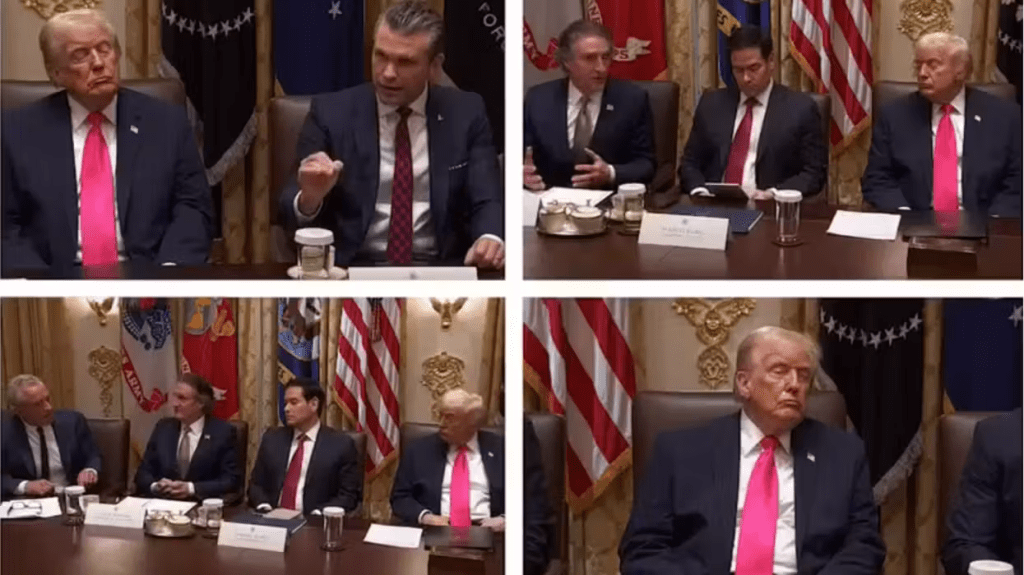
One could argue that Trump has completely dozed off at the helm while America spirals into chaos.
Blue Press Journal – In a striking critique, Fox News chief political analyst Brit Hume slammed President Donald Trump’s handling of the US trade war, pointing out that the administration’s own policies have left American farmers reeling. Trump’s proposed $12 billion aid package for embattled farmers is merely a Band-Aid on a wound caused by his own “disastrous policies,” Hume argued.
The aid package, which includes $11 billion in one-time payments to crop farmers and $1 billion for other crops, is an admission that Trump’s trade war has taken a toll on the agricultural sector. The President’s steep international tariffs, touted as a boon to the US, have instead hurt American farmers who are now being subsidized with taxpayer dollars.
During a roundtable event on Monday, Trump boasted that his trade war had generated the funds needed to bail out crop farmers. He also praised his tariffs on social media, claiming they were benefiting the US. However, economists argue that it’s hypocritical for Trump to take credit for helping farmers when his own policies are the root cause of their problems.
“This is not a bridge loan; this is a subsidy,” Hume said, referring to the Agriculture Department’s new Farmer Bridge Assistance Program. “And it’s put the president now in a position where he’s got to try to help the farmers.”
Trump’s tariffs, which include a 10% baseline tariff on all imports and levies on China as high as 30%, were supposed to be paid for by foreign countries. However, the costs have been passed on to American consumers, including farmers who are struggling to stay afloat.
The President’s attempt to spin the aid package as a success story has been met with skepticism. As Hume noted, “Trump is using our tax dollars to fix his poor judgment and economic policy.” The $12 billion bailout is a clear acknowledgment that Trump’s trade war has failed, and that American taxpayers are footing the bill.
As the trade war continues to drag on, it’s unclear how much longer farmers will be able to weather the storm. One thing is certain: Trump’s policies have come home to roost, and it’s the American taxpayer who is being left to pick up the tab. It’s funny that farmers supported Trump in large numbers for his election and now taxpayers have to pay for their poor decision.
Blue Press Journal – The United States is grappling with a deepening economic crisis under the Trump administration, marked by staggering job losses, soaring costs, and a stark disconnect between corporate profits and working-class struggles. New data reveals a mismanaged economy teetering on the edge of a prolonged recession, with households across the nation bearing the brunt of systemic failures.
Job Losses and Deepening Inequality
This year alone, the US has lost 1.1 million jobs, the worst performance since the pandemic’s peak in 2020 and a 54% increase in job losses compared to the same period under President Joe Biden. Small businesses, the backbone of the economy, have cut 120,000 jobs in November alone, while tech giants and corporations report record profits. This troubling divide underscores a growing disparity: corporate America thrives, but everyday families are left behind.
Consumer confidence has plummeted to its lowest level since April, driven by relentless inflation and rising living costs. With wages failing to keep pace, millions are being squeezed.
The crisis is not abstract—it is eroding the lives of everyday Americans. 20% of middle-class wage earners no longer afford to live in their own cities, while half of Latino and Hispanic families and 39% of Black families report being unable to afford basic necessities like groceries, housing, and healthcare. Communities of color, already disproportionately affected by economic instability, are facing a dire reckoning.
These hardships are fueling a political shift. Democrats are capitalizing on voter frustration, with polls showing widespread demand for policies targeting inflation, wage growth, and corporate accountability. The message is clear: voters want leaders who understand their pain, not those who dismiss it like President Trump and this administration.
A Precipice of Recession
Economists warn the US is on the brink of a deep and enduring recession, one that could cripple sectors from housing to manufacturing. Without bold action, middle- and working-class families risk catastrophic wealth loss, further deepening inequality. The stakes are now existential for the Trump administration: voters are prepared to replace Republicans with Democrats.
Key Economic Indicators (2024):
Metric
Data Point
Job losses this year
1.1 million
Job losses vs. 2020
Worst since pandemic peak
Job losses vs. Biden’s 2023
+54%
Small business job cuts (Nov)
120,000
Consumer confidence index (2024)
Lowest since April
Middle-class families unable to afford city living
20%
Latino/Hispanic families lacking basics
50%
Black families lacking basics
39%
A Leadership Vacuum in a Time of Crisis
The US economy is at a crossroads. The Trump administration’s denialism and missteps have exacerbated a crisis that demands urgent, fact-based leadership. As families struggle and the recession looms, the political consequences are unmistakable: voters will hold leaders accountable. The time for half-measures and rhetoric has passed. What remains is a fight for economic justice—and a test of whether policymakers will serve the people or the powerful.
The path forward is clear, leadership needs to change. Democrats need to take the congress in 2026 to get America Back On Track.
Blue Press Journal (DC) – As the Trump administration prepares to announce a $12 billion farm aid package on Monday, it’s clear that the president’s trade war with China has taken a devastating toll on American farmers. The aid, which will be doled out to farmers who grow crops such as corn, soybeans, and wheat, is a tacit admission that Trump’s economic policies have failed.
The trade dispute with China has been particularly brutal for soybean and sorghum farmers, who rely heavily on exports to China. With more than half of their crops shipped overseas each year, the imposition of tariffs has effectively shut off their biggest market. It’s no surprise, then, that these farmers are being targeted for relief.
But here’s the rub: this bailout is not just a necessary evil to help struggling farmers; it’s also a symptom of a broader problem. The Trump administration’s aggressive trade policies have created uncertainty and chaos in the agricultural sector, and now taxpayers are being asked to foot the bill.
As a nation, we’re being told that this is the price we must pay for Trump’s “America First” agenda. But is it really worth it? By subsidizing one group of Americans over others, we’re abandoning the free market principles that have made our economy great. In a true free market, businesses that can’t compete go out of business. It’s the way the system is supposed to work.
But under Trump’s administration, it seems we’re moving towards a more socialist model, where the government picks winners and losers. It’s a disturbing trend, and one that Republicans should be particularly concerned about. After all, the GOP has long been the party of small government and free enterprise.
The fact that Trump’s farm bailout is being framed as a reward for farmers who supported his tariffs is even more galling. It’s a brazen attempt to buy off a key constituency, rather than addressing the underlying issues that are driving the agricultural sector’s woes.
As the administration prepares to announce this massive bailout, it’s worth asking: what’s next? Will we see more handouts for other industries that are struggling as a result of Trump’s policies? The answer, unfortunately, is likely yes.
For now, American taxpayers will be forced to foot the bill for Trump’s trade war. It’s a costly experiment, and one that we’re all being forced to pay for. As we watch the $12 billion farm bailout unfold, it’s clear that the real losers here are not just the farmers, but the American people as a whole.
Blue Press Journal (DC) – In a sharply worded dissent, U.S. Supreme Court Justice Elena Kagan has cautioned that the Court’s recent decision to greenlight Texas’s new congressional map could undermine constitutional protections for voters—particularly those from racial minority communities. Earlier this week, the Court’s conservative majority allowed Texas to implement its redrawn districts for upcoming elections, despite a lower court’s finding that the map was likely drawn with impermissible racial considerations.
The lower court had determined that the map—crafted by the Republican-controlled state legislature—split communities along racial lines in ways that could diminish the political power of Black and Latino voters. Such a move, the court said, potentially violates both the 14th Amendment’s guarantee of equal protection and the 15th Amendment’s prohibition against racial discrimination in voting.
Justice Kagan, joined by Justices Sonia Sotomayor and Ketanji Brown Jackson, accused the majority of rushing to judgment without fully grappling with the evidence. “Today’s decision,” Kagan wrote, “disregards the careful, thorough analysis conducted by the district court and replaces it with a hasty greenlight for a map that may well be unconstitutional.” She emphasized that the lower court’s examination had been not only extensive but grounded in testimony, demographic data, and a deep review of the legislative process.
Kagan also warned that the Court’s intervention sends a troubling message about how voting rights cases will be handled going forward. “When this Court short-circuits lower court processes,” she noted, “it risks both the constitutional rights at stake and the public’s trust in the judiciary’s commitment to protecting them.”
The ruling is expected to have ripple effects beyond Texas. Redistricting battles are already underway in several states, including California, where a newly approved map is projected to favor Democrats. Some legal analysts believe the Texas decision could embolden partisan mapmakers elsewhere, knowing they may face fewer judicial roadblocks.
Critics of the ruling argue that it diminishes the role of trial courts in independently scrutinizing maps for racial bias and weakens long-standing protections designed to ensure fair representation.
The timing of the decision—so close to upcoming elections—adds to the controversy. Historically, the Supreme Court has been cautious about altering election rules too near a vote, citing the potential for confusion. In this case, however, the majority opted to leave the disputed map in place. For voters in Texas’s affected districts, the consequence is immediate: they will cast ballots in districts whose boundaries remain hotly contested.
As the 2026 election cycle intensifies, the Supreme Court’s posture on redistricting and voter rights will be under even closer scrutiny. Justice Kagan’s dissent underscores the stakes: “Our Constitution promises equal political voice to all citizens, regardless of race. Today’s decision risks breaking that promise.”
Blue Press Journal – As the calendar pages dwindle, a palpable sense of urgency – and mounting frustration – is spreading through a segment of the House Republican conference. The looming expiration of enhanced ObamaCare tax credits is creating a stark dilemma for moderate Republicans, many of whom fear that a failure to act could have significant, negative repercussions for the party’s slim majority in the crucial 2026 midterm elections.
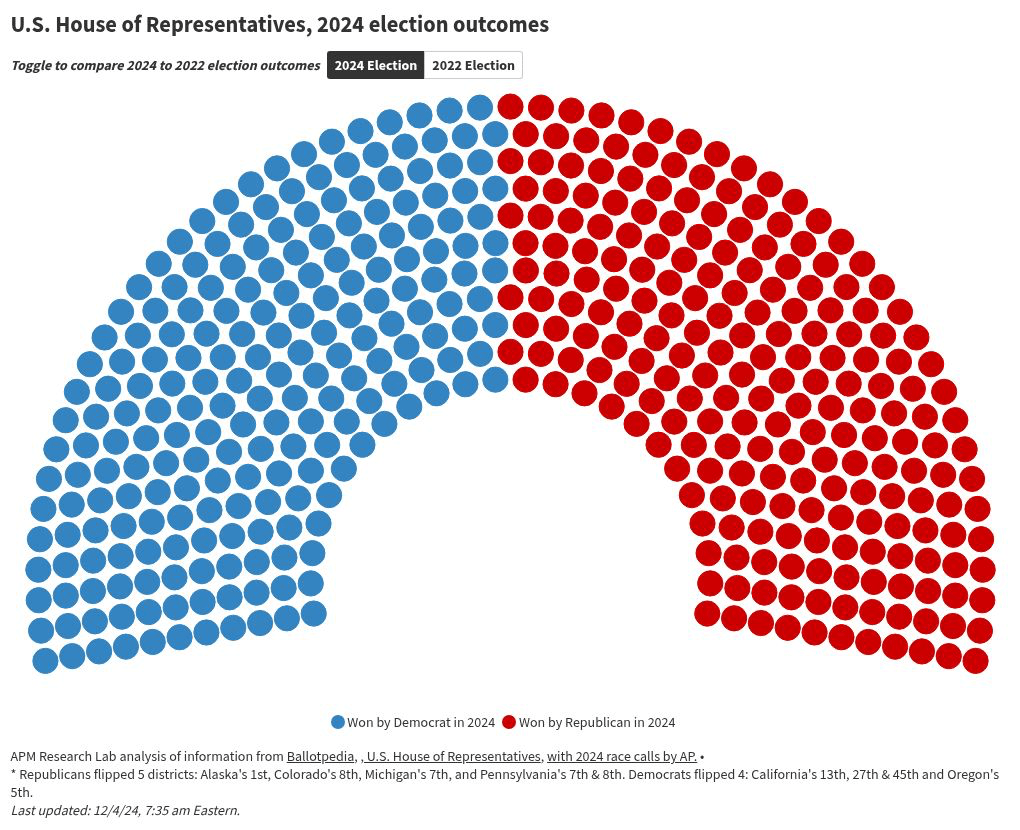
With less than ten legislative days remaining before millions of Americans brace for substantial increases in their health insurance premiums, a vocal group of centrist GOP lawmakers is making a strong case for extending these subsidies. Currently, these credits are a lifeline for over 20 million individuals, making healthcare more affordable. However, their pleas are encountering stiff resistance from Speaker Mike Johnson (R-La.) and a more conservative wing of the party. These members view the subsidies as a fundamental flaw within the Affordable Care Act and are largely opposed to any extension. Republicans currently hold 219 seats while the Democrats have 213.
The path forward is cluttered with competing ideas. Proposals range from one- to two-year extensions, with some attempting to incorporate restrictions like income caps or the elimination of zero-premium plans. Yet, despite these varying approaches, a consensus remains elusive, and none of the proposed plans have secured a commitment for a floor vote.
Leading the charge for a pragmatic solution are Representatives like Don Bacon (R-Neb.), Jeff Hurd (R-Colo.), and Brian Fitzpatrick (R-Pa.), who are advocating for a two-year extension. Simultaneously, a bipartisan framework spearheaded by Representatives Jen Kiggans (R-Va.) and Josh Gottheimer (D-N.J.) has garnered some traction, but has been met with a firm rejection from top Republican leadership.
For these moderate Republicans, the principle of ideological purity is clashing with the realities of effective governance. As Representative Jeff Van Drew (R-N.J.) put it, the current inaction is akin to “buffoonery,” highlighting both the potential political fallout and the very real human cost of allowing healthcare premiums to skyrocket. Others, such as Representative Kevin Kiley (R-Calif.), are emphasizing the broad agreement that exists across different factions to at least pass a temporary fix, thereby averting public anger and protecting vulnerable Republican incumbents.
Even the White House weighed in, proposing a two-year extension that included some conservative-leaning reforms. However, this initiative was quickly withdrawn amidst internal Republican opposition. Speaker Johnson has publicly committed to presenting a leadership-backed plan before the end of the year, but the specifics of this proposal remain shrouded in uncertainty.
As internal Republican party tensions escalate, the clock is relentlessly ticking. The decision made in the coming days – or lack thereof – on extending these vital ObamaCare tax credits will undoubtedly carry significant weight, impacting not only the health and financial well-being of millions of Americans but also the political fortunes of Republican lawmakers fighting for their seats in a challenging electoral landscape.
The delicate balance of national security hinges on the safeguarding of sensitive information. When that information involves real-time war plans, the consequences of even a momentary lapse can be dire. A recent report by the Pentagon’s acting inspector general has illuminated just such a risk, specifically concerning the actions of Defense Secretary Pete Hegseth and his use of the commercial messaging app Signal.
The report, released on Thursday, delves into what has been dubbed “Signalgate,” an incident where Hegseth reportedly utilized Signal – a platform not designed for classified military communications – to discuss detailed operational plans. The inquiry stemmed from a revelation by The Atlantic’s Jeffrey Goldberg, who detailed how he was added to a Signal chat group that included Hegseth and 18 other high-ranking officials, including national security advisor Michael Waltz. The sensitive nature of the discussion was stark: the group chat apparently delved into specific details regarding times, aircraft types, and targets related to a military strike against Houthi rebels in Yemen.
The findings of the internal Pentagon probe are unequivocal in their assessment of the risks involved. According to the report, “using a personal cell phone to conduct official business and send nonpublic DoD information through Signal risks potential compromise of sensitive DoD information, which could cause harm to DoD personnel and mission objectives.” This statement underscores the fundamental principle that communication channels for matters of war must be inherently secure and government-sanctioned.
The implications of this are significant. While Signal is known for its end-to-end encryption for personal conversations, it is not equipped with the robust security protocols and oversight necessary for handling classified military intelligence. The potential for data breaches, interception by adversaries, or even accidental exposure to unauthorized individuals is a critical concern when the information at stake involves the deployment of military assets and the lives of service members.
This report emerges during a notably critical juncture for Secretary Hegseth, who is currently grappling with fallout from a distinct controversy related to a “double tap” strike on an alleged drug smuggling vessel. The intersection of these occurrences highlights significant concerns regarding judgment and compliance with security protocols at the highest levels of the defense department.
The core of the “Signalgate” issue lies in the potential compromise of sensitive Department of Defense (DoD) information. The report explicitly states that such a compromise “could cause harm.” This harm is not abstract; it directly relates to the safety of U.S. military personnel engaged in operations and the successful execution of their missions. In the complex and often perilous landscape of modern warfare, where intelligence is a critical weapon, maintaining the integrity of communication channels is paramount.
The Pentagon’s inspector general’s report emphasizes the critical importance of communication tools in national security and military operations. The “Signalgate” incident exemplifies the significant risks associated with the use of commercial applications for sensitive discussions, endangering personnel safety and mission success. These findings underscore the grave implications of Donald Trump’s choice of Hegseth for the Department of Defense.
Blue Press Journal – In the high-stakes arena of presidential politics, image is everything. The perception of strength, vitality, and unwavering attention is a currency more valuable than almost any other. Just over a year ago, this perception was weaponized effectively against one candidate. Now, with the roles reversed, the same weapon seems to have lost its edge, raising critical questions about media narratives and political hypocrisy.
The issue is one of basic alertness. Multiple reports have surfaced detailing instances where President Donald Trump has appeared to doze off during his own criminal trial—a proceeding that concerns his personal and political future. This follows a pattern observed during his presidency. As one report noted, “while his secretaries went around the table, the 79-year-old president might have looked to some as though he may have dozed off a few times, eyes closed, head nodding down at this weeks cabinet meeting” Furthermore, it’s clear his schedule is often shortened to just five hours of work each day.
So why are we talking about this? The reason is not a shallow fixation on a presidents energy levels. It is, instead, a matter of consistency and the standards we set for the most powerful office on earth.
“Well, it’s something that Trump himself made a central issue on the campaign trail a year ago.”
This is the crux of the matter. The Donald Trump relentlessly attacked President Biden’s age and mental acuity, making the idea of an enfeebled leader a cornerstone of his campaign rhetoric. He positioned himself as a paragon of energy and sharpness. The emergence of these reports, therefore, creates a stark contrast. “Obviously there’s like a level of hypocrisy here about, you know, his own ability to remain really alert and awake, as in performing his duties.”
This leads to the most frustrating question for many observers: “There’s a lot of frustration among Democrats about why isn’t this sort of thing sticking with Trump when it’s stuck with Biden?”
The disparity in coverage from the main news media and public perception is undeniable. For one candidate, a moment of fatigue becomes a weeks-long narrative about cognitive decline. For the other, it is often dismissed as a momentary lapse or ignored altogether. This isn’t about defending one or attacking another; it is about applying a single, consistent standard to anyone who seeks the immense responsibility of the presidency.
We must move beyond the political gamesmanship. This is not a trivial matter. The presidency demands relentless focus, comprehension of complex global issues, and the ability to make swift, critical decisions under pressure. Clearly, age is affecting Trump’s performance, and it is a non-partisan issue that deserves honest discussion from all sides.
Let’s remember the old political ad that asked who you wanted answering the 3 a.m. phone call, their finger on the nuclear button. The image of a leader asleep at the table, whether metaphorical or literal, should give every voter pause. The integrity of the office demands that we hold every candidate to the same high standard of alertness and engagement, regardless of party. Our national security depends on it.
THE MAIN STREET MEDIA CAN NOT GIVE A PASS TO TRUMP…THEY NEED TO COVER IT THE SAME WAY THAT THEY DID JOE BIDEN.
Blue Press Journal – (Dec 2 ) U.S. Boston federal judge has issued a preliminary injunction blocking the Trump administration from enforcing a law that would cut off Medicaid funding for Planned Parenthood and its affiliates in 22 states and the District of Columbia. The provision, part of a major Republican-backed bill, was designed to bar Medicaid funds from going to tax-exempt organizations that perform abortions and had received significant Medicaid funding in the previous fiscal year.
In her ruling, U.S. District Judge Indira Talwani stated that the group of state attorneys general who challenged the law were likely to prove it is unconstitutional. She argued the provision imposes a “retroactive condition” on the states’ participation in the Medicaid program, changing the rules after they had already agreed to them, which violates the U.S. Constitution’s Spending Clause. Judge Talwani also labeled the law “impermissibly ambiguous” and warned that its enforcement would likely reduce patients’ access to birth control and preventive screenings, which would ultimately drive up healthcare costs for the states.
This decision comes after a separate legal challenge by Planned Parenthood, where Judge Talwani had also blocked the law before a federal appeals court put that ruling on hold. The states involved in the current lawsuit argued that the federal government was overstepping its authority, as states have historically determined which providers qualify for Medicaid funding. A spokesperson for Planned Parenthood praised the judge’s decision, calling the law “unconstitutional and dangerous” and noting that at least 20 of its health centers have already closed since the defunding provision was briefly allowed to take effect. The judge has placed a seven-day hold on her injunction to give the Trump administration an opportunity to appeal the decision. Read more
Blue Press Journal (DC) – In a move that has left even his staunchest political allies perplexed, Donald Trump has issued a presidential pardon for Juan Orlando Hernández, the former two-term president of Honduras. This isn’t a pardon for a minor offense or a miscarriage of justice; Hernández was serving a 45-year sentence after being convicted in June 2024 for being what the U.S. Justice Department called “at the center of one of the largest and most violent drug-trafficking conspiracies in the world.”
The pardon raises a jarring and fundamental question: How does a leader who advocates for bombing drug smuggling boats and potentially invading Venezuela to stop trafficking simultaneously release one of the most powerful narco-politicians of the modern era?
The sheer scale of Hernández’s crimes makes the pardon all the more staggering. The former president was found guilty of conspiring to import more than 400 tons of cocaine into the United States. He used his position—from congressman to president—to shield his operation, accepting millions of dollars in bribes from notorious traffickers, including the Sinaloa Cartel once led by Joaquín “El Chapo” Guzmán. His conviction was seen as a landmark victory in the global war on drugs. Now, that victory has been nullified with the stroke of a pen.
The move has created a firestorm of confusion, and the criticism is not just coming from the usual political opponents. Senator Thom Tillis (R-N.C.), a member of the Senate Judiciary Committee, did not mince words when speaking with reporters.
“I hate it. It’s a horrible message,” Tillis stated bluntly, capturing the sentiment of many who see the decision as a profound contradiction of Trump’s own hawkish rhetoric on border security and drug interdiction. “It’s confusing to say on the one hand we should potentially even consider invading Venezuela for drug traffick[ing], and on the other hand let somebody go.”
Tillis systematically dismantled the potential justifications for such a pardon. For those who might claim Hernández was a victim of a politically motivated prosecution, the Senator offered a crucial fact check. “Some were saying maybe it was a vindicative prosecution. The investigation started during the Trump administration. The trial, I think, occurred during the Biden administration. So it doesn’t check that box,” he explained.
This point is critical. The very administration that has now pardoned Hernández is the one that initiated the investigation into his crimes. This isn’t about correcting an injustice perpetrated by a political rival; it’s about reversing the work of his own Justice Department.
The pardon appears to have been issued without a clear rationale or even a formal request, adding to the sense of impulsive decision-making. “I don’t even know if there was a formal request for a pardon,” Tillis added. “I just think it’s horrible optics. I mean, we’re sending a mixed message.”
A “mixed message” is an understatement. To law enforcement agencies in Central America and the U.S. agents who spent years building a complex and dangerous case against a corrupt head of state, the message is one of betrayal. To the cartels and narco-politicians who watched Hernández’s fall, the message is one of hope—that power and influence can ultimately erase accountability.
What, then, is the point? Is there a hidden diplomatic strategy at play, or is this simply an act of chaos that undermines years of U.S. foreign policy and anti-drug efforts by Trump? As Washington grapples with the fallout, the only thing that remains clear is the deep incoherence at the heart of this decision. One day, the policy is to wage war on narco-traffickers; the next, it is to set one of their most powerful leaders free. THE QUESTION IS, has Trump lost his mind or is he just full of BS.








 Blue Press Journal