Blue Press Journal – As a great political strategist once famously declared, “it’s the economy, stupid.” That blunt assessment now cuts deep into the heart of America’s economic landscape, as the latest report reveals a shocking surge in U.S. layoffs for October, reaching a two-decade high. These alarming figures paint a grim picture, casting a harsh light on the efficacy of the economic policies championed by President Donald Trump. In short, the Trump economic policies are not working.
The deep cuts are not isolated incidents but a widespread phenomenon, attributed by Challenger to industries rapidly adopting AI-driven changes and intensifying cost-cutting measures. Tech firms led the charge in job culling within the private sector, closely followed by retailers and the broader services sector – industries often seen as barometers of consumer confidence and economic health.
The year-to-date figures are equally unsettling. From January to the end of October, employers have announced a staggering 1,099,500 job cuts, a 65% rise compared to the 664,839 cuts announced during the same period last year. Alarmingly, October not only saw individual companies announcing massive layoffs, but a significantly higher number of firms initiated job cut plans—nearly 450 companies compared to under 400 in September. These are numbers that Trump can’t spin.
Donald Trump campaigned on promises of economic prosperity and price control, yet this report provides evidence that his economic strategies are harming the American economy. The figures clearly show that his policies are ineffective and their lingering effects are detrimental to the workforce. This report serves as a rebuke, indicating that his administration is damaging the American economy.
Blue Press Journal – In a scathing rebuke, The Wall Street Journal’s conservative editorial board on Wednesday called out President Donald Trump for his misguided attempts to shift blame for Republican election defeats onto the fact that he wasn’t on the ballot. The Journal dismissed this rationale as “total B.S.,” pointing to Trump’s own policies as the root cause of the GOP’s woes.
The editorial board’s withering critique comes after Trump attributed the Republican losses in key elections to his absence from the ballot. However, the Journal countered that Trump’s presence was felt throughout the campaigns, with his policies and legacy dominating the discourse and motivating Democratic turnout.
“Mr. Trump was on the ballot ― not literally, but nonetheless as the main motivating force behind a dominating Democratic turnout,” the Journal wrote. The newspaper highlighted a range of Trump-backed policies that were effectively on the ballot, including his economic agenda, tariffs, and foreign policy initiatives.
Moreover, the Journal noted that Trump’s presidency has been marked by controversy, from the deployment of masked ICE agents to the rising cost of living. These issues, the newspaper argued, were inextricably linked to Trump’s own actions and policies, making him a central factor in the elections.
The Journal’s rebuke is significant, coming from a traditionally conservative outlet. The editorial board’s warning that “if he really believes this, then the GOP is heading for bigger problems in 2026” suggests that Trump’s refusal to acknowledge the role of his own policies in the election outcomes poses a long-term threat to the party’s prospects.
When Donald Trump won the 2024 presidential election, he did so on a wave of voter frustration—a deep dissatisfaction with the state of the U.S. economy, persistent inflation, and a soaring cost of living that plagued Kamala Harris’s campaign. His bold promise to “bring prices down” resonated across political lines, especially in key battleground states where families felt the financial squeeze more than ever.
Yet, one year into his second presidency, Trump’s economic promises appear more illusion than reality. Far from delivering relief, the latest data show inflation rising, household expenses climbing, and public confidence in his economic leadership sinking fast.
The Core Promise: Lowering Costs for Ordinary Americans
On the campaign trail, Trump’s rhetoric was clear: “We will bring grocery prices down. We will make energy affordable again. And we will end the economic pain caused by the Harris-Biden administration.” That clarity, coupled with aggressive attacks on his opponent’s record, helped him secure victory.
A year later, however, the picture looks grim. Grocery prices—already high—have surged to historic levels. Beef, coffee, and bananas have hit record highs, and the cost of electricity is biting deeply into household budgets.
Economic Snapshot – November 2025
Category
Price Change (YoY)
Notable Factors
Beef
+18%
Tariffs on South American imports, increased feed costs
Coffee
+22%
Tariffs on Brazil, supply chain disruptions
Bananas
+25%
Import restrictions, climate impacts
Electricity
+15%
Reduced renewable subsidies, fuel cost increases
Overall Inflation
+6.1%
Tariff-induced price pressures, labor shortages
Tariffs, Immigration Crackdowns, and Rising Prices
The administration’s economic strategy has heavily focused on aggressive global tariffs—meant to protect U.S. industries but instead often raising costs for U.S. consumers. Combined with strict immigration crackdowns that have reduced the labor force in agriculture and manufacturing, supply chains have been squeezed from multiple directions.
Economists warn that such policies can backfire. As economist Dr. Laura Benton told The Washington Post:
“Tariffs can protect certain domestic industries in the short term, but when applied so broadly and amid labor shortages, they almost inevitably raise consumer prices. In this case, the everyday American shopper is paying the price for political posturing.”
The Energy Gap: Another Broken Promise
Energy affordability was another cornerstone of Trump’s campaign platform. He accused the previous administration of “killing U.S. energy independence” and promised a resurgence in domestic oil, gas, and coal production to slash prices.
Yet, electricity prices have risen sharply—up 15% in just a year—due partly to reduced subsidies for renewable energy projects and volatile fossil fuel markets. Utility companies have passed higher costs on to consumers, further squeezing household budgets.
Trump’s “energy-first” rhetoric hasn’t translated into meaningful savings for Americans. In fact, higher energy costs disproportionately hurt lower-income households who spend a larger portion of their earnings on utilities.
Public Opinion: Approval in Decline
The political cost has been significant. According to a recent Washington Post-ABC News poll:
59% of Americans assign Trump either “a great deal” or “a good amount” of blame for current inflation.
His approval rating on handling the economy sits at 37%, versus 62% disapproval.
These numbers reflect a sharp decline from his post-election honeymoon period when many voters were willing to give him time to fulfill his promises.
During a recent interview on CBS’ “60 Minutes”, Trump was asked directly about his message to Americans struggling financially. Rather than addressing inflation or energy costs, he pivoted to discussing crime and immigration—issues where polling shows he performs better with the public. The dodge was glaring, and to many observers, telling.
Tax Cuts for the Wealthy – Paid for by Cuts to Medicaid
In a move that has drawn intense criticism, Trump signed his “Big Beautiful Bill” into law—a sweeping measure that extended his 2017 tax cuts primarily benefiting the wealthy, costing the U.S. government nearly $4 trillion over the next decade.
To help fund these cuts, his administration slashed Medicaid by $800 billion, a decision that has alarmed healthcare advocates and left millions vulnerable. For Americans facing rising costs on all fronts, the policy has reinforced a perception that Trump’s economic priorities favor the affluent over the working class.
Advocacy group spokesperson Maria Alvarez told reporters:
“These policies are not designed to help the average American family. Cutting vital healthcare programs while lavishing tax breaks on billionaires sends a clear message: you are on your own.”
The Danger of Political Promises Untethered from Policy Reality
Trump’s inability—or unwillingness—to deliver on his core economic promises raises broader questions about the nature of political campaigning. In retrospect, his vow to bring down grocery and energy prices may have been less an achievable policy goal than an effective electoral talking point.
Political analyst Greg Stanton argues:
“Campaign promises are often aspirational, but when they’re made in absolute terms—like pledging to lower prices ‘fast’—they set expectations that can implode if reality doesn’t cooperate. That’s when broken promises become political liabilities.”
The Cost of Distrust
Broken promises don’t just harm an administration’s approval ratings; they erode trust in the political process itself. For Americans who voted in 2024 hoping for economic relief, the past year has been a painful reminder that campaign rhetoric and governing reality can be miles apart.
This distrust carries consequences beyond Trump’s presidency—it deepens political polarization, discourages voter engagement, and fuels cynicism.
The Price of Broken Promises
The story of Trump’s second term thus far is one of unmet expectations. The promises to lower everyday costs have not materialized. Instead, tariffs, energy price hikes, and cuts to social programs have compounded the financial strain on millions.
For the voters who propelled him back into office, the disappointment is palpable. As inflation edges upward and household budgets tighten, the gap between campaign promises and lived reality grows ever wider.
In politics, promises can win elections—but failing to keep them can define a presidency. One year in, Donald Trump’s economic record is not one of triumph, but of trust broken.
Blue Press Journal – In a jaw-dropping interview with “60 Minutes” that aired on Sunday, former President Donald Trump claimed he didn’t know Changpeng Zhao, the founder of Binance cryptocurrency exchange, despite pardoning him just two weeks ago. The stunning revelation has sparked outrage and raised serious concerns about Trump’s mental fitness or his willingness to deceive the American public.
The facts surrounding Zhao’s pardon are damning. Binance, under his leadership, failed to report suspicious activity, including transactions linked to terrorist organizations and child exploitation websites. Zhao pleaded guilty to failing to maintain an effective anti-money-laundering program and stepped down as head of the company. Moreover, Binance has had a suspiciously cozy relationship with the Trump family, supporting their lucrative foray into cryptocurrency ventures.
The hypocrisy is glaring. Trump’s allies have long railed against President Joe Biden’s use of an autopen, claiming it invalidated his actions. Yet, when confronted with his own pardon of Zhao, Trump claims he didn’t know who he was pardoning. The double standard is stark.
It’s impossible to give Trump the benefit of the doubt. Either he is suffering from dementia, unable to recall significant decisions he made as President, or he is lying to the American people. The evidence suggests the latter is more plausible, given the lucrative ties between Binance and the Trump family.
Blue Press Journal – In a stark contradiction to his campaign promises, the Trump administration is inching closer to entangling the United States in a war with Venezuela, sparking widespread concern and outrage. Despite his vocal criticism of previous presidents for their involvement in foreign wars, Trump’s own administration is pushing towards a military intervention in the South American country with minimal checks, clarity, or justification.
The latest reports suggest that U.S. officials have identified targets for airstrikes in Venezuela, including government installations, which could be approved imminently. This development has raised alarm bells among experts, who warn that such actions would undoubtedly constitute an act of war. The administration’s claim that the strikes are aimed at targeting drug traffickers is being questioned, as there is no evidence to support this assertion, and the proposed plan would likely exacerbate the chaos in the region.
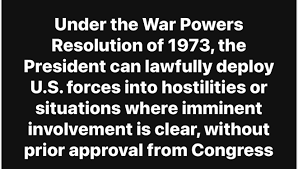
The Trump administration’s actions are being carried out without any formal debate, authorization, or clear plan to deal with the consequences. The War Powers Act, which requires the president to consult with Congress before engaging in military action, seems to be being disregarded. Secretary of Defense Pete Hegseth has failed to respond to requests from the Senate Armed Services Committee to share the orders and legal rationales behind the anti-drug operation.
The situation is further complicated by the administration’s broad definition of terrorism, which has led to the labeling of a wide range of individuals and groups as terrorists. This has raised concerns that the administration is asserting its right to drone strike anyone deemed a terrorist, without due process or accountability. The fact that members of the Trump administration are calling a broad swath of Americans terrorists, while also pursuing military action in Venezuela, is a chilling development that has many experts warning of the dangers of unchecked executive power.
Trump’s campaign promise to keep America out of war now seems like a distant memory. His administration’s actions in Venezuela are a clear example of the kind of interventionism that he once criticized. The lack of transparency, accountability, and moral justification for these actions is a cause for concern, and many are questioning the true motives behind the administration’s push for war.
The consequences of a war in Venezuela would be devastating, not just for the people of Venezuela but also for the United States. The chaos and instability that would ensue would likely lead to a humanitarian crisis, and the economic costs of such a war would be substantial. It is imperative that the administration provides clear evidence and justification for its actions, and that Congress exercises its constitutional authority to oversee and authorize military action.
Trump Told Us he Was Going to Destroy the American Democracy
Blue Press Journal – Last year, the Sunday Opinion section of The New York Times carried a stark, all-caps headline that now rings with chilling prescience: “WE WERE ALL WARNED. DONALD TRUMP SAYS HE WILL PROSECUTE HIS ENEMIES ORDER MASS DEPORTATIONS USE SOLDIERS AGAINST CITIZENS PLAY POLITICS WITH DISASTERS ABANDON ALLIES. BELIEVE HIM.” At the time, some may have dismissed it as hyperbole, a dramatic flourish for a Sunday paper. But in retrospect, these words serve as a grim testament to a reality that has since unfolded, leaving our democracy facing unprecedented challenges.
The actions taken since then have, in many ways, mirrored the dire predictions. Within his first week in office, the Trump administration initiated policies that bore the hallmarks of the promised mass deportations. We have witnessed the construction of what can only be described as medieval detention centers, the deployment of masked immigration agents to apprehend individuals, and defiance of federal court orders leading to the deportation of migrants to perilous situations in South America. The unsettling image of soldiers being deployed to quell supposed “bedlam” in American cities, a tactic eerily reminiscent of authoritarian regimes, has also become a stark reality.
Furthermore, the economic landscape has been significantly impacted. The announcement of steep international tariffs in April sent shockwaves through global markets, threatening economic instability and raising concerns of a potential recession. These actions, seemingly driven by a disregard for established international norms and a transactional approach to foreign policy, raise serious questions about the priorities and motivations behind such decisions.
It is difficult to escape the conclusion that the erosion of democratic norms and institutions has been a deliberate, if not explicit, consequence of the policies enacted. The warnings were not an attempt to sow fear, but rather a genuine alarm bell sounded by those who saw the potential for profound damage.
The stark question that remains is: what does this mean for the millions who voted for this agenda? This includes not only the core MAGA base but also the significant number of independent voters who lent their support. Was this the outcome they envisioned? Did they vote to dismantle the very foundations of the democratic system that has, for all its imperfections, provided a framework for progress and stability?
The consequences of these actions are real, impacting individuals, alliances, and society’s fabric. The warnings were clear, with a consistent execution, raising profound concerns for the future of American democracy. The time for polite disagreement is over; we must reflect and act to safeguard our democratic ideals now.
Blue Press Journal – The federal government shutdown enters its second month, a new Washington Post/ABC poll reveals that 45% of surveyed Americans place the blame squarely on the shoulders of Republican lawmakers and President Trump. Meanwhile, 33% of respondents attribute the shutdown to Democrats, and 22% remain undecided. But what’s behind this partisan standoff, and what are the stakes for the American people?
At the heart of the shutdown lies a contentious Republican budget bill, passed by party line vote earlier this year, that prioritizes massive tax breaks for millionaires and billionaires over critical healthcare funding. The bill’s provisions striped away vital safeguards for health insurance, leaving millions of Americans vulnerable to skyrocketing premiums and reduced access to care. Democrats, on the other hand, have sought to reinstate these safeguards, only to be met with resistance and a government shutdown from Trump and the Republican leadership.
The Consequences of Inaction
The expiration of the Affordable Care Act’s (ACA) enhanced premium tax credits would have devastating consequences for millions of Americans. If Congress fails to extend these tax credits, premiums would more than double on average for the roughly 20 million Americans who rely on them. The impact would be particularly severe for middle-class families and seniors.
Demographic
Current Premium
Projected Premium Increase
Family of four (earning $85,000/year)
$10,000/year
$18,000/year (80% increase)
60-year-old couple (earning $85,000/year)
$15,000/year
$30,000/year (100% increase)
A Crisis of Priorities
The shutdown is, in part, a reflection of the Republican Party’s priorities. By choosing to award massive tax breaks to their wealthy donors, they are effectively sacrificing the healthcare needs of millions of Americans. As Senator Chuck Schumer (D-NY) remarks, “The Republican budget bill is a blatant attempt to redistribute wealth from the middle class to the wealthy elite. It’s a morally reprehensible decision that will have far-reaching consequences for our nation’s health and economic security.”
The numbers are stark. If the enhanced premium tax credits are not extended, nearly 4 million people could become uninsured by 2034 due to the increased costs. This would not only have a devastating impact on individuals and families but also on the broader economy.
It’s essential that Americans hold their elected representatives accountable for their actions. We must demand that our leaders prioritize the needs of the many over the interests of the few. The fate of the Affordable Care Act and the healthcare of millions of Americans hangs in the balance.
The federal government shutdown is a crisis of priorities, and it’s time for our leaders to get their priorities straight. The health and well-being of the American people must come first.
Blue Press Journal (Opinion) – As the nation grapples with the chaos and destruction wrought by the Trump administration, many are left wondering: how long do we have to tolerate this regime? The answer, much like the Trump presidency itself, remains shrouded in uncertainty. Despite his boasts of strength and stability, the truth is that Trump’s grip on power is weakening, and the cracks are beginning to show.
The recent events in Chicago, where kids and cops were tear-gassed, serve as a stark reminder of the administration’s willingness to use force to suppress dissent. Meanwhile, a judge is holding ICE and CBP officials accountable for their actions, a move that underscores the growing pushback against the administration’s draconian immigration policies. The destruction of the East Wing of the White House, which has left Americans horrified, is a potent symbol of the regime’s disdain for the very institutions it is supposed to uphold.
Even Trump’s loyal base is beginning to show signs of disillusionment. As UFC fighters start to turn away from him, it’s clear that the president’s aura of invincibility is starting to fade. His promises to make life better for his white male base, which included claims that he would “end inflation on day one,” “make America affordable again,” and “slash energy and electricity prices by half within 12 months,” have proven to be nothing more than empty rhetoric.
In reality, Trump’s policies have made things worse. Instead of cutting energy prices, his killing off of Biden’s green energy projects in exchange for fossil fuel campaign money has led to skyrocketing electricity prices nationwide. The cost of groceries and housing has also increased, leaving many Americans struggling to make ends meet. As Trump himself once said, “We’re going to win so bigly, you won’t even believe it.” But for many Americans, the only thing that’s “bigly” is the size of their bills.
The regime’s association with child rapists, including Jeffrey Epstein, has also come under scrutiny. Mike Johnson’s attempts to engineer a cover-up have been exposed, and Republicans are finally starting to demand answers. As one Republican representative noted, “The American people deserve to know the truth about the president’s association with these individuals.” Trump’s response, predictably, has been to deny any wrongdoing and attack his critics. But as the saying goes, “you can’t hide the truth forever.”
As the international community watches in horror, Trump’s policies are damaging America’s relationships with its allies. His embrace of Putin and Netanyahu, his betrayal of Ukraine, and his saber-rattling against Venezuela have all contributed to a growing sense of unease. The tariffs he has imposed on Brazil, which were recently blocked by five Republican senators, are just the latest example of his misguided economic policies. As one senator noted, “These tariffs are a tax on American consumers, and they will only serve to hurt our economy.”
In the end, it’s clear that Trump’s regime is weaker than he wants us to believe. The question is, how long can he hold things together? As the walls begin to close in, and his loyal followers start to abandon ship, it’s likely that we won’t have to tolerate this regime for much longer. As Trump himself once said, “I’m a winner, I’m a champion, I’m a master builder.” But for many Americans, the only thing he’s building is a legacy of chaos and destruction.
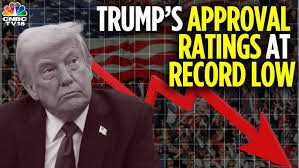
Blue Press Journal – President Trump’s job approval rating has reached a new second-term low, with astaggering 19-point deficit in the latest Economist/YouGov survey. The poll, conducted over the weekend, reveals that only 39% of Americans approve of Trump’s handling of the presidency, while a whopping 58% disapprove. This dismal rating is a clear indication that the American public is dissatisfied with Trump’s policies, which have been marred by controversy and criticism.
The president’s decision to tear down the West Wing, impose tariffs, and deploy masked agents in cities across the country have all contributed to his plummeting approval rating. The poll shows that Trump’s approval has declined across all age groups, with young adults experiencing the most significant drop-off since the start of his second term.
The survey also highlights Trump’s poor performance on key issues. Crime is the president’s strongest issue, but even that has a negative net approval rating of -1. Immigration and foreign policy fare worse, with negative net approval ratings of -10 and -13, respectively. On jobs and the economy, Trump’s net approval rating is a dismal -22, while his handling of inflation and prices has a staggering -31 net approval rating.
These numbers are a stark contrast to Trump’s claims of a thriving economy and successful presidency. Instead, they suggest that the American public is increasingly disillusioned with Trump’s policies and leadership style. As the president continues to push his divisive agenda, it remains to be seen whether he can recover from this low point or if his approval rating will continue to slide.
Blue Press Journal – In a rare display of bipartisan pushback against President Trump’s trade policies, the Senate voted to block tariffs on Brazil, with five Republicans joining every Democrat in support of the resolution. The legislation, which would terminate the national emergencies declared by Trump to justify 50% tariffs on Brazil, aims to mitigate the impact of these tariffs on American consumers.
Senate Democratic leader Chuck Schumer of New York slammed Trump’s tariffs, stating, “Every American who wakes up in the morning to get a cup of java is paying a price for Donald Trump’s reckless, ridiculous, and almost childish tariffs.” The tariffs, which affect coffee imports from Brazil, have led to increased prices for American coffee lovers.
The vote demonstrated a notable split within the Republican Party, with Sens. Susan Collins of Maine, Mitch McConnell of Kentucky, Lisa Murkowski of Alaska, Rand Paul of Kentucky, and Thom Tillis of North Carolina defying the President’s stance on tariffs. However, despite this bipartisan support, the legislation is likely doomed due to the Republican-controlled House’s new rules, which allow leadership to prevent it from coming up for a vote.
Furthermore, even if the legislation were to pass Congress, Trump would almost certainly veto it. The President has linked the tariffs on Brazil to the country’s policies and criminal prosecution of former President Jair Bolsonaro, a move that has been widely criticized as an overreach of executive power.
The U.S. ran a $6.8 billion trade surplus with Brazil last year, according to the Census Bureau, making the tariffs a questionable economic decision. Democrats argue that the tariffs will only serve to harm American consumers and businesses, while failing to address the underlying trade issues with Brazil.





 Blue Press Journal