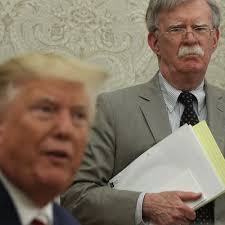
The decline in Trump’s approval rating appears to be linked to his tariff policies, which have been met with widespread criticism. Additionally, the “Big Beautiful Bill” signed into law earlier this summer, which extended Trump’s first-term tax cuts, expanded those cuts, and cut Medicaid, has also contributed to the president’s slipping popularity.
The administration’s handling of files related to the disgraced financier Jeffrey Epstein has also become a major issue for the GOP and Trump. A staggering 70 percent of respondents agreed that the case was mishandled, with 53 percent of Republicans expressing disapproval of the administration’s handling of the Epstein files. This suggests that the Epstein scandal has not only eroded trust in the president but also created divisions within his own party.
Further highlighting Trump’s struggles, 53 percent of respondents said that the president is making the federal government worse, a damning indictment of his leadership. Since taking office, Trump’s overall approval ratings have dropped a significant 9 points, according to Pew’s numbers.
The survey’s results will be closely watched by politicians and pundits, offering insight into the nation’s mood and the president’s standing. With his approval rating at a new low, Trump must address voters’ concerns and work to regain their trust to rebound from this slump.
Small businesses, which generate over half of the country’s new jobs, are the backbone of the US economy. However, the Chamber of Commerce warns that the tariffs will disproportionately affect these businesses, with 236,000 small importers, each with fewer than 500 employees, collectively bringing in over $868 billion worth of goods from abroad in 2023.
The National Retail Federation and the Chamber of Commerce, both of which have historically supported Republican candidates, are now sounding the alarm over the devastating impact of the tariffs. Despite their previous backing of the GOP, these organizations are realizing that the party’s policies are not as “pro-business” as they claimed.
The tariffs are expected to have a ripple effect on consumers, who will ultimately bear the brunt of the costs. According to a study by Goldman Sachs, US companies will shoulder 64% of the tariff costs, while foreign exporters will absorb only 14%. Consumers will be left to pick up the remaining 22%, with the study warning that companies will pass on two-thirds of the costs directly to consumers by October.
President Trump had claimed that China would “probably eat those tariffs,” but the reality is that the tariffs are a massive, regressive tax that will bleed small businesses dry and send prices soaring for consumers. The move has been widely criticized as a protectionist policy that will harm US jobs and the economy, rather than protecting them.
As tariffs take effect, small businesses and consumers brace for rising costs, questioning their survival. This situation highlights that the GOP’s “pro-business” policies may not be as beneficial as they seem.
The Result of the Republican Tax Break for Millionaires and Billionaires
Blue Press Journal: The recently passed Republican budget law has introduced significant cuts to Medicaid, impacting millions of low-income individuals and families. These reductions are affecting multiple states, with local hospitals and state governments struggling to fill funding gaps. Healthcare providers warn they may have to stop accepting Medicaid patients due to the unsustainable nature of continued care.
In North Carolina, the Department of Health and Human Services (NCDHHS) has announced plans to cut Medicaid spending by $319 million, effective October 1. This reduction will result in a 3% rate cut for all medical providers, as well as deeper cuts of 8-10% for inpatient and residential services and 10% for behavioral therapy and analysis for patients with autism. The NCDHHS spokesperson expressed concern about the potential consequences of these cuts, stating that “these reductions may cause some providers to stop accepting Medicaid patients, as the lowered rates could make it financially unsustainable to continue offering care.”
The impact of these cuts will affect various healthcare services, including hospice care, behavioral health, long-term care, and nursing homes. Reimbursement cuts are expected to exceed 3%, placing a greater burden on providers already operating on thin margins. Consequently, many Medicaid patients may lose access to essential services, worsening health disparities and perpetuating a cycle of poverty and poor health outcomes.
The situation in North Carolina is not unique, as other states are also grappling with the consequences of Medicaid cuts. Local hospitals, which often rely heavily on Medicaid funding, are facing significant financial strain as they struggle to absorb the reduced reimbursement rates. This could lead to a decrease in the quality of care, as hospitals are forced to cut costs and reduce staff to stay afloat.
The Medicaid cuts in the Republican budget law exemplify the human cost of ideological politics. By prioritizing tax cuts over the well-being of vulnerable populations, lawmakers are jeopardizing the lives of millions of Americans. It is crucial for policymakers to act quickly to restore funding to Medicaid and ensure access to essential healthcare services for all individuals.
Blue Press Journal- In a surprise move, US wholesale inflation surged in July, with the Labor Department reporting a 0.9% increase in the producer price index (PPI) from June. This marks the largest monthly jump in over three years, with wholesale prices rising 3.3% compared to the same period last year.
The increase in producer prices is attributed to tariffs imposed by President Trump on imports, driving up costs for US businesses reliant on imported goods. Wholesale food prices rose 1.4% from June, with vegetables surging 38.9%, while home electronic equipment prices increased by 5%.
According to Christopher Rupkey, chief economist at fwdbonds, a financial markets research firm, “It will only be a matter of time before producers pass their higher tariff-related costs onto the backs of inflation-weary consumers.” This warning suggests that the current surge in producer prices may be a precursor to higher consumer prices in the coming months.
The impact of the tariffs has been delayed as importers stockpiled products before the taxes took effect. However, as these inventories dwindle, consumers may soon face higher prices for various goods, including food and electronics.
The latest data has raised concerns about the consequences of ongoing trade tensions on the US economy. As the trade war escalates, both businesses and consumers are preparing for the fallout.
In his letter, sent to the President on Monday, Newsom warned that Trump’s efforts to encourage red states like Texas to redraw their maps could destabilize American democracy. Newsom argued that such actions would be a blatant attempt to gain an unfair advantage for the Republican Party in the 2026 elections. The governor cautioned Trump that “you are playing with fire, risking the destabilization of our democracy, while knowing that California can neutralize any gains you hope to make.”
The White House has been actively encouraging several Republican states, including Texas, to engage in mid-decade redistricting in an effort to create more pickup opportunities for the GOP in the House. However, Newsom’s letter and subsequent announcement suggest that California will not stand idly by while these efforts unfold.
By redrawing its own congressional maps, California aims to offset any potential gains the Republican Party might make through mid-decade redistricting in other states. The move is likely to be seen as a strategic response to the President’s efforts to influence the electoral landscape in favor of the GOP.
The decision to redraw California’s congressional maps is expected to have significant implications for the state’s electoral representation and could potentially impact the balance of power in the US House of Representatives. With the 2026 elections on the horizon, the stakes are high, and the battle for control of the House is likely to be fiercely contested.
Blue Press Journal: In a move that has sent shockwaves through the economic community, President Trump has nominated E.J. Antoni, chief economist at the conservative Heritage Foundation, to be the next commissioner at the Labor Department’s Bureau of Labor Statistics (BLS). The nomination has been met with a chorus of criticism from economists across the political spectrum, who argue that Antoni’s appointment would bring a new level of politicization to the traditionally nonpartisan agency.
As head of the BLS, Antoni would oversee the release of the consumer price index, which is used to adjust Social Security payments for inflation. Critics argue that his views on Social Security and his apparent willingness to manipulate data to favor the Trump administration make him unqualified for the position.
“There’s just nothing in his writing or his resume to suggest that he’s qualified for the position, besides that he is always manipulating the data to favor Trump in some way,” said Brian Albrecht, chief economist at the International Center for Law and Economics.
Democratic lawmakers have also weighed in on the nomination, with Sen. Patty Murray of Washington calling Antoni “an unqualified right-wing extremist” and demanding that the Senate Health, Education, Labor and Pensions Committee hold a confirmation hearing for him.
The nomination has sparked fears that the BLS, which has long been respected for its impartial and reliable data, may become increasingly politicized under Antoni’s leadership. The agency’s independence and nonpartisanship have been crucial in providing accurate and unbiased information about the nation’s economic health.
The move has been met with criticism, who argue that it is an overreach of executive power and a threat to civil liberties. The fact that other cities in the United States have higher rates of violent crime has raised questions about the justification for the President’s actions. Furthermore, the Washington Post has reported that the Trump administration is considering plans to establish a “Domestic Civil Disturbance Quick Reaction Force” composed of hundreds of National Guard troops, which would be deployed to quell protests and unrest in American cities.
Findings show a consistent gap, with murder rates in Trump (Republican)-voting states exceeding those in Democratic-voting states every year this century. This disparity has widened over the past two decades, from a low of 9% in 2003-2004 to a high of 44% in 2019. In both 2021 and 2022, red state murder rates were 33% higher than blue state rates, and the average red state murder rate from 2000-2022 was 24% higher than the average blue state rate. States with the highest murder rates often include red states like Louisiana, Mississippi, and Alabama.
The implications of this federal takeover by Trump are far-reaching and have sparked fears of a slide towards authoritarianism. The use of federal troops to quell domestic dissent would be a drastic departure from the principles of democracy and the rule of law. The fact that the President is seeking to normalize the use of military force to suppress civilian unrest has sent shockwaves through the nation’s capital.
The United States has long been a beacon of democracy and freedom, and it is imperative that its leaders uphold these values. The question on everyone’s mind is: can it happen here? The answer, unfortunately, is that it already is. The federal takeover of the DC police is a stark reminder that the principles of democracy are not self-sustaining and require constant vigilance and defense.
As the nation moves forward, it is essential that Americans rise to the occasion and demand that their leaders uphold the values of liberty, justice, and democracy. The alternative is a slide towards authoritarianism, and the consequences would be catastrophic. The time for hand-wringing and silence is over; it is time for Americans to come together and defend their democracy. This is 1938 Germany and we must stand for democracy and freedom!
The victims of Epstein’s abuse, as well as their families, have been traumatized for years, and the government’s failure to protect them has only added to their suffering. The trauma caused by abuse can be passed down through generations, making it a long-lasting and devastating impact on those affected. Despite this, the Trump administration has refused to release files about Epstein’s life, which could shed light on the circumstances surrounding his abuse and the potential involvement of high-profile figures.
The absence of Epstein survivors from the meeting is a telling sign of the administration’s priorities. By excluding the very people who have been most affected by Epstein’s abuse, the administration is sending a clear message that it is more interested in managing the crisis than in providing support and justice to the victims. This approach is not only insensitive but also potentially counterproductive, as it may further galvanize the public’s perception that the administration is trying to cover up its involvement in the scandal.
As the chilling testimonies of Epstein’s victims surge forth, the Trump administration finds itself under an escalating barrage of demands to confront its troubling past. Trump’s blatant refusal to divulge critical files screams of a cover-up, feeding the public’s festering distrust. How will they squirm out of this tightening noose of accountability? One thing is crystal clear: Trump’s stubborn refusal to release the Epstein-related inquiries raises eyebrows and begs the question—what dark secrets is he trying to safeguard?
The rising cost of living threatens to undermine the Republican Party’s economic agenda, which has been a cornerstone of their platform. The party’s inability to deliver on their promise to reduce the cost of living could have significant implications for the 2026 midterm elections.
This move is seen as a strategic attempt to shore up the party’s numbers in Congress, as they face growing headwinds from discontented voters. With the economy and cost of living emerging as key issues, the Republican Party and Trump are under pressure to deliver on their promises and demonstrate that they are committed to reducing the financial burden on American families.
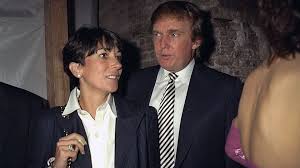
From left, American real estate developer Donald Trump and his girlfriend (and future wife), former model Melania Knauss, financier (and future convicted sex offender) Jeffrey Epstein, and British socialite Ghislaine Maxwell pose together at the Mar-a-Lago club, Palm Beach, Florida, February 12, 2000. (Photo by Davidoff Studios/Getty Images)
Trump later elaborated on the reason for the rift, stating that Epstein had “stolen” young women who worked at his Mar-a-Lago spa, including Virginia Giuffre, one of Epstein’s accusers. Giuffre had worked at the spa, and Trump claimed that Epstein had poached her from him. This revelation has raised questions about Trump’s knowledge of Epstein’s predatory behavior and his role in enabling it. Also why was Trump hiring young (girls) women at his spa which was used by older men?
According to some reports, the pair’s falling out occurred in late 2007, when Trump barred Epstein from Mar-a-Lago after he behaved inappropriately towards a teenager. This incident, as reported by journalists from the Miami Herald and Wall Street Journal, suggests that Trump was aware of Epstein’s problematic behavior towards minors as early as 2007.
However, another factor may have contributed to the end of their friendship: a bitter dispute over a Palm Beach oceanfront mansion. In 2004, Trump and Epstein engaged in a heated bidding war over the property, which ultimately drove a wedge between them. This incident, reported by The Washington Post in 2019, occurred just months before Palm Beach police began investigating allegations of Epstein’s sexual abuse of minors.
The complex and troubling history of Trump and Epstein’s relationship raises significant skepticism regarding the former president’s judgment and potential complicity in enabling Epstein’s crimes. One can’t help but question how Trump could remain oblivious to what was happening, given their apparent closeness. While Trump tries to downplay their friendship and create distance from Epstein’s actions, the evidence seems to point to a relationship that was not only closer but also far more problematic than he cares to admit.