Tag: politics

  • Media Manipulation: How CBS News is Spinning the Renee Good Story for the Trump Administration

    The Battle for Public Perception

    Blue Press Journal – In the chaotic aftermath of the shooting death of Renee Good by ICE agent Jonathan Ross, the Trump administration has struggled to maintain control of the public narrative. After initial attempts to label Good as a “domestic terrorist” failed to resonate with the American public, the White House appears to be shifting tactics. The new strategy relies on drip-feeding carefully curated information to a seemingly sympathetic media landscape.

    The latest chapter in this unfolding saga involves a report from CBS News, citing anonymous sources regarding the physical state of the ICE agent involved. For observers of both media ethics and political accountability, this incident raises troubling questions about the integrity of news reporting and the influence of political appointees within legacy media institutions.

    The “Sympathetic” Leak: Anatomy of the CBS Report

    Yesterday, CBS News published a report that immediately rippled through conservative media circles. The article claimed that Jonathan Ross, the ICE agent who shot and killed Renee Good, “suffered internal bleeding to the torso following the incident.” The report attributed this information to “two U.S. officials.”

    While the headline-grabbing claim of “internal bleeding” suggests a violent, life-threatening struggle, a closer look at the reporting reveals significant gaps:

    • Vague Terminology: “Internal bleeding to the torso” is a broad medical description. Without hospital records, diagnostic imaging, or independent medical verification, the phrase remains unsubstantiated.
    • Anonymous Sourcing: The officials who provided the tip have not been named, nor have they responded to follow-up inquiries, according to CBS’s own reporting.
    • Timing Ambiguity: The phrase “following the incident” is temporally vague. It could imply an injury sustained during the encounter, or a medical condition that arose hours or days later.

    Visual Evidence vs. Official Claims

    One of the most significant contradictions in this narrative lies in the available visual evidence. Video footage taken moments after the shooting depicts Agent Ross walking unassisted, handling his equipment with precision, and appearing notably composed.

    Critics have pointed out that an individual suffering from severe internal bleeding—a life-threatening condition involving hemorrhage within the abdominal cavity—would likely exhibit signs of shock, distress, or physical incapacitation. Yet, footage shows Ross drawing his weapon, maintaining his balance, and inspecting Good’s vehicle without any visible signs of distress.

    This discrepancy between the visual record and the anonymous leaks suggests that the administration’s narrative may be more about public relations than forensic fact-finding.

    The Role of the New CBS News Leadership

    To understand how such a thinly sourced story made it to air, one must look at the recent leadership changes at CBS News. In a move that critics view as an attempt to align the network’s editorial stance with the administration’s interests, the Trump administration has installed a new director widely perceived as a political loyalist.

    This appointment marks a significant shift in CBS’s editorial independence. Under this new leadership, the network’s standards for vetting information appear to have changed abruptly. While a rigorous, months-long investigation into torture at CECOT (the Terrorism Confinement Center in El Salvador) was reportedly suppressed—allegedly due to the administration’s refusal to provide an on-camera response—a dubious, anonymously sourced claim about an ICE agent’s health was published with minimal verification.

    This “two-tiered” approach to journalism—strict scrutiny for administration critics and leniency for administration allies—undermines the network’s credibility. It suggests that the new director may be functioning effectively as a “plant” for the administration, facilitating the flow of propaganda rather than independent news.

    Political Reaction: Weaponizing the Leak

    The leaked report to CBS quickly became a tool for political messaging. Vice President JD Vance took to social media to mock the public’s skepticism, stating, “While much of left has lied about this case, it turns out ramming a law enforcement officer with a car causes injuries. Who knew!”

    This reaction highlights the administration’s strategy: utilizing media leaks as “smoking gun” evidence to shut down debate. By framing the discussion around an unverified medical claim, the administration diverts attention from the central issue—the use of lethal force by a federal agent against a civilian.

    Demand Transparency and Accountability

    The reporting on Renee Good’s death has become a case study in modern information warfare. The Trump administration’s manipulation of the narrative, combined with the willingness of a compromised CBS News to act as a conduit for unverified leaks, distorts the public’s understanding of the event.

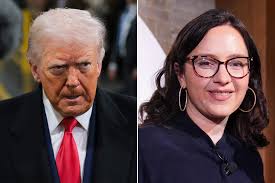
    By reporting an unverified claim from anonymous sources that aligns perfectly with the White House’s preferred narrative, Bari Weiss, as the editor-in-chief of CBS News, is not acting as a watchdog but as a stenographer. This erodes public trust and creates an environment where official narratives—no matter how thin—can be presented as fact.

  • Greenland Chooses Denmark and NATO Amid Renewed U.S. Annexation Push

    Greenland’s Prime Minister rejects U.S. annexation calls from President Trump

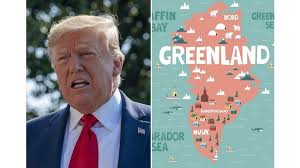
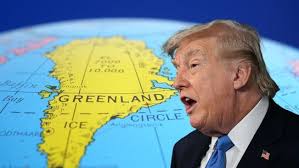
    Blue Press Journal — In a decisive statement on Tuesday, Greenlandic Prime Minister Jens-Frederik Nielsenre affirmed his nation’s commitment to Denmark and NATO, rejecting former President Donald Trump’s renewed calls for the United States to annex the Arctic territory. “We choose Denmark. We choose NATO,” Nielsen told reporters ahead of Wednesday’s scheduled visit by U.S. Vice President J.D. Vance and Secretary of State Marco Rubio. 

    The remarks come amid escalating rhetoric from Trump, who has revived his controversial proposal to bring Greenland into the U.S. union — a plan he first floated during his presidency in 2019 and now again in 2026. Trump has argued that Greenland’s strategic position and natural resources make it vital to American security, going so far as to suggest that military measures could be considered if diplomatic efforts fail. 

    Existing U.S.–Greenland Military Agreements

    While Trump has called for full political annexation, the United States already maintains a military presence on the island under longstanding agreements with Denmark. The Thule Air Base, a key U.S. Air Force installation in northwest Greenland, has operated for decades as part of NATO’s defense infrastructure. This cooperation provides the U.S. with early-warning radar capabilities and Arctic air operations — without the need to claim sovereignty over the territory. 

    Political Fallout in Washington

    Trump’s remarks have drawn criticism not only from Democrats but also from a growing number of Senate Republicans in 2026. Several GOP lawmakers — including Senators Lisa Murkowski, have publicly condemned the idea of using military force to acquire Greenland, calling it “reckless” and “damaging to America’s reputation as a global partner.” 

    “Greenland is already part of our defensive network through NATO and our bilateral agreements,” said Senator Murkowski. “Annexation talk undermines trust with our allies and ignores the reality that military coercion has no support from the American people.” 

    Their stance reflects national polling: Only 8% of Americans favor military action to seize Greenland, while 68% oppose it outright. Political analysts note that these numbers suggest little public appetite for an aggressive policy shift in the Arctic. 

    Diplomatic Tensions

    Danish Foreign Minister Lars Løkke Rasmussen has requested a formal meeting with Secretary of State Rubio in Copenhagen to address the growing tensions. Danish officials have emphasized that Greenland’s status as an autonomous territory within the Kingdom of Denmark is non-negotiable, and that NATO’s cooperative framework already ensures regional security. 

    Strategic Context

    Greenland’s location between North America and Europe makes it a key asset in Arctic geopolitics. With climate change opening new shipping lanes and resource exploration opportunities, nations are reassessing their Arctic strategies. For the U.S., its existing agreements and NATO alliance already guarantee access to Greenland’s strategic advantages without the diplomatic fallout annexation would bring. 

    As Vice President Vance and Secretary Rubio prepare for their visit, the discussion around Greenland raises questions about America’s role in the Arctic. Greenland’s leadership has clearly stated they prefer partnerships through NATO and Denmark, not U.S. sovereignty. Amid bipartisan skepticism and public resistance to military intervention, the Trump administration faces significant political and diplomatic challenges regarding Greenland.

  • Rising Costs Show Trump Administration’s Failure to Deliver Affordability for Americans

    Rising Food & Housing Costs Under Trump: Americans Struggle as Prices Climb

    Blue Press Journal – The Trump administration has repeatedly promised to put “America First” and make life more affordable for working families. Yet the latest data from the Bureau of Labor Statistics paints a starkly different picture: Americans are paying more for food, housing, and essential services, while wages have not kept pace with rising costs. 

    In December, food prices jumped 0.7% in just one month and are now 3.1% higher than a year ago. The food at home index rose 2.4% year-over-year, while food away from home skyrocketed 4.1%. For many households, this means weekly grocery bills have surged, straining budgets already stretched thin. Meats, poultry, and fish are up a staggering 6.9% compared to last year, hitting families who rely on protein staples. 

    Even though egg prices fell by 20.9% due to easing supply shortages, the overall food inflation trend reveals a troubling reality: under Trump’s leadership, the cost of feeding a family has gone up substantially. Fruits and vegetables climbed 0.5% both monthly and annually, further eroding affordability for healthy diets. 

    Housing and Energy Costs Continue to Rise

    Housing — the largest monthly expense for most Americans — increased 0.4% in December and is now 3.2% higher than last year. The shelter index was the single biggest driver of December’s overall CPI increase. Tenants’ and household insurance costs rose 1% in December and have soared 8.2% over the past year, adding to the burden on renters and homeowners alike. 

    Energy prices also moved higher, up 0.3% for the month and 2.3% year-over-year. Gas prices fell slightly in December, but electricity costs have surged 6.7% in the past year, making utilities more expensive for households already dealing with rising rents and food bills. 

    Trump’s Ford Plant Visit Highlights Misplaced Priorities

    While Americans are struggling to afford everyday necessities, President Trump chose to visit a Ford manufacturing plant today — a trip heavy on political optics but light on solutions for skyrocketing consumer costs. Instead of addressing the immediate economic pain caused by rising food, housing, and utility prices, the administration continues to focus on photo opportunities and corporate relationships. 

    For families facing higher grocery bills, mounting rent, and growing insurance costs, these visits do little to address the underlying affordability crisis. The Ford plant trip underscores a broader pattern: prioritizing headlines over policies that actually reduce costs for everyday Americans. 

    The Bottom Line

    The latest inflation data confirms what many households already feel — under the Trump administration, the cost of living continues to climb while relief remains out of reach. From the kitchen table to utility bills and rent payments, Americans are paying more and getting less. 

    Real leadership requires more than speeches and factory tours; it demands concrete measures to bring down prices and make life affordable. Until the administration shifts its focus from corporate showcases to the needs of ordinary citizens, the affordability gap will continue to widen.

  • The Trump DOJ and the Politicization of Justice: A Deep Dive into Failed Indictments and Partisan Power Plays

    An investigative look at the Trump Department of Justice’s alleged misuse of prosecutorial power to target political opponents and the erosion of nonpartisan justice in America.

    Blue Press Journal

    Under the Trump administration, the U.S. Department of Justice (DOJ) faced mounting criticism for what many legal experts and watchdogs saw as a pattern of politically motivated prosecutions. Time and again, federal prosecutors pursued high-profile cases against individuals perceived as adversaries of the president — only to be rebuffed by grand juries or judges due to insufficient evidence or procedural missteps. 

    A Pattern of Targeting Political Opponents

    From former FBI Director James Comey to New York Attorney General Letitia James, the DOJ under Trump appeared eager to pursue indictments against figures who had clashed with the administration. Yet these efforts often collapsed under legal scrutiny. 

    In one notable incident, an attempted prosecution of Comey was thrown out after a court determined that the interim U.S. Attorney overseeing the case had been unlawfully appointed — a procedural failure that undermined the legitimacy of the indictment (source: Washington Post). Similarly, efforts to re-indict Letitia James were rejected twice by federal grand juries, suggesting prosecutors lacked compelling evidence despite the politically charged nature of the case. 

    Weak Cases, Strong Political Undertones

    Grand juries are designed to evaluate whether enough evidence exists to proceed with criminal charges. Importantly, these proceedings are one-sided — no defense attorney is present to challenge the prosecutor’s narrative. Yet, even with this advantage, Trump’s DOJ often failed to secure indictments against targeted individuals. 

    Legal analysts argue that such repeated failures point not to bad luck, but to cases being built on shaky foundations. According to Reuters , former DOJ officials expressed concern that leadership under Trump prioritized loyalty and political alignment over prosecutorial independence, resulting in “revenge-driven” investigations that were weak on substance. 

    The Powell Investigation and the Broader Implications

    The announcement by Federal Reserve Chairman Jerome Powell that he was under DOJ criminal investigation further fueled suspicions of political targeting. Critics noted that Powell had occasionally clashed with Trump over monetary policy — raising questions about whether the investigation was rooted in genuine criminal suspicion or political retaliation. 

    The Erosion of DOJ’s Impartiality

    The DOJ’s credibility depends on its ability to function as an independent arbiter of justice, free from political influence. Under Trump, numerous former prosecutors, judges, and legal scholars warned that this independence was being eroded (source: Brookings Institution). When prosecutorial decisions appear driven by partisan motives rather than evidence, public trust in the justice system suffers — and the risk of weaponizing law enforcement against political opponents becomes dangerously real. 

    A Call for Restoring Nonpartisan Justice

    Regardless of political affiliation, Americans should be alarmed by any administration that wields prosecutorial power as a tool for vengeance. As we move forward, safeguarding the DOJ’s independence is critical to preventing future abuses and ensuring that justice is blind — not partisan.

  • Trump Allies Stall Key Epstein Evidence as GOP Targets Clintons in Political Showdown


    Trump and GOP Stall Epstein Files as Clinton Testimony Battle Deepens

    Blue Press Journal – The House’s Jeffrey Epstein inquiry took another contentious turn this week as former President Bill Clinton and former Secretary of State Hillary Clinton formally refused to testify — a move that has further inflamed partisan tensions and exposed deep dysfunction in Congress. 

    In an eight-page legal letter sent to House Oversight Chair Rep. James Comer (R-Ky.), the Clintons rejected subpoenas as “invalid and legally unenforceable,” signaling they are prepared for a protracted legal fight. They accused the committee of political grandstanding rather than pursuing truth, writing, “Every person has to decide when they have seen or had enough and are ready to fight for this country, its principles and its people, no matter the consequences. For us, now is that time.” 

    While GOP leaders have been quick to frame the Clintons’ refusal as a stonewalling tactic, critics argue that Republicans themselves — under the influence of Donald Trump — have been far more culpable in stalling the most critical piece of the investigation: the release of the full Epstein files. 

    The Epstein case, which involves a network of powerful figures allegedly tied to sex trafficking and abuse, has been the subject of public outrage for years. Yet despite repeated promises of transparency, Republican leadership has consistently delayed the disclosure of key documents. Multiple sources within the House have suggested that Trump allies fear the release could implicate individuals in the GOP’s donor and political circles

    While Comer and his allies have threatened contempt charges against the Clintons, they have conspicuously failed to move forward on releasing the “Epstein Files” — flight logs, visitor lists, and sealed depositions — that could implicate powerful figures across the Republican political spectrum. Multiple sources inside the committee have confirmed that Trump-aligned members have repeatedly delayed votes and procedural steps necessary for public disclosure.

    This obstructionism has turned what should have been a bipartisan effort to expose Epstein’s network into a partisan circus. Instead of focusing on delivering justice for victims and accountability for perpetrators, the committee has spent months engaging in selective subpoenas and political theatrics, while shielding certain names from ever seeing the light of day. 

    The public deserves to know all the names. Every log, every deposition, every document should be released without redaction. Anything less is complicity. And every day those files remain hidden, the Republican Congress proves it’s not committed to justice — only to preserving the sanctity of its own corrupt inner circle.

    #EpsteinFiles #GOPObstruction. #Trump

  • Sen. Mark Kelly Takes Stand Against Pentagon Over Alleged First Amendment Violations

    Sen. Mark Kelly’s Lawsuit Against Pentagon Marks Historic Defense of First Amendment and Legislative Independence

    Blue Press Journal – In a bold move underscoring the importance of constitutional protections for lawmakers, Senator Mark Kelly (D-AZ) filed a federal civil lawsuit Monday against the Pentagon, Secretary of Defense Pete Hegseth, the U.S. Navy Department, and Navy Secretary John Phelan. The suit alleges that the Trump administration’s decision to cut Kelly’s military retirement pay—following his participation in a video message to U.S. troops—constitutes an unprecedented attack on legislative independence and the First Amendment. 

    Kelly’s complaint, filed in U.S. District Court in Washington, argues that the government’s actions “trample on protections the Constitution singles out as essential to legislative independence.” His legal team points out that never in American history has the Executive Branch sought to impose military sanctions on a sitting Member of Congress for engaging in political speech disfavored by those in power. 

    “The First Amendment forbids the government and its officials from punishing disfavored expression or retaliating against protected speech,” the lawsuit asserts. “That prohibition applies with particular force to legislators speaking on matters of public policy.” 

    Historical Precedent and Constitutional Stakes

    Kelly’s case touches a nerve in the ongoing debate over separation of powers and free speech. The framers of the Constitution designed the Speech or Debate Clause in Article I, Section 6 to ensure legislative independence, shielding lawmakers from intimidation or retaliation by the executive branch. Past disputes—such as United States v. Johnson (1966), where the Supreme Court protected a congressman’s speeches from executive interference—have reaffirmed that principle. 

    Similarly, cases involving retaliation against political expression—like the landmark New York Times Co. v. United States (1971), which defended the right to publish the Pentagon Papers—reinforce that government actors cannot suppress speech simply because it is inconvenient or critical. Kelly’s lawsuit echoes these foundational rulings, framing the Pentagon’s move as not only punitive but corrosive to the core democratic values of checks and balances. 

    Why This Matters

    Kelly, a former Navy combat pilot and astronaut, has dedicated his career to public service. His military retirement pay is not merely a personal benefit—it symbolizes the nation’s recognition of that service. Punishing him for participating in a video for troops sets a dangerous precedent, risking a chilling effect on lawmakers who speak out on military or national security issues. 

    At a time when political polarization threatens institutional trust, Kelly’s stand represents more than a personal legal battle—it’s a defense of constitutional freedoms that protect all Americans. If the executive branch can wield military benefits as a political weapon against sitting senators, the independence of Congress itself is at stake. 

    Kelly’s lawsuit is not just about his pay—it’s about preserving the voice of legislators in matters of public concern. In standing up to the Pentagon, he’s standing up for the principles that have kept American democracy resilient for over two centuries.

  • Trump’s ICE Playbook: Cruelty as Policy — And Why Minneapolis Should Be a Turning Point

    Blue Press Journal Editorial

    This is a Turning Point for America … Where do you stand?

    In the wake of yet another deadly incident involving federal immigration enforcement, this time in Minneapolis, we’re forced to confront the grim reality of Donald Trump’s approach to law enforcement: cruelty isn’t a bug in the system — it’s the feature. 

    On Thursday, an Immigration and Customs Enforcement (ICE) agent fatally shot a 32-year-old Minneapolis woman during what officials described as a “targeted operation.” Eyewitnesses say she was sitting in her car, unarmed, when the agent fired. The incident has sparked outrage across the city and reignited criticism of ICE’s tactics, which have long been accused of operating with excessive force and little accountability. 

    The Politics of Defending the Indefensible

    Some pundits claim that Trump’s—and the GOP’s—unwavering defense of these actions is “smart politics,” shifting public discourse away from other controversies like Jeffrey Epstein’s resurfaced ties to political elites or the worsening cost-of-living crisis. But let’s be clear: defending ICE after an act that looks, to many, like an execution in broad daylight, isn’t “smart.” It’s reckless. 

    ICE’s track record is already deeply unpopular. Polling from Pew Research and Gallup shows a majority of Americans disapprove of its methods, especially the high-profile deportations of families, the detention of children, and the use of militarized raids in immigrant communities. Trump’s ICE administration doesn’t just alienate progressives — it turns moderates and even some conservatives off. 

    When law enforcement violence starts landing squarely on U.S. citizens — particularly white, middle-class citizens who don’t fit the GOP’s caricature of “illegal immigrants” — it hits differently. The thought quickly shifts from “I don’t like seeing people brutalized” to “That could happen to me or my family.” That’s not a winning political strategy; it’s a ticking time bomb.

    Minneapolis Officials Aren’t Staying Quiet

    Minneapolis Mayor Jacob Frey condemned the shooting, saying: 

    “We cannot normalize federal agents using deadly force in situations where it’s clearly avoidable. Our residents deserve safety, not fear.” 

    City Council Member Aisha Chughtai went further: 

    “This department operates with impunity, and it’s costing lives. ICE has no place in our city.” 

    Their words reflect a growing frustration among urban leaders over Trump-era immigration enforcement policies that have persisted well beyond his presidency. 

    Lessons from 2020 That Trump Still Hasn’t Learned

    Trump’s political instincts on law enforcement are stuck in the summer of 2020 — a moment of mass racial justice protests and public reckoning over police brutality. Back then, he doubled down on defending every police action, no matter how egregious, and lost reelection in the process. 

    The reality is that public opinion doesn’t reward defending indiscriminate violence. People want safety, but they also want accountability. Minneapolis is still living with the trauma of George Floyd’s murder, and defending another federal killing in the city won’t play well — locally or nationally.

    Why This Matters for 2026 and Beyond

    With the 2026 mid-term elections looming, Trump’s embrace of ICE’s most aggressive tactics could further alienate swing voters. It’s one thing to talk about “law and order” in abstract terms; it’s another to defend an ICE agent shooting an unarmed woman in her car. 

    The GOP may think they’re steering the narrative toward “dangerous cities” and “radical protestors,” but the images coming out of Minneapolis tell a different story — one of excessive force, unchecked power, and an administration willing to defend the indefensible.

  • The Trump DOJ’s Attack on the Federal Reserve: A Dangerous Precedent That Could Damage the U.S. Economy

    Trump DOJ’s Attack on Federal Reserve Independence Threatens U.S. Economic Stability

    Blue Press Journal (DC) – In a stunning and unprecedented move, the Trump Administration’s Department of Justice (DOJ) has issued subpoenas to the Federal Reserve and threatened criminal indictment against Fed Chair Jerome Powell. The action stems from Powell’s testimony before the Senate Banking Committee in June regarding the Fed’s $2.5 billion renovation of two office buildings — a project President Trump criticized as excessive. 

    While the stated justification for the investigation is alleged misuse of taxpayer funds, Powell has bluntly called the charges a “pretext” designed to undermine the central bank’s independence. This is not a routine dispute over budgetary planning — it is a direct confrontation that could shatter the long-standing separation between America’s political leadership and its monetary policy authority.

    Why the Federal Reserve’s Independence Matters

    The Federal Reserve is not a partisan institution. Its ability to set interest rates based solely on economic data, rather than political pressure, is a cornerstone of stable economic governance. Market confidence in the U.S. dollar, Treasury bonds, and the overall financial system depends heavily on the perception that Fed decisions are insulated from political whims.

    If political actors can intimidate or remove Fed officials for refusing to follow a preferred interest rate path, the consequences will be severe. Investors may begin to doubt whether U.S. monetary policy is being driven by sound economic analysis or short-term electoral calculations. That uncertainty could increase borrowing costs, destabilize markets, and weaken the dollar’s position as the world’s reserve currency.

    The Risk to Markets and the Economy

    President Trump has repeatedly attacked Powell for not cutting interest rates as aggressively as he wants — especially with an eye toward stimulating short-term growth. But artificially low rates set for political purposes can have damaging effects:

    • Inflation Risk: Sustained rate cuts without economic justification can overheat the economy, driving up consumer prices. 
    • Asset Bubbles: Cheap credit can fuel excessive speculation in housing, stocks, and other markets, leading to bubbles that eventually burst. 
    • Weakened Global Confidence: If international investors believe the Fed is being controlled by political operatives, they may reduce exposure to U.S. assets, raising borrowing costs and hurting the dollar.

    History offers clear warnings. Countries where central banks have been politicized — such as Turkey and Argentina — often face runaway inflation, capital flight, and prolonged economic instability.

    Weaponizing the DOJ Against Independent Institutions

    The DOJ’s role in this episode is equally troubling. Traditionally, the Justice Department has operated independently from the White House, refraining from targeting political adversaries without clear and compelling evidence. Under the Trump Administration, however, the DOJ has pursued investigations against a growing list of perceived opponents.

    Serving subpoenas to the Fed in the midst of a dispute over interest rates sends a chilling message: any independent official who resists political directives could face criminal investigation. This politicization of law enforcement erodes public trust, not only in the DOJ but in the broader legal system.

    Even some Republican lawmakers are sounding alarms. Senator Thom Tillis of North Carolina has stated that this legal maneuver removes any doubt about efforts within the administration to dismantle the Fed’s independence — warning that credibility is now at stake for both the DOJ and the Federal Reserve.

    Short-Term Politics, Long-Term Damage

    While the administration may view the investigation as a way to pressure Powell into lowering rates before his term ends in May, the long-term damage far outweighs any short-term gain. The moment global investors suspect that U.S. monetary policy is politically manipulated, they will adjust their strategies — moving capital elsewhere, demanding higher returns on U.S. debt, and hedging against instability.

    Economic stability is built on trust in the institutions that manage it. Undermining that trust for political advantage is a dangerous gamble that could cost the United States dearly.

    Defending the Fed Means Defending the Economy

    The Federal Reserve’s independence is not a luxury — it is a necessity. Strong economies require central banks to act based on evidence, not election-year strategy. The Trump DOJ’s aggressive move against Jerome Powell is about more than building renovations; it is about whether America’s monetary policy will remain guided by data and public interest, or whether it will be subordinated to political intimidation.

    If history teaches us anything, it’s that once the credibility of a central bank is lost, restoring it is painfully difficult. The United States must resist any effort to politicize the Fed — because protecting its independence is protecting the future of the American economy.

  • Pete Hegseth’s Unprecedented Attack on Sen. Mark Kelly: A Dangerous Abuse of Power

    Pete Hegseth vs. Mark Kelly: Unprecedented Military Free Speech Controversy

    Blue Press Journal – In a move that has stunned legal experts and rattled military veterans, Defense Secretary Pete Hegseth has launched an extraordinary and highly questionable administrative action against Senator Mark Kelly (D-Ariz.), a retired Navy captain and decorated combat veteran. Rather than pursuing the court-martial he initially threatened — a route that would require due process, evidence, and public scrutiny — Hegseth has opted for a behind-closed-doors tactic to reduce Kelly’s retirement rank and military pension. 

    This is not just unusual. According to military law experts, it’s virtually unheard of. 


    Why This Matters — and Why It’s Unprecedented

    Retired officers are rarely, if ever, targeted for alleged misconduct occurring after their service. The statute Hegseth is invoking — 10 U.S. Code § 1370(f) — is designed to review retirement grades only under very limited conditions, almost always tied to conduct during active duty. 

    Rachel VanLandingham, a retired Air Force lieutenant colonel and former judge advocate, has been unequivocal: “It’s just never been done.” She points out that the “good cause” provision in the law must be read in line with the rest of the statute, meaning it applies to active-duty conduct — not political speech years after retirement. 

    Hegseth’s move takes Kelly into “uncharted legal waters,” bypassing established safeguards and, in the words of VanLandingham, making “a mockery of the procedures and the rules and due process.” 


    The Backstory: Free Speech vs. Political Retaliation

    The conflict began after Kelly, along with five other Democratic lawmakers who are military or intelligence veterans, released a November video reminding service members that they are obligated to refuse illegal orders. Kelly’s statement was clear and rooted in military law: “Our laws are clear. You can refuse illegal orders.”

    President Trump, incensed by the video, publicly accused the group of “seditious behavior” and even suggested execution — an extreme and inflammatory response. Within a week, Hegseth announced a Pentagon investigation into Kelly, framing his comments as a threat to military discipline. 

    Now, instead of testing those claims in a transparent court-martial process, Hegseth is relying on an administrative path that concentrates decision-making power in the hands of Navy Secretary John Phelan — a Trump loyalist with no military experience who donated over $800,000 to Trump’s campaign. 


    Stacking the Deck: Politics Over Justice

    Military law experts say the process Hegseth is using is rife with conflicts. Under §1370(f), Phelan alone will decide whether “good cause” exists to reopen Kelly’s retirement grade — without the oversight of a formal board and without the evidentiary safeguards of a court-martial. 

    Phelan’s rapid politicization of the Navy since his appointment — replacing career civil servants with political appointees — raises serious concerns about impartiality. This is not a neutral process; it’s a political maneuver with a predetermined target. 

    Todd Huntley, a retired Navy captain and former judge advocate, notes that “good cause” is meant for cases involving fraud, calculation errors, or newly discovered evidence tied to active-duty service. Kelly’s post-retirement political speech does not meet that threshold. 


    Kelly’s Service Record and the Bigger Threat

    Mark Kelly’s 25-year Navy career included combat missions and even journeys into space. He retired honorably in 2011 as a captain. To reopen his retirement status over political speech is not only a personal attack — it sends a chilling message to every retired service member: speak out against the administration, and you could lose your rank and pension. 

    Kelly himself has called out the intimidation tactic: “Pete Hegseth wants to send the message to every single retired service member that if they say something he or Donald Trump doesn’t like, they will come after them the same way. It’s outrageous, and it is wrong. There is nothing more un-American than that.”


    Why This Should Alarm Everyone

    This is more than a dispute between two public figures. It’s a test of whether political power can override legal precedent, due process, and free speech protections for retired military officers. 

    The decision to sidestep a court-martial and instead use an opaque administrative process strips away transparency, lowers the burden of proof, and concentrates authority in politically aligned hands. If successful, it could create a dangerous blueprint for punishing political opponents — even decorated veterans — without fair trial standards. 


    The Road Ahead

    Kelly has 30 days to respond to the Pentagon’s proceedings and is considering filing a federal lawsuit. The outcome will set a precedent not just for him, but for thousands of retired service members who believed their honorable discharge protected them from politically motivated retaliation. 

    In the words of VanLandingham: “This is about intimidation… They have so much power to get the result that they want, which is exactly what they’re doing.”

    The question now is whether Americans — military and civilian alike — will allow this erosion of rights to stand.

  • Why Annexing Greenland Would Be a Strategic Mistake for the United States 

    President Trump’s push to acquire Greenland threatens to fracture NATO. Here is why the U.S. military presence is already secure, and why upsetting the world order over the Arctic is a geopolitical error.


    Blue Press Journal – In recent weeks, the geopolitical chatter has shifted drastically toward the Arctic, with President Donald Trump reviving a controversial ambition: the acquisition of Greenland. From floating the idea of a purchase to alluding to the use of military force, the rhetoric has escalated quickly.

    However, a closer look at the geopolitical landscape, existing military infrastructure, and the unwavering will of the Greenlandic people reveals that upsetting the current world order to seize this territory is not just diplomatically volatile—it is strategically unnecessary.

    A Sovereign Nation, Not a Commodity

    The most glaring flaw in the proposal to “take” Greenland is the dismissal of its sovereignty. Greenland is not uninhabited real estate; it is a self-governing nation within the Kingdom of Denmark.

    In a unified and emphatic statement, European leaders—including French President Emmanuel Macron, German Chancellor Friedrich Merz, and UK Prime Minister Keir Starmer—declared that “Greenland belongs to its people.” They made it clear that decisions regarding the island are for Denmark and Greenland alone.

    This sentiment is echoed on the ground. In a rare show of political unity, Greenland’s party leaders issued a joint statement firmly rejecting Trump’s overtures. “We don’t want to be Americans, we don’t want to be Danes, we want to be Greenlanders,” the statement read. This aligns with public sentiment; a poll conducted last January found that 85 percent of the population opposes joining the United States.

    Furthermore, the claim that the U.S. needs to seize the island for “national security” ignores the fact that Washington already maintains a significant military footprint there. The Pituffik Space Base (formerly Thule Air Base) provides critical early warning and space surveillance capabilities. The U.S. does not need to own Greenland to secure it; the current alliance structure guarantees access.

    The Cost to NATO and the West

    Beyond the question of necessity lies the question of cost. Attempting to force the acquisition of Greenland would likely shatter the Western alliance system.

    Denmark asserts control over Greenland in the same legal framework the United States uses to govern Alaska or Vermont. If Washington were to use military force against Copenhagen—a NATO ally—it would trigger a constitutional crisis within the alliance. It would mark the first time in history that a NATO member has threatened military action against another.

    Such a move would validate the narratives of adversaries like Russia and China by fracturing the unity of the West. As Danish Prime Minister Mette Frederiksen noted in her joint statement with European leaders, security in the Arctic must be achieved collectively. Unilateral aggression undermines the very principles of sovereignty and territorial integrity that the U.S. and its allies are sworn to protect.

    Climate Integrity vs. Resource Extraction

    Finally, there is the matter of values. Trump’s vision for Greenland often implies resource extraction, yet the island has charted its own course regarding the climate crisis. In 2021, Greenland passed legislation banning all new oil exploration and drilling. The government described this as a “natural step,” signaling that the nation prioritizes climate integrity over economic exploitation.

    Ignoring this local governance to pursue resource interests highlights a fundamental misunderstanding of the territory’s priorities.

    The rhetoric of acquiring Greenland makes for sensational headlines, but the reality is a diplomatic minefield. The United States already possesses the military access it needs, the indigenous population is vehemently opposed to the idea, and the move would alienate America’s closest allies in Europe.

    In the Arctic, security is best maintained through cooperation and respect for sovereignty, not through the upending of the post-World War II order.