Tag: politics

  • Is Trump Playing with a Full Deck?

    The ongoing saga of Trump’s tariff decisions has left many wondering if he’s playing with a full deck. It’s like he wakes up each morning in a parallel universe and decides to shake things up just for fun. The fact that no one is questioning his mental fitness is mind-boggling.

    The stock market took a nosedive earlier this month when Trump announced his grand tariff plans. While the market did recover slightly after he backtracked on some of them, consumer confidence is still in the dumps. It’s like a rollercoaster ride in the market, and not the fun kind.

    Trump claims he took a cognitive test during his physical exam, but can we really trust those results? Probably not. His reckless tariff decisions could end up costing American families big time. A study from Yale University estimates an average of $4,700 per year per family. Ouch.

    It seems like Trump is just winging it with no real plan in sight. Some folks on Wall Street are starting to wonder if he’s not just unpredictable, but maybe a few fries short of a Happy Meal. The Yale Budget Lab analysis paints an even bleaker picture, predicting higher prices and job losses.

    So here we are, with a guy running the country and the economy that most people didn’t even vote for. God help us all.

  • Trump Has Lost it!! We will say it if the National Press will not

    With today’s 90-day delay of most tariffs, let’s not forget about the 25% on cars and steel and aluminum, and the whopping 125% on China. One has to wonder, is Trump all there? I mean, there was no plan in place, not even within his own administration, as they were giving different rationales on the Sunday talk shows.

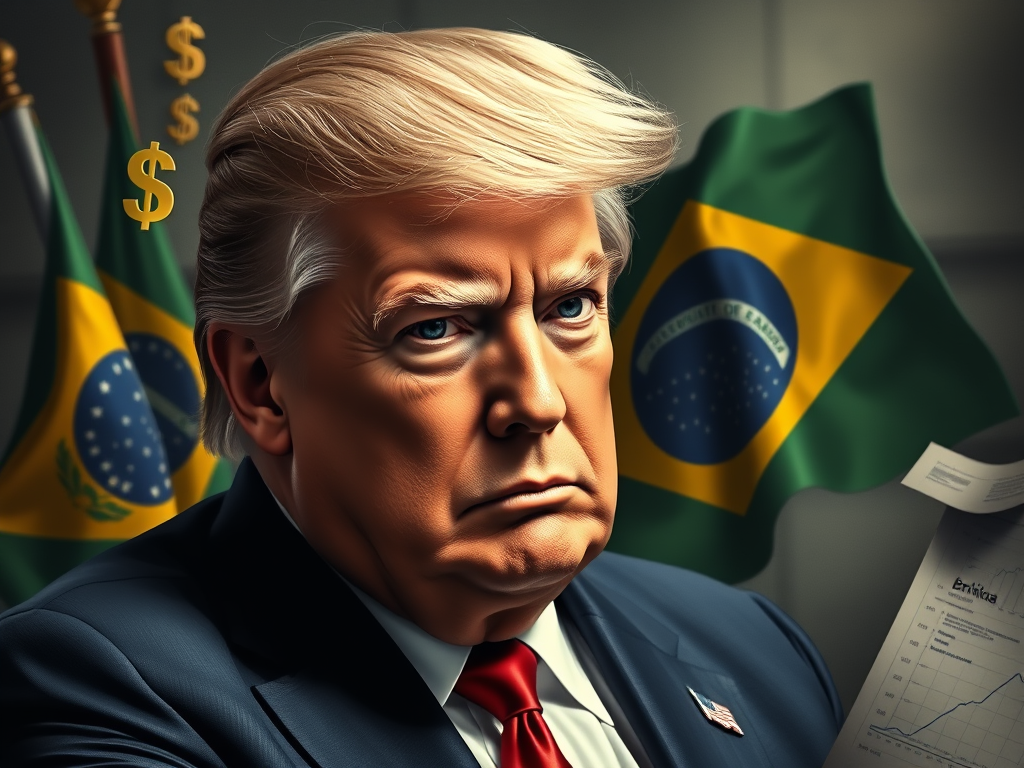
    In a surprising turn of events, Trump took to his favorite social media platform to announce that he is graciously reducing tariffs on all countries to a mere 10% for the next 90 days. This comes after his previous misleading descriptions of tariffs as “reciprocal.” However, China will now face a staggering 125% tariff on their exports to the U.S.   Get ready to pay more at Walmart, Target and the like. 

    Countries that exported more to the United States than they imported from American manufacturers were hit with tariffs higher than the 10% baseline. This disproportionately affected poorer countries, whose citizens cannot afford to purchase American goods. For example, Vietnam faced a “reciprocal” tariff of 46%, while Lesotho, a country Trump claimed to have never heard of, was slapped with a 50% tariff.

    The high tariff rate on Chinese goods may come as a shock to Americans accustomed to purchasing cheap household items made there. A T-shirt that once cost $9.99 at Walmart will now likely be priced at over $20. Let’s not forget the MAGA hats that are made in China, well that will also more than double. 

    Now, Trump claims he will negotiate with 75 countries. Is he really willing to give up his weekly golf games for this? How long will this charade last?  Given the track record of this administration incompetence that’s not a promising game plan. 

    In the end, prices will inevitably rise as China shows no signs of backing down. And if the tariffs are lowered, where is the revenue that Trump promised they would bring in? Oh, the mysteries of Trump’s trade policies.  He has lost it.  

    It appears this is just another scatter brain idea Trump didn’t think out. 

  • The Decline of America: MAGA Voters are to Blame!

    As I sit here on this Sunday, absorbing the news that surrounds us, one undeniable truth emerges: the America we once knew, the America our fathers fought for and built, is no more. This transformation, unfortunately, does not bode well for anyone except the wealthiest among us. The very individuals, voters, who championed the “Make America Great Again” movement are now unwittingly working against their own interests, blinded by their animosity towards the very principles that once made our nation great.

    This shift in our national identity will have far-reaching consequences. International trade will realign itself, because of the tarriffs, with the United States no longer at its core. Alliances will be formed without regard for our preferences. The dollar may lose its status as the world’s reserve currency. Our brightest minds and most innovative ideas may seek refuge in countries where the rule of law is steadfast, where dissent is not silenced, and where academic freedom is cherished.

    Europe, recognizing the changing landscape, will forge ahead without us. They will establish their own nuclear defense system, likely including Canada, Japan, and Australia in their alliance. The concept of the “free world” as we have known it will no longer encompass America. We will be left to drift, or worse, align ourselves with authoritarian regimes such as Russia or China.

    As Europe strengthens its internal defense industries, we will inevitably lose jobs and influnce. Our government, led by an economically ignorant president Trump and a shortsighted secretary of state, is failing us. The billionaire influencers, like Elon Musk, who undermine our global influence and the health officials who deny science are driving us towards a precipice.

    The age of America, as we once knew it, is coming to an end. And the blame lies squarely on the shoulders of those who believed in the false promises of MAGA and Trump. The consequences of their actions will reverberate for generations to come. Our children will be left with the ashes of once was the greatest country in history.

  • Dumbest’ Recession Ever: GOP Will Pay For Trump’s Tariffs

    Few Republicans are willing to defend the president’s tariffs, leaving the party vulnerable for the first time in Trump’s new term. The implementation of these tariffs marks a significant shift from the global trend of decreasing trade barriers, with economists warning that Americans could face thousands of dollars in increased prices each year, while the U.S. economy is expected to slow sharply.

    According to the Yale Budget Lab, the Trump administration’s tariffs could result in the average household facing an additional $3,800 in expenses this year. This includes a 10% universal tariff, higher tariffs on approximately 60 countries, as well as existing import taxes on steel, aluminum, and cars. Inflation is projected to soar to over 4%, up from the current 2.8%, with the economy facing minimal growth, as estimated by Nationwide Financial.

    The repercussions of these tariffs were felt on Thursday, as the S&P 500 index plummeted by 4.8%, marking its worst day since the pandemic began. The Dow Jones Industrial Average also took a hit, dropping over 1,600 points, causing the average 401 retirement account to lose over $8,000 in just one day.

    Economists predict that the average U.S. tariff could reach nearly 25% once fully implemented on April 9, surpassing levels seen in over a century and even exceeding the infamous 1930 Smoot-Hawley tariffs, which exacerbated the Great Depression.

    The impact of these tariffs will be particularly harsh on Asian countries, with duties on Vietnamese imports rising to 46% and on Indonesia to 32%. Some Chinese imports could face tariffs as high as 79%, affecting major U.S. import sources for shoes like Nike, which produced half of its shoes and one-third of its clothing in Vietnam last year.

    Best Buy’s stock plummeted by a staggering 17.8%, a devastating blow attributed to the global production of its electronics. United Airlines also suffered a significant loss of 15.6%, as fears of a weakening global economy deterred customers from traveling for business or leisure. Target, too, experienced a sharp decline of 10.9%, with concerns mounting over the financial strain on its customers amidst persistent inflation. The once thriving giants of the retail and travel industries now find themselves teetering on the edge of uncertainty, as the world grapples with economic turmoil.

  • How to ruin the US Economy in just three months

    President Donald Trump’s reckless and tumultuous economic policies are wreaking havoc on the economy, sending consumer sentiment into a downward spiral and increasing the likelihood of the United States plunging into a severe recession.

    In March, consumer sentiment took a nosedive, plummeting by 12% from February as individuals across the political spectrum expressed fears of a worsening economy in the near future. The looming uncertainty surrounding economic policy developments continues to weigh heavily on consumers, with a staggering two-thirds anticipating a rise in unemployment over the next year—the highest level since 2009.

    Adding to the mounting concerns, inflation rose for the fourth consecutive month in February, climbing by 0.4% even before Trump’s ill-advised tariffs took effect. Economists warn that these tariffs will only exacerbate price hikes, further straining the economy.

    Recent data has economists on edge, with fears mounting that Trump’s policies could push the economy over the edge. Both businesses and consumers are pulling back in response to the chaos emanating from the White House, fueling apprehensions of an impending economic crisis.

    Economic columnist Heather Long of The Washington Post has sounded the alarm, cautioning that a sharp decline in consumer spending could trigger a recession, given the economy’s heavy reliance on consumer activity. If consumers halt their spending—whether due to actual price increases resulting from Trump’s tariffs or mere speculation—it could spell disaster for the economy.

    Republicans are driving up costs, sabotaging the economy, and hurtling the nation towards a recession. The stakes are high, and the consequences dire. 

  • Let us not forget the values that once defined America

    The anguish we are witnessing today, fueled by Trump and Elon Musk, is truly staggering—the scale of global suffering and tragedy is beyond comprehension. For years, U.S. aid in Africa stood as a radiant beacon of hope for millions, delivering essential support for HIV prevention, vaccines, clean water, and food. This fostered goodwill towards America. Yet now, this crucial aid has been obliterated, and experts are sounding the alarm: if Trump persists on this reckless course, millions could face devastating consequences within just a year.

    The United States has poured invaluable resources into uncovering one of Russia’s most despicable war crimes: the heart-wrenching abduction of thousands of Ukrainian children for the abhorrent purpose of forced adoption by Russian families. The Conflict Observatory, a critical initiative backed by the State Department, assembled crucial data on these vulnerable missing children, key for any future efforts to reunite them with their devastated families. It’s utterly shocking that the State Department has abruptly terminated their contract, fueling fears that this vital database may have been carelessly erased forever. And disturbingly, Trump now chooses to align himself with our long-standing adversary, Russia, rather than standing up for the principles of democracy!

    In 2024, Donald Trump made a powerful comeback to the White House, surfing the tidal wave of a collective amnesia that swept across the nation. Despite his deeply troubling ties with foreign dictators, the disastrous mishandling of the COVID pandemic, and his blatant attempts to subvert the 2020 election, a staggering number of voters chose to bury these egregious transgressions in favor of addressing urgent issues like skyrocketing grocery and rent prices. Trump’s magnetic appeal to young voters, who had never witnessed a political landscape unmarred by his divisive politics, was a pivotal factor in his victory.

    The America of the past, despite its imperfections, was undeniably a beacon of hope and progress. Those who profess to tear it down, cloaked in the guise of restoring its former glory, are, in truth, pursuing a reckless and destructive agenda, Project 2025. Take Elon Musk as an example—a South African immigrant with no real ties to the America we once knew. They move forward with a carefree attitude, vowing to mend the havoc they wreak when the time comes, but the damage they inflict is far too grave to simply brush aside.

    It was a source of pride to be a nation that cared for HIV-infected babies in Africa, saving lives for mere pennies a day. It was a nation that prioritized compassion and humanitarian aid. Let us not forget the values that once defined us and strive to reclaim our identity as a nation that cares. Let’s Make America Great Again.

  • Supreme Court Chief Justice Warns Trump his Adminstrations violation of the law

    In recent days, the Trump Administration has faced significant legal setbacks as their actions have been deemed in violation of the law by the US Court system.

    Elon Musk’s attempt to dismantle USAID was ruled to likely violate the Constitution by a judge. Additionally, a judge has barred Trump’s EPA from reclaiming $20 billion in climate grants, and another judge has blocked Trump’s efforts to ban transgender troops.

    Now, Supreme Court Chief Justice John Roberts has issued a stern warning to Trump. In response to Trump’s calls for the impeachment of a judge who ruled against him, Chief Justice Roberts defended the federal courts. He stated that impeachment is not an appropriate response to judicial decisions, as there is a normal appellate review process in place for that purpose.

    Trump has been particularly fierce in his call for the impeachment of U.S. District Judge James Boasberg, following Boasberg’s bold decision to order two deportation flights to be turned around. Outraged, Trump invoked the Alien Enemies Act of 1798 in an attempt to justify the deportations, claiming that those on board were part of a violent Venezuelan gang. Yet, Boasberg stood firm, ruling that even if they were indeed gang members, a mere gang cannot be equated with the legal status of a hostile foreign government. The Trump Administration shockingly failed to provide any evidence to support their claims of gang membership!

    It is evident that the Trump administration is blatantly disregarding the orders of our court system, the very system that protects our rights. Regardless of personal opinions, we must uphold our system of rights that safeguards us all.

    If we fail to defend our rights, we risk losing them. Remember, might does not make right. We are governed by a system of laws, not by kings. Stand up for justice before it’s too late.

  • Trump Administration’s Lawlessness: A Threat to Democracy

    One of the fundamental principles we, as Americans, cherish is the belief in the rule of law. Judges and courts are meant to ensure that everyone is treated fairly and that no one is above the law.

    However, this weekend, the Trump administration has thrown this principle into chaos. The administration has brazenly defied federal court orders that sought to limit the deportation of immigrants without due process. Despite a judge’s order to halt the removal of Rasha Alawieh, a kidney transplant specialist at Brown University, authorities went ahead and deported her. Additionally, around 250 Venezuelan migrants were deported, in direct violation of another judge’s directive to turn American planes around.

    The Justice Department claimed that the order regarding Alawieh arrived too late for them to comply, while the White House argued that the judge had no jurisdiction over the deported Venezuelans. This blatant disregard for the law represents a dangerous escalation in Trump’s quest to establish an autocracy or even a monarchy.

    In a final act of lawlessness, Trump declared in the early hours of Monday morning that Biden’s preemptive pardons for Jan. 6 committee members are “void” because they were allegedly signed by autopen. This assertion is unequivocally false.

    The actions of the Trump administration this weekend paint a chilling picture of a leader who believes he is above the law and can act with impunity. The very fabric of our democracy is at stake, and it is imperative that we stand up against this assault on our legal system.

  • Musk’s history of endorsing antisemitic conspiracy theories and denying neo-Nazi violence

    Elon Musk’s latest social media post has ignited a fierce controversy, as he audaciously shifted the responsibility for the mass atrocities committed by tyrants like Stalin, Mao, and Hitler onto “public sector employees.” This shocking claim, made on Musk’s X account, seems to trivialize the unspeakable horrors inflicted by these infamous leaders while shamefully redirecting blame toward government workers. It’s revealing that Musk swiftly deleted the post.

    The post specifically references Stalin, Mao, and Hitler, highlighting the millions of lives lost under their brutal regimes. Stalin’s reign of terror in the Soviet Union, Mao’s disastrous policies in China, and Hitler’s genocide during World War II are well-documented historical tragedies that cannot be dismissed by blaming faceless bureaucrats.

    What makes Musk’s repost even more alarming is his current role as the head of the so-called Department of Government Efficiency, where he has been actively firing federal employees, including those in crucial roles at agencies like the National Weather Service and FEMA. This pattern of behavior raises concerns about Musk’s motives and the impact of his decisions on the functioning of the government.

    Furthermore, Musk’s history of endorsing antisemitic conspiracy theories and denying neo-Nazi violence adds another layer of disturbing behavior. His ongoing legal battle with a Jewish college graduate, whom he falsely accused of being a federal agent posing as a neo-Nazi, further underscores the troubling nature of his actions.

    It is evident that Elon Musk holds troubling beliefs and wields significant power through his influence on social media and within the federal government. The question remains: why is President Trump allowing someone with such controversial views and actions to have such a significant impact on the government and its employees? The implications of Musk’s actions are far-reaching and demand closer scrutiny and accountability.

  • Emptying Our Wallets: Why Trump Tariffs Hurt US Consumers

    For years, the debate around tariffs has raged, often framed as a tool to protect domestic industries and bring jobs back home. However, a closer look reveals a less palatable truth: tariffs, ultimately, hit the pockets of American consumers hard. While the intention might be noble, the reality is that these taxes on imported goods often translate into higher prices, reduced choices, and a weakened economy for everyone.

    So, how do tariffs negatively impact the average American? Here’s a breakdown:

    1. Higher Prices for Everyday Goods: This is perhaps the most immediate and noticeable effect. When a tariff is placed on imported goods like clothing, electronics, or even ingredients for our favorite foods, the cost of importing those goods increases. Businesses, often with tight margins, are left with two choices: absorb the cost (which can be unsustainable) or pass it on to the consumer in the form of higher prices.

    Think about that imported washing machine you were looking to buy. A tariff on imported steel, for example, increases the cost of the materials used to make it, driving up the retail price. Suddenly, that washing machine isn’t so affordable anymore. This applies to countless products we use daily, from smartphones to coffee beans.

    2. Less Choice and Reduced Competition: Tariffs protect domestic industries by making imported goods less competitive. While this sounds good on paper, it can stifle innovation and lead to complacency. Without the pressure of foreign competition, domestic companies may become less motivated to improve their products, offer competitive pricing, or explore new innovations.

    This translates to fewer choices for consumers. Instead of having a range of products to choose from, consumers might be stuck with fewer, potentially more expensive, options offered by a shrinking pool of domestic suppliers. This lack of competition ultimately limits consumer power and pushes prices higher.

    3. Supply Chain Disruptions and Increased Uncertainty: Modern supply chains are incredibly complex and interconnected. Tariffs disrupt these carefully orchestrated systems, forcing businesses to scramble for alternative suppliers, which can be time-consuming and costly. This disruption can also lead to shortages of certain goods, further driving up prices.

    Moreover, the uncertainty surrounding tariffs can scare businesses from investing and expanding. The threat of new tariffs or changes to existing ones makes it difficult for companies to plan for the future, leading them to delay investments, cut back on hiring, and ultimately hindering economic growth.

    4. Retaliatory Tariffs and Trade Wars: Tariffs rarely happen in isolation. When one country imposes tariffs on another, the affected country often retaliates with its own tariffs. This tit-for-tat escalation, known as a trade war, can severely disrupt global trade and damage economies on both sides.

    American farmers, for instance, have been significantly impacted by retaliatory tariffs on agricultural products. Reduced demand for their goods leads to lower prices and financial hardship, demonstrating the widespread impact of trade wars that ultimately impact consumers through higher grocery bills.

    5. Reduced Purchasing Power: Ultimately, the combined effect of higher prices, reduced choices, and economic uncertainty translates to a reduced purchasing power for American consumers. Every dollar spent on higher-priced goods is a dollar less that can be used for other necessities, savings, or investments. This can have a significant impact on household budgets, particularly for low- and middle-income families.

    While Trump often argues for their benefits in protecting domestic industries, the evidence suggests that the costs far outweigh the benefits, particularly for US consumers. Tariffs act as a hidden tax, eroding purchasing power, limiting choices, and disrupting the economy. A focus on free trade, fair competition, and policies that foster innovation will ultimately benefit American consumers far more than protectionist measures that leave us all paying the price.