Tag: politics

  • Trump and the Military Crossed a Line

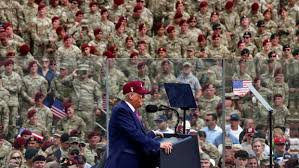
    Recent internal communications from the 82nd Airborne Division reveal a carefully orchestrated effort to shape the narrative around President Trump’s recent visit. Documents indicate that soldiers were selectively chosen to appear behind Trump based on their political affiliations and physical characteristics. The men chosen to stand behind him during the event were predominantly male. Their enthusiastic laughter and applause during Trump’s partisan speech marked a startling and uncommon moment where military personnel publicly engaged in overt political partisanship.

    One source disclosed a message to troops indicating that those who held opposing political views to the current administration and preferred not to be present should discuss with leadership to not attend. This situation unfolded at Fort Bragg, North Carolina, showcasing a stark departure from the usual presidential visit, which is typically characterized by decorum and neutrality. Instead, Trump delivered a speech filled with partisan rhetoric, drawing boisterous responses from soldiers behind him, thereby blurring the critical line between military duty and political engagement.

    Compounding the unconventional nature of the event, a retailer from Tulsa, Oklahoma, sold pro-Trump merchandise on-site. Allowing the sale of explicitly partisan items on an Army base likely violates numerous Defense Department regulations designed to uphold the military’s longstanding commitment to political neutrality, a commitment the Army has historically taken great care to maintain.

    Trump has taken partisanship further than any prior president, treating gatherings with troops as campaign events and openly criticizing his rivals. Retired Army Lt. Gen. Russel Honore, renowned for his role in coordinating military aid during Hurricane Katrina, labeled the speech “inappropriate,” asserting he had never witnessed anything like it during his 37 years of service.

    With military presence in LA and directives from the President aimed at political military initiatives, it is essential for Americans to recognize the gravity of this situation. The military’s involvement in such overtly partisan activities poses a significant threat to our constitutional principles, marking a dangerous departure from the ideals of neutrality and professionalism that have long defined our armed forces.

  • Army Values that Trump does not Support or Understand

    On Saturday evening, the capital of the United States will take on an appearance reminiscent of North Korea’s Pyongyang, China’s Beijing, and Russia’s Red Square, featuring tanks and missile launchers parading through the streets. This spectacle—a $45 million “birthday gift” to himself, funded by taxpayers—highlights a troubling trend in American politics.

    The U.S. military is designed to remain apolitical, standing apart from politics and the whims of elected officials. This principle is what sets America apart from other nations and contributes to its greatness. 

    Kentucky Republican Senator Rand Paul expressed skepticism about the parade’s symbolism, telling HuffPost, “I don’t really think the symbolism of tanks and missiles is really what we’re all about. If you ask me about a military parade, the first images that come to mind are of the Soviet Union and North Korea.” 

    Interestingly, this monumental event aligns with the 250th birthday of the U.S. Army, overshadowing Donald Trump’s own 79th birthday. Isn’t it ironic how the mainstream media has made such a fuss over Biden’s age at 81, while we often overlook that Trump is just 79? Let’s not ignore the math here.

    Although both the Navy and the Marines also celebrate significant anniversaries this year, there has been no discussion of organizing lavish $45 million events for them. This raises questions about why only Trump’s birthday seems to warrant such extravagant recognition.

    The military parade appears to promote an authoritarian display of power, further emphasized by the unnecessary deployment of U.S. troops to police American streets, as confirmed by the Los Angeles police chief. 

    Historically, the United States has held very few military parades, the last occurring in 1991 during George H.W. Bush’s presidency, after American forces pushed Iraqi dictator Saddam Hussein out of Kuwait—an event justifying a celebration of military success.

    Despite Trump’s frequent proclamations of support for the armed forces, his history reveals a stark disregard for military service and its values. He evaded the Vietnam War draft, citing “bone spurs,” with a doctor who was a family friend providing the diagnosis. Moreover, during his presidential campaign in 2015, Trump insulted Arizona Senator John McCain—an esteemed veteran who endured nearly six years of imprisonment and torture—by claiming he was not a hero simply because he was captured, stating he preferred those who avoided capture. Reports from his former chief of staff indicate that Trump referred to fallen military members as “suckers” and “losers,” demonstrating a clear lack of respect for their sacrifices.

    Trump also broke the long-standing tradition of a commander-in-chief personally shaking hands with every graduating cadet at a military academy, leaving West Point immediately after his speech to return to his golf resort in New Jersey. In contrast, Joe Biden devoted time to congratulating each graduate last year, spending 70 minutes with them—reflecting a commitment to honoring military service that Trump failed to show during his tenure, even when he had participated in similar ceremonies in the past.

    As we witness this parade today, it’s crucial to honor the Army’s 250 years of service to our nation and celebrate the values they embody—principles that Trump himself seems to overlook or misunderstand.

  • Trump’s False Patriotism: His Grand Parade Satruday

    On Saturday, the nation is slated to witness a grand military parade featuring nearly 6,600 soldiers, 150 military vehicles, and a range of aircraft. Estimated to cost between $25 million and $45 million – a figure likely understating the total impact – this event is presented as a celebration of the United States Army’s 250th anniversary, coincidentally falling on President Donald Trump’s 79th birthday.

    Yet, this planned spectacle is a departure from the norm. Contrary to popular imagination, the U.S. military does not typically conduct large-scale public parades. Those public events that do occur, such as Fleet Week or ceremonial displays, are usually recruitment-focused and deliberately nonpolitical. True military parades on this scale are reserved for moments of national triumph, occasions like the celebrations following the victories in 1946 or 1991, designed to honor those who fought and won major wars. This parade lacks any such victory to celebrate.

    The absence of a traditional justification, coupled with the substantial expense, points to a different purpose. President Trump, who has often praised authoritarian figures, appears to be leveraging this display of military power to enhance his “tough-guy” persona at home and project strength abroad.

    This politicization of the military is deeply problematic, threatening the institution’s apolitical standing and its loyalty to the Constitution. While presidents naturally interact with and represent the military, President Trump’s use of it to validate harsh partisan positions crosses a critical line, fueling concerns that he seeks personal allegiance over fidelity to the Constitution.

    Adding a layer of controversy, this effort to use the military for political gain comes from a figure who reportedly took significant steps to avoid military service himself. According to testimony from his former lawyer, President Trump admitted to inventing a medical reason to evade the Vietnam draft, stating he “wasn’t going to Vietnam.” This stark contrast between alleged personal draft avoidance and the public deployment of military symbols for political purposes raises questions about the sincerity of the patriotism on display, suggesting it may be artificial and politically motivated.

  • Military Deployment in LA: Trump’s Authoritarian Move Exposed!

    The Trump administration’s brazen move to federalize the California National Guard, deploying them to suppress protests against ICE detentions in Los Angeles without any request from the state’s governor, illustrates a chilling power grab. This reckless decision comes despite local law enforcement’s reassurances that the situation was well in hand, revealing a disturbing intersection of Trump’s authoritarian tendencies and his campaign’s most alarming promises.

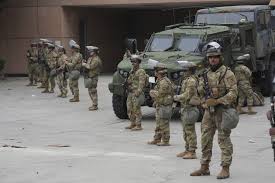
    The decision by the Pentagon to activate 700 Marines from the Marine Corps Air Ground Combat Center in Twentynine Palms, California, to accompany the 4,000 federalized National Guard troops in occupying sections of Los Angeles represents a significant commitment to deploying military forces within the United States. This action aligns with Trump’s ongoing declarations throughout the 2024 campaign cycle regarding his intention to utilize military personnel to suppress civil unrest.

    Trump, the mastermind behind the 2020 coup attempt and the instigator of a deadly insurrection at the Capitol, now has the audacity to claim that protesters in Los Angeles are staging an insurrection. This display of military might is nothing but a calculated move to flex his muscles and stifle dissent—an alarming tactic to reclaim control and intimidate those who dare oppose him.

    Like a quintessential bully, Trump reveals his cowardice at every turn. Humiliated by powerful adversaries—China, Harvard, and the federal courts—he has resorted to waging war on the most vulnerable among us, specifically targeting a progressive state like California, where the overwhelming majority stand firmly against him.

    The deployment of the military to Los Angeles comes at a time when state and local officials have deemed it unnecessary. This manufactured crisis is a product of Trump’s creation, and the presence of federally controlled troops on American streets is a historically ominous sign of social crisis.

    The Trump administration has waged a ruthless campaign to punish Democratic cities and states, a vendetta that was brewing long before he even stepped back into office. A shocking expose from November revealed that Trump and his inner circle were deep in discussions about mercilessly cutting federal funding to defiant cities like Chicago—bold bastions of resilience that have dared to stand up against his heartless deportation agenda.

    Trump and his cohorts are fervently seeking to unleash chaos and bloodshed on our streets. On Truth Social, Trump proclaimed, “Looking really bad in L.A…. BRING IN THE TROOPS!!!” The events over the weekend have gifted Trump a golden opportunity to attack a blue state, fabricate a dramatic spectacle in its largest city, and dangerously blur the boundaries between a constitutional president and a would-be monarch.

  • Dictator Trump: Patriotic Americans Must Stand for the Constution

    Over the weekend, President Trump ordered the deployment of thousands of National Guard troops to Los Angeles in an effort to suppress protests against his aggressive and unlawful mass deportation campaign. This decision ignited a clash with California’s state government, which neither requested the military assistance nor supported the deployment.

    The largely peaceful protests in Los Angeles against the Trump administration’s deportation policies have now entered their fourth day, but the response to them is generating significant controversy. Specifically, the decision to potentially deploy up to 2,000 troops under federal control to the streets of LA has drawn sharp criticism, particularly from former top military figures. They argue that this move constitutes a violation of the military’s long-held commitment to remain separate from domestic politics, except in the most extreme and justifiable circumstances.

    California Governor Gavin Newsom, a Democrat, announced his intention to sue Trump, labeling the president a “dictator” who is deliberately “fanning the flames” of tension and potential violence in Los Angeles. Newsom also highlighted the broader implications of the June 7 memorandum Trump signed, emphasizing that its reach extends beyond California.

    The memorandum, titled Department of Defense Security for the Protection of Department of Homeland Security Functions, grants Pentagon Secretary Pete Hegseth the authority to “employ any other members of the regular Armed Forces as necessary to augment and support the protection of Federal functions and property in any number determined appropriate in his discretion.” This marks an unprecedented assertion of federal military power across the nation.

    The core concern is the perceived politicization of the armed forces. Critics argue that deploying troops against the wishes of the state’s governor, and in the absence of a clear and genuine civil emergency, appears to be a politically motivated action by the Trump administration. This has triggered alarm within military circles, where the ideal of remaining apolitical is deeply ingrained. As one source noted, the deployment “seems like a political forcing – a forced use of the military by Trump because he can.”

    Recognizing the profound and far-reaching consequences of Trump’s actions, courageous demonstrators across the United States—from Portland, Maine, to the vibrant streets of Houston, Texas, and the resilient heart of Salt Lake City, Utah—rallied with unyielding solidarity alongside the brave protesters in California who are courageously facing military repression.

    Governor Newsom underscored the illegality and immorality of commandeering a state’s National Guard without the governor’s consent, and he confirmed plans to file a lawsuit against the president on Monday in response to the extraordinary deployment. 

    Trump himself has previously made no secret of his willingness to utilize the military for domestic purposes. During his reelection campaign last year, he repeatedly told supporters that, if re-elected, he would deploy the armed forces against what he termed “the enemy within.” This history further fuels the perception that the troop deployment is not a response to a genuine emergency, but rather an attempt to use the military to suppress dissent and further a political agenda.

    Trump’s use of force and intimidation tactics reflects authoritarian tendencies, signaling a constitutional crisis in the United States.

  • KILL the BILL

    Elon Musk has gone beyond merely labeling the bill a “disgusting abomination”; he has made it clear that he intends to actively oppose it.

    The former White House advisor has intensified his criticism of the large Republican bill that proposes significant tax cuts and Medicaid reductions, urging Americans to contact their lawmakers and oppose the legislation. While Musk’s reasons differ from those of Democrats, both sides share a common goal: to avoid increasing the national debt further. Historically, Republican presidents have contributed slightly more to the national debt per term than their Democratic counterparts, according to inflation-adjusted data from the U.S. Treasury Department and the Bureau of Labor Statistics dating back to 1913. Notably, President Trump is the largest contributor, having added an estimated $7.1 trillion to the national debt during his first term from 2016 to 2020.

    This legislation is intended to represent the full scope of President Donald Trump’s domestic policy agenda for a his second term, making Musk’s strong opposition—just one week after stepping down as a senior adviser to the president—particularly noteworthy.

    The Republican bill combines over $4 trillion in tax cuts and new spending with less than $2 trillion in cuts to Medicaid and other social programs, resulting in a net deficit increase of $2.4 trillion, according to the Congressional Budget Office. The tax cuts predominantly benefit the wealthy and corporations, which some argue are not paying their fair share.

    On Wednesday, Musk posted, “A new spending bill should be drafted that doesn’t massively grow the deficit and increase the debt ceiling by 5 TRILLION DOLLARS.”

    Musk is asking the public to trust someone who can land rockets vertically and develop self-driving cars more than the Republican lawmakers who passed this bill by a single vote under pressure from Trump and wealthy interests.

    Now, the question remains whether the Republican-controlled Senate will stand firm or yield to Trump and his affluent allies.

  • Blue States: Net Contributors to the Federal Tax System

    Analyses of the financial relationship between states and the federal government consistently reveal a significant, though often overlooked, pattern: states that predominantly vote Democratic tend to contribute more in federal taxes than they receive back in federal spending and benefits, while states that predominantly vote Republican often receive more than they contribute. This effectively means that “blue states” are subsidizing “red states.”

    Numerous studies examining federal tax receipts versus federal expenditures at the state level have repeatedly demonstrated this disparity. The reasons for this imbalance are multifaceted. Many Democratic-leaning states contain major metropolitan areas with high concentrations of wealth and income, leading to higher overall federal tax contributions. Conversely, many Republican-leaning states have economies that rely more heavily on federal spending, such as military bases, government contracts, and direct aid programs.

    This fiscal dynamic is evident in various federal programs and investments. For instance, under traditional Medicaid programs, the federal government covers a larger share of costs in several red states, including Texas, Florida, Georgia, Louisiana, and West Virginia. Furthermore, while blue states initially received a larger share of COVID-19 relief funds, analyses indicate that red states have disproportionately benefited from significant Biden-era legislative investments like the Inflation Reduction Act (IRA), the CHIPS Act, and the Infrastructure Investment and Jobs Act (IIJA), sometimes receiving benefits at a much higher rate.

    Looking at overall flows, data from 2018 to 2022 provides a clear illustration of this pattern. During this period, individuals and organizations located in blue states collectively accounted for nearly 60% of all federal tax receipts but received only 53% of all federal spending directed back to states in the form of direct payments, grants, contracts, or wages.

    Despite this consistent flow of resources from blue states to red states, political discourse and actions sometimes appear to contradict this fiscal reality. Examples include past threats from figures like President Donald Trump and the GOP to block disaster relief for blue states like California, proposals to impede the return of federal relief funds for state and local taxes, and opposition to the very industrial investments from Biden-era legislation that benefit red states. This fiscal dynamic exists alongside the political power structure where red states often hold significant influence in Congress, partly facilitated by gerrymandered districts.

    The data consistently shows that states predominantly voting Democratic are net contributors to the federal system, effectively providing a fiscal transfer to states predominantly voting Republican. This reality is a crucial, though often understated.

  • GOP Views on Healthcare: A Reality Check – Medicaid

    Many observers believe the Republican Party fundamentally misunderstands the healthcare challenges facing everyday Americans. This can make it difficult to comprehend why voters, particularly those in need of support, continue to elect them, especially after hearing statements like the one from Senate Majority Leader John Thune.

    Senator Thune remarked, “the best healthcare is a job…

    This perspective strikes critics as out of touch with the current economic landscape. It seems unlikely that someone benefiting from generous, taxpayer-funded healthcare fully grasps the reality for millions. The truth is, an increasing number of jobs, particularly contract positions, offer no health coverage. Even jobs that do offer insurance often provide plans with sky-high costs and limited benefits. This isn’t just bad luck; many see it as a result of corporations prioritizing profits over employee well-being.

    The vital role programs like Medicaid. Medicaid is a lifeline for the elderly, low-wage workers, and a critical support for rural hospitals, often serving populations with limited other options.

    Adding to the perception of a disconnect, other GOP statements have caused controversy, such as Sen. Joni Ernst’s reported comment at a town hall that “we are all going to die.” Critics find such remarks dismissive or lacking in appropriate context.

    It’s a striking paradox that states and communities most reliant on programs like Medicaid often lean heavily Republican or MAGA in their voting patterns. They are the ones who most need government assistance, yet they support the party that often seeks to reduce it. This discrepancy between rhetoric, policy, and the needs of their own constituents is a source of confusion and frustration for many.

  • Robert F. Kennedy Jr.’s Impact on Vaccine Policy: Negative

    Once again, Robert F. Kennedy Jr. is allowing his personal, unproven anti-vaccine views to influence medical policy within the U.S. Department of Health and Human Services (HHS). He is creating new obstacles that will make it more difficult for people who want vaccinations to access them. 

    Recently, Kennedy bypassed the usual procedures to change recommendations regarding COVID-19 vaccinations. Additionally, he canceled hundreds of millions of dollars in pledged funding to Moderna, the mRNA vaccine developer, which was intended for developing, testing, and purchasing vaccines for pandemic influenza. Kennedy has been openly critical of mRNA vaccines, and HHS confirmed that the funding was withdrawn.

    Kennedy has a longstanding history of opposing vaccines. In 2021, he petitioned the Food and Drug Administration (FDA) to revoke the emergency use authorizations of COVID-19 vaccines and threatened legal action if the agency continued to approve them.

    “We’re witnessing a complete circumvention of the nation’s leading public health agency,” said Richard Besser, former acting director of the CDC and president of the Robert Wood Johnson Foundation.

    It’s important to recall Kennedy’s role during the measles outbreak, when cases surged past 700 and a second young child died in Texas from measles. Despite the availability of a safe and effective vaccine to prevent such outcomes, Kennedy’s vaccine skepticism has contributed to declining vaccination rates.

    Furthermore, Kennedy has not implemented other recommendations from the CDC’s vaccine advisory panel, including the introduction of a new meningitis vaccine and expanding RSV vaccine eligibility to high-risk adults aged 50 to 59.

    The vaccine advisory panel is not scheduled to vote on COVID-19 vaccine recommendations until late June, potentially causing delays for manufacturers in preparing vaccines for the upcoming fall season.

    Many warned former President Trump against appointing Robert F. Kennedy Jr., cautioning about his controversial views. However, it appears that Kennedy’s public support for Trump’s presidency was linked to promises of him being appointed to HHS.

  • GOP Bill Provision Threatens Legal Challenges to Trump

    Concern is intensifying over a single paragraph hidden deep within the GOP bill, as its implications may ripple through our society in unprecedented ways.

    A recently passed spending bill by the GOP-controlled House of Representatives contains a concerning provision that could significantly hinder legal challenges against the Trump administration. This clause would require individuals challenging the administration to post a bond, a financial burden that many cannot afford. As a result, it would effectively restrict the ability to contest the powerful actions of one of the most formidable figures in the country to those who are wealthy.

    In the text found on pages 562 and 563 of the 1,116-page bill, concerns have been raised for reasons unrelated to America’s budget, safety-net programs, or national debt. The cited paragraph references a federal rule regarding civil court procedures, which mandates that any individual seeking an injunction or temporary restraining order to prevent an action by the Trump administration must post a financial bond.

    Democracy watchdogs are alarmed by this provision, fearing it will create an environment where only affluent individuals or entities can afford to stand up against an administration that has repeatedly demonstrated its contempt for oversight and judicial authority. The provision would increase the costs associated with pursuing legal actions against Trump’s policies, particularly for those seeking injunctions against presidential orders or directives. This added financial hurdle represents a clear tactic to discourage opposition and protect the administration from accountability.

    By implementing this financial barrier, the intention to shield the Trump administration from judicial scrutiny becomes evident. Both the House and the Senate must reject this measure to uphold the integrity of judicial power and ensure that all individuals have the ability to challenge governmental overreach, regardless of their financial status.