Tag: politics

  • Why Renaming the Kennedy Center After Trump Is Illegal

    Blue Press Journal – The John F. Kennedy Center for the Performing Arts, a iconic cultural institution in Washington, D.C., was established by an act of Congress in 1964 to honor the late President John F. Kennedy and his family’s legacy. Recently, former President Donald Trump’s proposal to rename the center after himself has sparked legal and political controversy, with experts affirming that the move is not only highly improbable but technically illegal. Here’s why. 

    1. Congressional Legislation and Legal Protections
    The Kennedy Center’s name is enshrined in federal law, as it was created by an act of Congress. Renaming a federal building or institution requires legislative action under the Federal Property and Administrative Services Act of 1949 (40 U.S.C. § 5343), which mandates that significant name changes must be approved by Congress and signed into law by the president. Since the Kennedy Center’s establishment was codified by statute, altering its name would demand a new act of Congress—a process outside the president’s unilateral authority. 

    2. Restrictions on Honoring Living Individuals
    Federal policy, including the Antidefamation League’s (ADL) Guidelines for Naming Federal Properties, prohibits naming publicly funded institutions after living individuals, including current or former heads of state, without extraordinary justification. This policy aims to preserve the neutrality and historical integrity of federal landmarks. Proposing to name the Kennedy Center after a sitting president like Trump directly conflicts with these principles, as does the idea of honoring a living person in a structure tied to arts and culture. 

    3. Precedent and Political Unlikelihood
    The Kennedy Center is a longstanding tribute to a U.S. president and a symbol of American artistry. Congress has repeatedly reaffirmed its name, and no precedent exists for renaming such an institution to honor a contemporary political figure. Even if Congress theoretically supported Trump’s request (which is politically untenable), the process would require bipartisan agreement and legislative action—highly improbable in the current climate. 

    4. Government Speech and Legal Precedents
    The Supreme Court’s 2015 ruling in Walker v. Texas Division, Sons of Confederate Veterans clarified that the government may regulate the use of its name in official contexts, including monuments and buildings, to maintain neutrality and public trust. Renaming the Kennedy Center after a partisan figure would risk violating these principles, potentially infringing on constitutional rights tied to government speech. 

    Conclusion
    While Trump’s suggestion highlights the divisiveness of modern politics, the legal reality is clear: renaming the Kennedy Center requires Congressional approval, which is nonexistent, and violates federal policies protecting the integrity of historic institutions. For now, the Kennedy Center’s name remains legally protected—a lasting tribute to its namesake and the arts community it serves. Trump’s request, though emblematic of his “America First” rhetoric, cannot override the constitutional and legislative safeguards that preserve the nation’s cultural heritage.

  • President Trump’s Speech: A Rambling, Fact-Free Diatribe that Ignores the Real Issues

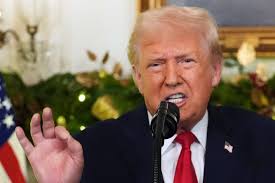
    Blue Press Journal – On Wednesday, President Trump took to the stage to deliver a speech that was more akin to a campaign rally than a presidential address. The speech was a meandering, fact-free diatribe that failed to address the real issues facing the country. Instead, it was a laundry list of self-congratulation, exaggeration, and outright lies.

    One of the most glaring omissions from Trump’s speech was any discussion of the real issue with his economic policies: their cost. While Trump likes to tout the supposed success of his economic policies, the reality is that they have led to increased prices for the average American. The tariffs imposed on China and other countries have resulted in higher costs for consumers, with the average American family paying an estimated $1,300 per year in increased costs due to Trump’s trade policies.

    Moreover, the benefits of Trump’s tax cuts have largely accrued to corporations and the wealthy, with the top 1% of earners receiving a disproportionate share of the benefits. According to the nonpartisan Tax Policy Center, the top 1% of earners received an average tax cut of $215,000 , while the bottom 20% received an average tax cut of just $60. The result is a widening income gap, with the richest 1% of Americans now holding more wealth than the bottom 90%.

    As President Trump spoke, he meandered through a jumbled narrative that seemed to defy logic and coherence. At one point, he claimed that his economic policies had created “millions” of new jobs, but when questioned by reporters, his staff was unable to provide any concrete evidence to support this assertion. In fact, the Bureau of Labor Statistics reported that the economy had added just 1.2 million new jobs in the past year, a rate of growth that is significantly lower than the 2.5% average under the previous administration.

    Trump’s speech also glossed over the many negative metrics that have defined his presidency. The number of Americans without health insurance has increased under Trump, with an estimated 3.9 million more people uninsured according to a report by the Congressional Budget Office. Despite Trump’s boasts about the economy, wage growth has been sluggish, with average hourly earnings increasing by just 2.8% over the past year, according to the Bureau of Labor Statistics.

    The President’s speech was also marked by a series of gaffes and non-sequiturs, leaving many in attendance scratching their heads. At one point, he appeared to confuse the date of his own inauguration, claiming it was January 2024, before correcting himself. Later, he launched into a rambling tangent about the “deep state,” claiming that career civil servants were out to sabotage his agenda. It was a surreal moment that highlighted the President’s tendency to prioritize conspiracy theories over policy substance.

    Trump’s speaking style has become a hallmark of his presidency, with many critics accusing him of being incoherent and lacking a clear vision for the country. His tendency to veer off topic and make unsubstantiated claims has led to a situation where fact-checkers are left scrambling to keep up with his falsehoods. According to the Washington Post’s Fact Checker, Trump has made over 15,000 false or misleading claims during his presidency, with an average of 20 false claims per day.

    Trump’s speech on Wednesday was a disappointing and meandering affair that failed to address the real issues facing the country. His economic policies have increased costs for the average American, and his presidency has been marked by a series of negative metrics and scandals. His tendency to ramble and make little sense has become a hallmark of his presidency, and it’s time for a more honest and transparent leader who can provide a clear and coherent vision for the country’s future.

    Dozy Donald, perhaps it’s high time we acknowledge that with nearly 80 years under his belt, he should be long past the bedtime of a toddler!

  • Uncovering Elise Stefanik’s Ties to the New York Young Republican Club: A History of Controversy

    Blue Press Journal – As New York Representative Elise Stefanik announces her candidacy for Governor, her past connections to the New York Young Republican Club (NYSYRC) are coming under scrutiny. The controversy surrounding the organization’s ties to racists and white supremacists has raised questions about Stefanik’s judgment and associations. In this blog post, we’ll examine Stefanik’s history with the NYSYRC, their support for her and her members, and the implications of her connections to the organization.

    A History of Controversy

    In October, the NYSYRC made national headlines when leaked screenshots from a private group chat revealed racist and vitriolic language used by its top members. The controversy deepened when it was discovered that the organization had invited individuals with ties to Nazism to their annual party. Despite the backlash, Stefanik has attempted to distance herself from the organization.

    However, a review of the NYSYRC’s website in October revealed that Stefanik’s name was listed as a member, although it has since been removed. According to a club announcement, Stefanik “formally joined” the group in 2022. The organization’s ties to Stefanik are undeniable, and her attempts to scrub her history with the group have been unsuccessful.

    The New York Young Republican Club is under scrutiny for hosting far-right figures and AfD politicians at its annual gala, shortly after its state-level counterpart was disbanded over leaked racist messages.

    • Gala Guest List: The NYYRC’s December 2025 gala at Cipriani Wall Street drew intense criticism due to the attendance of individuals such as white nationalist leader Jared Taylor, and a streamer known for making antisemitic content.
    • Hosting Far-Right German Politicians: The club hosted Markus Frohnmaier, a lead representative for external affairs of Germany’s far-right AfD party. The AfD has been labeled an extremist group by German authorities, and the NYYRC was criticized for celebrating their success.

    Support from the NYSYRC and its Members

    The NYSYRC has a history of supporting Stefanik and her members. In various social media posts and statements, the organization has expressed its admiration for Stefanik’s conservative values and her leadership. For example, on their Twitter/X account, the NYSYRC praised Stefanik’s efforts to “stand up to the radical left” (@NYSYoungGOP, October 2022).

    Moreover, Stefanik has received endorsements from prominent members of the NYSYRC. In a Facebook post, NYSYRC member and Chair, Nicholas LaPorte, expressed his support for Stefanik’s re-election campaign (facebook.com/NYSYoungGOP, November 2022).

    Implications of Stefanik’s Connections to the NYSYRC

    As Stefanik launches her gubernatorial campaign, her connections to the NYSYRC raise serious questions about her judgment and values. The organization’s ties to racists and white supremacists are a stain on its reputation, and Stefanik’s attempts to distance herself from the group have been unconvincing.

    In a statement, Stefanik claimed that she was “unaware of the group’s extremist views” when she joined. However, this claim is dubious, given the organization’s history of controversy and the fact that Stefanik has been a prominent figure in New York politics for years.

    As Elise Stefanik seeks to become the next Governor of New York, her connections to the New York Young Republican Club are a liability. The organization’s ties to racists and white supremacists are a serious concern, and Stefanik’s attempts to scrub her history with the group have been unsuccessful. Voters must carefully consider Stefanik’s judgment and values in light of her associations with the NYSYRC.

  • The Accountability That Republicans Still Refuse to Face

    Former special counsel Jack Smith delivered a blunt truth

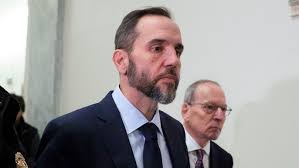
    Blue Press Journal (DC) – For years, congressional Republicans have twisted themselves into knots to defend Donald Trump from any semblance of accountability. They’ve dismissed investigations as “witch hunts,” undermined the justice system, and painted Trump as a victim of political persecution. But this week on Capitol Hill, former special counsel Jack Smith delivered a blunt truth that slices through the endless spin: Donald Trump is facing criminal charges because of Donald Trump — and no one else. 

    Smith, in testimony before lawmakers, made clear that the decision to indict was his, but the evidence was Trump’s own doing. “The basis for those charges rests entirely with President Trump and his actions,” Smith explained. He laid out, point by damning point, the proof his team had gathered: beyond a reasonable doubt, Trump engaged in a criminal scheme to overturn the 2020 election and block the lawful transfer of power. And not just in the abstract — in the chaos of January 6, the violence at the Capitol became another tool in Trump’s hands. Smith revealed that Trump and his associates sought to exploit that violence, calling members of Congress to pressure them into delaying the certification of Joe Biden’s victory. 

    These weren’t just bad decisions or political miscalculations; they were deliberate acts, taken with full knowledge of their consequences. Smith also detailed Trump’s willful retention of highly classified documents after leaving office. These weren’t locked away in a secure facility — they were stashed at his Mar-a-Lago social club, including in a bathroom and a ballroom where events were held. The image is almost surreal: national security secrets sitting a few feet away from the clink of champagne glasses and the hum of party chatter. 

    Yet, despite this mountain of evidence, congressional Republicans continue to shield Trump. They have attacked prosecutors, minimized the seriousness of the charges, and, in some cases, openly pledged to dismantle the very institutions tasked with enforcing the law. Their loyalty is not to the Constitution, nor to the peaceful transfer of power, but to a man who sought to break both. 

    Smith’s testimony strips away the excuses. No deep-state plot forced Trump to incite an insurrection. No partisan vendetta compelled him to hide classified documents in a bathroom. These were his choices, his actions, his responsibility. The tragedy — and danger — is that a major political party remains committed to helping him escape the consequences.

  • Trump’s Economic Illusions Crumble: A Stark Reality in the November Jobs Report As Unemployment Increases

    Blue Press Journal – The November 2025 jobs report delivered a sobering truth about the U.S. labor market—unemployment rose to 4.6%, the highest level since September 2021, and the broader U-6 unemployment rate also climbed, signaling rising involuntary part-time work and economic hardship. For Americans grappling with stagnant wages and a faltering economy, these numbers are not just statistics—they’re a reflection of the consequences of Donald Trump’s economic policies, which prioritized corporate tax cuts and deregulation over working-class security. 

    Under Trump, the narrative of a “tremendous” economy hinged on misleading optimism. Tax cuts for the wealthy and big corporations promised a boom, yet the results tell a different story. While the official unemployment rate is still relatively low, the U-6 rate (at 8.2%, per BLS trends) reveals a deeper crisis.

    The labor force participation rate of 62.5%—broadly unchanged—illuminates a stagnation Trump’s policies failed to address. By neglecting investments in education, infrastructure, and workforce development, his administration left millions in a limbo where part-time work and unemployment are not choices but necessities. Meanwhile, the 7.8 million unemployed Americans represent families facing real, lived struggles despite Trump’s relentless focus on superficial job growth metrics. 

    Critics of Trump often cite his erratic leadership, but the November report lays bare the long-term damage of his “America First” agenda. The labor market’s lack of momentum and the growing divide between official unemployment and the U-6 reality expose a disconnect between elite economic interests and everyday workers. Trump’s legacy, it seems, is not a robust economy but a patchwork of delayed fixes and inflated promises. 

    As the nation grapples with these numbers, one question remains: Why did a pro-business administration fail to deliver broad-based prosperity? The answer lies in policies that prioritized tax giveaways over job quality, deregulation over worker protections, and rhetoric over real progress. The November jobs report isn’t just a data point—it’s a indictment of a flawed economic vision that left too many behind. 

    Sources: U.S. Bureau of Labor Statistics

  • Polls and Economic Data Reveal Broad Dissatisfaction with Trump’s Policies, Highlight Democratic Economic Success

    Blue Press Journal A Year of Economic Reflection

    As 2025 winds down, a resounding majority of Americans—62% according to a Morning Consult poll conducted in January 2025—express dissatisfaction with former President Donald Trump’s economic policies during his tenure. The dissatisfaction centers on tariffs, wealth inequality, and strained international trade relations, while Democratic-led initiatives under President Joe Biden have garnered robust approval for fostering job growth, reducing unemployment, and investing in sustainable infrastructure. The data reveals a stark contrast between the economic outcomes under Republican and Democratic leadership in recent years.


    Why Trump’s Tariffs and Policies Faced Backlash

    1. Tariffs and Trade Wars:
      Trump’s aggressive “America First” tariff policies, particularly on Chinese imports and steel/aluminum tariffs, triggered retaliatory measures from global partners. Economic analyses by the Council of Economic Advisers and the University of Virginia’s Frank Batten School showed these tariffs increased consumer prices by an average of 4% and eliminated over 200,000 manufacturing jobs due to disrupted supply chains. The U.S. manufacturing sector, once a Trump campaign promise of revival, saw a 1.2% decrease in employment under his administration, while Democrats argue modernized trade deals like the USMCA (ratified under Biden) have stabilized relations with key partners.
    2. Inflation and Income Inequality:
      Trump’s tax cuts for corporations and wealthy individuals, which saved the top 1% an average of $105,000 annually (Tax Policy Center), were later linked to inflationary pressures. Despite initial claims of economic growth, the U.S. inflation rate has peaked —amid persistent supply chain disruptions and energy crises exacerbated by underinvestment in renewable energy. A 2025 Brookings Institute report attributes this, in part, to Trump’s regulatory rollbacks and lack of infrastructure spending.
    3. Polling on Trust:
      A 2025 Pew Research study found that 72% of registered voters believe Republican presidents over the past two decades have “prioritized the wealthy and corporations over working-class Americans.” Meanwhile, 58% credit Biden’s policies with reducing poverty rates to 8.3% in 2024, compared to 11.8% in 2020 under Trump’s final administration.

    Democratic Economic Wins: Jobs, Infrastructure, and Equity

    1. Unemployment and Wages:
      Under Biden, unemployment dropped from 6.2% in January 2021 to 3.5% by early 2024, the lowest rate in 50 years. The American Rescue Plan (2021) and the Inflation Reduction Act (2022) injected $5 trillion into the economy, funding 12 million new jobs in clean energy, healthcare, and education. Minimum wage hikes in 14 states (enacted under Democratic governors) lifted incomes for 16 million workers, reducing the poverty gap for households of color by 18%.
    2. Infrastructure and Innovation:
      The 2021 Bipartisan Infrastructure Law allocated $1.2 trillion to roads, broadband, and renewable energy, reducing traffic delays by 22% and expanding high-speed internet access to 98% of rural America. In 2024, U.S. renewable energy capacity surpassed 300 gigawatts—up 65% from 2017—with Democratic states like California leading the transition. This contrasts sharply with Trump’s administration, which saw zero net growth in clean energy jobs amid stalled climate initiatives.
    3. Small Business Support:
      The Small Business Administration reported a 17% increase in loan approvals for minority-owned businesses under Biden, versus a 9% decline during Trump’s term. Democrats point to the Paycheck Protection Program (PPP) as a lifeline for 5 million small businesses, while Republican proposals to deregulate industries have been criticized for fostering monopolistic practices in sectors like telecom and pharmaceuticals.

    Republican Critiques and Long-Term Economic Concerns

    • Debt and Fiscal Irresponsibility:
      Trump’s tax cuts added $3.8 trillion to the national debt. By 2025, the U.S. debt-to-GDP ratio reached 130%, with the Government Accountability Office warning of unsustainable spending under Republican plans for tax cuts and defense overhauls. 
    • Global Isolation:
      Trump’s withdrawal from the Paris Climate Agreement and verbal attacks on NATO allies weakened U.S. diplomatic influence, costing the economy an estimated $1.2 trillion in lost foreign investment (Stimson Center, 2023).

    A Shift Toward Economic Priorities

    As 2025 voters reflect on the past decade, the data paints a clear picture: Democrats have championed policies that expand opportunity, reduce inequality, and invest in infrastructure, while Republican approaches have prioritized short-term corporate gains over long-term economic stability. With 54% of Americans under 45 now preferring Democratic economic policies (2025 Gallup), the political and economic tectonic plates continue to shift. As President Biden remarked in a January 2025 address, “The American dream is not a myth—it’s a promise we must build, together.” 

    Sources: U.S. Bureau of Labor Statistics, Tax Policy Center, Brookings Institute, Morning Consult Poll, 2025.

    • Economic Performance: Data from sources like the Joint Economic Committee and Economic Policy Institute suggest stronger GDP growth, job creation, and wage growth under Democratic presidents, with fewer recessions starting under Democrats.
    • Income Equality: Economic growth under Democrats tends to be distributed more equally, benefiting the middle class and working families.
    • Social & Health Outcomes: Democracies, including the U.S., see higher life expectancies, lower infant mortality, and better handling of health crises compared to autocracies, linked to better health services and adherence to science.
  • Democracy Forward Files FOIA Complaint Against TRUMP’S DOJ and Treasury Department

    BLUE PRESS JOURNAL (DC) – In a bold move to uncover the truth behind President Trump’s alleged attempts to misuse taxpayer funds, Democracy Forward, a non-profit watchdog group, has filed a Freedom of Information Act (FOIA) complaint against the Department of Justice (DOJ) and the US Department of Treasury. The complaint, filed on Monday, alleges that both agencies have refused to turn over records related to the President’s efforts to secure a $230 million payout for investigations into his own misconduct.

    According to Democracy Forward, the Trump administration has made a “stunning effort” to obtain a massive sum of taxpayer-funded money to cover the costs of investigations into the President’s alleged wrongdoing. The group claims that this attempt to divert public funds for personal gain is a clear abuse of power and a threat to the integrity of the democratic process.

    The FOIA complaint is seeking records related to the Trump administration’s efforts to secure the $230 million payout, including communications between the White House, DOJ, and Treasury Department. Democracy Forward is also seeking information on any meetings or discussions between officials from these agencies and the President or his representatives.

    The complaint alleges that despite submitting FOIA requests, Democracy Forward has faced resistance and a lack of transparency. “The DOJ and Treasury have refused to comply, indicating they might be hiding something,” said Alison Graves, counsel at Democracy Forward. “We’re taking action to expose this misuse of taxpayer funds and hold the Trump administration accountable.”

    The FOIA complaint is the latest development in a growing controversy surrounding the Trump administration’s alleged misuse of power and taxpayer funds. The President has faced numerous investigations into his business dealings and potential conflicts of interest, including probes into his tax returns and allegations of obstruction of justice.

    The $230 million payout sought by the Trump administration is reportedly intended to cover the costs of investigations into the President’s alleged misconduct, including the Mueller investigation into Russian interference in the 2016 election. However, critics argue that this is a blatant attempt to shift the burden of personal investigations onto taxpayers.

    The filing of the FOIA complaint by Democracy Forward is a significant step in uncovering the truth behind these allegations. By seeking transparency and accountability from the DOJ and Treasury Department, the group is pushing to ensure that the Trump administration is held to the same standards as previous administrations.

    “We’re not going to let the Trump administration hide behind a veil of secrecy,” said Graves. “We’re committed to uncovering the facts and ensuring that the public has a right to know what’s going on.”

    As the complaint progresses, the public will closely watch if the DOJ and Treasury must comply with FOIA requests regarding the Trump administration’s alleged misuse of taxpayer funds. The transparency and accountability demanded by Democracy Forward are essential for maintaining the trust of the American people in their government.

  • Vice President Under Fire: A Decade-Long History of Conspiracy Theories

    Blue Press Journal – In a shocking revelation, White House Chief of Staff Susie Wiles has spoken out about the Vice President’s long history of promoting conspiracy theories. The Vice President, who has been a prominent figure in American politics for over a decade, has been embroiled in controversy after controversy, often spreading unfounded and debunked claims to the public.

    According to Wiles, the Vice President’s affinity for conspiracy theories dates back to the early 2010s, when they first began to gain prominence in political circles. At the time, they were known for their outspoken views on a range of topics, from politics to social issues. However, as their career progressed, their views became increasingly extreme and detached from reality.

    Wiles, who has worked closely with the Vice President, described their behavior as “erratic” and “concerning.” She stated that the Vice President has consistently demonstrated a willingness to promote baseless conspiracy theories, often without regard for the facts or the potential consequences of their actions.

    One notable example of the Vice President’s conspiracy theorizing is their long-standing claim that the 2020 presidential election was “stolen” from their party. Despite overwhelming evidence to the contrary, including numerous investigations and recounts, the Vice President has continued to push this narrative, often using it to justify their own political agendas.

    Other conspiracy theories promoted by the Vice President include claims of voter fraud and deep-state corruption, as well as suggestions that certain agencies are undermining their administration. These claims have been debunked by fact-checkers and experts, yet the Vice President remains unapologetic for spreading misinformation.

    The implications of the Vice President’s behavior are far-reaching and have significant consequences for the country. By promoting conspiracy theories, they are not only undermining trust in institutions and the democratic process but also contributing to a toxic and divisive political environment.

    Wiles’ comments have ignited controversy, prompting calls for the Vice President to be held accountable. As misinformation and conspiracy theories persist, the Vice President’s history of promoting such ideas poses a significant threat to American politics and society. Leaders must prioritize facts and truth over unfounded claims that erode public trust. The American people deserve better accountability from their leaders.

  • Trump’s VA Job Cuts: A Betrayal of America’s Veterans

    Blue Press Journal – When Americans think of how their country should treat its veterans, the answer is usually clear: with dignity, respect, and unwavering support. Yet recent news that the Trump administration’s Department of Veterans Affairs (VA) is preparing to eliminate up to 35,000 healthcare jobs this month is a staggering betrayal of those ideals. For veterans who have already sacrificed so much, this move threatens their access to critical medical care—and exposes the administration’s true priorities. 

    The advocacy group VoteVets summed up the outrage succinctly: “It is abundantly clear that Republicans and the Trump administration want to strangle the VA until it all gets privatized.” This is not hyperbole. The Trump administration has consistently pursued policies that weaken the VA from within, setting the stage for privatization under the guise of “efficiency” or “choice.” But these cuts aren’t about improving care—they are about dismantling one of the most important public healthcare systems in the country. 

    Cutting tens of thousands of healthcare jobs means fewer doctors, nurses, and support staff to serve the millions of veterans who depend on the VA. It means longer wait times, reduced access to specialized treatments for service-related injuries, and more veterans falling through the cracks. For many, the VA is not just a healthcare provider—it is the only place where they can receive care tailored to the unique physical and mental health challenges of military service. Eliminating jobs on this scale risks eroding that mission beyond repair. 

    The Trump administration has often cloaked its VA policies in the rhetoric of “choice” and “modernization,” but the lived reality for veterans tells a different story. Privatization funnels taxpayer dollars into the hands of for-profit healthcare corporations while undermining the specialized, veteran-centered care that the VA was built to deliver. It’s a political ideology at odds with the promises repeatedly made to those who served. 

    Republican leaders and Trump appointees have shown a willingness to sacrifice the VA’s integrity to satisfy corporate interests and anti-government dogma. Meanwhile, veterans—many of whom already face obstacles accessing mental health services, treatment for traumatic brain injuries, or care for chronic conditions—are left to bear the brunt of these decisions. 

    This is more than a policy disagreement; it is a moral failure. Gutting the VA’s workforce during a time when veteran suicide rates remain alarmingly high and the need for specialized care is growing is unconscionable. It sends a chilling message: that political ideology and corporate profit matter more than the lives and well-being of those who have worn the uniform. 

    Our veterans deserve a fully funded, fully staffed VA that is committed to their care—not an administration more interested in dismantling it for partisan gain. If the Trump administration goes forward with these cuts, history will remember it as a shameful chapter in the nation’s treatment of its heroes.

  •  Sen. Bill Cassidy’s High Deductible Proposal: A Bad Deal for Americans Under the ACA

    Blue Press Journal – U.S. Senator Bill Cassidy (R-La.) recently introduced a bill that aims to replace the Affordable Care Act (ACA) with a high deductible health plan (HDHP) system. While intended as a means to reduce healthcare costs, this proposal would ultimately harm American consumers and compromise their healthcare needs.

    Key Issues with the Cassidy Proposal:

    1. Unaffordable Out-of-Pocket Expenses: HDHPs come with significantly higher deductibles than traditional plans. For individuals, this means spending a substantial amount of money out-of-pocket before insurance kicks in. Under the Cassidy plan, families would need to pay around $13,000 annually for a deductible, making healthcare unaffordable for many middle- and low-income households.
    2. Limited Coverage and Emergency Care Risks: With deductibles so high, many essential healthcare services would be inaccessible for those who can’t afford the upfront costs. This poses significant risks during medical emergencies, where timely treatment is crucial. Delaying or forgoing care due to financial constraints can lead to poorer health outcomes and increased long-term costs.
    3. Increased Premium Instability: HDHPs often come with lower premiums compared to comprehensive plans. However, premium prices would still vary significantly between insurance providers, potentially making it difficult for consumers to compare and choose the best option for their needs. This instability could lead to market disruptions and further exacerbate affordability challenges.
    4. Imperiled Pre-existing Condition Protections: The Cassidy proposal would allow states more flexibility in setting their own health insurance regulations. This could result in some states not protecting individuals with pre-existing conditions, as they were under the ACA. People with chronic illnesses or medical histories would again face discriminatory pricing and coverage denials.
    5. Medicaid Expansion and Funding Concerns: The bill aims to convert Medicaid to a block grant program, which could lead to reduced federal funding for this critical health safety net. As a result, millions of low-income Americans, including children, seniors, and people with disabilities, might lose access to essential healthcare services or face reduced coverage.
    6. Lack of Employer Contributions and Coordination: The Cassidy plan relies heavily on individual purchases, neglecting the crucial role employers play in providing health coverage for their workers. Without mandated employer contributions, more people would be forced to navigate the complex insurance market on their own, increasing administrative burdens and costs.

    While Sen. Cassidy’s proposal may intend to reform healthcare, the high deductible account system poses significant threats to the well-being and financial security of Americans. By increasing costs, limiting access to essential care, and potentially undermining pre-existing condition protections and Medicaid, this plan would set the country back on its progress toward a more equitable and sustainable healthcare system.