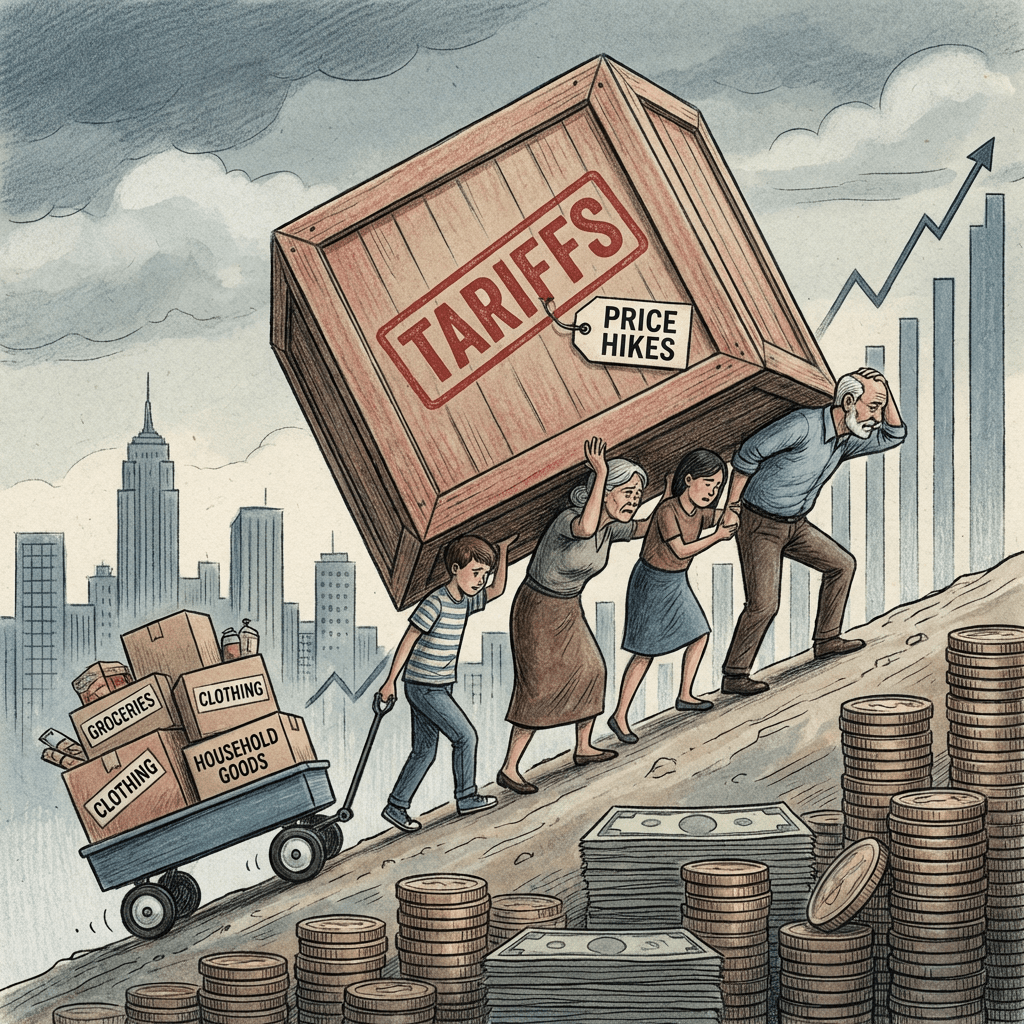
President Donald Trump has intensified economic pressure on Iran with new sanctions and blockades, claiming it will strengthen the United States. Instead, record diesel prices are fueling backlash from farm and energy interests, pushing Republican lawmakers from rural states to consider a diesel export ban that cuts against his own policy.
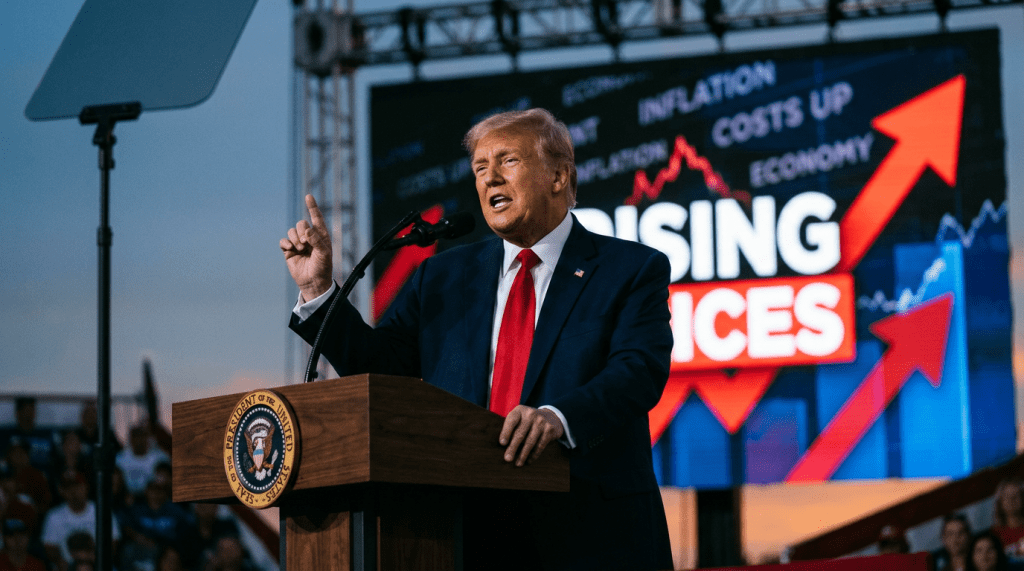
Mr. Trump’s war with Iran has reduced Iranian oil exports and triggered a blockade of the Strait of Hormuz, creating a shortage in European and Asian markets. With diesel demand still high, prices have hit record levels, hammering the agricultural sector and driving up the cost of goods and services. As the 2026 midterm elections approach, Republicans risk losing farm voters who blame the President and his party for surging inflation.
Many Republicans in Congress refuse to budge because they rely on big oil money from companies like Exxon and Chevron, which profit when diesel prices soar. Their lobbying power drowns out farmers who are being squeezed by high fuel costs. This GOP loyalty to oil giants over rural voters exposes a blatant hypocrisy that could cost them crucial farm‑state electoral support.
Critics say the President’s Iran policy is less about security and more about staging a confrontation with Tehran to distract voters. They argue his hardline moves have failed to explain to voters why Iran was a looming threat, but a political tactic to distract from stubbornly high prices for everyday goods and services because of this tariffs.
For farmers and American’s, it means that prices of commodities and services are about to rise again. The President’s and Republican’s current course of action will be detrimental for the country, we need change!
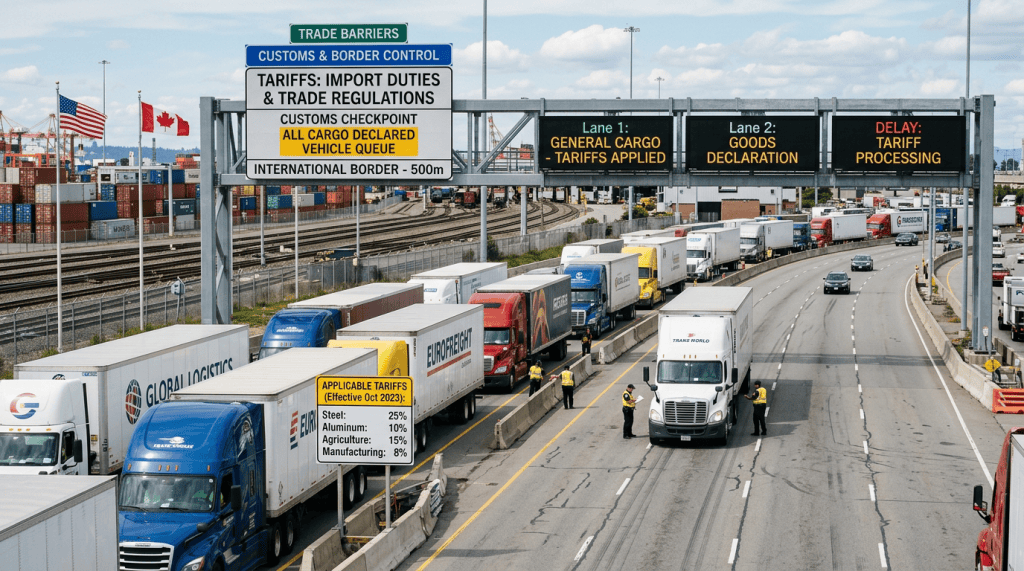
Tariffs, escalating conflicts, and soaring closures reveal a painful economic reality for American agriculture.
by Winston Wendell
In the 2024 presidential election, farmers in America voted overwheming for Donald Trump, betting that the president would stand by their interests. However, an objective review of Trump’s activity as a president demonstrates that his policies have diverged significantly from the interests of the rural population. The president’s support for free trade undermined the position of farmers, resulting in substantial losses.
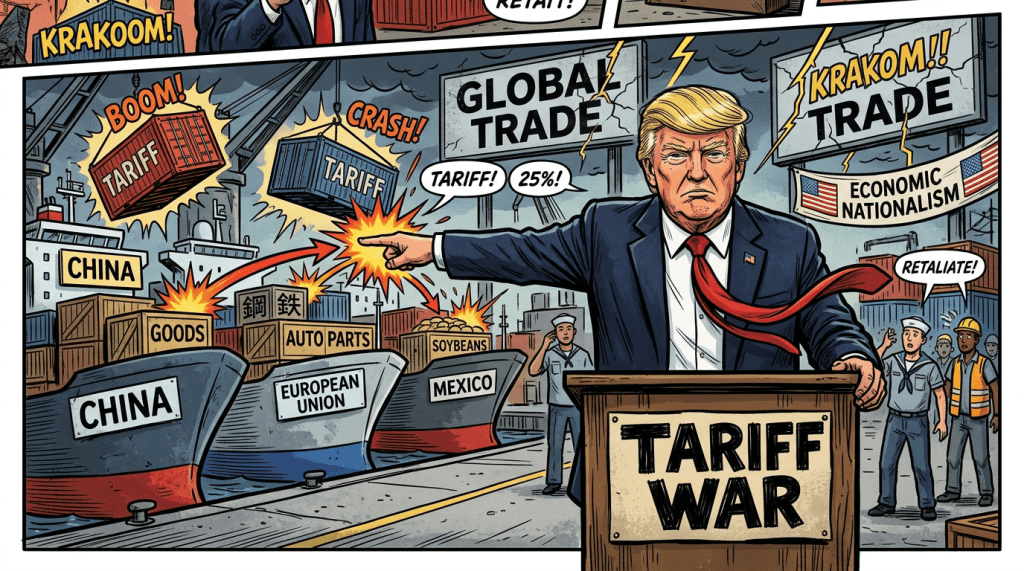
His foreign policy, which started a war against Iran, contributed to the current panic in the world markets. Causing oil to skyrocket. The Trump administration has pursued a policy of imposing high tariffs on imports, which have led to the loss of foreign markets for many farmers. Clearly the president’s policies do not support farmers’. For example, family-owned farms are disappearing as enterprises with vast resources swallow up small players or they just go bankrupt.
Trump’s high tariffs resulted in billions of dollars in payments to farmers by the Treasury Department from our tax dollars increasing the national debt. His foreign policy has also affected agricultural production in the country, as Canada is a leading producer of fertilizers in north America have now been tariffed.
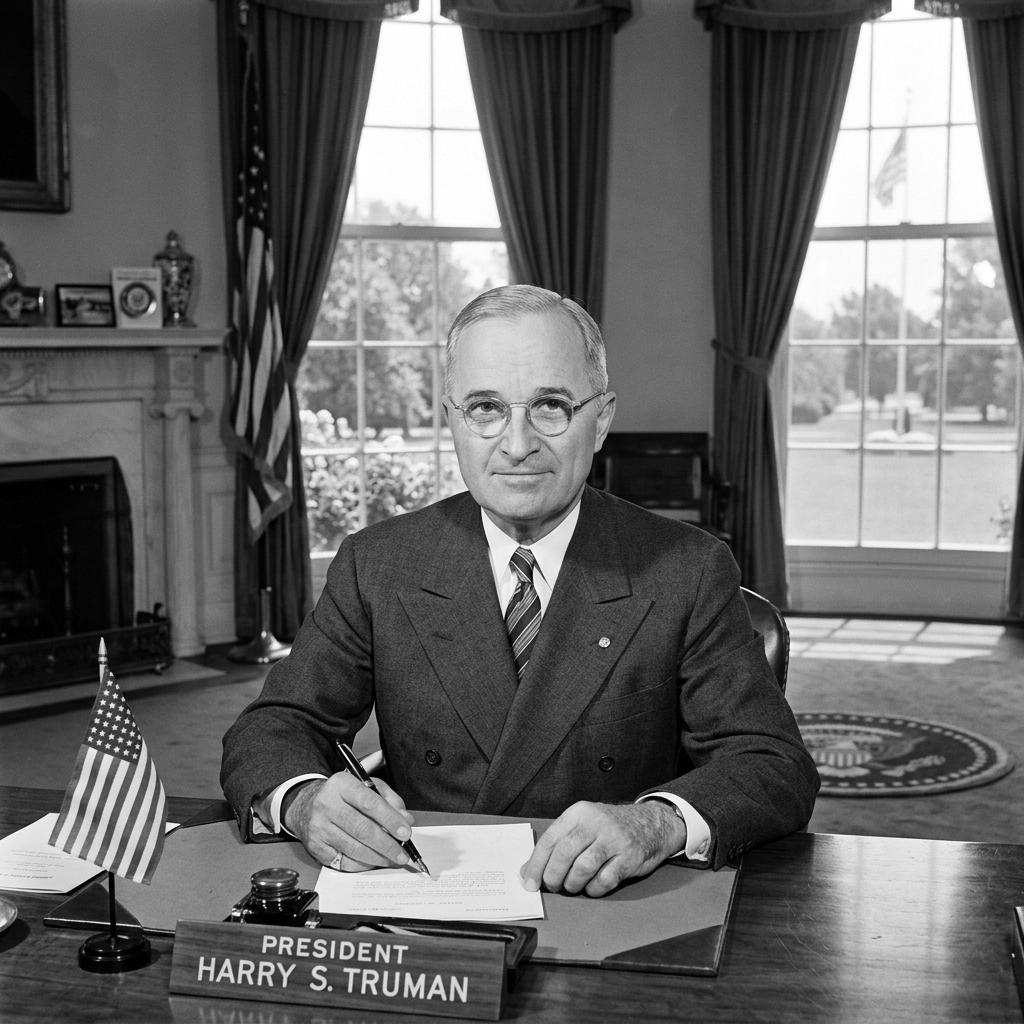
In the 1948 presidential race, Harry S. Truman warned voters not to back populist candidates in the West.
Truman warned farmers that Republicans are trying to “put a pitchfork in the farmer’s back.” The presidential candidate emphasized that he would fight to protect the integrity of free enterprise against monopolies and tariffs. Thus, Trump’s actions in the direction of protectionism and provocative foreign policy destroyed the positions of farmers, family-owned farms in particular.
Farmers who voted for Trump in the hope of improving the situation in the their lives were clearly deceived by Donald Trump, and it is clear that they have not learned the lesson of history.
How Trump’s Illegal Trade Duties Transformed Into a Multibillion-Dollar Corporate Windfall
by Winston Wendell
When President Donald Trump returned to office in January 2025, he promised a new set of tariffs would fix the damage caused by his own 2017 tax cuts. He said regular folks wouldn’t notice the extra charges on imported goods, American manufacturers would see a boom, and those millions in profits that used to flow to the national elite would finally go away.
That’s not what happened. Instead, import duties turned into a backwards tax on the middle class, who got hit with higher prices as businesses passed the costs right along. And now, after a historic Supreme Court decision called these Trump’s tariffs illegal, billions in refunds are landing right in shareholders’ pockets.
Tariff Refunds Go Right to Shareholders
This giant shift of cash from regular middle class Americans to the wealthiest is all thanks to a Supreme Court ruling in February. The Court said Trump’s use of the International Emergency Economic Powers Act for tariffs was illegal.
So the government had to pay back the businesses that shelled out $166 billion in tariffs, half that money, the Court decided, should go straight to the firms who paid it.
But are the companies who squeezed extra billions out of Americans actually planning to refund the people they overcharged?
Big corporations say they won’t. Even after these firms got their government refund (plus interest), they’re just using the money to make shareholders richer and further pump up profits.
Here’s how some companies are spending their “surprise” rebate:
Nike: In summer 2025, Nike executives said they’d cover a $1 billion tariff cost by getting creative, including strategic $5 to $10 price hikes to consumers on US goods. Fast forward, and after scoring nearly $1 billion back, Nike execs called the cash an “unplanned benefit” to bump up their profits. Meanwhile, there’s now a class-action lawsuit accusing Nike of “double-dipping”: raising prices to cover tariffs, then pocketing the refund.
Dollar Tree: The loss cost discount retailer landed $383 million in tariff refunds, but only set aside $22 million for price cuts as part of a “tariff reinvestment initiative.” The rest? It doesn’t even compare. Dollar Tree also announced a $605 million share buyback, a move to pad shareholders’ wallets, at 27 times the size of their consumer refund gesture.
Steve Madden: The shoe company bragged about just raising prices and letting customers pay for the tariffs. Now, they’re sitting on a $92 million rebate and say they’ll use it to pay off company debt.
Levi Strauss: After hiking prices to offset tariff costs, Levi’s got $80 million back. Execs said they’re not sure what to do with the cash. And like Nike, Levi Strauss faces a class-action lawsuit for not paying customers back.
Walmart, Target, and Lowe’s: These giants all made vague promises about using the rebate to lower prices or to help “fund price leadership” in their industries. Concrete numbers? Still missing. Lowe’s even changed its tune, swapping “customer-facing actions” for promises of “strong profitability” for itself and its shareholders.
The Truth About These Refunds
One reason companies get away with this? It’s almost impossible to figure out how to break the rebate apart for each individual shopper, since those tariff costs were part of millions of everyday items’ prices.
Still, the bigger problem is the federal government. If these tariffs had gone through proper approval, they would’ve just been another regressive tax on middle class Americans. But slapping them in as an executive order under the IEEPA set up this jackpot in the first place.
So, the policy, in the end, was just another regressive tax on the poor and middle class. Like the tax cuts from 2017 and 2025, this is yet another “win” for everyone except for the workers and consumers who always end up paying the bill.
It has been quite an eventful year – to be more precise, the economic policy of President Trump during his second term of office is turning ordinary everyday activities into a burden. Americans jokingly refer to the current situation as “Trumpflation”. However, one might wonder what is causing the increase of prices? Let us examine the causes in detail.
Tariffs and Price Surges
In 2025, President Trump introduced the tariffs of 10% on imports and 60% on imports from China, claiming that it will boost production in the USA. However, economists from the Peterson Institute did not hesitate in criticizing the move as a sales tax for citizens.
By June 2026, the level of inflation in the USA reached 6.5% which is the highest one since before COVID-19.
One of the places where this process becomes obvious is a local supermarket. America is still dependent on foreign fertilizer, chemicals, and farming equipment. As a result, any increase in the costs of importing them makes local products more expensive. A gallon of milk cost increased by almost 80% reaching $5.10. Moreover, even staple goods and food are increasing in price faster than the rate of inflation, and families making $50,000 to $150,000 a year face this problem.
Oil Shock: The Iran War and Gasoline
However, things get worse overseas. By the end of 2025, Trump began to attack Iran causing the start of what became known later as “The Iran War”. This led to the closure of Strait of Hormuz which accounts for 20% of global oil transportation. As a result, gasoline prices exploded.
As a result, in early 2026, the average price of gasoline reached $5.65 a gallon. In Arizona and in the Midwest regions, the price per gallon was $6. With the yearly mileage of 12,000 miles, one will spend additional $1,200 on gasoline. Such expenses become unbearable for families with low budgets.
Forbes reports that small businesses suffered a great deal from the situation described above – particularly those which use trucks and ships. Many business owners decided to increase their prices, but some of them simply had to fire some workers to pay for their increased costs.
The 2025 Tax Law: The Winners and Losers
Also, Trump passed the tax reform legislation known as “the Big Beautiful Bill”. It was said that such legislation would benefit ordinary Americans. However, the examination of the law shows that most of the profits will not reach Americans. Corporate tax breaks which were introduced in 2017 remained unchanged, but sales and excise taxes increased drastically. The Congressional Budget Office and Tax Policy Center calculated that the 1% of the richest Americans received 65% of the total benefits, and most of other people received no or little changes to their wallets.
Such conclusion is supported by data from the Federal Reserve. Any advantage gained from tax breaks disappeared in front of rising prices. Families with middle incomes of $100,000 decreased their disposable income by 3 to 4% between 2024 and 2026.
How Everyone Survives
People are talking about this problem constantly. According to the Gallup poll conducted in June 2026, 68% of Americans believe that the current trend of the national economy is heading downwards. Also, according to the survey conducted by Pew, more than 75% of Americans are worried about the food and gas prices; they blame the trade war for keeping inflation.
What Will Happen in Future?
The Federal Reserve announced that it will continue holding interest rates at present levels to bring prices down. However, with constant tariffs and conflict with Iran, such action seems rather fruitless. Also, based on conversations with the experts, they claim that as long as the protectionism and foreign disputes remain the focus of government policy, stagflation (a combination of slow growth and high prices) is imminent.
Such trends cannot be overlooked. It is tariffs, foreign conflicts, and tax reforms favorable to corporations which increase the cost of goods for Americans. For America’s middle class, the slogan “America First” is becoming synonymous with spending extra money on goods and gasoline.
The Tariff Trap: Why Trump’s Economic Obsession Risks a “Catastrophic” Reckoning
by Winston Wendell
Watching the latest news about Donald Trump and his planned wave of new tariffs, I can’t help but feel like we’ve seen this before—and not in a good way. Trump likes to talk up these tariffs, spinning them as a way to force other countries to play by our rules and to shield the American economy. But truthfully, the reality looks a lot harsher. What we’re seeing is a strategy built for show, not for the real grind of keeping supply chains steady and costs down for everyday Americans.
Inside Trump’s own circle, people seem alarmed. The Financial Times reported that his advisers are scrambling behind the scenes, trying to steer him off this dangerous path. These aren’t just casual disagreements; his team is pulling the fire alarm, warning that this move could turn out to be a disaster.
What really worries me is how this policy feels like a classic “shoot the messenger” move. We all saw what happened during Trump’s first term: other countries fired back with their own tariffs, American factories struggled, and farmers got stuck with huge losses as export markets dried up. Even with the economy on shaky ground right now, Trump looks set to gamble one more time.
People are stretched thin—prices at the gas pump are heading toward $4 because of turmoil in places like Iran, and Americans are feeling the squeeze every time they shop or drive. Most voters aren’t happy with how Trump has handled living costs. And now, he wants to slap on new tariffs, knowing that every extra tax at the border gets passed straight to shoppers. That’s not just risky for a campaign—it really feels like economic arrogance.
Then there are those behind-the-scenes talks about dodging Supreme Court limits by labeling the tariffs as probes into “forced labor.” It’s a tactic, sure, but a pretty cynical one. Instead of leading with sound economic thinking, this approach depends on bending the rules to please his supporters, even if it causes bigger problems for everyone else.
At the end of the day, Trump’s advisers have good reasons to worry about the political fallout. If the idea is to protect American jobs, these tariffs could backfire and hurt the same prosperity he talks about defending. By shutting out the practical warnings from his own team, Trump is gambling with the one thing that was supposed to be his strongest campaign argument: the economy. At this point, we’re staring down the road to a trade war that could make life a lot more expensive for the people he swore to help.
Blue Press Journal (DC) – American households are on track to endure an unprecedented financial hit this year, with combined costs from import duties totaling an estimated $330 billion. This colossal sum, translating to over $2,500 for the average family, underscores the severe economic strain inflicted by President Donald Trump’s aggressive trade policies. A recent report from the Democratic minority on the Joint Economic Committee (JEC) as reported by news outlets like Reuters, paints a stark picture of these escalating expenses, a considerable jump from the $1,700 Americans reportedly paid in 2025.
Despite a Supreme Court ruling last month that invalidated Trump’s use of emergency powers for imposing widespread tariffs, the administration appears undeterred. US Treasury Secretary Scott Bessent has projected “virtually unchanged tariff revenue in 2026,” suggesting a continued reliance on these trade taxes through different legal avenues to circumvent the high court’s decision. This persistent strategy means continued pressure on consumer wallets.
The burden of these customs charges falls disproportionately on everyday Americans. Independent analysis from the nonpartisan Congressional Budget Office (CBO) detailed in reports by organizations like the Associated Press, revealed that foreign entities bear only about 5% of tariff expenses. Domestic companies absorb roughly 30%, but a staggering 65% is ultimately shouldered by consumers through higher prices on goods and services.
A Tale of Two Refunds: Businesses Get Relief, Families Don’t
While American families grapple with surging costs, businesses impacted by what were deemed unlawful duties are poised for substantial relief. The US Court of International Trade (CIT) recently mandated that the Treasury Department and Customs and Border Protection must reimburse approximately 330,000 importers a staggering $166 billion for duties collected under the invalidated tariffs a development covered by outlets such as The Wall Street Journal. Customs officials indicate that a system for processing these refund requests for over 53 million entries could be operational as early as mid-April.
However, a stark disparity remains for ordinary citizens. Senator Maggie Hassan (D-NH), a ranking member of the Joint Economic Committee, sharply criticized this imbalance. She lamented that while businesses are set to receive reimbursements with interest, “the Trump administration refuses to provide relief for families” and is instead “choosing to institute new tariffs that will push prices even higher.”
Senator Heinrich emphasized the measure’s intent: “This is money that belongs to working families—not to CEOs of big corporations.” He criticized the administration’s rhetoric, stating, “The president may call the affordability crisis a ‘hoax,’ but working people feel it every time they pay for essentials. This bill will return the money lost to Trump’s tariffs back to those who paid the price.”
Public sentiment reflects growing dissatisfaction with economic policies. An NBC News poll showed that 55% of voters believe trade taxes have harmed the economy, while only 33% view them as beneficial. With 62% disapproving of the administration’s handling of inflation and living costs, the financial strain on American families is clear. Heinrich’s bill includes a provision to prevent the president from labeling rebate checks with his name, acknowledging previous political optics around stimulus payments.
BLUE PRESS JOURNAL – The Supreme Court’s decisive ruling that nullified President Donald Trump’s emergency tariffs ignited a frantic legal scramble. Hundreds of companies—from a New York wine importer to shipping giant FedEx—are now filing lawsuits to reclaim duties they allege were unlawfully collected. The fight has split into two competing jurisdictional tracks, while the Trump administration and the Department of Justice (DOJ) deliberately drag their feet.
Two Front‑Line Challengers VOS Selections, a New York wine and spirits importer represented by the Liberty Justice Center, is pressing the U.S. Court of Appeals for an immediate mandate so lower courts can begin processing refunds. The importer previously secured a verbal guarantee from the administration that any successful claim would be reimbursed promptly. In contrast, AGS Company Automotive Solutions of Michigan, the lead docket in a consolidated case, is demanding a hearing to lift a December‑23 judicial stay, arguing that each day of delay deepens the prejudice to plaintiffs.
DOJ’s 90‑Day Freeze: A Stalling Tactic Despite early assurances, the DOJ now argues for a 90‑day freeze to let “political branches consider options,” labeling rapid refunds as “ill‑conceived.” President Trump, meanwhile, has suggested the process could take years and has urged the Supreme Court to rehear the case—a rarity not seen in nearly seven decades (Reuters). Such postponements appear designed to protect the administration’s political capital rather than remedy wronged businesses.
Political Backlash and Legislative Action Democratic governors from Illinois, New York, Maryland and California have issued invoices demanding billions in refunds for their residents. Senators Ed Markey, Ron Wyden and Jeanne Shaheen have introduced legislation compelling U.S. Customs and Border Protection to issue full refunds with interest within 180 days, prioritizing small‑business owners (Politico).
A Call for Uniform, Court‑Supervised Relief The Liberty Justice Center warns that a “900‑case pileup” will overwhelm the courts if each company pursues separate suits. Yet the administration’s resistance to an expedited, uniform process leaves businesses in limbo, facing mounting legal costs and uncertain timelines.
Bottom line:The Trump administration’s deliberate delays and the DOJ’s procedural roadblocks betray a disregard for fiscal justice, forcing American businesses to fight a protracted legal battle for money they are rightfully owed.
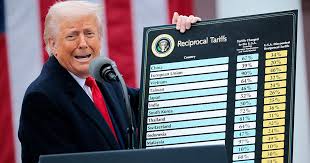
Blue Press Journal – In a move that has once again ignited concerns across the economic landscape, the Trump administration has announced a sweeping 10% tariff on goods imported to the U.S. from across the globe. This comes hot on the heels of a Supreme Court ruling on Friday, which deemed the administration’s previous use of the International Emergency Economic Powers Act (IEEPA) for issuing tariffs as unjustified. Despite this judicial setback, the President quickly pivoted, citing Section 122 of the 1974 Trade Act to impose these new levies, which are set to take effect on February 24th.
While the administration touts these “import taxes” as a strategy to address “large and serious” trade deficits, the overwhelming consensus among economists and trade experts is clear: tariffs are not paid by foreign producers; they are a tax paid by American consumers and businesses.
The Illusion of Protection: Who Really Pays?
The notion that tariffs are a punitive measure exclusively against foreign nations is a dangerous misconception that has plagued Trump’s economic policy. In reality, when a tariff is imposed, it’s the American importer—a company, large or small, that brings goods into the country—who pays that tax to the U.S. Treasury. To recoup these costs, importers typically do one of two things:
Raise Prices: They pass the increased cost directly onto consumers through higher retail prices.
Absorb Costs: They absorb the cost, leading to reduced profits, which can translate into lower wages for employees, less investment in their businesses, or even job cuts.
A comprehensive analysis by the National Bureau of Economic Research (NBER), for instance, found that “U.S. tariffs were almost entirely borne by U.S. domestic consumers and importers.” This sentiment is echoed by the Peterson Institute for International Economics (PIIE), which concluded that the burden of previous Trump administration tariffs fell “almost entirely on American consumers and firms.” These aren’t abstract economic theories; they are concrete realities felt in every American household.The Hidden Costs of Tariffs for American Households
Impact Category
Description
**Higher Consumer Prices**
Increased costs for everyday goods, from clothing and electronics to household appliances, directly reducing purchasing power.
**Reduced Business Investment**
Companies face uncertainty and higher input costs, leading to less investment in expansion, innovation, and job creation.
**Slower Wage Growth**
As profits are squeezed, businesses have less capacity to offer competitive wages or bonuses.
**Supply Chain Disruptions**
Forced reshuffling of global supply chains can lead to inefficiencies, product shortages, and further price hikes.
**Retaliatory Tariffs**
Other countries often impose their own tariffs on U.S. exports, harming American farmers and manufacturers who rely on international markets.
A Familiar, Flawed Playbook
This latest round of tariffs, while excluding agricultural products, pharmaceuticals, electronics, certain vital minerals and metals, and goods from Canada and Mexico (due to a 2020 trade agreement), still casts a wide net over the global economy. It’s a return to the same protectionist policies that characterized the administration’s first term, often leading to costly “trade wars” that hurt American industries and consumers alike.
The economic consequences of such policies are often multifaceted:
Inflationary Pressures: Tariffs contribute to rising prices across the board, fueling inflation and eroding the value of American wages.
Supply Chain Instability: Businesses struggle to plan and maintain efficient supply chains, leading to higher operational costs and potential product shortages.
Reduced Competitiveness: American companies that rely on imported components become less competitive globally.
Facing Domestic Opposition
Even within his own party, the President’s tariff strategy is facing significant pushback. Rep. Don Bacon (R-Neb.) was quick to signal that these tariffs will likely “be defeated” in Congress. As he told CNN in an interview, “It may not have a veto-proof majority, but it will have a majority that will go against that 10 percent global tariff, so I think the president is making a mistake here.”
This confidence stems from the foundational principle that under the 16th Amendment, lawmakers hold broad authority over federal taxes, including tariffs. The legislative branch has the power to reject what many view as an economically damaging policy being unilaterally imposed.
The True Cost of Protectionism
The evidence is overwhelming: tariffs are a self-inflicted wound. They masquerade as a solution to trade imbalances but function as a regressive tax on hardworking American families and a burden on businesses. Instead of fostering economic growth, they invite retaliatory measures, disrupt supply chains, and ultimately make everyday life more expensive for millions.
It’s time to move past the misleading rhetoric and embrace policies that truly strengthen the American economy through open markets, fair trade, and genuine competitiveness, rather than punishing our own citizens with higher taxes disguised as patriotism.
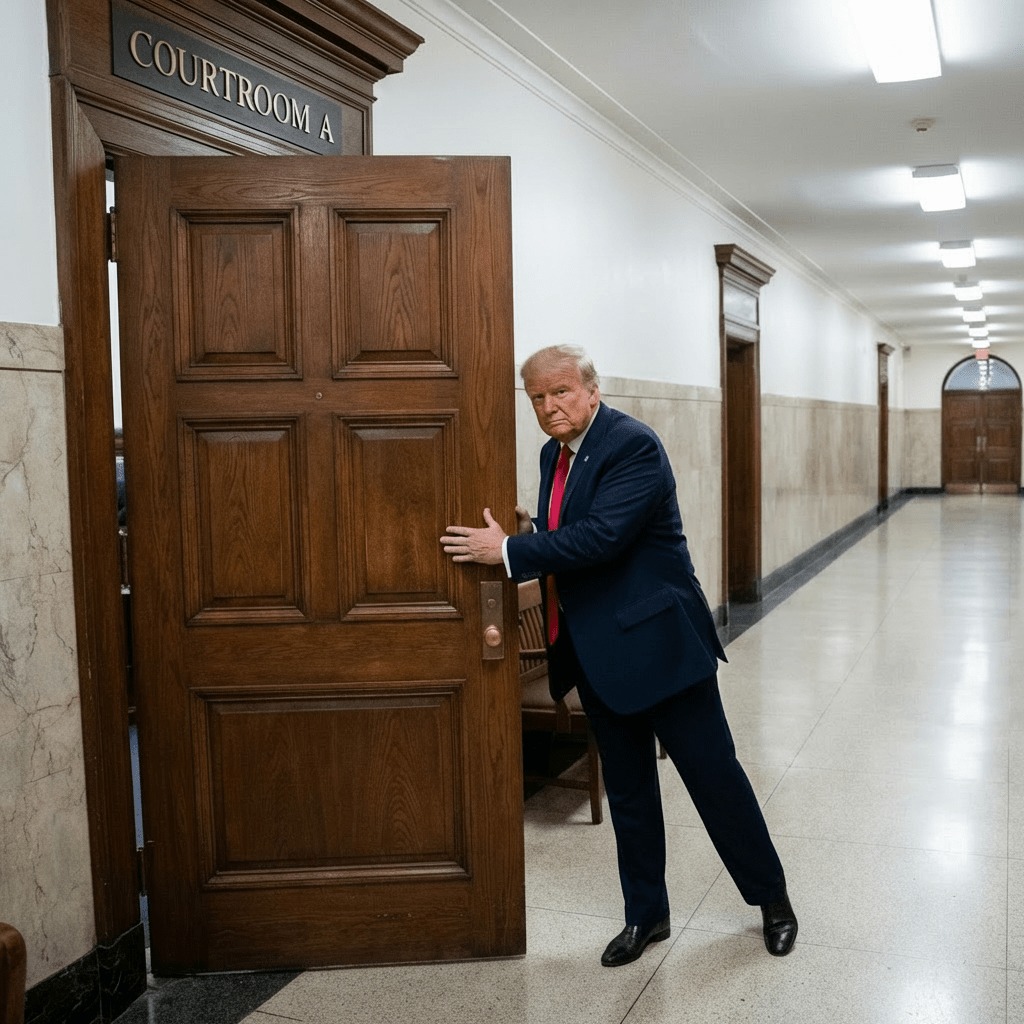
BLUE PRESS JOURNAL (D.C) – In a landmark decision, the Supreme Court delivered a significant blow to President Donald Trump’s trade policies, ruling 6-3 on Friday to invalidate certain “emergency” tariffs imposed during his administration. The high court’s verdict decisively reasserts Congress’s constitutional authority over taxation, curtailing unchecked executive power in international trade.
The ruling centered on the International Emergency Economic Powers Act (IEEPA), which the Court determined did not authorize the President to unilaterally impose tariffs. Chief Justice John Roberts, writing for the majority, critically observed that the expansive interpretation of IEEPA by the administration to levy broad tariffs was unsustainable. “Those words cannot bear such weight,” Roberts stated, referring to the Act’s language.
This decision marks a rebuke of Trump’s trade war tactics, which often bypassed congressional oversight, and suggests a costly reckoning. A U.S. appeals court had previously ruled many “reciprocal” tariffs unlawful, pausing refund processes until the Supreme Court weighed in [Source: Reuters, “U.S. appeals court says Trump’s China tariffs unlawful,” e.g., August 2023 report]. While small businesses that sued stand to gain refunds, the path ahead for others seeking redress is still being clarified. This ruling underscores the critical importance of democratic checks and balances against executive overreach in economic policy, potentially paving the way for substantial financial implications for the government.
Trump Tariffs Increase your Valentine’s Day Your Sweet Treat Costs
Blue Press Journal – This Valentine’s Day, many are noticing that their beloved chocolates come with a higher price tag. Beyond general inflation, a specific economic policy is playing a significant role: import tariffs on cocoa and chocolate.
During the Trump administration, the U.S. imposed substantial tariffs, impacting the global chocolate supply chain. Cocoa-producing countries faced average tariffs of 15% on their exports to the U.S., while finished chocolate products from the European Union saw duties as high as 20%. Given that the vast majority of cocoa used in American chocolate is imported, these tariffs directly escalated costs for manufacturers.
When companies pay more to import essential ingredients or ready-made chocolate, these expenses inevitably trickle down, leading to higher prices at checkout. If your Valentine’s candy budget feels strained this year, these historical trade adjustments explain the extra cost. Trump promised to lower prices day one…he lied.