Tag: tariffs

  • Chaos and Confusion: Trump Tariff Policy

    Trump’s lack of understanding and competence is glaringly obvious to everyone, especially economists. At 79 years old, he is clearly showing his age.

    Attempting to bring back manufacturing, increase revenue, and negotiate with every country in the world? Trump can’t have it all his way.

    The administration is trying to sell the public on three conflicting ideas. First, that Trump’s tariffs will revive American manufacturing, bringing back lost jobs and boosting the middle class. Second, that the tariffs will generate massive revenue to replace income tax. And third, that the tariffs will pressure foreign nations into trade deals with the U.S.

    Trump’s tariffs impact nearly every country, even those that supply goods the U.S. cannot produce. We can’t grow bananas or mine diamonds here.

    Trump is failing to support domestic industries or protect American workers. He is dismantling subsidies meant to boost clean energy manufacturing and calling for the repeal of important acts. His actions are undermining workers and unions.

    The end result is chaos and confusion.

    Trump has long championed tariffs and protectionist policies, dating back to the late 1980s. This is one of the few policies he is truly committed to. It’s possible these tariffs stem from personal whims rather than a coherent policy plan. Personal impulses rarely lead to coherent decisions.

  • Trump’s Trade Advisor Invented a Fake Economist To Sell His Tariff Views

    The absurd tale that inspired Trump’s tariffs plan is truly a masterpiece of deception and delusion. In a stroke of genius, Peter Navarro, a key adviser to President Trump, conjured up a fictional character named Ron Vara to bolster his arguments about the economic threat posed by China. This phantom figure, with his fake memo and fake email address, managed to convince Trump to embrace the idea of tariffs as a solution to all of America’s problems.

    It’s truly a work of fiction worthy of a Pulitzer Prize. Navarro, the mastermind behind this elaborate ruse, was able to dupe not only Trump but also Jared Kushner, who brought him on board as an economic adviser during the 2016 campaign. The fact that Navarro’s go-to expert, Ron Vara, doesn’t actually exist is just the cherry on top of this ridiculous sundae.

    Now, as we witness the havoc wreaked by Trump’s tariffs on the U.S. economy, we can only shake our heads in disbelief. Who knew that all it would take to bring about economic ruin was a president with “great ideas” and a penchant for imaginary experts? The sheer audacity of it all is truly mind-boggling.

    So, here we are, in the midst of economic chaos, all thanks to the brilliant mind of Donald Trump. Who needs real experts and sound economic policy when you have a fictional character like Ron Vara to guide the way? It’s a tale for the ages, a cautionary fable about the dangers of putting your faith in fake news and fake experts and Donald Trump!

  • Will Trump’s Tariffs Lead to American Economic Collapse?

    President Donald Trump declared on Sunday that he will not waver in his decision to impose sweeping tariffs on imports from most countries unless they balance their trade with the U.S. This firm stance has caused financial markets to spiral, sparked recession fears, and disrupted the global trading system.

    Billionaire hedge fund investor Bill Ackman, a former supporter of President Trump, is now sounding the alarm about the potential dangers of the White House’s tariff policies. He warns that these tariffs could lead to economic collapse, disproportionately affecting Trump’s own supporters.

    The president’s actions have eroded the trust of business leaders worldwide. If Trump continues to wage economic warfare on every nation, business investments will dwindle, consumers will tighten their spending, and our international reputation will suffer irreparable damage.

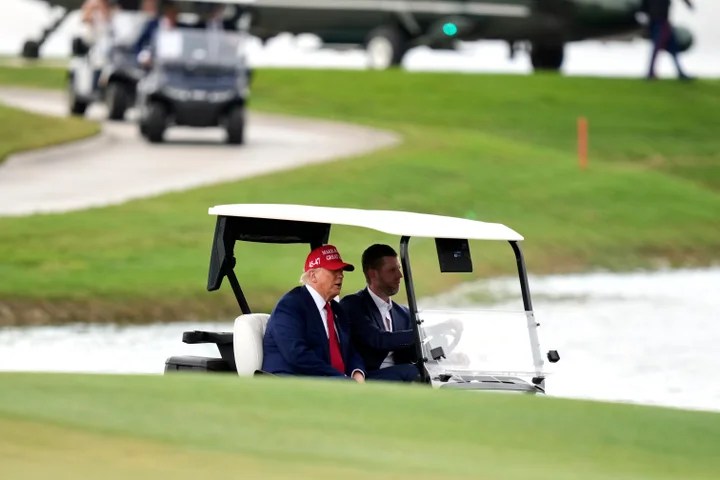
    Despite spending the weekend golfing in Florida, Trump remains defiant, proclaiming online that “WE WILL WIN. HANG TOUGH, it won’t be easy.” His Cabinet members and economic advisers are vigorously defending the tariffs and downplaying their impact on the global economy.

    As the markets continue to be rattled by the tariffs, U.S. stock futures are plummeting. The S&P 500 futures dropped by 2.5%, the Dow Jones Industrial Average futures by 2.1%, and Nasdaq futures by 3.1%. Even the price of bitcoin, which had been stable, fell by nearly 6% on Sunday.

    Elon Musk, Trump’s cost-cutting expert, broke his silence on the tariffs at an event in Italy this weekend, advocating for a zero-tariff agreement between the U.S. and Europe. This suggestion was met with criticism from White House trade adviser Peter Navarro.

     One must question if these tariffs are truly a sustainable revenue source and if they will truly attract businesses to relocate to the United States.  Trump can’t have it both ways! 

  • Trumps Plays Golf while his Tariffs Cause Economic Turmoil

    Just two days after sending shockwaves through the economy with his announcement of widespread tariffs, President Donald Trump remains steadfast in his trade policies, seemingly unaffected by the chaos he has caused. As the markets plunge, with the S&P 500 down 6% and the Dow down 2,200, the situation is being described as the worst crisis since COVID-19 hit.

    Despite the turmoil, President Trump, surrounded by his bubble of wealth and power in Florida, shows no signs of backing down. Treasury yields on the 10-year Treasury has dropped to 4.01%, a significant decrease from earlier this year.

    Waking up at his luxurious Mar-a-Lago club in Palm Beach on Friday morning, President Trump wasted no time in heading to his nearby golf course, all while proclaiming on social media that “THIS IS A GREAT TIME TO GET RICH.” His decision to spend the weekend at his opulent properties may test the patience of Americans struggling with evaporating retirement savings and a plummeting stock market.

    Critics, including Senator Ben Ray Luján, have voiced their concerns about the President’s priorities, questioning his choice to play golf while the country faces economic uncertainty. With fears of increased prices, slowed economic growth, and a potential recession looming, many are calling for President Trump to listen to the concerns of the American people and take action.

    In the midst of this turmoil, the nation waits anxiously to see how President Trump’s decisions will impact their lives. Will he heed the calls for change, or will he continue to forge ahead with his controversial trade policies? Only time will tell.

  • Fed Chair Issues Warning on Trump Tariffs

    Federal Reserve Chair Jerome Powell delivered a stark warning on Friday, revealing that President Trump’s new tariffs are causing far more economic damage than initially anticipated. The sheer size and potential harm of these tariffs have thrown the bank’s efforts to combat inflation into disarray.

    Powell emphasized that the magnitude of Trump’s reciprocal tariffs has surpassed all expectations, posing a significant risk of long-term inflation spikes. The uncertainty surrounding these tariffs remains high, but it is becoming increasingly evident that the economic repercussions will be much more severe than previously thought, leading to heightened inflation and sluggish growth.

    Meanwhile, President Trump, seemingly unfazed by the chaos he has unleashed, took a break from his golf tournament in Florida to launch a scathing attack on Fed Chairman Jerome Powell for actually stating the truth. 

    In a retaliatory move, China announced a staggering 34% tariff on all U.S. imports starting April 10, in response to Trump’s aggressive tariff policies. The Commerce Ministry in Beijing also revealed plans to tighten export controls on rare earths, crucial materials for advanced technology products.

    As the trade war escalates, it is clear that the pain inflicted by Trump’s tariffs is only intensifying, with more countries retaliating with their own tariffs. The future looks bleak as the world braces for the economic fallout of this escalating trade conflict.

  • Dumbest’ Recession Ever: GOP Will Pay For Trump’s Tariffs

    Few Republicans are willing to defend the president’s tariffs, leaving the party vulnerable for the first time in Trump’s new term. The implementation of these tariffs marks a significant shift from the global trend of decreasing trade barriers, with economists warning that Americans could face thousands of dollars in increased prices each year, while the U.S. economy is expected to slow sharply.

    According to the Yale Budget Lab, the Trump administration’s tariffs could result in the average household facing an additional $3,800 in expenses this year. This includes a 10% universal tariff, higher tariffs on approximately 60 countries, as well as existing import taxes on steel, aluminum, and cars. Inflation is projected to soar to over 4%, up from the current 2.8%, with the economy facing minimal growth, as estimated by Nationwide Financial.

    The repercussions of these tariffs were felt on Thursday, as the S&P 500 index plummeted by 4.8%, marking its worst day since the pandemic began. The Dow Jones Industrial Average also took a hit, dropping over 1,600 points, causing the average 401 retirement account to lose over $8,000 in just one day.

    Economists predict that the average U.S. tariff could reach nearly 25% once fully implemented on April 9, surpassing levels seen in over a century and even exceeding the infamous 1930 Smoot-Hawley tariffs, which exacerbated the Great Depression.

    The impact of these tariffs will be particularly harsh on Asian countries, with duties on Vietnamese imports rising to 46% and on Indonesia to 32%. Some Chinese imports could face tariffs as high as 79%, affecting major U.S. import sources for shoes like Nike, which produced half of its shoes and one-third of its clothing in Vietnam last year.

    Best Buy’s stock plummeted by a staggering 17.8%, a devastating blow attributed to the global production of its electronics. United Airlines also suffered a significant loss of 15.6%, as fears of a weakening global economy deterred customers from traveling for business or leisure. Target, too, experienced a sharp decline of 10.9%, with concerns mounting over the financial strain on its customers amidst persistent inflation. The once thriving giants of the retail and travel industries now find themselves teetering on the edge of uncertainty, as the world grapples with economic turmoil.

  • America’s Economic Future at Risk Amid Trump Tariff Storm

    In the wake of Donald Trump’s aggressive new tariffs, a storm is brewing in the American economy. Consumer costs are skyrocketing, and the once-solid foundation of America’s global economic relationships is crumbling before our eyes.

    Fresh off the presses from the nonpartisan Tax Foundation, a chilling report reveals that the average American household will be forced to fork over an additional $2,100 per year for goods due to these tariffs. The import tax rate is set to soar from a mere 2.5% in 2024 to a staggering 19% in 2025, marking the highest level since the dark days of the Smoot-Hawley era in the early 1930s. Brace yourselves, as Americans’ after-tax incomes are projected to plummet by an average of 2.1% this year alone.

    The impact of these tariffs will be swift and far-reaching, as a wide array of imported goods will see their prices surge. From basic necessities like food and household supplies to high-tech gadgets, no corner of the market will be left unscathed.

    Meanwhile, America’s longtime allies are shifting their trade and investment strategies, interpreting the tariffs as a clear signal that the United States is turning its back on its role as a global economic leader. As new trade alliances take shape and foreign investments dwindle, the repercussions for U.S. growth, employment, and international influence could be nothing short of catastrophic. The storm clouds are gathering, and the future looks bleak indeed.

  • Trumps Math does not Add Up!

    The Trump administration’s brilliant plan for calculating import taxes has left economists rolling on the floor with laughter. Turns out, the reciprocal tariffs were not based on any actual data from other countries, but rather on a magical formula created by the White House – a formula that has been the butt of jokes among experts.

    This formula, which assigned completely random tariffs to different countries, including some uninhabited islands, gained attention thanks to an anonymous social media user who connected the dots between the tariffs and other countries’ trade surpluses with the U.S. divided by their exports. So, in essence, the tariffs meant to combat unfair trade practices are themselves based on a completely arbitrary formula.

    The U.S. loves to buy cheap goods from other countries, and the money spent often comes back to American companies and government debt. But now, thanks to these tariffs, U.S. importers are stuck footing the bill and potentially passing on the cost to consumers.

    Economists are warning that these tariffs could lead to price inflation, slow economic growth, and maybe even push us into a recession. Bravo, Trump administration, for what could possibly be one of the biggest economic blunders in U.S. history. David Beckworth, an economist from the Mercatus Center, summed it up perfectly by calling it an “unforced economic policy error.” 

  • TRUMP: Make America Poor Again

    President Trump’s new policy seems to be “Make America Poor Again,” as he announced tariffs on imports from around the world. This decision caused Wall Street to plummet, following global markets on Thursday. Economists are now warning that the risk of recession is on the rise.

    Interestingly, Russia was absent from the list of countries that Trump plans to hit with steep tariffs, sparking accusations of favoritism towards Russian President Vladimir Putin. This move did not go unnoticed on social media, with critics quick to point out Trump’s admiration for Putin.

    After the U.S. market closed on Wednesday, Trump declared a 10% baseline tax on imports from all countries, with higher tariff rates on nations that have trade surpluses with the U.S. China will face a 34% tax, the European Union 20%, and Taiwan 32%.

    Trump announced a significant list of countries and regions that would face new tariffs, which included a number of lesser-known territories with minimal trade relations with the United States. Notably, one mention highlighted a collection of islands that were entirely uninhabited.

    Trump claims that these tariffs will make the global system fairer and bring manufacturing jobs back to the U.S. However, experts warn that these tariffs could slow down economic growth and worsen inflation, which is already above the Federal Reserve’s target.

    Stocks of major companies like Nike, Best Buy, and Dollar Tree plunged more than 11% before the opening bell on Thursday. Trump has also announced tariffs on auto imports, China, Canada, Mexico, steel, aluminum, oil from Venezuela, and plans for import taxes on pharmaceutical drugs, lumber, copper, and computer chips.

    The Wall Street Journal criticized Trump’s tariffs, listing potential repercussions that could backfire on the president and his agenda. The editorial board highlighted the risks of retaliation and the negative impact on the economy. The future seems uncertain as the world waits to see how these tariffs will play out.

  • Trump Tariffs: A Threat to Job Growth and Economic Stability

    Tariffs, which are taxes imposed on imported goods and services, are frequently touted as a straightforward solution to intricate economic issues. However, a more thorough examination reveals that tariffs can actually be harmful to the American economy, ultimately impeding growth and negatively impacting consumers and leading to a recession as it did in the 1930’s. 

    One of the most immediate and significant consequences of tariffs is the increase in prices for consumers. When tariffs are placed on imported goods, the cost of these goods rises. Instead of absorbing these costs, businesses typically pass them on to consumers through higher prices for a wide range of products, from clothing and electronics to raw materials used in manufacturing. This reduction in purchasing power leaves Americans with less money to spend on other goods and services, ultimately dampening demand across the economy.

    While tariffs may appear to be a means of safeguarding American businesses, they often have the opposite effect. Many U.S. companies rely on imported components and raw materials to produce their goods. Tariffs on these inputs drive up production costs, making American businesses less competitive in the global market. This can result in decreased sales, layoffs, and even business closures.

    Although tariffs may temporarily protect jobs in specific industries directly impacted by imports, they frequently lead to job losses in other sectors. As previously mentioned, the heightened production costs stemming from tariffs can compel businesses to reduce their workforce. Additionally, retaliatory tariffs can harm industries that rely on exports, resulting in further job losses. Numerous studies have consistently demonstrated that the overall effect of tariffs on employment tends to be negative.

    Instead of turning to the blunt tool of tariffs, policymakers should concentrate on implementing policies that foster long-term economic growth and enhance competitiveness.