Federal Reserve Chair Jerome Powell delivered a stark warning on Friday, revealing that President Trump’s new tariffs are causing far more economic damage than initially anticipated. The sheer size and potential harm of these tariffs have thrown the bank’s efforts to combat inflation into disarray.
Powell emphasized that the magnitude of Trump’s reciprocal tariffs has surpassed all expectations, posing a significant risk of long-term inflation spikes. The uncertainty surrounding these tariffs remains high, but it is becoming increasingly evident that the economic repercussions will be much more severe than previously thought, leading to heightened inflation and sluggish growth.
As the trade war escalates, it is clear that the pain inflicted by Trump’s tariffs is only intensifying, with more countries retaliating with their own tariffs. The future looks bleak as the world braces for the economic fallout of this escalating trade conflict.
Few Republicans are willing to defend the president’s tariffs, leaving the party vulnerable for the first time in Trump’s new term. The implementation of these tariffs marks a significant shift from the global trend of decreasing trade barriers, with economists warning that Americans could face thousands of dollars in increased prices each year, while the U.S. economy is expected to slow sharply.
The impact of these tariffs will be particularly harsh on Asian countries, with duties on Vietnamese imports rising to 46% and on Indonesia to 32%. Some Chinese imports could face tariffs as high as 79%, affecting major U.S. import sources for shoes like Nike, which produced half of its shoes and one-third of its clothing in Vietnam last year.
Best Buy’s stock plummeted by a staggering 17.8%, a devastating blow attributed to the global production of its electronics. United Airlines also suffered a significant loss of 15.6%, as fears of a weakening global economy deterred customers from traveling for business or leisure. Target, too, experienced a sharp decline of 10.9%, with concerns mounting over the financial strain on its customers amidst persistent inflation. The once thriving giants of the retail and travel industries now find themselves teetering on the edge of uncertainty, as the world grapples with economic turmoil.
In the wake of Donald Trump’s aggressive new tariffs, a storm is brewing in the American economy. Consumer costs are skyrocketing, and the once-solid foundation of America’s global economic relationships is crumbling before our eyes.
Fresh off the presses from the nonpartisan Tax Foundation, a chilling report reveals that the average American household will be forced to fork over an additional $2,100 per year for goods due to these tariffs. The import tax rate is set to soar from a mere 2.5% in 2024 to a staggering 19% in 2025, marking the highest level since the dark days of the Smoot-Hawley era in the early 1930s. Brace yourselves, as Americans’ after-tax incomes are projected to plummet by an average of 2.1% this year alone.
The impact of these tariffs will be swift and far-reaching, as a wide array of imported goods will see their prices surge. From basic necessities like food and household supplies to high-tech gadgets, no corner of the market will be left unscathed.
Meanwhile, America’s longtime allies are shifting their trade and investment strategies, interpreting the tariffs as a clear signal that the United States is turning its back on its role as a global economic leader. As new trade alliances take shape and foreign investments dwindle, the repercussions for U.S. growth, employment, and international influence could be nothing short of catastrophic. The storm clouds are gathering, and the future looks bleak indeed.
This formula, which assigned completely random tariffs to different countries, including some uninhabited islands, gained attention thanks to an anonymous social media user who connected the dots between the tariffs and other countries’ trade surpluses with the U.S. divided by their exports. So, in essence, the tariffs meant to combat unfair trade practices are themselves based on a completely arbitrary formula.
The U.S. loves to buy cheap goods from other countries, and the money spent often comes back to American companies and government debt. But now, thanks to these tariffs, U.S. importers are stuck footing the bill and potentially passing on the cost to consumers.
Economists are warning that these tariffs could lead to price inflation, slow economic growth, and maybe even push us into a recession. Bravo, Trump administration, for what could possibly be one of the biggest economic blunders in U.S. history. David Beckworth, an economist from the Mercatus Center, summed it up perfectly by calling it an “unforced economic policy error.”
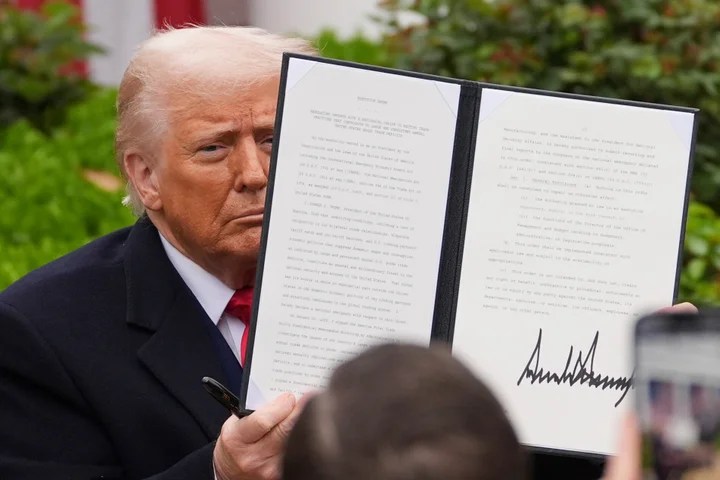
President Trump’s new policy seems to be “Make America Poor Again,” as he announced tariffs on imports from around the world. This decision caused Wall Street to plummet, following global markets on Thursday. Economists are now warning that the risk of recession is on the rise.
Stocks of major companies like Nike, Best Buy, and Dollar Tree plunged more than 11% before the opening bell on Thursday. Trump has also announced tariffs on auto imports, China, Canada, Mexico, steel, aluminum, oil from Venezuela, and plans for import taxes on pharmaceutical drugs, lumber, copper, and computer chips.
The Wall Street Journal criticized Trump’s tariffs, listing potential repercussions that could backfire on the president and his agenda. The editorial board highlighted the risks of retaliation and the negative impact on the economy. The future seems uncertain as the world waits to see how these tariffs will play out.
Tariffs, which are taxes imposed on imported goods and services, are frequently touted as a straightforward solution to intricate economic issues. However, a more thorough examination reveals that tariffs can actually be harmful to the American economy, ultimately impeding growth and negatively impacting consumers and leading to a recession as it did in the 1930’s.
One of the most immediate and significant consequences of tariffs is the increase in prices for consumers. When tariffs are placed on imported goods, the cost of these goods rises. Instead of absorbing these costs, businesses typically pass them on to consumers through higher prices for a wide range of products, from clothing and electronics to raw materials used in manufacturing. This reduction in purchasing power leaves Americans with less money to spend on other goods and services, ultimately dampening demand across the economy.
While tariffs may appear to be a means of safeguarding American businesses, they often have the opposite effect. Many U.S. companies rely on imported components and raw materials to produce their goods. Tariffs on these inputs drive up production costs, making American businesses less competitive in the global market. This can result in decreased sales, layoffs, and even business closures.
Although tariffs may temporarily protect jobs in specific industries directly impacted by imports, they frequently lead to job losses in other sectors. As previously mentioned, the heightened production costs stemming from tariffs can compel businesses to reduce their workforce. Additionally, retaliatory tariffs can harm industries that rely on exports, resulting in further job losses. Numerous studies have consistently demonstrated that the overall effect of tariffs on employment tends to be negative.
Instead of turning to the blunt tool of tariffs, policymakers should concentrate on implementing policies that foster long-term economic growth and enhance competitiveness.
In New York, the S&P 500 was down 0.8%, marking one of its worst losses in recent years. The index is poised to conclude the first quarter of the year with a 5.9% loss, potentially making it the worst quarter in nearly three years. The Dow Jones Industrial Average also saw a decline of 111 points, or 0.3%, as of 10:10 a.m. Eastern time, while the Nasdaq composite dropped by 1.7%.
The primary reason for these market fluctuations is the impending Trump tariffs. Economists at Goldman Sachs anticipate that Trump will announce an average reciprocal tariff of 15%, leading them to adjust their forecasts for inflation and U.S. economic growth for the remainder of the year. They have also raised concerns about a potential 35% chance of recession within the next year, up from an earlier forecast of 20%. This shift reflects a decrease in growth projections, declining confidence, and indications from White House officials suggesting a willingness to endure economic hardships.
The uncertainty surrounding these tariffs could prompt U.S. households and businesses to curtail their spending, thereby impacting an economy that had been performing well at the end of last year.
It seems that Trump is completely indifferent to the possibility of automakers raising prices due to tariffs. According to The Associated Press, if the full cost of tariffs is passed on to consumers, the average price of imported vehicles could skyrocket by $12,500. Not to mention, foreign auto parts would also be hit with a 25% tax, even if they are used in domestically assembled vehicles. And let’s not forget about the tariffs on aluminum, a key component in American cars, which would also see an increase in price.
“We’re looking at much higher vehicle prices,” said economist Mary Lovely, senior fellow at the Peterson Institute for International Economics. “We’re going to see reduced choice. … These kinds of taxes fall more heavily on the middle and working class.’’
Canadian Prime Minister Mark Carney had some choice words for Trump, calling the tariffs “unjustified” and declaring that the close economic and security relationship between Canada and the United States is officially over. Bravo, Trump, bravo. Your trade policies are truly a work of art.
President Donald Trump’s reckless and tumultuous economic policies are wreaking havoc on the economy, sending consumer sentiment into a downward spiral and increasing the likelihood of the United States plunging into a severe recession.
In March, consumer sentiment took a nosedive, plummeting by 12% from February as individuals across the political spectrum expressed fears of a worsening economy in the near future. The looming uncertainty surrounding economic policy developments continues to weigh heavily on consumers, with a staggering two-thirds anticipating a rise in unemployment over the next year—the highest level since 2009.
Recent data has economists on edge, with fears mounting that Trump’s policies could push the economy over the edge. Both businesses and consumers are pulling back in response to the chaos emanating from the White House, fueling apprehensions of an impending economic crisis.
Economic columnist Heather Long of The Washington Post has sounded the alarm, cautioning that a sharp decline in consumer spending could trigger a recession, given the economy’s heavy reliance on consumer activity. If consumers halt their spending—whether due to actual price increases resulting from Trump’s tariffs or mere speculation—it could spell disaster for the economy.
Republicans are driving up costs, sabotaging the economy, and hurtling the nation towards a recession. The stakes are high, and the consequences dire.
For years, the debate around tariffs has raged, often framed as a tool to protect domestic industries and bring jobs back home. However, a closer look reveals a less palatable truth: tariffs, ultimately, hit the pockets of American consumers hard. While the intention might be noble, the reality is that these taxes on imported goods often translate into higher prices, reduced choices, and a weakened economy for everyone.
So, how do tariffs negatively impact the average American? Here’s a breakdown:
1. Higher Prices for Everyday Goods: This is perhaps the most immediate and noticeable effect. When a tariff is placed on imported goods like clothing, electronics, or even ingredients for our favorite foods, the cost of importing those goods increases. Businesses, often with tight margins, are left with two choices: absorb the cost (which can be unsustainable) or pass it on to the consumer in the form of higher prices.
Think about that imported washing machine you were looking to buy. A tariff on imported steel, for example, increases the cost of the materials used to make it, driving up the retail price. Suddenly, that washing machine isn’t so affordable anymore. This applies to countless products we use daily, from smartphones to coffee beans.
2. Less Choice and Reduced Competition: Tariffs protect domestic industries by making imported goods less competitive. While this sounds good on paper, it can stifle innovation and lead to complacency. Without the pressure of foreign competition, domestic companies may become less motivated to improve their products, offer competitive pricing, or explore new innovations.
This translates to fewer choices for consumers. Instead of having a range of products to choose from, consumers might be stuck with fewer, potentially more expensive, options offered by a shrinking pool of domestic suppliers. This lack of competition ultimately limits consumer power and pushes prices higher.
3. Supply Chain Disruptions and Increased Uncertainty: Modern supply chains are incredibly complex and interconnected. Tariffs disrupt these carefully orchestrated systems, forcing businesses to scramble for alternative suppliers, which can be time-consuming and costly. This disruption can also lead to shortages of certain goods, further driving up prices.
Moreover, the uncertainty surrounding tariffs can scare businesses from investing and expanding. The threat of new tariffs or changes to existing ones makes it difficult for companies to plan for the future, leading them to delay investments, cut back on hiring, and ultimately hindering economic growth.
4. Retaliatory Tariffs and Trade Wars: Tariffs rarely happen in isolation. When one country imposes tariffs on another, the affected country often retaliates with its own tariffs. This tit-for-tat escalation, known as a trade war, can severely disrupt global trade and damage economies on both sides.
American farmers, for instance, have been significantly impacted by retaliatory tariffs on agricultural products. Reduced demand for their goods leads to lower prices and financial hardship, demonstrating the widespread impact of trade wars that ultimately impact consumers through higher grocery bills.
5. Reduced Purchasing Power: Ultimately, the combined effect of higher prices, reduced choices, and economic uncertainty translates to a reduced purchasing power for American consumers. Every dollar spent on higher-priced goods is a dollar less that can be used for other necessities, savings, or investments. This can have a significant impact on household budgets, particularly for low- and middle-income families.
While Trump often argues for their benefits in protecting domestic industries, the evidence suggests that the costs far outweigh the benefits, particularly for US consumers. Tariffs act as a hidden tax, eroding purchasing power, limiting choices, and disrupting the economy. A focus on free trade, fair competition, and policies that foster innovation will ultimately benefit American consumers far more than protectionist measures that leave us all paying the price.





 Blue Press Journal