Tag: tariffs

  • Setting the Record Straight on Tariffs

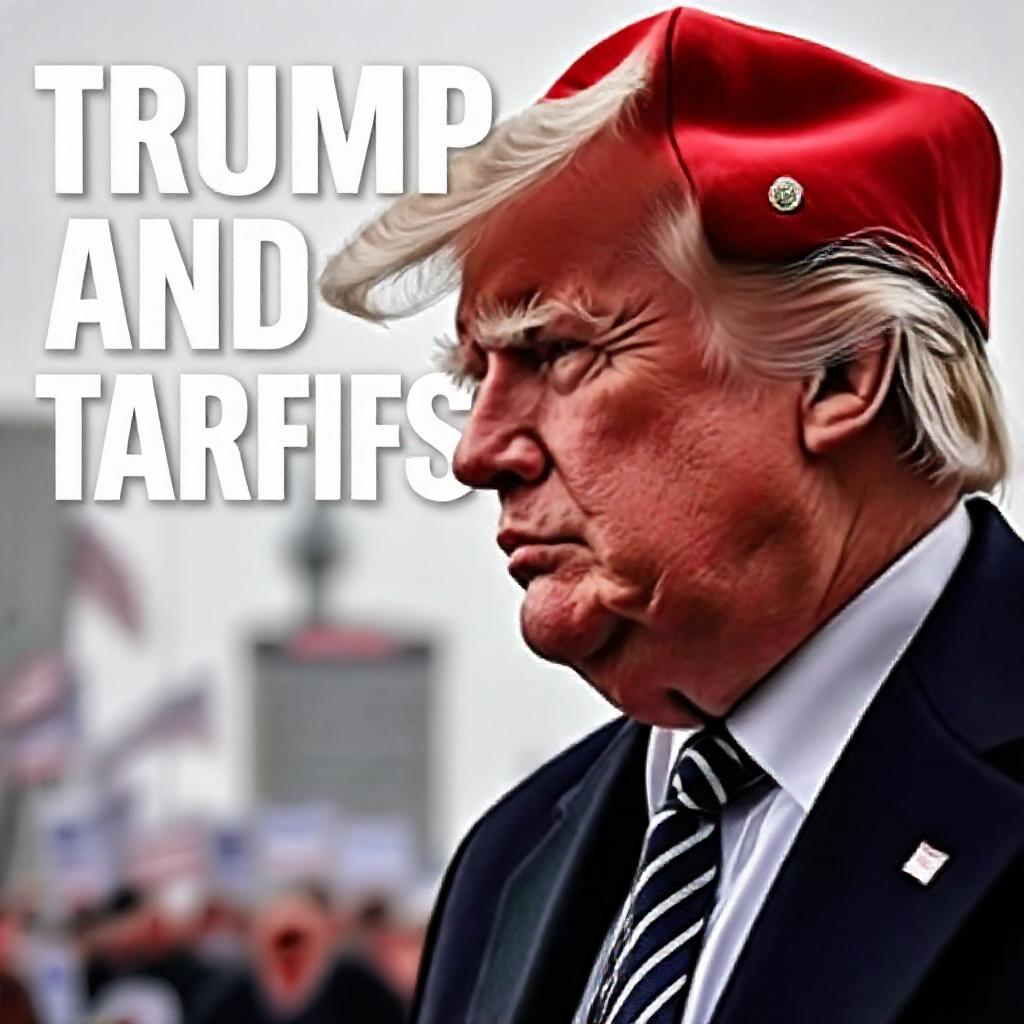
    The Trump administration is gearing up to slap some hefty tariffs on U.S. imports, taking us back to the good ol’ days before World War II.  Trump plans to flex his emergency executive authority muscles by imposing a 25 percent tariff on Canada and Mexico, and a 10 percent tariff on Chinese goods. Because nothing says “Let’s make America great again” like starting a trade war with our closest trading partners, right?

    But hey, who needs a fair economy, prosperity for working people, environmental protection, or climate sustainability anyway? Certainly not Trump, because his tariff ideas aren’t about any of that. Nope, they’re just designed to make things more expensive for American consumers and screw over working folks. But hey, at least we’ll all be paying more for stuff, right?

    And let’s not forget the potential for retaliation from other countries. Foreign governments and consumers are already sharpening their knives, ready to hit American goods and companies where it hurts. Canadian Prime Minister Justin Trudeau is all fired up, ready to respond in a “purposeful, forceful but reasonable, immediate” manner if Trump goes through with his threats. Because nothing says “friendly neighbor” like starting a trade war, right?

    But hey, who cares about potential consequences, right? A recent study suggests that a trade war with Canada could totally backfire on us. I mean, we export more stuff to Canada than anywhere else, and without all that sweet Canadian energy coming our way, we’d actually have a trade surplus with them. So yeah, let’s just keep poking the bear and see how that works out for us. Sounds like a great plan, right?

    Seems our president must have failed Economics 101 in college!
  • Trump Tariffs on the US Economy … Eggs, Groceries, Cars and lots of things will increase!

    The Impact of Tariffs on the US Economy 

    In today’s interconnected global economy, trade plays a crucial role in driving economic growth. However, the use of tariffs – taxes imposed on imported goods – has sparked ongoing debates. While advocates of tariffs argue that they protect domestic industries and jobs, a closer examination reveals that they can actually have detrimental effects on the US economy.

    The Trumps Illusion of Protectionism:

    Proponents of tariffs often argue that they shield American businesses from foreign competition, enabling them to flourish and create jobs. While this argument may seem logical at first glance, it fails to consider several key factors. When tariffs are implemented, the immediate consequence is an increase in the prices of imported goods. While this may benefit certain domestic producers, it also results in higher costs for consumers.

    For instance, let’s consider a scenario where a tariff is imposed on imported steel. While US steel manufacturers may experience a surge in demand, industries that rely on steel – such as car manufacturers, construction companies, and appliance makers – are now faced with elevated costs. These increased costs are typically passed on to consumers in the form of higher prices for cars, homes, and everyday goods.

    The Domino Effect: Retaliation and Trade Wars

    One of the major drawbacks of tariffs is the potential for retaliation. When the United States imposes tariffs on goods from other countries, such as Cannda, those countries often respond by imposing tariffs on US exports. This retaliation can escalate into a trade war, creating barriers for businesses involved in both imports and exports. For instance, American farmers may bear the brunt of the impact when other nations target agricultural products with retaliatory tariffs.

    These trade wars disrupt supply chains, increase uncertainty, and ultimately harm businesses across various sectors, not just those directly affected by tariffs. Instead of fostering growth, such conflicts often result in job losses and economic stagnation.

    The Cost of Choice and Innovation

    Tariffs also restrict consumer choice by raising the prices of imports, limiting the variety of products available to American consumers. This restriction stifles competition and can hinder innovation. Businesses shielded from global market competition may become complacent and less inclined to enhance their products or reduce prices.

    Moreover, tariffs can reduce overall economic efficiency. When companies are compelled to purchase more expensive domestic goods instead of cheaper, higher-quality imports, their productivity suffers. This decline in productivity can have a ripple effect on the entire economy, making the United States less competitive on the global stage.

    The key takeaway is this: although the idea of safeguarding domestic industries may seem appealing, the truth is that tariffs mostly have negative consequences. They result in higher prices for consumers, provoke retaliatory trade conflicts, stifle innovation, and ultimately harm the US economy. It is imperative to transition beyond the superficial allure of tariffs and adopt a more sophisticated and successful strategy towards global trade.

  • Trump’s Tuesday Press Conference…train wreck

    The impending disaster that is the Trump train wreck is hurtling towards the station at full speed.

    Trump’s audacious claims of coveting Greenland and the Panama Canal, along with his threats of taking them by force, are nothing short of alarming. His desire to turn Canada into a US state and rename the Gulf of Mexico as the Gulf of America is a display of his delusional grandeur.

    In a nonsensical rant about the January 6 insurrection, Trump insinuated involvement of the FBI and Hezbollah, showcasing his descent into madness. His tirade against Jack Smith, the special counsel, paints a picture of a deranged individual unable to accept accountability for his actions.

    The president-elect’s bizarre commentary on everyday appliances like dishwashers and showers only adds to the spectacle of his erratic behavior. His extreme and provocative statements serve as a warning to those who underestimate the danger he poses.

    Tuesday’s events serve as a stark reminder of the chaos that ensues when we allow such extremism to go unchecked. The time for complacency is over, as we are on the brink of disaster if we continue to normalize Trump’s outrageous behavior.

  • The economy and jobs perform better under Democratic administrations…just the facts

    The performance of the U.S. economy has shown a consistent trend of stronger growth under Democratic presidents compared to Republican presidents in the modern era. Across various metrics such as total job growth, unemployment rates, economic expansion, manufacturing job creation, manufacturing investment, small business development, and national debt management, Democratic administrations have consistently outperformed their Republican counterparts.

    This disparity can be attributed to the differing economic policies pursued by each party. Democrats have focused on investing in the middle class, supporting small businesses, and enhancing economic resilience following economic downturns. In contrast, Republicans have often prioritized tax cuts that primarily benefit the wealthy, which have failed to stimulate economic growth or pay for themselves.

    It is noteworthy that of the 11 recessions that have occurred in the modern era, 10 have originated during Republican presidencies. Additionally, data shows that the unemployment rate tends to be lower at the conclusion of Democratic presidencies compared to Republican presidencies. 

    Recent examples include the decrease in the unemployment rate from 6.4% at the beginning of the Biden-Harris administration to 4.1% in September 2024, while it rose from 4.7% at the start of President Donald Trump’s term to 6.4% upon his departure.

    Furthermore, economic growth has been more robust under Democratic presidents, with real GDP expanding by 10% during the Biden-Harris administration compared to 9% under President Trump. The United States has also demonstrated a quicker recovery to pre-pandemic GDP levels compared to other G7 nations, surpassing pre-pandemic forecasts from the Congressional Budget Office.

    In conclusion, the data clearly illustrates that Democratic administrations have consistently fostered stronger economic performance in the United States compared to Republican administrations.

  • He did lie and they Bought it!

    It is abundantly clear now that Trump deceived the American public in order to secure his election, with just enough support to narrowly win. Let’s not mince words – a slim majority compromised their values for the allure of lower egg prices and a full gas tank.

    Seems like you can indeed pull the wool over everyone’s eyes, as Trump managed to do. Despite Covid no longer being a concern and the Biden Administration orchestrating the most successful economic recovery in history, many individuals fell for a blatant falsehood.

    And now, Trump finally confesses that he is incapable of delivering on his promises.

    Congratulations, you’re stuck with him for the next four years! Enjoy.

    ‘Did he lie?’: Trump questioning his price-lowering promises are possible sparks anger

  • I told you so … vote for Trump, vote for TARIFFS

    I hate to say “I told you so,” but… actually, no I don’t. It’s pretty satisfying to be right. Trump has decided to slap tariffs on several countries, which will ultimately be passed on to consumers.

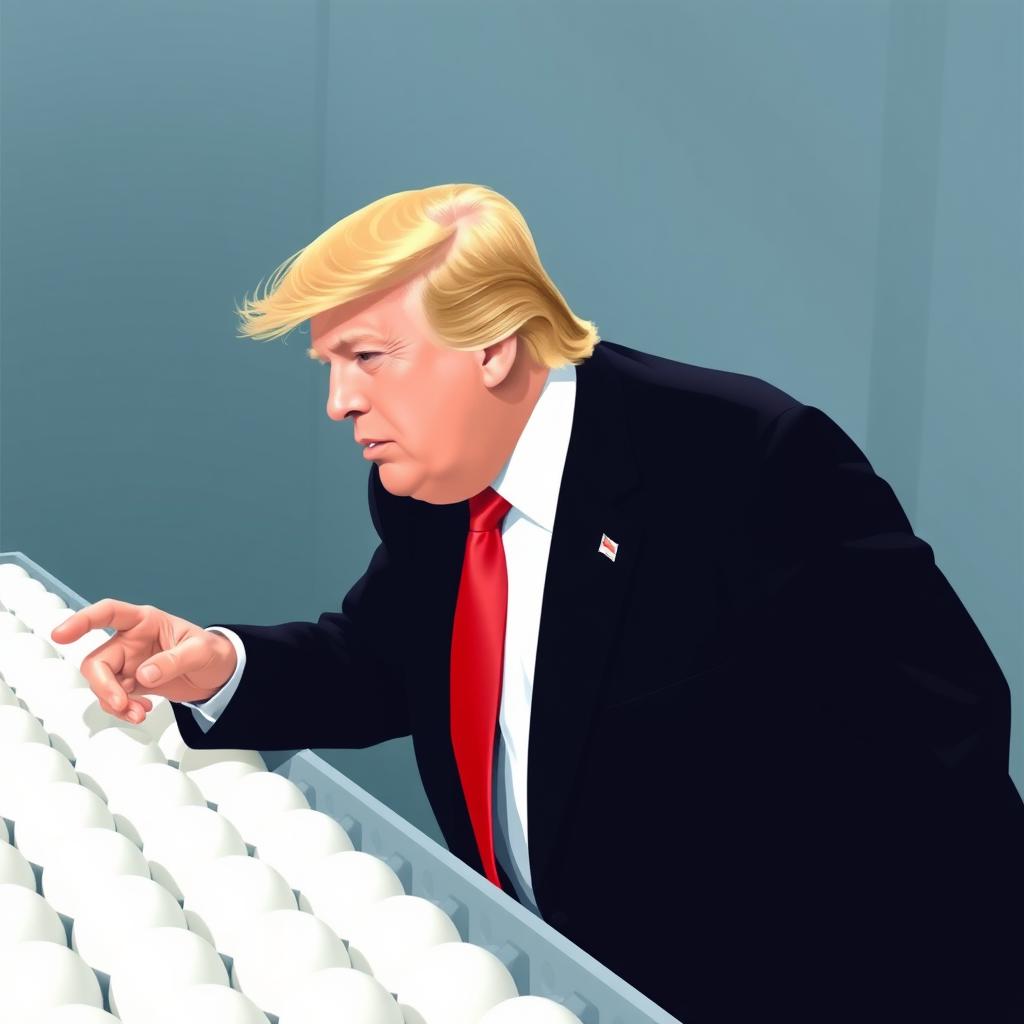
    For those of you who believed that inflation would magically disappear and voted for him in hopes of cheaper eggs, well, surprise! You’ve been deceived, or let’s call it what it is – lied to.

    But hey, don’t take my word for it. Check out this story for some cold, hard facts. Enjoy!

    Trump ‘can’t guarantee’ Americans won’t pay more if tariffs enacted

  • The Effects of Tariffs on Imported Goods…the Trump Promise

    Understanding Tariffs

    Tariffs come in two primary forms: specific tariffs, which are a fixed fee per unit of imported goods, and ad valorem tariffs, which are a percentage of the value of the imported goods. These taxes can be levied for various reasons including protecting domestic industries, generating government revenue, and responding to unfair trade practices.

    Direct Effects on Prices

    One of the most immediate consequences of tariffs is the increase in prices for imported goods. When a government imposes a tariff, it raises the cost of these goods for importers. These costs are usually passed on to consumers, resulting in higher retail prices. For example, if a country imposes a 25% tariff on imported steel, the price of products using that steel—like cars and appliances—will also rise. This leads to inflationary pressures in the economy, affecting not just goods that are directly subject to tariffs, but potentially many related products as well.

    Impact on Domestic Markets

    Tariffs are often implemented to protect domestic industries from foreign competition. In the short term, this can benefit local producers, allowing them to maintain or increase their market share as consumers seek alternatives to more expensive imported goods. However, this protection can also lead to complacency among domestic producers, reducing their incentive to innovate or improve efficiency. Over time, failing to compete with foreign manufacturers can hinder the growth of a country’s industry.

    Additionally, while some sectors may thrive due to tariffs, others may suffer. Industries that rely on imported raw materials may see their costs rise, leading to higher production costs and reduced competitiveness. This creates a complex dance of winners and losers in the domestic market.

    In summary, Trump’s proposed tariffs will increase costs for the very people he vowed to help by lowering prices.

    Read more in the below article:

    We’re Economists. Here’s What We Really Think Of Trump’s Plan To ‘Lower’ Grocery Prices.