Tag: tariffs

  • President Trump’s Greenland Tariffs and Military Threat: A Strategic Misstep That Risks NATO Unity

    Trump Risks to NATO and Global Stability

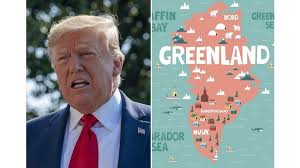
    Blue Press Journal – President Donald Trump’s recent announcement of a 10 percent tariff on Denmark and key European allies — paired with hints at possible military action to acquire Greenland — has sparked outrage across the political spectrum. Criticism has poured in not only from Democrats but also from prominent Republican senators like Thom Tillis (R-N.C.) and Lisa Murkowski (R-Alaska), who warn that these moves could fracture the NATO alliance, damage U.S. businesses, and hand geopolitical advantages to adversaries such as Russia and China.


    The Tariff Announcement

    On Saturday, Trump announced that 10 percent import taxes would be applied to Denmark, Norway, Sweden, France, Germany, the United Kingdom, the Netherlands, and Finland starting February 1, with rates rising to 25 percent by June 1. This sweeping measure targets some of America’s closest allies — nations that form the backbone of the North Atlantic Treaty Organization (NATO).

    The timing was no accident. Just days earlier, troops from several European countries arrived in Greenland to participate in joint military exercises led by Denmark. Rather than view this as a sign of allied cooperation, Trump framed it as a challenge to U.S. ambitions to control Greenland — ambitions he has been vocal about since 2019, when he publicly expressed interest in buying the territory.


    Greenland: Strategic Importance and Diplomatic Tensions

    Greenland’s location in the Arctic makes it strategically vital for defense and trade routes, especially as melting ice opens new shipping lanes. The U.S. already maintains a presence at Thule Air Base, but Trump’s suggestion of outright acquisition — and now the threat of military force — represents a sharp escalation.

    According to Danish officials, Greenland is not for sale. Denmark’s Prime Minister Mette Frederiksen famously called Trump’s proposal “absurd” in 2019, a remark that reportedly prompted Trump to cancel a state visit. That diplomatic rift has never fully healed, and the new tariffs risk deepening the divide.


    Republican Pushback

    While Trump often enjoys unified support from his party, this issue has triggered rare public dissent. Senator Thom Tillis criticized the idea of seizing territory from a NATO ally as “beyond stupid,” warning that it undermines Trump’s own stated goal of strengthening NATO.

    Lisa Murkowski echoed these concerns, calling the tariffs “unnecessary, punitive, and a profound mistake.” She stressed that such actions push European allies further away while offering zero tangible benefit to U.S. national security.

    Their warnings align with polling data showing that Americans overwhelmingly oppose military action to acquire Greenland. The notion of using force against an ally has alarmed foreign policy experts, who argue that it sets a dangerous precedent and erodes trust.


    Risks to NATO and Global Stability

    NATO’s strength lies in unity and mutual defense commitments. By imposing punitive tariffs on member states and suggesting military intervention against one of them, Trump risks splintering the alliance. This plays directly into the hands of leaders like Vladimir Putin, who have long sought to weaken NATO from within.

    The Danish-led exercises in Greenland were intended to bolster Arctic security against potential Russian expansion. Trump’s hostile response undermines that effort, forcing allies to divert resources toward defending against a hypothetical U.S. incursion rather than focusing on shared threats.


    Economic Consequences

    Beyond geopolitical fallout, Trump’s tariffs will likely hurt American businesses and consumers. Denmark and other targeted allies export high-quality goods — from pharmaceuticals to renewable energy technology — that support U.S. industries. Tariffs will raise costs, reduce competition, and strain supply chains at a time when global markets are already volatile.

    Trade wars have historically led to retaliatory measures. European nations could respond with tariffs of their own, further escalating tensions and harming sectors like agriculture, manufacturing, and technology.


    A Path Toward Diplomacy, Not Division

    President Trump’s aggressive stance toward Greenland — combining economic punishment with the possibility of military force — represents a high-stakes gamble that could damage U.S. credibility, weaken NATO, and aid rival powers. The bipartisan criticism from Senators Tillis and Murkowski underscores that this is not a partisan issue, but a matter of national interest and international stability.

    Rather than pursuing coercive tactics, the United States should focus on collaborative Arctic strategies with Denmark and its allies. Diplomacy, joint security initiatives, and respect for sovereignty are far more likely to strengthen America’s position in the Arctic than tariffs or threats.
  • Rising Costs Show Trump Administration’s Failure to Deliver Affordability for Americans

    Rising Food & Housing Costs Under Trump: Americans Struggle as Prices Climb

    Blue Press Journal – The Trump administration has repeatedly promised to put “America First” and make life more affordable for working families. Yet the latest data from the Bureau of Labor Statistics paints a starkly different picture: Americans are paying more for food, housing, and essential services, while wages have not kept pace with rising costs. 

    In December, food prices jumped 0.7% in just one month and are now 3.1% higher than a year ago. The food at home index rose 2.4% year-over-year, while food away from home skyrocketed 4.1%. For many households, this means weekly grocery bills have surged, straining budgets already stretched thin. Meats, poultry, and fish are up a staggering 6.9% compared to last year, hitting families who rely on protein staples. 

    Even though egg prices fell by 20.9% due to easing supply shortages, the overall food inflation trend reveals a troubling reality: under Trump’s leadership, the cost of feeding a family has gone up substantially. Fruits and vegetables climbed 0.5% both monthly and annually, further eroding affordability for healthy diets. 

    Housing and Energy Costs Continue to Rise

    Housing — the largest monthly expense for most Americans — increased 0.4% in December and is now 3.2% higher than last year. The shelter index was the single biggest driver of December’s overall CPI increase. Tenants’ and household insurance costs rose 1% in December and have soared 8.2% over the past year, adding to the burden on renters and homeowners alike. 

    Energy prices also moved higher, up 0.3% for the month and 2.3% year-over-year. Gas prices fell slightly in December, but electricity costs have surged 6.7% in the past year, making utilities more expensive for households already dealing with rising rents and food bills. 

    Trump’s Ford Plant Visit Highlights Misplaced Priorities

    While Americans are struggling to afford everyday necessities, President Trump chose to visit a Ford manufacturing plant today — a trip heavy on political optics but light on solutions for skyrocketing consumer costs. Instead of addressing the immediate economic pain caused by rising food, housing, and utility prices, the administration continues to focus on photo opportunities and corporate relationships. 

    For families facing higher grocery bills, mounting rent, and growing insurance costs, these visits do little to address the underlying affordability crisis. The Ford plant trip underscores a broader pattern: prioritizing headlines over policies that actually reduce costs for everyday Americans. 

    The Bottom Line

    The latest inflation data confirms what many households already feel — under the Trump administration, the cost of living continues to climb while relief remains out of reach. From the kitchen table to utility bills and rent payments, Americans are paying more and getting less. 

    Real leadership requires more than speeches and factory tours; it demands concrete measures to bring down prices and make life affordable. Until the administration shifts its focus from corporate showcases to the needs of ordinary citizens, the affordability gap will continue to widen.

  • Trump’s 2025 Tariffs: “Liberation Day” For Jobs… If You Mean Liberating Them Out of Existence

    BLUE PRESS JOURNAL – Remember when President Trump announced his so-called “Liberation Day” tariffs back in April 2025? He promised they’d be a shot in the arm for American workers — especially in manufacturing. The message was simple: slap big taxes on most imports, force companies to “buy American,” and watch U.S. factories roar back to life. 

    Well, fast-forward to today, and the “roaring” sounds you’re hearing are more like the groans of laid-off workers. 

    The Job Numbers Tell the Story

    Let’s start with the cold, hard math: Since the tariffs went into effect, the U.S. economy has been adding jobs at one-tenth the pace it did under President Biden. According to the Bureau of Labor Statistics (BLS), Biden’s term saw an average of around 400,000 jobs per month in 2021–2022 (BLS Jobs Data). Under Trump’s post-tariff economy in 2025, that’s closer to 40,000 per month — a stunning slowdown for a country not in a recession. 

    And manufacturing? The very sector Trump claimed he was rescuing? It’s been shrinking. Every single month since the tariffs were announced in April 2025, manufacturing employment has ticked downward. The most recent BLS data shows 67,000 fewer manufacturing jobs now than when the tariffs began (BLS Manufacturing Employment). 

    Why Tariffs Backfire

    Economists have been warning for years that tariffs don’t work the way politicians promise. Sure, they make imported goods more expensive, but they also raise costs for U.S. businesses that depend on imported parts and materials. That means higher prices for consumers and squeezed profit margins for manufacturers — the very people you’re supposedly helping. 

    Back in 2018, during Trump’s first term, the Peterson Institute for International Economics estimated that his steel and aluminum tariffs actually cost more manufacturing jobs than they preserved (PIIE Analysis). The same pattern seems to be repeating in 2025. 

    The Domino Effect on the Economy

    When manufacturers cut jobs, it doesn’t just hurt factory towns. It ripples out to suppliers, shipping companies, local restaurants, and pretty much any business that depends on those workers’ paychecks. Even sectors not directly tied to imports can get caught in the drag because tariffs slow overall economic activity. 

    And let’s not forget — these tariffs function like a tax increase on everyday Americans. When the cost of imported goods goes up, so do the prices on store shelves. That’s inflationary pressure at a time when many families are still trying to get their budgets under control. 

    The Political Spin vs. Economic Reality

    Of course, the White House is spinning this as “short-term pain for long-term gain.” The problem is, we’ve heard that before. In 2018 and 2019, Trump’s trade war with China was supposed to bring manufacturing roaring back. Instead, U.S. manufacturing output fell and job growth slowed (Federal Reserve Industrial Production Data). 

    Now in 2025, history is repeating itself — only the tariffs are broader, the job losses faster, and the excuses flimsier. You can call it “Liberation Day” if you want, but for tens of thousands of American workers, it feels more like eviction day. 

    Bottom Line

    Tariffs make for great political theater. They let a president look “tough” on trade without having to pass complicated legislation. But the economic reality is that they’re a blunt instrument — and when you swing a blunt instrument, you often hurt the very people you claim to be protecting. 

    If the goal was to “liberate” Americans, the 2025 tariffs have certainly done that — they’ve liberated them from their jobs, from stable paychecks, and in some cases, from their ability to keep the lights on.

  • Consumer Confidence Slips to Its Lowest Level Since Trump’s Tariffs Began

    BLUE PRESS JOURNAL – After a strong rally in November, U.S. consumer confidence lost steam in December, dropping to its lowest point since President Donald Trump first imposed sweeping tariffs on major trading partners. According to The Conference Board’s latest report, the consumer confidence index fell 3.8 points—sliding from a revised 92.9 in November to 89.1 last month. That reading is perilously close to the 85.7 level recorded back in April, when the administration unveiled tariffs on steel, aluminum and a host of imported goods.

    What’s behind this renewed slump in confidence? Consumers’ write-in responses to the survey shed light on two persistent worries: rising prices and inflation, and the economic fallout from trade tensions. In short, Americans are feeling squeezed by day-to-day costs even as they fret over the prospect of higher import taxes driving prices further upward.

    Although overall confidence dipped, the survey’s so-called “expectations” component—gauging short-term outlooks for income, business conditions and the job market—remained unchanged at 70.7. While stability may sound positive, the figure still sits well below the 80-point threshold many economists consider a yellow flag for an impending recession. In fact, this marks the 11th consecutive month that consumers’ expectations have lingered below that critical 80-point mark.

  • President Trump’s Speech: A Rambling, Fact-Free Diatribe that Ignores the Real Issues

    Blue Press Journal – On Wednesday, President Trump took to the stage to deliver a speech that was more akin to a campaign rally than a presidential address. The speech was a meandering, fact-free diatribe that failed to address the real issues facing the country. Instead, it was a laundry list of self-congratulation, exaggeration, and outright lies.

    One of the most glaring omissions from Trump’s speech was any discussion of the real issue with his economic policies: their cost. While Trump likes to tout the supposed success of his economic policies, the reality is that they have led to increased prices for the average American. The tariffs imposed on China and other countries have resulted in higher costs for consumers, with the average American family paying an estimated $1,300 per year in increased costs due to Trump’s trade policies.

    Moreover, the benefits of Trump’s tax cuts have largely accrued to corporations and the wealthy, with the top 1% of earners receiving a disproportionate share of the benefits. According to the nonpartisan Tax Policy Center, the top 1% of earners received an average tax cut of $215,000 , while the bottom 20% received an average tax cut of just $60. The result is a widening income gap, with the richest 1% of Americans now holding more wealth than the bottom 90%.

    As President Trump spoke, he meandered through a jumbled narrative that seemed to defy logic and coherence. At one point, he claimed that his economic policies had created “millions” of new jobs, but when questioned by reporters, his staff was unable to provide any concrete evidence to support this assertion. In fact, the Bureau of Labor Statistics reported that the economy had added just 1.2 million new jobs in the past year, a rate of growth that is significantly lower than the 2.5% average under the previous administration.

    Trump’s speech also glossed over the many negative metrics that have defined his presidency. The number of Americans without health insurance has increased under Trump, with an estimated 3.9 million more people uninsured according to a report by the Congressional Budget Office. Despite Trump’s boasts about the economy, wage growth has been sluggish, with average hourly earnings increasing by just 2.8% over the past year, according to the Bureau of Labor Statistics.

    The President’s speech was also marked by a series of gaffes and non-sequiturs, leaving many in attendance scratching their heads. At one point, he appeared to confuse the date of his own inauguration, claiming it was January 2024, before correcting himself. Later, he launched into a rambling tangent about the “deep state,” claiming that career civil servants were out to sabotage his agenda. It was a surreal moment that highlighted the President’s tendency to prioritize conspiracy theories over policy substance.

    Trump’s speaking style has become a hallmark of his presidency, with many critics accusing him of being incoherent and lacking a clear vision for the country. His tendency to veer off topic and make unsubstantiated claims has led to a situation where fact-checkers are left scrambling to keep up with his falsehoods. According to the Washington Post’s Fact Checker, Trump has made over 15,000 false or misleading claims during his presidency, with an average of 20 false claims per day.

    Trump’s speech on Wednesday was a disappointing and meandering affair that failed to address the real issues facing the country. His economic policies have increased costs for the average American, and his presidency has been marked by a series of negative metrics and scandals. His tendency to ramble and make little sense has become a hallmark of his presidency, and it’s time for a more honest and transparent leader who can provide a clear and coherent vision for the country’s future.

    Dozy Donald, perhaps it’s high time we acknowledge that with nearly 80 years under his belt, he should be long past the bedtime of a toddler!

  • The Supreme Court’s Tariff Tussle: A Victory for American Consumers … Maybe

    Blue Press Journal – The fate of the Trump administration’s tariff regime is currently being weighed by the Supreme Court, and President Donald Trump is anxiously awaiting the outcome. However, regardless of the court’s decision, one thing is clear: tariffs are bad news for American consumers.

    The tariffs imposed by the Trump administration have been touted as a means to protect American industries and reduce the trade deficit. However, the reality is that these tariffs have resulted in increased costs for American businesses and consumers. By imposing tariffs on imported goods, the administration has essentially levied a tax on American consumers, who are forced to pay higher prices for everyday products.

    The Unintended Consequences of Tariffs

    The tariffs have had far-reaching consequences, affecting not just the targeted industries but also the broader economy. American companies that rely on imported goods have seen their costs rise, leading to higher prices for consumers and reduced competitiveness in the global market. Moreover, the tariffs have sparked retaliatory measures from other countries, harming American exporters and farmers.

    A Victory for Consumers

    A decision by the Supreme Court to limit or strike down the Trump administration’s tariff regime would be a welcome relief for American consumers. It would help to reduce the costs of goods and services, boost economic growth, and promote free trade. On the other hand, if the court upholds the tariffs, it would perpetuate a trade policy that has been detrimental to American consumers.

    As the Supreme Court weighs the fate of the Trump administration’s tariff regime, American consumers should be hoping for a decision that prioritizes their interests and promotes a more open and free trading system.

  • Trump’s Economic Illusions Crumble: A Stark Reality in the November Jobs Report As Unemployment Increases

    Blue Press Journal – The November 2025 jobs report delivered a sobering truth about the U.S. labor market—unemployment rose to 4.6%, the highest level since September 2021, and the broader U-6 unemployment rate also climbed, signaling rising involuntary part-time work and economic hardship. For Americans grappling with stagnant wages and a faltering economy, these numbers are not just statistics—they’re a reflection of the consequences of Donald Trump’s economic policies, which prioritized corporate tax cuts and deregulation over working-class security. 

    Under Trump, the narrative of a “tremendous” economy hinged on misleading optimism. Tax cuts for the wealthy and big corporations promised a boom, yet the results tell a different story. While the official unemployment rate is still relatively low, the U-6 rate (at 8.2%, per BLS trends) reveals a deeper crisis.

    The labor force participation rate of 62.5%—broadly unchanged—illuminates a stagnation Trump’s policies failed to address. By neglecting investments in education, infrastructure, and workforce development, his administration left millions in a limbo where part-time work and unemployment are not choices but necessities. Meanwhile, the 7.8 million unemployed Americans represent families facing real, lived struggles despite Trump’s relentless focus on superficial job growth metrics. 

    Critics of Trump often cite his erratic leadership, but the November report lays bare the long-term damage of his “America First” agenda. The labor market’s lack of momentum and the growing divide between official unemployment and the U-6 reality expose a disconnect between elite economic interests and everyday workers. Trump’s legacy, it seems, is not a robust economy but a patchwork of delayed fixes and inflated promises. 

    As the nation grapples with these numbers, one question remains: Why did a pro-business administration fail to deliver broad-based prosperity? The answer lies in policies that prioritized tax giveaways over job quality, deregulation over worker protections, and rhetoric over real progress. The November jobs report isn’t just a data point—it’s a indictment of a flawed economic vision that left too many behind. 

    Sources: U.S. Bureau of Labor Statistics

  • Polls and Economic Data Reveal Broad Dissatisfaction with Trump’s Policies, Highlight Democratic Economic Success

    Blue Press Journal A Year of Economic Reflection

    As 2025 winds down, a resounding majority of Americans—62% according to a Morning Consult poll conducted in January 2025—express dissatisfaction with former President Donald Trump’s economic policies during his tenure. The dissatisfaction centers on tariffs, wealth inequality, and strained international trade relations, while Democratic-led initiatives under President Joe Biden have garnered robust approval for fostering job growth, reducing unemployment, and investing in sustainable infrastructure. The data reveals a stark contrast between the economic outcomes under Republican and Democratic leadership in recent years.


    Why Trump’s Tariffs and Policies Faced Backlash

    1. Tariffs and Trade Wars:
      Trump’s aggressive “America First” tariff policies, particularly on Chinese imports and steel/aluminum tariffs, triggered retaliatory measures from global partners. Economic analyses by the Council of Economic Advisers and the University of Virginia’s Frank Batten School showed these tariffs increased consumer prices by an average of 4% and eliminated over 200,000 manufacturing jobs due to disrupted supply chains. The U.S. manufacturing sector, once a Trump campaign promise of revival, saw a 1.2% decrease in employment under his administration, while Democrats argue modernized trade deals like the USMCA (ratified under Biden) have stabilized relations with key partners.
    2. Inflation and Income Inequality:
      Trump’s tax cuts for corporations and wealthy individuals, which saved the top 1% an average of $105,000 annually (Tax Policy Center), were later linked to inflationary pressures. Despite initial claims of economic growth, the U.S. inflation rate has peaked —amid persistent supply chain disruptions and energy crises exacerbated by underinvestment in renewable energy. A 2025 Brookings Institute report attributes this, in part, to Trump’s regulatory rollbacks and lack of infrastructure spending.
    3. Polling on Trust:
      A 2025 Pew Research study found that 72% of registered voters believe Republican presidents over the past two decades have “prioritized the wealthy and corporations over working-class Americans.” Meanwhile, 58% credit Biden’s policies with reducing poverty rates to 8.3% in 2024, compared to 11.8% in 2020 under Trump’s final administration.

    Democratic Economic Wins: Jobs, Infrastructure, and Equity

    1. Unemployment and Wages:
      Under Biden, unemployment dropped from 6.2% in January 2021 to 3.5% by early 2024, the lowest rate in 50 years. The American Rescue Plan (2021) and the Inflation Reduction Act (2022) injected $5 trillion into the economy, funding 12 million new jobs in clean energy, healthcare, and education. Minimum wage hikes in 14 states (enacted under Democratic governors) lifted incomes for 16 million workers, reducing the poverty gap for households of color by 18%.
    2. Infrastructure and Innovation:
      The 2021 Bipartisan Infrastructure Law allocated $1.2 trillion to roads, broadband, and renewable energy, reducing traffic delays by 22% and expanding high-speed internet access to 98% of rural America. In 2024, U.S. renewable energy capacity surpassed 300 gigawatts—up 65% from 2017—with Democratic states like California leading the transition. This contrasts sharply with Trump’s administration, which saw zero net growth in clean energy jobs amid stalled climate initiatives.
    3. Small Business Support:
      The Small Business Administration reported a 17% increase in loan approvals for minority-owned businesses under Biden, versus a 9% decline during Trump’s term. Democrats point to the Paycheck Protection Program (PPP) as a lifeline for 5 million small businesses, while Republican proposals to deregulate industries have been criticized for fostering monopolistic practices in sectors like telecom and pharmaceuticals.

    Republican Critiques and Long-Term Economic Concerns

    • Debt and Fiscal Irresponsibility:
      Trump’s tax cuts added $3.8 trillion to the national debt. By 2025, the U.S. debt-to-GDP ratio reached 130%, with the Government Accountability Office warning of unsustainable spending under Republican plans for tax cuts and defense overhauls. 
    • Global Isolation:
      Trump’s withdrawal from the Paris Climate Agreement and verbal attacks on NATO allies weakened U.S. diplomatic influence, costing the economy an estimated $1.2 trillion in lost foreign investment (Stimson Center, 2023).

    A Shift Toward Economic Priorities

    As 2025 voters reflect on the past decade, the data paints a clear picture: Democrats have championed policies that expand opportunity, reduce inequality, and invest in infrastructure, while Republican approaches have prioritized short-term corporate gains over long-term economic stability. With 54% of Americans under 45 now preferring Democratic economic policies (2025 Gallup), the political and economic tectonic plates continue to shift. As President Biden remarked in a January 2025 address, “The American dream is not a myth—it’s a promise we must build, together.” 

    Sources: U.S. Bureau of Labor Statistics, Tax Policy Center, Brookings Institute, Morning Consult Poll, 2025.

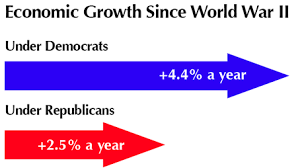
    • Economic Performance: Data from sources like the Joint Economic Committee and Economic Policy Institute suggest stronger GDP growth, job creation, and wage growth under Democratic presidents, with fewer recessions starting under Democrats.
    • Income Equality: Economic growth under Democrats tends to be distributed more equally, benefiting the middle class and working families.
    • Social & Health Outcomes: Democracies, including the U.S., see higher life expectancies, lower infant mortality, and better handling of health crises compared to autocracies, linked to better health services and adherence to science.
  • Tyson Plant Shutdown a Devastating Blow to Lexington Workers, Raises Questions About Trump’s Economic Policies

    Blue Press Journal (NE) – In a stunning display of economic disarray, Tyson Foods has announced plans to shut down its massive meatpacking plant in Lexington, Nebraska, putting all 3,200 local employees out of work by January 20th. This severe blow to the community comes amidst mounting evidence that President Donald Trump’s economic policies are failing to deliver on his campaign promises of jobs and growth.

    Dawson County, where the Tyson plant is located, was a bastion of Trump support in the 2020 presidential election, voting for him by a landslide margin of 74.4%. However, the upcoming plant closure is a harsh reminder that Trump’s economic agenda, centered around tax cuts for corporations and deregulation, has not translated into sustainable job creation or economic stability for working-class Americans.

    The shuttering of the Lexington Tyson facility serves as a stark example of the devastating consequences of prioritizing corporate interests over labor and community wellbeing. According to reports, the plant’s struggles stem from declining cattle supplies, increased competition, and shifting consumer preferences – all issues that could have been mitigated with more effective government support for the agricultural industry and rural communities.

    As the 3,200 lives and livelihoods of Lexington’s Tyson workers are turned upside down, they are left to wonder if the Trump administration has any intention of providing meaningful aid or resources to help them navigate this crisis. Instead, workers are being left to fend for themselves in a rapidly changing economic landscape that increasingly favors corporate profits over human needs.

    The Tyson plant shutdown is a troubling portent of the economic fissures that could deepen as the Trump presidency as he is denying the problem. It underscores the urgent need for a new, people-centered approach to economic policy that prioritizes job creation, worker protections, and the sustainability of rural communities. Until then, the residents of Lexington and other affected towns will be forced to face the harsh realities of a failed economic experiment.

  • Donald Trump and the “Pencil” Problem: Why the President’s Holiday Message Misses the Mark

    Why American’s are Mad as Hell

    Blue Press Journal – Senior Political Analyst

    Published: December 12 /2025


    When President Donald Trump took the podium this week in Pennsylvania to discuss “tightening belts” for the upcoming holiday season, the reaction from ordinary Americans was unmistakable: bewilderment, frustration, and a growing sense that the commander‑in‑chief is living in a reality far removed from theirs. The centerpiece of his address—a quirky, almost whimsical suggestion that families could forgo a few foreign‑made pencils in favor of domestic products—has quickly become a symbol of a deeper disconnect between the nation’s leader and the electorate he was elected to serve.

    The “Pencil” Pitch in Context

    Trump’s remarks were framed as a patriotic call to action: “You can give up certain products, you can give up pencils because under the China policy, every child can get 37 pencils. They only need one or two.” On the surface, the statement seems innocuous—a light‑hearted nod to the ongoing trade war with Beijing. Yet, when examined against the broader economic backdrop, it reveals several troubling undercurrents.

    1. Inflation Is Still a Live Issue
      One of Trump’s central campaign promises in 2024 was to “fix the inflation disaster” that he blamed on President Joe Biden’s fiscal policies. While the Consumer Price Index (CPI) has modestly cooled from its 2022 peak, core inflation remains above the Federal Reserve’s 2 % target. For families already grappling with higher grocery bills, gas prices, and rising rent, a suggestion to surrender a handful of school supplies feels tone‑deaf rather than inspiring.
    2. Supply‑Chain Realities
      The global pencil market is dominated by manufacturers in China and Indonesia, where economies of scale allow a single “pencil” to be produced for a fraction of the cost of a domestically made counterpart. By urging consumers to “give up” imported pencils, Trump implicitly dismisses the fact that many American schools and families rely on low‑cost supplies to keep classroom budgets afloat. The policy he champions—greater protectionism—has historically led to higher prices, not savings.
    3. The Symbolic vs. the Substantive
      A president’s rhetoric matters, but it must be tethered to concrete policy outcomes. Trump’s tariffs have, in some sectors, spurred short‑term gains for a handful of domestic manufacturers. However, the broader economy has seen a slowdown in export‑dependent industries, with retaliatory tariffs eroding market access for U.S. farmers and tech firms. In this light, the “pencil” anecdote is less an earnest call for patriotism than a symbolic gesture that masks the real costs of protectionist policy.

    Why Voters Are Growing Angry

    The holiday season traditionally amplifies concerns about household budgets. According to the latest Pew Research Center poll, 62 % of Americans say they expect to “tighten spending” over the next six months. When a president—especially one who campaigned on restoring economic stability—asks citizens to “give up pencils,” the reaction is not merely a chuckle; it is a genuine expression of frustration.

    • Economic Insecurity Is Not a Gimmick
      For a single‑parent household in the Midwest, the idea of swapping a cheap, imported pencil for a pricier domestic version is not a matter of patriotism but of financial necessity. The president’s comment trivializes the day‑to‑day decisions that low‑income families make: which bills to prioritize, whether to cut back on heating, or if they can afford a modest holiday gift.
    • A Disconnect From the Voter Base
      Trump’s political ascent was built on a promise to “drain the swamp” and bring a business‑savvy mindset to Washington. Yet, his current messaging reflects a leadership style that favors grandstanding over nuanced problem‑solving. The “pencil” remarks, like many of his recent speeches, suggest a preference for rhetorical fireworks rather than a detailed plan to combat the lingering effects of inflation, supply‑chain disruptions, and labor market volatility.
    • Erosion of Trust in Governance
      When elected officials appear out of step with the lived experiences of their constituents, public trust erodes. The 2025 Gallup confidence index shows a modest decline in trust toward the federal government, dropping from 35 % in 2023 to 31 % today. While many factors contribute to this decline, high‑profile missteps—such as the holiday “pencil” pitch— exacerbate the perception that the administration is disconnected from ordinary Americans.

    The Bigger Picture: Policy Over Pantomime

    Trump’s call to “surrender pencils” should be viewed through the lens of his broader trade agenda. Protectionist tariffs, when wielded without strategic nuance, can produce unintended consequences:

    • Higher Consumer Prices
      By limiting imports, domestic producers often raise prices to cover higher production costs. That means families pay more for the very goods they are being asked to “support.”
    • Retaliatory Measures
      China’s own tariffs on American agricultural products have already dented farm incomes, especially in the heartland. The ripple effects extend beyond the farm gate, touching food processing, distribution, and ultimately, grocery shelves. A good example is Trump’s 12 billion dollar farmer bailout because of his Tariffs.
    • Innovation Stagnation
      Open competition spurs innovation. Shielding domestic firms from foreign competition can create complacency, reducing the incentive to improve quality or lower costs—a risk that could ultimately harm American competitiveness on the global stage.

    What a Realistic Response Looks Like

    If the administration truly intends to help Americans navigate a tighter holiday budget, the policy playbook should include:

    1. Targeted Relief for Low‑Income Households – Expand the Child Tax Credit and supplemental nutrition assistance to offset the cost of essential school supplies and groceries.
    2. Strategic Trade Negotiations – Shift from blanket tariffs to sector‑specific agreements that protect critical industries while preserving access to affordable imports.
    3. Transparent Communication – Move away from anecdotal, symbolic exhortations and instead provide clear, data‑driven guidance on how households can stretch their dollars without compromising essential needs.
    4. Investment in Domestic Manufacturing – Support small‑ and medium‑sized enterprises through tax incentives and workforce training, ensuring that “Made‑in‑America” goods are competitive on price and quality.

    President Trump’s holiday message about “giving up pencils” may have been intended as a MAGA rallying cry for economic patriotism, but it ultimately underscores a growing chasm between Donald Trumps Oval Office and the American public. In a time when families are already feeling the pinch of lingering inflation and rising living costs, symbolic gestures ring hollow. What voters need—not a glossy sound bite about pencils—but concrete, compassionate policy that acknowledges their everyday realities.

    The presidency is, at its core, a service to the people. Trump has lost sight of the very individuals he was elected to represent, the social contract frays.