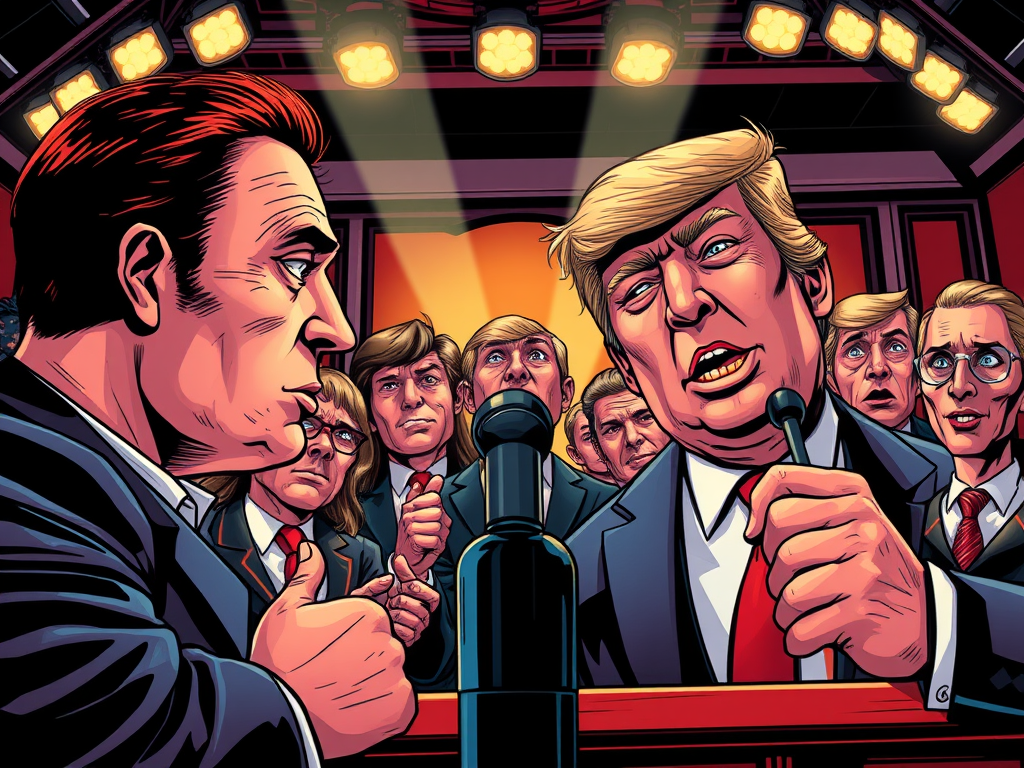
It seems that the once powerful lawmakers on the appropriations committees are feeling a bit miffed these days. Poor things, having their power stripped away by the dynamic duo of Donald Trump and Elon Musk. How tragic.
President Donald Trump is really making a name for himself, and not in a good way. Despite only being in office for a short time, he’s already managed to sink in popularity faster than a lead balloon. Voters are not impressed, to say the least.
And let’s not forget about the loyal congressional supporters who are too busy to bother with town hall meetings. Rep. Marjorie Taylor Greene is facing some heat from angry locals protesting her love for Elon Musk’s Department of Government Efficiency. It seems people are a tad upset about potential cuts to Medicaid and Social Security. But hey, who needs those programs anyway, right?
Then there’s Rep. Lauren Boebert, who’s so busy standing by Trump and Musk that she can’t even be bothered to hold a real town hall. Her constituents have resorted to yelling at a cardboard cutout of her instead.
It’s clear that the Republican-led Congress is really looking out for the little guy. They’re following Trump and Musk’s lead, doing everything they can for the wealthy elite while leaving the middle class in the dust.
This move has been condemned by consumer rights and democracy advocates as yet another abuse of power by the twice-impeached Republican felon. The White House announced the termination of these commissioners, who were responsible for enforcing civil antitrust laws and protecting consumers.
The FTC, an independent agency established 111 years ago to combat fraud and monopolies, is now being manipulated by Trump to please his billionaire cronies. By disregarding the rule of law, the president is causing long-lasting damage to consumer protection. It’s a dangerous game that puts the interests of the wealthy elite above those of the American people.
It is evident that the commissioners who were unlawfully terminated will pursue legal action to uphold both the law and principles of common sense.
In recent days, the Trump Administration has faced significant legal setbacks as their actions have been deemed in violation of the law by the US Court system.
Now, Supreme Court Chief Justice John Roberts has issued a stern warning to Trump. In response to Trump’s calls for the impeachment of a judge who ruled against him, Chief Justice Roberts defended the federal courts. He stated that impeachment is not an appropriate response to judicial decisions, as there is a normal appellate review process in place for that purpose.
Trump has been particularly fierce in his call for the impeachment of U.S. District Judge James Boasberg, following Boasberg’s bold decision to order two deportation flights to be turned around. Outraged, Trump invoked the Alien Enemies Act of 1798 in an attempt to justify the deportations, claiming that those on board were part of a violent Venezuelan gang. Yet, Boasberg stood firm, ruling that even if they were indeed gang members, a mere gang cannot be equated with the legal status of a hostile foreign government. The Trump Administration shockingly failed to provide any evidence to support their claims of gang membership!
It is evident that the Trump administration is blatantly disregarding the orders of our court system, the very system that protects our rights. Regardless of personal opinions, we must uphold our system of rights that safeguards us all.
If we fail to defend our rights, we risk losing them. Remember, might does not make right. We are governed by a system of laws, not by kings. Stand up for justice before it’s too late.
One of the fundamental principles we, as Americans, cherish is the belief in the rule of law. Judges and courts are meant to ensure that everyone is treated fairly and that no one is above the law.
However, this weekend, the Trump administration has thrown this principle into chaos. The administration has brazenly defied federal court orders that sought to limit the deportation of immigrants without due process. Despite a judge’s order to halt the removal of Rasha Alawieh, a kidney transplant specialist at Brown University, authorities went ahead and deported her. Additionally, around 250 Venezuelan migrants were deported, in direct violation of another judge’s directive to turn American planes around.
In a final act of lawlessness, Trump declared in the early hours of Monday morning that Biden’s preemptive pardons for Jan. 6 committee members are “void” because they were allegedly signed by autopen. This assertion is unequivocally false.
The actions of the Trump administration this weekend paint a chilling picture of a leader who believes he is above the law and can act with impunity. The very fabric of our democracy is at stake, and it is imperative that we stand up against this assault on our legal system.
Elon Musk’s latest social media post has ignited a fierce controversy, as he audaciously shifted the responsibility for the mass atrocities committed by tyrants like Stalin, Mao, and Hitler onto “public sector employees.” This shocking claim, made on Musk’s X account, seems to trivialize the unspeakable horrors inflicted by these infamous leaders while shamefully redirecting blame toward government workers. It’s revealing that Musk swiftly deleted the post.
The post specifically references Stalin, Mao, and Hitler, highlighting the millions of lives lost under their brutal regimes. Stalin’s reign of terror in the Soviet Union, Mao’s disastrous policies in China, and Hitler’s genocide during World War II are well-documented historical tragedies that cannot be dismissed by blaming faceless bureaucrats.
What makes Musk’s repost even more alarming is his current role as the head of the so-called Department of Government Efficiency, where he has been actively firing federal employees, including those in crucial roles at agencies like the National Weather Service and FEMA. This pattern of behavior raises concerns about Musk’s motives and the impact of his decisions on the functioning of the government.
It is evident that Elon Musk holds troubling beliefs and wields significant power through his influence on social media and within the federal government. The question remains: why is President Trump allowing someone with such controversial views and actions to have such a significant impact on the government and its employees? The implications of Musk’s actions are far-reaching and demand closer scrutiny and accountability.
For years, the debate around tariffs has raged, often framed as a tool to protect domestic industries and bring jobs back home. However, a closer look reveals a less palatable truth: tariffs, ultimately, hit the pockets of American consumers hard. While the intention might be noble, the reality is that these taxes on imported goods often translate into higher prices, reduced choices, and a weakened economy for everyone.
So, how do tariffs negatively impact the average American? Here’s a breakdown:
1. Higher Prices for Everyday Goods: This is perhaps the most immediate and noticeable effect. When a tariff is placed on imported goods like clothing, electronics, or even ingredients for our favorite foods, the cost of importing those goods increases. Businesses, often with tight margins, are left with two choices: absorb the cost (which can be unsustainable) or pass it on to the consumer in the form of higher prices.
Think about that imported washing machine you were looking to buy. A tariff on imported steel, for example, increases the cost of the materials used to make it, driving up the retail price. Suddenly, that washing machine isn’t so affordable anymore. This applies to countless products we use daily, from smartphones to coffee beans.
2. Less Choice and Reduced Competition: Tariffs protect domestic industries by making imported goods less competitive. While this sounds good on paper, it can stifle innovation and lead to complacency. Without the pressure of foreign competition, domestic companies may become less motivated to improve their products, offer competitive pricing, or explore new innovations.
This translates to fewer choices for consumers. Instead of having a range of products to choose from, consumers might be stuck with fewer, potentially more expensive, options offered by a shrinking pool of domestic suppliers. This lack of competition ultimately limits consumer power and pushes prices higher.
3. Supply Chain Disruptions and Increased Uncertainty: Modern supply chains are incredibly complex and interconnected. Tariffs disrupt these carefully orchestrated systems, forcing businesses to scramble for alternative suppliers, which can be time-consuming and costly. This disruption can also lead to shortages of certain goods, further driving up prices.
Moreover, the uncertainty surrounding tariffs can scare businesses from investing and expanding. The threat of new tariffs or changes to existing ones makes it difficult for companies to plan for the future, leading them to delay investments, cut back on hiring, and ultimately hindering economic growth.
4. Retaliatory Tariffs and Trade Wars: Tariffs rarely happen in isolation. When one country imposes tariffs on another, the affected country often retaliates with its own tariffs. This tit-for-tat escalation, known as a trade war, can severely disrupt global trade and damage economies on both sides.
American farmers, for instance, have been significantly impacted by retaliatory tariffs on agricultural products. Reduced demand for their goods leads to lower prices and financial hardship, demonstrating the widespread impact of trade wars that ultimately impact consumers through higher grocery bills.
5. Reduced Purchasing Power: Ultimately, the combined effect of higher prices, reduced choices, and economic uncertainty translates to a reduced purchasing power for American consumers. Every dollar spent on higher-priced goods is a dollar less that can be used for other necessities, savings, or investments. This can have a significant impact on household budgets, particularly for low- and middle-income families.
While Trump often argues for their benefits in protecting domestic industries, the evidence suggests that the costs far outweigh the benefits, particularly for US consumers. Tariffs act as a hidden tax, eroding purchasing power, limiting choices, and disrupting the economy. A focus on free trade, fair competition, and policies that foster innovation will ultimately benefit American consumers far more than protectionist measures that leave us all paying the price.
One judge went as far as to say that the government’s claim that the firings were for cause, rather than a mass layoff, was “bordering on the frivolous.” Another judge echoed this sentiment, calling the Trump administration’s actions a “sham.”
Andrew Heineman, legislative director for U.S. Rep. Jerry Nadler (D-NY), aptly pointed out that Leavitt’s remarks suggest that the firings were indeed part of Trump’s agenda, Project 2025. This revelation sheds light on the administration’s deceptive tactics and raises serious concerns about its commitment to upholding the law.
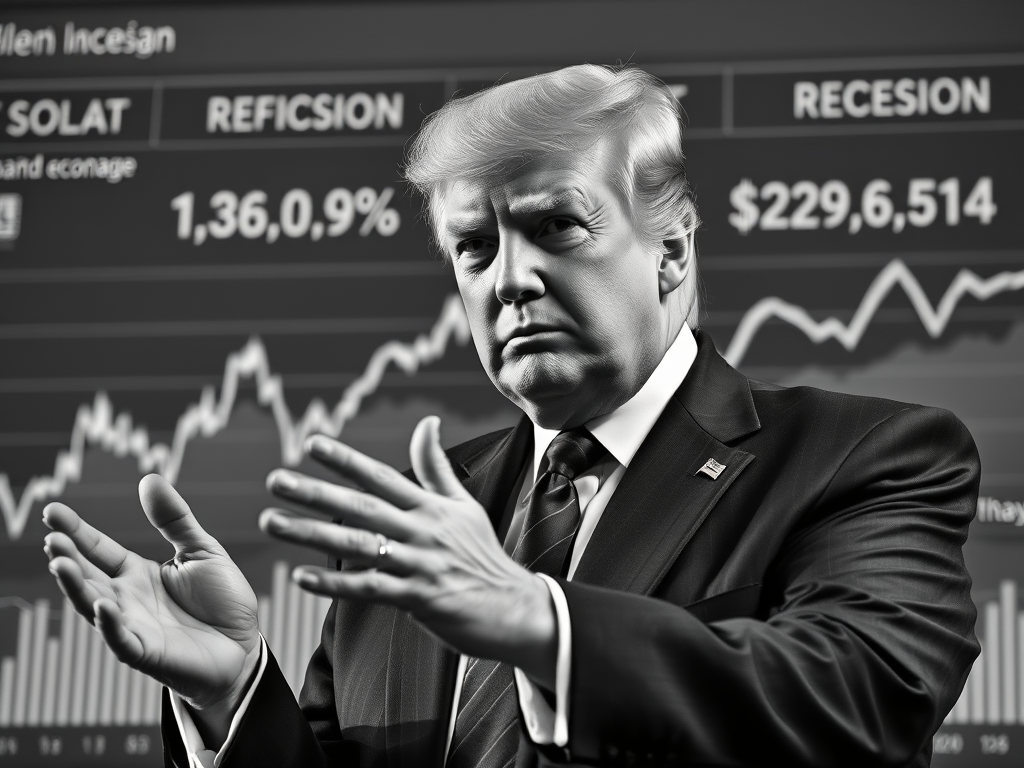
A 10% drop is no small matter in the world of professional investors, who have coined the term “correction” for such occurrences. The S&P 500’s 1.4% decline on Thursday was the first of its kind since 2023. These losses were exacerbated by Trump’s aggressive stance in the ongoing trade war, with threats of imposing hefty taxes on European wines and alcohol.
Trump’s sudden shift from championing economic growth to acknowledging the possibility of a recession this year has sent shockwaves through the financial world. The transition from a robust economy under Biden to the looming threat of a recession under Trump is a stark and unsettling reality.
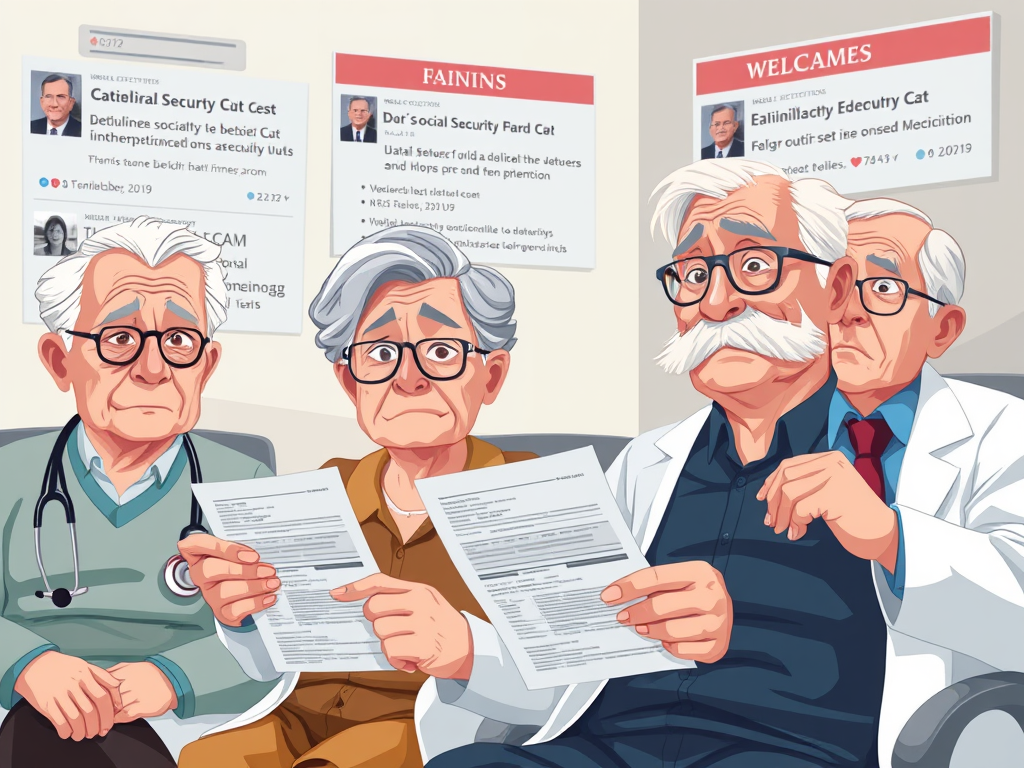
Do you ever get frustrated when you call a business and end up on hold for what feels like an eternity? All you want is to speak to a real person who can help you with your issue or answer your question. Well, brace yourself because Elon Musk’s team is putting pressure at Social Security to end phone service for customers.
The Social Security Administration is considering cutting back on phone services that 73 million retired Americans rely on. So, get cozy in your chair because a simple question could have you waiting all day or listening to a never-ending busy signal. The agency is thinking about ending phone services for processing claims and bank transactions, pushing elderly individuals to visit field offices in person to access their benefits, that’s if there are any left after Trump/Musk finishes cutting most of the federal government.
Current and former officials are concerned that this change will disrupt the agency’s operations and its ability to serve the public. The toll-free number provided by Social Security is a lifeline for older Americans who may not have internet access or struggle with navigating the web.
Initially, DOGE staffers were worried about fraudulent benefits going to deceased individuals. However, it turns out that the agency’s outdated technology system made it seem like impossibly old people were still receiving benefits. No fraud, just some computer code that the little bros didn’t quite grasp.
“It seems like they’re trying to dismantle the agency to benefit their billionaire buddies,” said Martin O’Malley, who previously led the agency under Joe Biden. “And of course, Trump will probably come out with his next lie about how he would never touch Social Security. Watch out, he’s coming for it!”
Here we go again with new tariffs! The stock market took a hit last week, and now some of our closest security partners in the European Union are retaliating with their own trade actions. They are imposing new duties on U.S. industrial and farm products in response to the Trump administration’s decision to increase tariffs on steel and aluminum imports to 25%.
The EU’s measures will affect goods from the United States worth a staggering 26 billion euros ($28 billion). These tariffs won’t just target steel and aluminum products, but also textiles, home appliances, and agricultural goods. Specifically, they are aimed at products made in Republican-held states, such as beef and poultry from Kansas and Nebraska, and wood products from Alabama and Georgia. So, MAGA world, get ready to pay the price for your misguided support of Trump.
The new tariffs will cost companies billions of dollars and increase uncertainty in two of the world’s major trade partnerships. Companies will either absorb the losses and see reduced profits, or more likely, pass the costs on to consumers in the form of higher prices. This will lead to increased prices in both Europe and the United States, putting jobs at risk.
Is this really what voters expected? It’s time to rethink our trade policies and work towards mutually beneficial agreements. Let’s prioritize job creation, economic growth, and stability for all parties involved.
Maybe tell Trump to retake Economics 101 because he really has not got a clue.



 Blue Press Journal