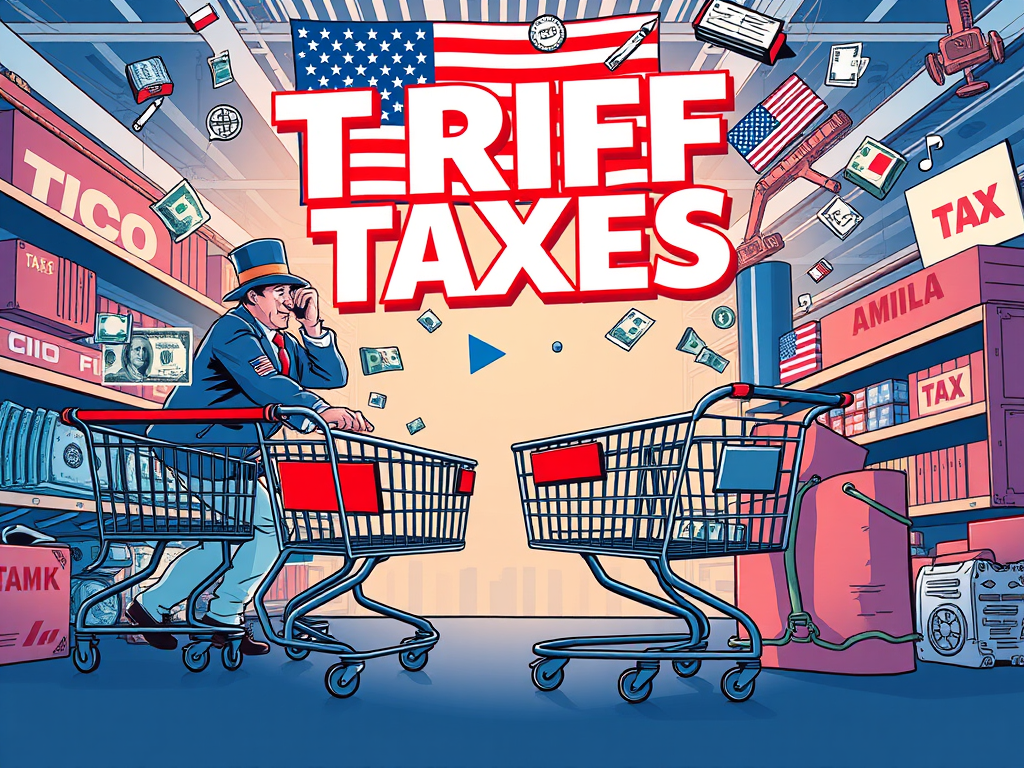
The Constitution clearly states that taxes must originate in Congress. Tariffs, as a form of tax, are straightforward in their nature.
President Trump’s implementation of “reciprocal” tariffs on over 180 countries is facing legal challenges from various businesses. These challenges have led to lawsuits being filed against the administration in both the U.S. Court of International Trade and a federal district court in Florida.
Efforts are being made to expedite the case to the Supreme Court, as the implications of Trump’s tariffs on businesses are imminent. While most tariffs have been put on hold for a 90-day period to allow for negotiations, China remains a notable exception with tariffs as high as 145 percent on its products.
The International Emergency Economic Powers Act (IEEPA) does not provide the authority to impose such tariffs. The trade deficit, which Trump claims as the basis for these tariffs, is not an emergency nor an extraordinary circumstance.
The question arises whether our country will be governed by emergency decrees or by the democratic processes and decisions of Congress. A recent resolution to repeal Trump’s 25 percent tariff on Canada was supported by four Republican senators, including Paul, Collins, Murkowski, and McConnell. However, the resolution faces challenges in the House.
Senator Grassley emphasized during a Senate Finance Committee hearing that the Constitution grants Congress the power to regulate both interstate and foreign commerce. It is evident that Trump’s tariffs are not well-received among GOP senators.
 Blue Press Journal
Leave a comment