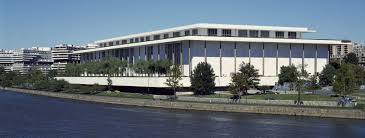
Blue Press Journal – The John F. Kennedy Center for the Performing Arts, a iconic cultural institution in Washington, D.C., was established by an act of Congress in 1964 to honor the late President John F. Kennedy and his family’s legacy. Recently, former President Donald Trump’s proposal to rename the center after himself has sparked legal and political controversy, with experts affirming that the move is not only highly improbable but technically illegal. Here’s why.
1. Congressional Legislation and Legal Protections
The Kennedy Center’s name is enshrined in federal law, as it was created by an act of Congress. Renaming a federal building or institution requires legislative action under the Federal Property and Administrative Services Act of 1949 (40 U.S.C. § 5343), which mandates that significant name changes must be approved by Congress and signed into law by the president. Since the Kennedy Center’s establishment was codified by statute, altering its name would demand a new act of Congress—a process outside the president’s unilateral authority.
2. Restrictions on Honoring Living Individuals
Federal policy, including the Antidefamation League’s (ADL) Guidelines for Naming Federal Properties, prohibits naming publicly funded institutions after living individuals, including current or former heads of state, without extraordinary justification. This policy aims to preserve the neutrality and historical integrity of federal landmarks. Proposing to name the Kennedy Center after a sitting president like Trump directly conflicts with these principles, as does the idea of honoring a living person in a structure tied to arts and culture.
3. Precedent and Political Unlikelihood
The Kennedy Center is a longstanding tribute to a U.S. president and a symbol of American artistry. Congress has repeatedly reaffirmed its name, and no precedent exists for renaming such an institution to honor a contemporary political figure. Even if Congress theoretically supported Trump’s request (which is politically untenable), the process would require bipartisan agreement and legislative action—highly improbable in the current climate.
4. Government Speech and Legal Precedents
The Supreme Court’s 2015 ruling in Walker v. Texas Division, Sons of Confederate Veterans clarified that the government may regulate the use of its name in official contexts, including monuments and buildings, to maintain neutrality and public trust. Renaming the Kennedy Center after a partisan figure would risk violating these principles, potentially infringing on constitutional rights tied to government speech.
Conclusion
While Trump’s suggestion highlights the divisiveness of modern politics, the legal reality is clear: renaming the Kennedy Center requires Congressional approval, which is nonexistent, and violates federal policies protecting the integrity of historic institutions. For now, the Kennedy Center’s name remains legally protected—a lasting tribute to its namesake and the arts community it serves. Trump’s request, though emblematic of his “America First” rhetoric, cannot override the constitutional and legislative safeguards that preserve the nation’s cultural heritage.
 Blue Press Journal
Leave a comment