Federal Obstruction: Breaking Norms and Undermining Justice
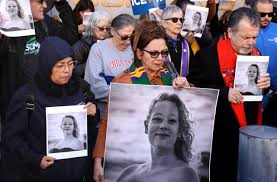
Blue Press Journal – The recent killing of Renee Good in Minneapolis by Immigration and Customs Enforcement (ICE) agent Jonathan Ross has become a flashpoint in the ongoing debate over transparency, accountability, and the role of federal law enforcement in local investigations. What should have been a cooperative, multi-agency effort to uncover the truth has instead devolved into a troubling example of federal obstruction — with the FBI and Department of Justice (DOJ) refusing to share critical evidence with Minnesota’s state investigators.
Minnesota Attorney General Ellison made multiple attempts to resolve the situation privately, but his requests were ignored. Only after holding a joint press conference with the Hennepin County District Attorney did he receive confirmation: the directive to block state access reportedly came directly from President Trump, who publicly referred to Minnesota officials as “crooked.” This raises a troubling question — why would the FBI and DOJ prioritize political loyalty over transparency in a homicide investigation? Justice requires evidence, and withholding it undermines public trust.
A Breakdown in Cooperation
According to Minnesota Attorney General Keith Ellison, the FBI initially agreed to work with the Minnesota Bureau of Criminal Apprehension in a joint investigation. That agreement was abruptly rescinded, with federal agents reportedly withholding key evidence — including ballistic reports, weapon data, and crime scene materials — from state authorities.
Ellison, who has a history of productive collaboration with federal law enforcement, attempted to intervene. He reached out to contacts within the FBI and DOJ to resolve the impasse, but his requests were ignored. Even a formal letter pleading for cooperation went unanswered. The silence speaks volumes about the federal government’s approach to oversight in this case.
Political Interference at the Expense of Justice
The most concerning revelation emerged when Ellison discovered the reason behind the denial of his requests: the directive to exclude Minnesota authorities seemingly originated from President Donald Trump. This political interference — alongside Trump’s public declarations branding Minnesota officials as “crooked” — severely compromises the integrity of federal investigations.
The DOJ and FBI are supposed to serve the public interest, not political agendas. Yet the decision to block state investigators suggests that decisions within these agencies may be influenced more by partisan loyalty than by a commitment to truth.
A Troubling Double Standard
Even more disturbing is the selective release of evidence. While federal authorities refused to share investigative files with state officials, video footage from Ross’s cellphone was leaked to Alpha News, a Minnesota-based right-wing media outlet. This raises legitimate questions:
- If the evidence is too sensitive to share with official investigators, why is it being provided to a partisan outlet?
- Does this behavior reflect professional investigative standards — or an attempt to shape public perception before all the facts are known?
Ellison called this move “fundamentally unprofessional” and noted that the leaked footage undermines any rationale for withholding evidence from state authorities.
Echoes of the George Floyd Case
Ellison’s office previously prosecuted the officers responsible for George Floyd’s murder in 2020, an effort that relied heavily on gathering every available piece of evidence. He recognized a familiar pattern here: when government agencies are connected to a controversial killing, certain officials attempt to smear the victim’s character.
In the case of Renee Good, Ellison has been outspoken in defending her reputation. He emphasized that she was neither a domestic terrorist nor a threat to Ross at the time of the shooting, and that she was engaged in helping her vulnerable neighbors.
Why Transparency Matters
The refusal of the FBI and DOJ to cooperate with Minnesota’s investigation sends a dangerous message: federal agencies can act without meaningful oversight, even in cases involving lethal force against civilians. This erodes public trust and undermines the principle that justice must be both done and seen to be done.
Without full access to the evidence, state investigators are forced to rely on incomplete information, raising the risk of an inadequate or flawed conclusion. For the family of Renee Good — and for the public — this is unacceptable.
A Call for Accountability
The Renee Good case is more than an isolated incident. It is a test of whether the FBI and DOJ are truly committed to transparency, fairness, and cooperation with local authorities. If federal agencies can unilaterally block state-level investigations into killings by federal agents, then our system of checks and balances is in jeopardy.
Minnesota officials will continue their parallel investigation, seeking information directly from the public. But the broader question remains: will the FBI and DOJ choose accountability over political expediency?
Until they do, cases like Renee Good’s will serve as stark reminders that justice delayed — or denied — is justice betrayed.
 Blue Press Journal
Leave a comment