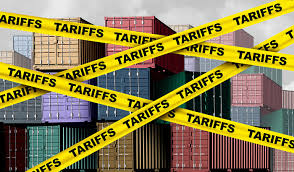
Blue Press Journal, D.C. – In a decisive 6‑3 ruling, the United States Supreme Court invalidated President Donald Trump’s reliance on the International Emergency Economic Powers Act (IEEPA) to levy a broad set of tariffs that were central to his “America First” trade agenda. The decision marks the first time a president has attempted to use this emergency statute for tariff enforcement, and the Court’s rebuke represents a major legal setback for the administration.
The Vote and Its Significance
Chief Justice John Roberts, along with Justices Neil Gorsuch and Amy Coney Barrett— all President Trump’s conservative appointees—joined the Court’s liberal bloc to overturn the bulk of the tariffs. Justice Brett Kavanaugh authored a dissent that Trump praised as “genius,” while Justice Gorsuch’s concurring opinion warned that bypassing Congress undermines the legislative process.
Market Reaction
Wall Street experienced heightened volatility throughout the day, but the major indexes closed with modest gains after the ruling, suggesting investor relief despite the lack of a dramatic rally. Companies most exposed to the contested duties, such as Mattel and Crocs, posted the strongest upward moves, reflecting expectations of lower import costs.
Trump’s Next Move
Unwilling to abandon his trade strategy, the President signaled that he will turn to other statutory authorities—Section 232 of the Trade Expansion Act and Sections 122 and 301 of the Trade Act of 1974—to impose “even stronger” tariffs. This approach re‑emphasizes the administration’s intent to act unilaterally, a stance Gorsuch subtly rebuked in his concurrence.
Unresolved Tariff Revenue
The ruling leaves billions of dollars in already‑collected tariff revenue in legal limbo. Neither the Court nor the administration has offered guidance on whether refunds will be required, an outcome Justice Barrett warned could become a “mess.” Businesses and the Treasury Department now face potential litigation over the disposition of those funds.
What This Means for Trade Policy
The decision underscores the Court’s willingness to enforce statutory limits on executive power, reaffirming Congress’s role in shaping U.S. trade policy. As the administration explores alternative legal pathways, stakeholders should monitor forthcoming regulatory actions and potential congressional responses.
 Blue Press Journal
Leave a comment