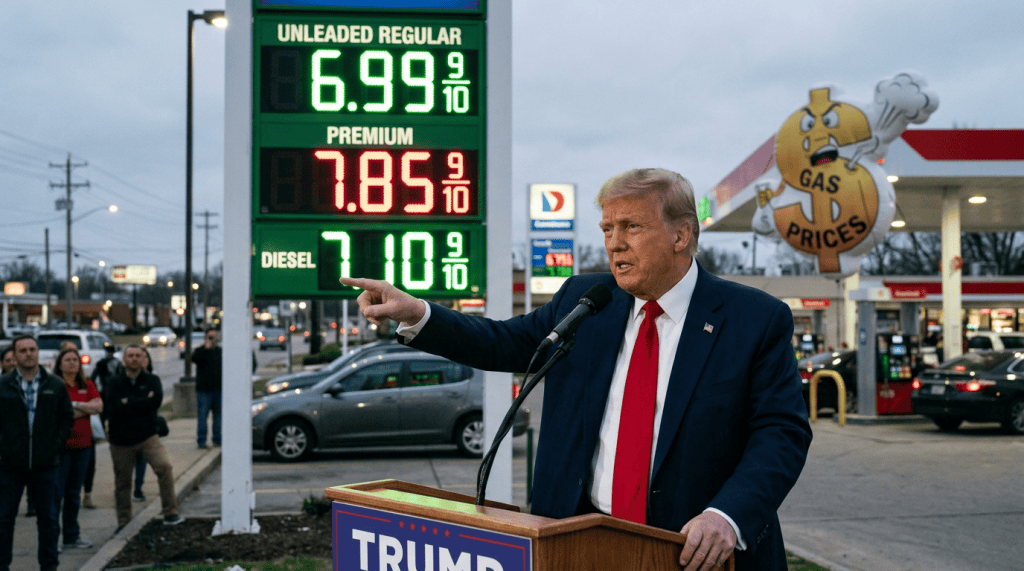
Every time you fill up your car, the hit to your wallet reminds you just how tough things are right now. But for a lot of Americans, it’s not just the price that stings, it’s the silence from Republican leaders. Republicans just say it’s a price we have to pay for an unwanted and unneeded war with Iran.
Back in 2024, the message was loud and clear: high gas prices were blamed on the Biden administration. Candidate Donald Trump and Congressional Republicans jumped at every chance, blasting gas prices as a disaster for the middle class. Fast forward to 2026, gas is even pricier, as of today over $4.50 a gallon but where is the Republican uproar? It’s disappeared. Where’s the flood of angry tweets and the emergency congressional hearings now?
Honestly, the geopolitical nightmare unleashed by Trump’s reckless war with Iran is the main culprit behind soaring gas prices. His poorly thought-out conflict has sent global oil prices spiraling into disarray. Yet, under GOP leadership, there’s a deafening silence. Accountability? It’s vanished without a trace. It’s just like the proverb of the three wise monkeys, see no evil, hear no evil, speak no evil. It appears the Republican Party has embraced that proverb wholeheartedly.
That’s not leadership. It’s plain old political showmanship that does nothing to help Americans. When you place party before country it does nothing to help Americans.
So the next time you find yourself trapped at the pump, challenge yourself: should accountability really waver just because there’s a shift in the White House?
The individuals leading the Trump administration believe that the significant policy changes they are implementing are aimed at restoring America to its “greatness.” But for anyone born between the late nineties and the early 2010s, things look a lot darker. As Donald Trump’s second term picks up speed, Gen Z and Millennials are facing a blunt truth: the American Dream isn’t just on hold it’s getting destroyed by his policies.
The current political scene feels way bigger than just another round of debates in Washington. It’s more like a high-stakes battle over whether the future is even viable for young Americans. With climate protections getting rolled back or shelved and economic pressures tightening, Trump’s “America First” agenda is starting to look like “America Last”!
The Environmental Foreclosure
The administration’s sudden shift back toward fossil fuels is a significant point. Despite breaking new records for global temperatures, the Trump White House has systematically dismantled the Inflation Reduction Act’s green energy programs and pulled out of the Paris Accords. The New York Times reported that their “energy dominance” plan, if that’s what you call it, sidelines renewables, even though those sectors were poised to create millions of tech jobs for young college graduates.
For a 22-year-old graduating college student trying to start their career, “drill, baby, drill” isn’t just a political slogan but it’s a threat to the green economy that was supposed to emerge. By going for short-term oil profits instead of long-term climate stability, the administration is basically selling out the planet’s and their future’s for quick political wins. Now with the price of oil with the Iran War … we clearly see the need for a back-up plan the green energy gird would provide America. The rest of the world sees renewable energy as the future, Trump is still stuck in the 20th century.
The Housing Market is Stuck in a State of Stagnation
Young Americans are feeling the economic squeeze like never before. While Trump policies keep propping up corporate and billionaire tax cuts, the average young American sees a housing market that’s more like a fortress than a welcoming community. The hope for the American dream, like them owning their own home is slipping away.
Interest rates are still high mostly to blame to the famous “Trump Tariffs” and the total lack from Trump of an economic plan other than huge tax breaks for billionaires. The administration isn’t doing much about the shortage of affordable housing either. So the dream of owning a home just keeps slipping away.It’s clear that tariffs are increasing the cost of construction materials and deregulation has already made housing even pricier. That may be helping the rich but it’s leaving first-time buyers stranded. For many young people, living with their parents is their only option with the cost of housing now.
The Student Debt Anchor
No issue shows the generational divide as sharply as student loans. While the Biden administration tried ways to ease this burden and forgive a portion of the loans, the current Trump Department of Education is making things tougher by eliminating programs that help student debt.
America’s $1.7 trillion student debt problem is more than just numbers, it’s a heavy weight holding young people down and out of the economy. By the administration removing flexible repayment options and slowing and eliminating relief programs, Trump is basically locking an entire generation out of economy. The reverting to a profit-driven approach for federal lending transforms education into a trap rather than a public good. For young workers, this doesn’t feel like “fiscal responsibility”, it’s a strategic blow to their hopes of starting a business, buying a home, or building a family. You know the “American Dream”.
Healthcare: The safety net is deteriorating
The 2025-2026 budget proposals the Republicans-Trump are advancing targets the Affordable Care Act (ACA), which has been critical for young adults who stay on their parents’ plans until they’re 26. Trump’s push to “end” or “replace” the ACA—without a clear alternative risks leaving millions of freelancers and gig workers exposed.
Plus, new Medicaid work requirements and fewer mental health subsidies come just as mental health crises among young people hit record highs. These changes undoubtedly will land hardest on young low-income workers, opening up a “health gap” that could take decades to close.
Will frustration in 2026 translate into votes?
The Trump administration and Congressional Republican policies have adversely impacted young Americans and their future prospects. The question arises whether their frustrations will translate into action and votes against the Republican Party in the 2026 congressional elections. Current polling indicates a potential Democratic takeover of at least the House of Representatives. That outcome would at least provide a barrier against Trump’s most severe budget cuts. While it may sound simplistic, it is crucial to for them to recognize that they hold the power to shape their own futures.
BLUE PRESS JOURNAL – After the recent assassination attempt connected to the White House Correspondents’ Association Dinner, the conversation in this country quickly fell apart again—everyone just pointing fingers. Right-wing pundits rushed to play the victim, shouting about an “assassination culture” they claim the other side invented. But even a quick look around shows how hollow this is. The right loves to say that a silly roast by Jimmy Kimmel crosses the line into incitement, but at the same time, they choose to ignore the nonstop flood of dehumanizing talk pouring out from the top of their own party.
There’s this common story that “both sides” are equally to blame for all the anger and ugliness poisoning the country, but that doesn’t really line up if you actually look at what’s happened under the man leading a big chunk of America. Donald Trump hasn’t just joined in on the decline of our political culture—he’s orchestrated it. He never pulls back; when things are tense, he piles on even harder. Every crisis is a new chance to inflame, divide, and go further.
Now, we’ve reached the point where the conservative movement’s top guy regularly talks about people he disagrees with as if they’re not even human. He’s called immigrants “poison” in America’s bloodstream. He’s branded rivals “garbage,” “crazy,” or “evil.” When someone’s always describing their fellow Americans as a contagious threat, they’re basically giving a green light to anyone looking for an excuse to get violent. Every time Trump calls out judges, journalists, or his political enemies as being flat-out enemies of the state—not just adversaries, but existential threats—he’s not having a policy argument. He’s fueling a narrative of all-out war.
You hear a lot of outrage from the right over jokes made by comedians or little digs from critics, but where’s all that outrage when their own leader crosses the line? Look at what happened after Special Counsel Robert Mueller died. Trump didn’t even bother with the basic decency you’d expect from an ex-President. He jumped on Truth Social to launch a nasty, personal attack. That pretty much sums up his playbook: no space for grief, no respect, and definitely no humanity, as long as the target is someone Trump doesn’t like.
Let’s be honest, conservative media—right down to the daily gripes of famous podcasters—drives this narrative too. They live in a reality bubble where any criticism of their own mean-spirited talk is “an attack,” but when they ridicule and dehumanize, it’s “just being honest.” They want us to believe that a comedy skit is what’s really making the country volatile, all while their own words light a match in a room full of gasoline.
We need to stop pretending this is a fifty-fifty issue. There’s no balance here. Fixing violence in our politics means dropping the notion that everyone’s equally responsible. It means actually holding the people with the loudest microphones, the most power, and the biggest platforms accountable for what they say. If we keep letting leaders treat their opponents like they’re subhuman, it’s on all of us when things get worse. Real, honest debate gets snuffed out fast when every speech carries a dose of barely disguised menace. The latest wave of anger and division isn’t just something in the air—it’s a deliberate choice, made over and over, by people who know exactly what they’re doing.
Blue Press Journal – When it comes to economics, it feels like the current administration treats the laws of mathematics as more of a suggestion than a rule. On Thursday, Health and Human Services Secretary Robert F. Kennedy Jr. tried to patch up President Trump’s wild claims about prescription drug pricing, but ended up digging himself into an even deeper hole with his own calculations.
Here’s where it gets weird: President Trump has a habit of throwing out promises like price drops of “500%, 600%, or even 1,000%.” Critics, including Ed Mazza from HuffPost, have already flagged that these numbers don’t make sense. If you drop a price by 100%, the item is free. Anything above that—500% or 1,000%—means a “negative cost,” which would mean drug companies have to pay you to take their meds. Obviously, that’s not happening.
Kennedy, not letting basic logic get in the way, decided to address the confusion right in the Oval Office. While backing up the President, he shared an anecdote about a recent talk with a Democratic senator. Kennedy argued that if a drug’s price goes from $100 to $600, that’s a 600% increase—so taking it back down from $600 to $100 should count as a “600% savings.”
But his math just doesn’t work. Going from $100 to $600 is actually a 500% increase, while dropping from $600 to $100 is just about an 83% decrease. Still, Kennedy stood his ground, calling it a “mathematical device,” whatever that means.
This isn’t Kennedy’s first attempt at bending math to fit the administration’s story. Just the day before, during a Senate hearing, Senator Elizabeth Warren (D-Mass.) pressed him about the President’s suspicious numbers. Kennedy claimed Trump uses a different method for the math, saying that moving from $600 down to $10—a real 98% drop—should be called a 600% decrease.
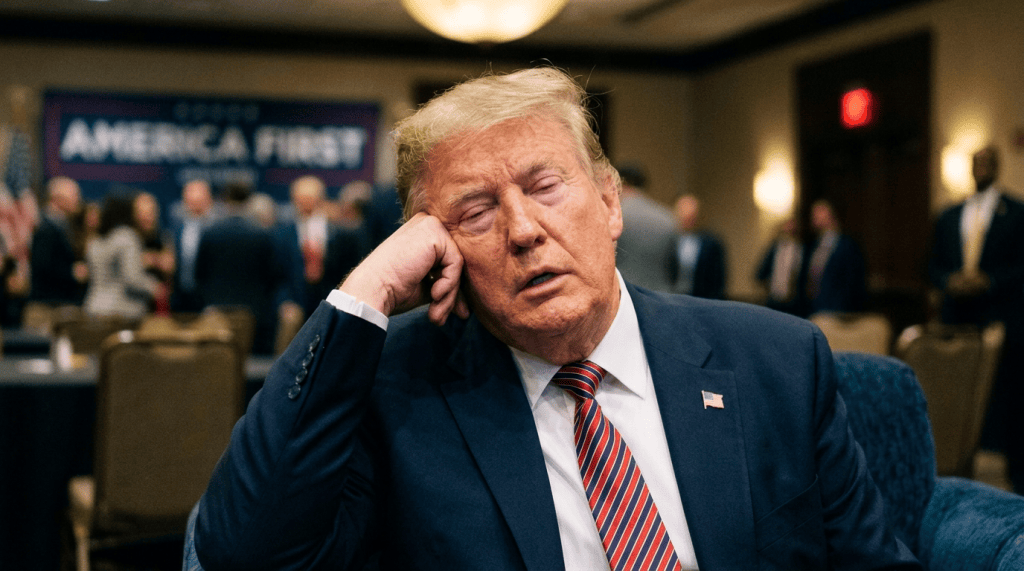
President Trump took this creative math in stride during Thursday’s event, shrugging off mathematical details entirely. “There are two ways of calculating it,” he said, as if it’s just about how you want to spin the numbers—60% or 600%, take your pick. Also he seemed to nod off at times during Kennedy’s weird expiation. So who wouldn’t.
All this numbers acrobatics is happening as the White House aggressively promotes its drug pricing plan. At the same Thursday event, they announced a deal with biotech firm Regeneron, which combines price cuts for certain groups with tariff reductions for the company.
Outside these big news moments, the administration is still pushing its “TrumpRx” website—a platform that’s supposed to offer cheaper prescriptions. That site hasn’t escaped criticism either. People have pointed out that its catalog is tiny, and it often overlooks cheaper generics you can find at regular pharmacies.
The administration keeps arguing that its cost-cutting efforts are meaningful, but clinging to “alternative math” makes it look like the steepest drops are actually happening in logic, not in the price of drugs.
Blue Press Journal – The partnership between Donald Trump and his biggest media backers has always been bumpy, but now things have reached a whole new level. The public break between Trump and Tucker Carlson isn’t just drama—it’s downright surreal. Carlson, leaving behind regular political jabs, is spinning an intense story that weaves together world crises, questions of faith, and the scary reality of nuclear threats.
The Easter Break
It all started to show over Easter weekend—a time that’s usually quiet and reflective. Carlson took the moment to deliver a fiery speech slamming Trump’s recent social media posts about possible strikes on Iranian civilian targets. Carlson didn’t hold back. He called Trump’s words “evil,” “unacceptable,” and, going further, a potential “war crime.”
But he didn’t stop with just policy. Carlson sounded genuinely disturbed by the way evangelical leaders have started drawing messianic connections between Trump and Jesus. To Carlson, it’s moved into flat-out blasphemy and veered away from traditional morals.
Into the Weeds
Now, things have taken a darker, more bizarre turn. Beyond attacking Trump’s foreign policy, Carlson claims symbolic moves—like how Trump handled the Bible during a ceremony—aren’t just simple missteps. Carlson suggests they’re deliberate signals, proof that Trump “actively rejects” Christianity’s core beliefs.
By painting Trump as “Bible-rejecting” and practically “Satan-adjacent,” Carlson’s making it clear: he’s stepping away from mainstream conservatives and heading straight into the fringes. This is a real pivot. The fight inside the American right isn’t about taxes or legislation anymore—it’s become a struggle over spiritual credibility and hidden forces.
This growing tension isn’t cooling off—it’s a warning of more chaos ahead. As the rifts inside the MAGA movement grow, nobody can say where American politics is heading. The real fight brewing on the right isn’t with the other side. It’s within itself.
Right now, it’s tough to ignore how Donald Trump’s policies have a direct impact on the struggles regular Americans deal with every day. Whether people are stretching their paychecks at the grocery store or worrying about their retirement funds, you can feel stability slipping away—and it’s obvious that the President Trump and his administration played a major role in this.
You can see it in everybody’s wallets. AAA reports the national average for a gallon of gas has jumped to $4.04, way up from last year’s $3.17, according to the EIA.
But this spike isn’t random. Ongoing chaos in energy markets—especially around the Strait of Hormuz and Trump’s war with Iran—has thrown oil supply chains all over the world into disarray. That little waterway handles a fifth of the planet’s oil every day. Industry experts say these shipping problems are here to stay, and you shouldn’t expect gas to drop below $3 anytime soon, maybe not even next year.
People aren’t blind to all this. Polls show that Trump’s approval is dropping. In a Quinnipiac poll, 65% said Trump’s policies deserve at least “some” or “a lot” of the blame for higher gas prices. Then there’s the stock market—wild swings, driven by the Trump’s unpredictable announcements and trade moves like tariffs, are now blowing up the retirement plans folks thought were safe.
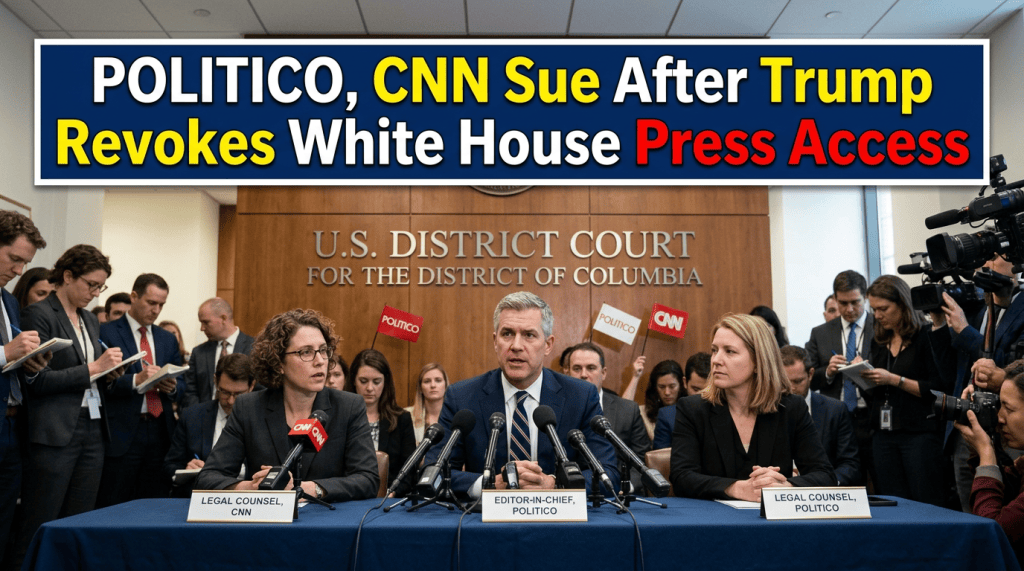
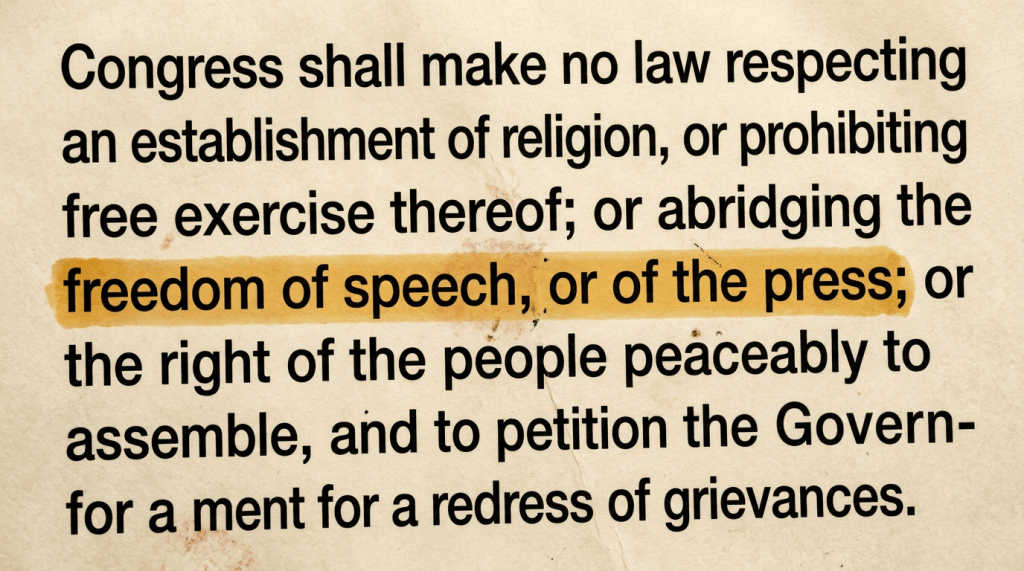
But honestly, it runs deeper than just the numbers. The way the national conversation is shifting feels heavy and exhausting. There have been organized attacks on the free press, and weird feuds, like Trump going after the Pope. The war on Iran stands totally opposed to the “Just War Doctrine” at the heart of the Christian faith, exactly as the Vicar of Christ put it.
What really has people worried is the reckless language Trump uses around foreign conflicts. He fired off a warning on Truth Social, saying a “whole civilization will die” when talking about Iran. Jake Tapper from CNN brought up how Republicans—like Rep. Elise Stefanik (R-N.Y.)—rush to criticize campus protesters but stay quiet about these apocalyptic threats from the president. The administration loves acting strong on national security, but all this tough talk only isolates the country and stirs up global danger. Talk about leaving NATO? That’s not just irresponsible—it’s a big risk for America’s security.
Manufacturing jobs keep disappearing. Food prices keep climbing. The United States’ reputation is getting shakier. Blaming everything on bad luck is just a way to look away from reality. This is what happens when a president’s leadership is all about picking fights instead of working together or thinking things through.
If you look at slowdowns in manufacturing, shrinking savings, and a pushier attitude on the world stage, you start to see the pattern. America’s problems aren’t just random—they’re the result of leaders. Trump, who care more about grudges than solving real problems. Americans deserve more—leadership that brings stability, sticks to the facts, and fights for actual peace around the world. We deserve better than Donald Trump and the Republican leadership in Congress.
CNN’s Jake Tapper confronted the GOP Representative over her double standards on inflammatory rhetoric, her justification for “civilizational obliteration” revealed dangerous inconsistencies in MAGA’s moral calculus. By Windsor Wendell – Blue Press Journal
On the latest episode of CNN’s State of the Union, Jake Tapper pressed Representative Elise Stefanik about Donald Trump’s comments on Iran. But it wasn’t just routine political back-and-forth—you could actually see the strain of trying to defend her party over what was said. The whole thing was sparked by Trump’s latest social media post, where he basically threatened to wipe out Iran’s entire civilization.
I watched Stefanik twist herself up, scrambling to make Trump’s words sound harmless. Tapper called out Trump’s post as, essentially, a “call for genocide,” even quoting the “your whole civilization will die tonight” line almost directly. Stefanik immediately jumped in, insisting Tapper was just misrepresenting what Trump meant, brushing off the threat against eighty million people as no more than “diplomatic back-and-forth.” But Tapper wasn’t stretching the truth—he was quoting Trump almost word-for-word. This was way more than a warning to the Iranian regime. It was aimed right at a whole culture, one with a long, rich history. That distinction matters, especially when you think of international law and the rules we have in place to stop genocide.
It’s tough to ignore the double standard here, remembering how fiercely Stefanik grilled college presidents in 2023. The Guardian covered the way she went after them, claiming students who chanted “from the river to the sea” were making genocidal threats, demanding the schools condemn those protests immediately. But now, when the President uses even stronger language about annihilating Iranians, Stefanik suddenly gets cagey, refusing to call it out—and always finding a way to protect Trump. The hypocrisy is hard to watch.
The part that really gets to me is how easily religious values get sidelined for politics. Both the Pew Research Center and the National Catholic Register say Stefanik’s a Roman Catholic. That faith puts God and the Pope above any politician. Scripture lays it out plainly—faith comes first, not political leaders. Yet here she is, making excuses for threats against civilians, showing more loyalty to a political figure than to the principles her faith is supposed to stand for. This is all happening as tensions with Tehran ratchet up even further, all thanks to President Trump pulling the U.S. out of the JCPOA and pushing his “maximum pressure” approach. The Iran nuclear deal—the JCPOA—was a 2015 agreement between Iran and the P5+1 to roll back Iran’s nuclear program as sanctions were lifted. And honestly, it was working.
Now, with war looming, Stefanik’s shifting logic feels like a betrayal—of both her oath to the Constitution and the heart of her religious beliefs. Her district up in Northern New York deserves real answers, not dodges and blind loyalty. The bigger question is, will voters call her out and finally demand she put basic decency over political showmanship?
The recent controversy surrounding Donald Trump’s AI-generated social media posts—depicting him in messianic imagery—has unveiled a disturbing reality within the American evangelical movement. When Trump shared an image suggestive of Christ, he wasn’t just committing a lapse in judgment; he was engaging in a form of narcissism that borders on blasphemy. However, more alarming than the post itself is the blatant toadyism displayed by Franklin Graham.
In a display of political opportunism disguised as piety, Graham rushed to defend the president, dismissing the offense as harmless. By claiming Trump’s image was “no big deal” and asserting that Trump simply needs to “listen to Jesus,” Graham has abandoned his duty as a spiritual leader to play the role of political operative. When a preacher consistently prioritizes the ego of a secular leader over the sanctity of his own faith, one must question whether he is serving God or the GOP.
Even Marjorie Taylor Greene, an unlikely critic, hit the nail on the head: Graham should be guiding Trump toward humility, not running interference for his manipulations. Instead, Graham continues to offer Trump moral absolution for secular sins in exchange for political proximity. This transactional relationship betrays the true essence of Christianity, which demands repentance and humility—two virtues consistently absent in Trump’s public life. When faith is used to shield a politician from accountability, it ceases to be a religion and becomes a cult of personality.
Blue Press Journal (DC) – The escalating military engagement with Iran has propelled American producer inflation to its highest level in over three years, with the Labor Department confirming that the Producer Price Index surged 0.5% in March 2026 and climbed 4% annually. According to Bloomberg, the spike stems primarily from an 8.5% monthly explosion in energy costs as regional hostilities disrupt critical supply chains, while the Washington Post reports that retail gasoline prices have pushed consumer inflation to 3.3% over the past year.
In spite of this growing pressure, President Trump continues to insist on reducing interest rates further, an action that the Financial Times observes runs counter to the emerging agreement between policymakers that there is a need to adopt stricter measures to avoid the economy from overheating. Even though inflation growth was only 0.1% when volatile industries were stripped off, Reuters points out that the International Energy Agency has recently made its first reduction of global oil demand forecasts since the COVID-19 period due to infrastructure sabotage and the closing of the Strait of Hormuz.
Given that food costs offer little in terms of relief following the volatility seen in February, the potential disconnect between the government’s military and economic policies suggests that market uncertainty may persist even after the mid-term elections.
Blue Press Journal – In the landscape of modern politics, Trump politics, we have become accustomed to the daily barrage of inflammatory rhetoric from Donald Trump. However, Sundays unhinged tirade against Pope Leo XIV—the first American-born pontiff—marks a chilling departure from political discourse and signals a complete detachment from reality.
When the president decided to attack the head of the planet’s biggest religious group, debate over decisions and policies fades away. Instead comes a breakdown in basic thinking. It is a fundamental collapse of cognitive reasoning and a direct affront to the core tenets of the Christian faith.
The Tirade: A Distortion of Reality
The attack, posted to Truth Social, was as erratic as it was vitriolic. Trump took issue with the Pope’s calls for global peace—calls that were not directed at any specific individual, but were instead a broader warning against the “delusion of omnipotence” that threatens international stability.
Instead of measured responses, Trump responded with sharp criticism, calling the Pope ineffective regarding crime and poorly suited for international affairs. Not stopping there, he suggested his own influence shaped events, insisting the cardinals chose the pontiff as a calculated effort against his administration.
“I don’t want a Pope who criticizes the President of the United States because I’m doing exactly what I was elected, IN A LANDSLIDE, to do,” Trump griped.
The Conflict: Omnipotence vs. Peace
The Pope’s message was a clarion call for de-escalation, particularly regarding the growing tensions with Iran. Throughout history, the Papacy has stood as a bastion for peace, preaching the message of brotherly love and the sanctity of human life.
What stands out is how a plea for worldwide calm was taken as an offense to Donald Trump. Only a narcissist would view the Popes remarks as against himself. Trump targeted the Catholic Church’s head over messages favoring peace, it went beyond criticism of an individual. Instead, it became defiance of principles rooted deeply in Christian doctrine.
A Choice for Christians: The Mirror Test
For millions of American Christians, this moment serves as an urgent, defining mirror test. We must ask ourselves: Has the political movement surrounding Donald Trump become a golden idol that demands the sacrifice of our spiritual integrity?
The Bible is clear. It calls for humility, mercy, and the pursuit of peace. It does not call for the idolization of political figures who view spiritual leaders as enemies simply because they speak truth to power. If we claim to follow the teachings of Christ, we cannot remain silent while those same teachings are mocked and maligned by a leader who values his own ego above the sanctity of the faith.
Christians and Followers of Christ
Donald Trump’s descent into attacking the Pope is more than just another news cycle; it is a warning. It reveals a worldview where there is no room for moral authority, no room for spiritual guidance, and no room for peace if it does not serve Donald Trump’s narrative.
Future directions require clarity on priorities. One path follows a leader whose authority rests on unquestioned devotion. In contrast, another reflects quiet principles long professed within spiritual tradition. These are not compatible routes. Commitment to one weakens alignment with the other. Choice becomes unavoidable when values diverge so fully. The time has come to choose.