Tag: Donald Trump

  • The Shadow of the Past: Why Is Melania Trump Addressing the Epstein Connection Now?

    Blue Press Journal – In a move that has left many political observers searching for answers, First Lady Melania Trump issued a preemptive statement on Thursday, April 9, 2026, at the White House distancing herself from the late convicted sex offender Jeffrey Epstein. While no major mainstream media outlets had run a story on the topic, the timing suggests a defensive posture against a brewing digital storm.

    The catalyst appears to be a volatile social media campaign waged by Amanda Ungaro, a former model and the ex-partner of Paolo Zampolli—the well-connected businessman credited with introducing Melania to Donald Trump in September 1998 at the Kit Kat Club in Manhattan during Fashion Week.  

    The Ungaro Factor

    Why has the former First Lady focused so intensely on an individual like Ungaro who appears to taking to social media to be making accusations? The answer lies in the deeply personal X (formerly Twitter) and explosive accusations of the Trump inner circle by Ungaro. She was deported to Brazil following her arrest in Miami in June 2025. Ungaro (40) and her husband, Joao Batista Cunha De Araujo, were arrested by police on charges including unlicensed practice of medicine.

    Ungaro’s narrative is complex: she claims to have been a passenger on Jeffrey Epstein’s private aircraft during her teenage years, alleging she was funneled into his orbit via modeling industry scouts. This linked her own history to the Epstein scandal and claiming a two-decade-long knowledge of the Trumps’ social circles, Ungaro has positioned herself as a potential whistleblower. Many have questioned of the Trump-Epstein historical timeline, the public remains fascinated by the intersection of high-society modeling and Epstein’s network.

    A History of Entanglements

    To understand the conflict, one must look at the timeline. Melania Knauss met Donald Trump at a party in 1998, hosted by Zampolli at the Kit Kat Club. At the time of their introduction, Donald Trump was separated from his second wife, Marla Maples, but their divorce was not finalized until 1999. 

    The situation is further complicated by the federal government’s involvement in Ungaro’s life. According to reporting by The New York Times on the accusations of political favoritism by the White House. It is alleged that Zampolli leveraged his status as a diplomatic envoy to influence her deportation proceedings during a bitter custody battle. Zampolli has vehemently denied these claims, labeling them as “nonsense”. 

    Why the Preemptive Strike?

    The First Lady’s decision to air these concerns—despite the lack of a formal mainstream media probe—indicates a strategic choice to control the narrative before Ungaro’s online campaign gains further traction. By addressing the “Epstein connection” head-on, she is attempting to neutralize a figure who claims to possess insider knowledge of a “corrupt system.”

    Whether Ungaro can substantiate her claims or if this remains a case of digital theater, the story serves as a reminder that Donald Trump and the First Lady’s past social circles continue to pose a significant reputational challenge.

  • The High Cost of Chaos: Questioning the Trump Administration’s Iran Strategy

    Naval combat scene with burning ships, missiles, helicopters, and a soldier operating a gun on a boat

    Blue Press Journal – The escalation of conflict between the United States and Iran has pushed the global economy to the brink, fostering an environment of instability that many experts argue was entirely preventable. By initiating a campaign of military aggression without congressional authorization, the Trump administration has by passed legislative oversight, leaving the American public to bear the brunt of surging inflation and a precarious geopolitical landscape.

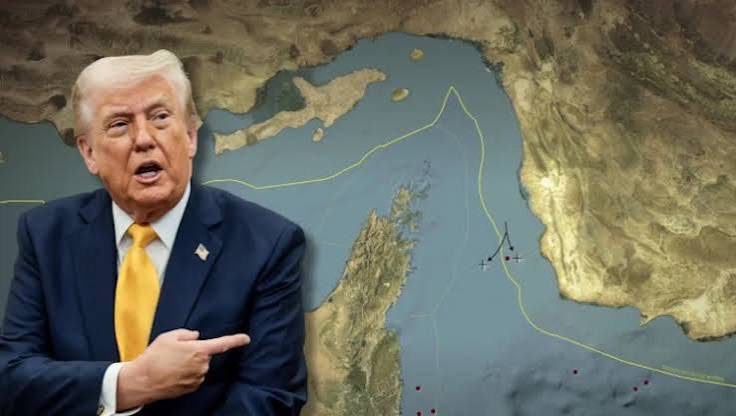
    Current negotiations center on a fragile two-week ceasefire, yet this “peace” effort remains deeply troubling. Critics argue that using the threat of mass civilian casualties as a bargaining chip to reopen the Strait of Hormuz is not only reprehensible but strategically bankrupt. Data from Lloyd’s List Intelligence confirms that shipping volumes plummeted 90% at the height of the conflict, while reports from the Financial Times indicate that Iran intends to levy hefty cryptocurrency tolls on vessels—effectively turning a vital international waterway into a proprietary toll road.

    The administration’s shifting narrative and erratic policy goals have created what many characterize as a “credibility gap.” While the White House touts progress, the Associated Press notes that claims of regional stability are contradicted by continued missile fire reported across Kuwait, the UAE, and Qatar. Furthermore, as the New York Times reports, the imposition of $2 million fees per ship suggests a significant concession that threatens the status of the Strait as an international waterway.

    Many military analysts have a scathing assessment of the presidents war describing his current posture as a “total fold.” After weeks of reckless bluster, the U.S. now finds itself negotiating on terms dictated by an Iranian 10-point proposal. We are left asking: What has actually been gained? With Iranian nuclear capabilities degraded, by how much? Now we face the potential for Russian or Chinese rearmament of Iran looming, the administration’s strategy appears to be a reactive, uncoordinated mess.

    If an American president cannot maintain a coherent policy, ignores the potential for long-term strategic catastrophe, and accelerates the financial hardship of working families, we must critically evaluate their fitness for office. This unnecessary war, characterized by its lack of transparency and disregard for international norms, remains a defining failure of the Trump administration.


  • Trump Dismisses War Crimes Accountability While Compromising Classified Military Operations

    Blue Press Journal – During a volatile press briefing today, President Donald Trump exhibited a concerning disregard for both international humanitarian law and fundamental operational security, rejecting questions about potential Geneva Conventions violations while inadvertently disclosing sensitive tactical details despite direct warnings from General Dan Caine, Chairman of the Joint Chiefs of Staff.

    When confronted by a New York Times correspondent about the legal implications of targeting civilian electrical grids and transportation infrastructure—clear violations of the Geneva Conventions—Trump deflected substantive inquiry by questioning the outlet’s credibility instead of addressing the issues, according to The Washington Post and The Guardian. His dismissal of established international law protections prompted him to interrupt the reporter, refusing to engage with the fundamental principle that attacks on non-military infrastructure constitute war crimes. Trump’s assertion that he was “not at all” worried about such legal boundaries indicates a troubling departure from American adherence to armed conflict laws, especially with rising tensions regarding potential military intervention in Iran.

    Compounding these legal controversies, Trump simultaneously compromised operational security when discussing the recent F-15 pilot rescue mission. Despite General Caine’s explicit attempt to protect classified information regarding deployment numbers—emphasizing his preference to maintain secrecy—the President immediately disclosed that “hundreds” of personnel participated, contravening his own assurance of discretion. As Reuters and the Associated Press reported, such casual treatment of tactical details contradicts standard intelligence protocols designed to protect service members and future special operations.

    National security experts cited by Axios and CNN warn that this pattern of rejecting legal constraints while mishandling sensitive intelligence undermines American moral authority and tactical advantage, raising serious questions about executive judgment regarding potential military engagement in the Middle East.

  • The Dimming Light: How Trump’s Presidency Is Eroding America’s Standing

    A magnificent golden palace city built on a mountain peak surrounded by clouds.

    Blue Press Journal – There was a time when American presidents spoke of the nation as Ronald Reagan did: a “shining city on a hill,” a beacon of democracy and prosperity visible to the entire world. That imagery suggested permanence—a promise that no matter the challenges, the United States would remain the moral and economic anchor of the free world. Today, that light is flickering. Under President Donald Trump’s leadership, we are witnessing not the preservation of American greatness, but the deliberate dismantling of the very foundations that made it possible.

    The economic architecture of global cooperation has been shattered by a trade policy that treats allies as adversaries. Trump’s aggressive tariff regime has strained relations with virtually every major trading partner, transforming decades of diplomatic capital into resentment and retaliation. These are not the calculated negotiations of a nation securing its interests; they are the erratic maneuvers of an isolationist agenda that makes America poorer while promising prosperity. When the world’s largest economy retreats behind protectionist walls, the cost is borne not by abstract institutions, but by American consumers facing inflated prices and disrupted supply chains.

    Equally troubling is the administration’s incoherent approach to foreign policy, particularly regarding Ukraine and Russia. Trump’s hot-and-cold support for Kyiv—alternating between gestures of solidarity and open contempt—has left allies uncertain of American commitment. More alarming is his refusal to demand accountability from Moscow for its aggression, effectively absolving Russia of consequences while undermining Ukrainian sovereignty. This is not diplomacy; it is capitulation dressed in nationalist rhetoric, and it signals to the world that American security guarantees are negotiable commodities rather than sacred obligations.

    The recent escalation against Iran represents perhaps the most dangerous departure from presidential norms. Launching military actions without notifying allied democracies, only to later demand their support for a conflict that “makes no sense,” treats international partnerships as transactional burdens rather than strategic assets. The immediate consequence—rising gas prices—is already extracting pain from American households, translating geopolitical chaos into economic hardship at the pump. This is governance by impulse, not strategy, and the cost is measured in both dollars and diminishing American influence.

    Beneath these policy failures lies a more fundamental threat: the president’s apparent disregard for constitutional norms and his evident desire to function as a King rather than a servant of the republic. The separation of powers, the rule of law, and the peaceful transfer of authority—these are not inconveniences to be circumvented by executive fiat, but the essential guardrails of democratic governance. When a leader rejects these constraints, he does not merely damage his administration; he corrodes the public’s faith in the institutions that define American liberty.

    We are told we are entering a new golden age, but the reality is the end of the great American era that Trump and his MAGA movement have brought upon us. We are no longer the Reagan-esque “shining city on the hill”—that symbol of hope and ordered liberty. Instead, we have become an erratic power, rich in military might but increasingly impoverished in moral authority and economic stability. The policies of this administration are making America not greater, but smaller; not freer, but more constrained by the whims of authoritarian instinct.

    The city is still there, but the light is dimming. Whether it can be rekindled depends on whether we remember that true American greatness was never found in tariffs, isolationism, or the concentration of power in a single hand, but in our willingness to lead the world through principle rather than abandon it through pride

  • Trump Declares Federal Government ‘Can’t Take Care’ of Medicare While Pouring Billions Into War, Creating Opening for Democratic Midterm Sweep

    Political cartoon with a scale tipped heavily toward "War Spending" compared to "Medicare".

    War Spending Ends Up on Children and Seniors

    Blue Press Journal – President Donald Trump has effectively abandoned federal responsibility for American families’ basic needs, declaring during a private White House Easter lunch that his administration cannot afford to fund child care, Medicare, or Medicaid while pursuing costly military interventions abroad. The remarks, captured in video footage, below, later removed from the White House website and preserved by Business Insider reporter Bryan Metzger, reveal a stark prioritization of warfare over domestic welfare that threatens to derail Republican hopes in the 2026 midterm elections.

    “We’re fighting wars,” Trump stated, referencing the ongoing Iran conflict that has already cost taxpayers an estimated $18 billion since February 28, according to Department of Defense figures cited in reports. “We can’t take care of day care.” The president suggested that individual states should independently fund child care and health programs—a shift that would necessitate massive state tax increases—while the federal government focuses exclusively on “military protection.”

    The administration’s fiscal hypocrisy is staggering. While proposing to slash over $1 trillion from Medicare and Medicaid through the so-called One Big Beautiful Bill Act, Republicans are simultaneously advancing a budget package containing up to $200 billion for the Iran war and immigration enforcement, Axios reports. This trade-off has drawn sharp condemnation from Senator Elizabeth Warren, who observed that “Republicans in Congress want to cut Americans’ health care to pay for more war in Iran.”

    Trump’s austerity strategy is collapsing. Federal judges in California and New York have blocked attempts to freeze $10 billion in child care funding for five Democratic-led states. A KFF poll shows 79% of voters oppose Medicare cuts and 76% oppose Medicaid reductions, transcending partisan lines.

    With Trump’s approval ratings plummeting amid unchecked military spending and rising domestic costs, Democrats stand positioned to capture both chambers of Congress in November. The administration’s open admission that it values Pentagon budgets over pediatric care and senior health programs may serve as the defining electoral message that shifts control of the Senate and House back to Democratic hands.

    WATCH: The White House took down this video, but we still have it. Trump: We can't take care of daycare. We're a big country. We're fighting wars. It's not possible for us to take care of daycare, Medicaid, Medicare, all these things.

    The Lincoln Project (@lincolnproject.us) 2026-04-02T15:45:28.821986468Z
  • Ty Cobb warns Trump’s obsessive Truth Social rants signal cognitive collapse, demands 25th Amendment Activation

    Donald Trump using a smartphone at a desk in the Oval Office late at night.

    Blue Press Journal

    Former White House attorney Ty Cobb has issued a stark assessment of President Donald Trump’s mental fitness, declaring the Commander-in-Chief “gone” during a bombshell interview with journalist Jim Acosta. Cobb identified Trump’s obsessive late-night Truth Social activity—sometimes hundreds of posts within hours—as symptomatic of cognitive decline requiring immediate constitutional intervention.

    The former White House lawyer excoriated the Cabinet for refusing to invoke the 25th Amendment while criticizing the Department of Justice for failing to investigate mounting evidence of presidential unfitness. “It’s not a surprise that we’re in this much trouble,” Cobb stated, blaming institutional cowardice for the current crisis.

    Research from Business Insider documents Trump’s history of erratic social media behavior, including 200-tweet sprees during 2020 protests. Meanwhile, a Reuters/Ipsos poll confirms 60% of Americans view Trump as increasingly unstable as he approaches his 80th birthday, contradicting the President’s claims that closed eyes during meetings merely indicate “boring” Cabinet sessions.

  • Trump’s $200 Billion Iran Conflict: Funding Forever Wars by Slashing American Healthcare

    Cartoon THE BIG SNIP: GOP elephant cuts HEALTHCARE FUNDING ribbon; signs read SAVE OUR CARE and PEOPLE OVER PROFITS.

    Blue Press Journal – The escalating prospect of a $200 billion conflict with Iran under Donald Trump’s “America First” banner is exposing a deep hypocrisy in current Republican fiscal policy. National leadership is now eyeing drastic cuts to Medicaid and essential nutrition programs to bankroll foreign military intervention—a move that prioritizes global volatility over domestic survival.

    As reported by The Hill, House Budget Committee Chair Jodey Arrington is championing this pivot, framing a “war on fraud” as a convenient mask for gutting social safety nets. However, this strategy is meeting fierce resistance from those who see it as a betrayal of the working class. HuffPost notes that millions of Americans have already lost insurance coverage due to previous GOP maneuvers, yet Trump’s allies seem intent on further dismantling healthcare to finance a reckless Middle East strategy.

    Critics argue this policy shift is not only economically dangerous but morally bankrupt. According to The New York Times, the reliance on “reconciliation” to bypass legislative debate shows a willingness to sacrifice the health of the American public for unilateral executive aggression. Rather than focusing on the surging cost of living, which Reuters reports remains a primary concern for the electorate, this administration’s trajectory trades the well-being of families for the catastrophic costs of an avoidable war.

  • Nationwide May 1 Strike Targets Trump’s Authoritarian Agenda

    Protesters holding "NO KINGS" and "ABOLISH THE MONARCHY" signs in front of a cathedral.

    Blue Press Journal – Indivisible co‑founder Ezra Levin announced a coordinated “May Day” general strike slated for May 1, aiming to turn a day of economic resistance into a national statement against President Donald Trump’s increasingly authoritarian policies. Levin, speaking at the flagship No Kings rally in Minneapolis, praised the bold stand taken by Minnesotans earlier this year when they challenged an ICE sweep of their city. He said the upcoming strike will be “more than a protest”—it will be an economic show of force that puts workers ahead of corporate elites and “kings” in Washington (the New York Times).

    Levin outlined the plan: no work, no school, no shopping, a unified pause that demonstrates ordinary Americans as the biggest obstacle to fascism. Indivisible’s Leah Greenberg echoed this, insisting the strike sends a clear demand for a government that invests in communities rather than enriching billionaires or fueling endless wars (reported by Reuters).  With the March “No Kings” rally estimated to have drawn over five million participants—potentially the largest single‑day protest in U.S. history (CNN)—the May  1 action could further cripple Trump’s agenda and force a reckoning on his immigration, tax and foreign‑policy strategies.

  • Trump Dismisses Iran War Economic Costs as “Short-Term” While Americans Face Surging Oil Prices

    Digital gas price sign showing Unleaded 5.89 9/10 with concerned customers nearby.

    Blue Press Journal – President Donald Trump openly acknowledged this week that military confrontation with Iran would trigger severe economic consequences, stating the potential for skyrocketing energy costs and stock market declines “didn’t matter to me” during a Republican fundraising address (Associated Press).

    The admission comes as crude oil prices hit $99.75 per barrel and national gas prices jumped roughly 30%, driven by Iranian retaliation and the blockade of the Strait of Hormuz (Forbes). While the billionaire president—whose net worth recently exceeded $6 billion through cryptocurrency investments—calls these disruptions temporary, working families face hardship. Seattle commuters report abandoning personal vehicles for lengthy public transit routes as operating costs become unsustainable (HuffPost).

    Trump’s justification that previous presidents “lacked the guts” to strike Iran has collapsed under scrutiny. Bill Clinton, Barack Obama, Joe Biden, and George W. Bush all denied the alleged private conversations where they supposedly expressed regret for not initiating conflict (The Wall Street Journal).

  • Trump Retained Top-Secret Documents to Advance Business Interests, Special Counsel Memo Reveals

    Donald Trump in the Oval Office holding folders with a Top Secret SCI cover sheet.

    Blue Press JournalNewly disclosed records indicate Special Counsel Jack Smith uncovered evidence that Donald Trump removed classified materials connected to his global business empire, establishing a financial motive for the former president’s alleged concealment of sensitive files at Mar-a-Lago, according to reporting from The Washington Post and Politico.

    A January 2023 progress memo, released March 13 to congressional investigators, alleges Trump displayed restricted maps to political allies—including future chief of staff Susie Wiles—aboard a private aircraft, while hoarding documents so sensitive only six U.S. officials were authorized to view them. These revelations prompted a 37-count federal indictment subsequently dismissed by Judge Aileen Cannon on technical grounds, effectively suppressing evidence of potential corruption.

    Representative Jamie Raskin has accused the Justice Department of covering up Trump’s improper storage of national secrets in club showers and closets to protect his commercial interests, charges the DOJ deemed a “cheap political stunt.” While Smith remains silenced by judicial gag orders, Trump has attacked the special counsel as a “deranged animal” on Truth Social, intensifying scrutiny of unprecedented efforts to monetize classified intelligence.