The bedrock of American democracy—free and fair elections—is under persistent assault from debunked claims of election fraud, notably propagated by Donald Trump. This ongoing narrative, termed the “big lie,” recently escalated in Fulton County, Georgia, where officials are taking extraordinary legal action against the FBI.
Fulton County Challenges FBI Over Seized Ballots
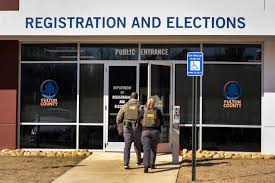
Blue Press Journal – Fulton County has requested a federal court to compel the FBI to return ballots and election documents from the 2020 election, seized during a warehouse search near Atlanta. This move responds to Trump’s “persistent demands for retribution over claims, without evidence, that fraud cost him victory in Georgia,” which have been “debunked” by numerous audits and investigations.
Fulton County’s legal filing directly challenges the FBI’s actions, asserting that the federal government breached the Fourth Amendment, which protects individuals against “unreasonable searches and seizures.” The filing argues the affidavit for the search lacked “probable cause,” instead describing “types of human errors that its own sources confirm occur in almost every election — without any intentional wrongdoing whatsoever.” As the filing succinctly states, “The Fourth Amendment demands ‘probable cause’ — not ‘possible cause.’” Fulton County Chairman Robb Pitts emphasized the gravity, stating, “This case is not only about Fulton County. This is about elections across Georgia and across the nation.”
Trump’s Rhetoric: A Threat to Democratic Norms
This incident is not isolated; it aligns with Trump’s stated desire to “take over” elections in Democratic-run areas, referencing “15 places” for targeting. Critics fear this rhetoric could lead to actions “beyond the Constitution,” a concern echoed by U.S. Sen. Mark Warner (D-Va.). Trump’s infamous 2020 call pressuring Georgia’s Secretary of State Brad Raffensperger to “find” 11,780 ballots remains a stark reminder of his willingness to undermine election results.
Despite a White House spokesperson trying to frame Trump’s remarks as supporting the SAVE Act, Trump claimed that cities like Atlanta face “horrible corruption on elections,” insisting “the federal government should not allow that.” This position directly contradicts the Constitution, which grants states authority over election administration, leading even Republican Senator Thom Tillis (R-N.C.) to state, “Nationalizing elections and picking 15 states seems a little off strategy.” The involvement of figures like Tulsi Gabbard—mentioned as Trump’s Director of National Intelligence—at the Fulton search raises concerns about the boundaries between intelligence and law enforcement.
Ultimately, the actions in Fulton County and Trump’s rhetoric embody the “big lie,” seeking to erode faith in democratic institutions and undermine elections. As Chairman Pitts said about the seized ballots, “What they’re doing with the ballots now, we don’t know, but if counted fairly, the results will be the same.” Vigilance against those undermining election integrity is crucial.
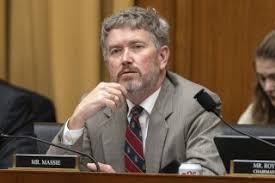
Blue Press Journal – In a sharply worded interview on ABC’s This Week, Representative Thomas Massie (R‑KY) accused President Donald Trump, senior cabinet members, and top White House officials of deliberately shielding a network of wealthy individuals tied to the late convicted sex offender Jeffrey Epstein. Massie called the effort a “systematic cover‑up” designed to protect what he labeled the “Epstein class” – a circle of billionaires who allegedly mingle with names appearing in the heavily redacted documents.
Massie reminded viewers that Trump had once promised full transparency after acknowledging social outings with Epstein‑linked guests in New York City and West Palm Beach. “He said he would be open about the issue,” Massie said, “yet he remains entrenched in the very class he vowed to expose.”
Since Epstein’s 2019 death (during Trumps first term) —officially ruled a suicide, though contested by his family—political pressure to release the remaining files has intensified. During the 2024 campaign, Trump and his allies pledged to make every Epstein‑related record public. After taking office, however, the administration stalled, dismissing the files as a “Democrat hoax” and delivering only heavily redacted versions from the Justice Department.
The limited disclosures have already raised fresh questions. According to a recent statement by Rep. Jamie Raskin (D‑MD), a search of unredacted text for “Don,” “Donald,” and “Trump” generated more than one million hits. The same files suggest deeper ties between Trump’s inner circle—Commerce Secretary Howard Lutnick, CMS Administrator Mehmet Oz, and former strategist Steve Bannon—and Epstein than previously reported.
While no direct criminal evidence against Trump or his aides has emerged, the growing web of connections fuels mounting political scrutiny. Massie seized the moment to label the current administration the “Epstein administration,” accusing it of retaliating against his push for full disclosure. In turn, Trump has publicly attacked Massie and even endorsed Massie’s primary opponent, underscoring the partisan stakes surrounding the dossier.
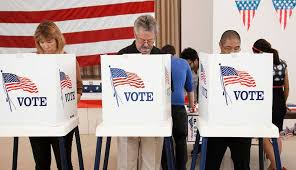
Blue Press Journal – The integrity of our democratic elections is a cornerstone of American society. Yet, alarming patterns of federal interference, particularly from U.S. Immigration and Customs Enforcement (ICE), threaten to undermine this fundamental right. It is unequivocally illegal for ICE or any federal agents to be present at polling sites, actively interfering with the electoral process. This isn’t just about preserving norms; it’s about upholding federal and state law against a dangerous trend of voter intimidation.
The Illegality of Federal Presence at Polling Sites
Multiple federal statutes explicitly prohibit the presence of armed federal agents at or near polling locations. The bedrock of these protections includes:
18 U.S. Code § 592 – Troops at polls: This critical federal law makes it a crime for any officer or member of the Armed Forces, or “any officer or employee of the United States,” to “bring troops or armed men to the place where a general or special election is held, unless it be necessary to repel armed enemies of the United States.” This clearly applies to federal agents like ICE, whose presence, particularly if armed or uniformed, is designed to intimidate, not to repel foreign enemies. Source: Cornell Law – 18 U.S. Code § 592
The Voting Rights Act of 1965, Section 11(b): This landmark civil rights legislation prohibits any person from intimidating, threatening, or coercing any other person for voting or attempting to vote. The presence of federal agents, especially those known for aggressive enforcement, inherently creates an intimidating environment, directly violating the spirit and letter of this act. Source: U.S. Department of Justice – The Voting Rights Act of 1965
Beyond federal statutes, numerous state laws reinforce these protections, often prohibiting armed personnel, electioneering, or interference within a specified distance of polling places. These state-level mandates underscore a bipartisan commitment to ensuring unfettered access to the ballot box, free from overt or implied coercion.
Trump’s Dangerous Playbook: Suppressing the Vote Through Fear
As leading investigative journalists have meticulously documented, Donald Trump has consistently demonstrated an unconcealed disdain for democratic elections that could undermine his pursuit of total power, his 2020 Big Lie is a prime example. Concerns about ICE’s role in this authoritarian agenda first emerged with alarming clarity in 2025. Trump launched aggressive immigration enforcement operations in major cities like Los Angeles and Chicago, then threatened to deploy National Guard troops to back them up.
Figures like California Governor Gavin Newsom and Illinois Governor J.B. Pritzker, both Democrats, immediately recognized these operations for what they were: not merely about deporting undocumented immigrants, but a preview for leveraging armed federal agents to seize control of elections and suppress dissent. Congressional Democrats have increasingly voiced alarm, especially as chaos related to these tactics escalated in communities like Minnesota. This experience shows that even absent ICE directly surrounding polls, Trump’s immigration enforcement operations spread enough fear and chaos to terrorize minority communities and significantly transform how campaigns are run.
Targeting Democracy’s Pillars
This tactic is no accident. Black, Latino, and Asian communities are major components of the Democratic Party coalition. Instilling fear and creating a climate of uncertainty within these communities serves a clear purpose: to suppress their votes and unfairly aid the Republican Party. The GOP’s historical reliance on voter suppression, whether through restrictive ID laws or purges of voter rolls, finds a new and profoundly dangerous iteration in the weaponization of federal law enforcement.
Yet, despite these brazen attempts to tear apart communities and suppress the vote, there’s a powerful counter-narrative emerging. In places like Minnesota, Trump’s actions have, ironically, spurred a rise in dispersed community networks. These grassroots efforts document ICE activities, challenge arrests, and provide mutual aid to those too afraid to leave their homes. This resilience demonstrates that while the threat to our democracy is real, so is the will of the people to protect it.
The presence of ICE at polling sites is not merely an act of intimidation; it is an assault on American democracy, a flagrant violation of federal and state laws designed to protect the sanctity of the ballot. We must remain vigilant, hold leaders accountable, and ensure that our elections remain free, fair, and accessible to every eligible voter, without fear of federal interference.
TAGS: ICE, polling sites, voter suppression, election integrity, federal law, state law, Donald Trump, GOP, democracy, civil rights, voting rights, voter intimidation, election interference, 18 U.S. Code 592, Voting Rights Act, political weaponization
Trump Tariffs Increase your Valentine’s Day Your Sweet Treat Costs
Blue Press Journal – This Valentine’s Day, many are noticing that their beloved chocolates come with a higher price tag. Beyond general inflation, a specific economic policy is playing a significant role: import tariffs on cocoa and chocolate.
During the Trump administration, the U.S. imposed substantial tariffs, impacting the global chocolate supply chain. Cocoa-producing countries faced average tariffs of 15% on their exports to the U.S., while finished chocolate products from the European Union saw duties as high as 20%. Given that the vast majority of cocoa used in American chocolate is imported, these tariffs directly escalated costs for manufacturers.
When companies pay more to import essential ingredients or ready-made chocolate, these expenses inevitably trickle down, leading to higher prices at checkout. If your Valentine’s candy budget feels strained this year, these historical trade adjustments explain the extra cost. Trump promised to lower prices day one…he lied.
Blue Press Journal – Donald Trump’s presidency has been marked by controversy, but his latest move to shutter the iconic John F. Kennedy Center for the Performing Arts for two years has many questioning the motives behind the sudden decision. Critics argue that the abrupt closure, citing the need for renovations, seems timed to coincide with the facility’s public relations woes and Trump’s own reputation crisis.
Although Trump has made efforts to spin a positive narrative around his leadership of the Kennedy Center, his actions have largely been met with negative headlines. After he hand-picked loyalists for the board who quickly elected him as chairman, ticket sales plummeted and top performers distanced themselves from the institution.
Now, in a move that has caught even some Republicans off guard, Trump is using the temporary closure as an opportunity to renovate the facility. The $257 million allocated for these renovations, as part of last year’s “Big Beautiful Bill,” has raised questions about the timing and necessity of the complete shut down. Senator Susan Collins, a Republican from Maine, expressed surprise at the unexpected closure, stating that she had understood the renovations to be already underway and progressing well.
Yet, Trump and Kennedy Center interim President Richard Grenell may need to be reminded that they cannot shut down an institution simply to avoid negative publicity. A letter signed by 70 Democratic lawmakers, including Representative Jamie Raskin of Maryland, argues that the closure likely violates federal law and raises serious legal and policy questions that must be addressed before any irreversible actions are taken.
The letter also critiques Trump’s handling of the Kennedy Center board, accusing him of purging independent trustees, altering the board’s bylaws to concentrate power in his appointees, and even defacing the national memorial to President Kennedy by adding his own name. This is a radical departure from the center’s traditionally bipartisan governance.
While Trump has promised to preserve some elements of the White House’s East Wing during his own renovation plans, the Kennedy Center’s sudden closure and renovation could be an attempt to manage public perception and distract from the facility’s mismanagement of resources under his leadership.
The fate of the Kennedy Center, a beloved American institution, now hangs in the balance as questions about Trump’s motives and legality swirl. As the country waits to see what comes next, one thing is clear: the truth behind the center’s abrupt closure and renovation will be crucial to understanding the true intentions behind this high-profile move.
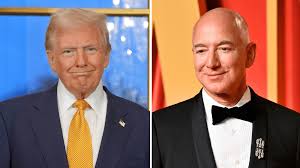
Washington Post layoffs and Jeff Bezos’s role in dismantling the newsroom, and how this aligns with the erosion of the First Amendment and appeasement of Donald Trump
The news industry this week witnessed a seismic shift that threatens the very foundation of American democracy. The Washington Post, a nearly 150-year-old institution and a pillar of the democratic system, began a fresh wave of mass layoffs. Under the ownership of billionaire Jeff Bezos and the stewardship of publisher Will Lewis, the paper is closing its Sports department, gutting its International and Metro desks, and ending its signature podcast.
While management frames these cuts as a necessary business realignment, a closer examination reveals a more troubling narrative. These layoffs represent a systematic dismantling of the Fourth Estate’s ability to hold power accountable. When viewed alongside Bezos’s history of appeasing Donald Trump and his interference in editorial independence, it becomes clear that these cuts are not just financial—they are a direct threat to the First Amendment.
The Erosion of Institutional Integrity
The Washington Post has long been synonymous with investigative journalism, most famously exposing the Watergate scandal. However, under Jeff Bezos’s ownership, the paper has pivoted away from its role as a public watchdog toward a model that prioritizes business interests over journalistic missions.
According to a statement released by the Washington Post Guild, “Continuing to eliminate workers only stands to weaken the newspaper, drive away readers and undercut The Post’s mission.” This is not hyperbole; it is a factual assessment of the current trajectory. By decimating the Metro desk and closing the Books section, the Post is severing its connection to the local community and intellectual discourse—areas essential for a well-informed citizenry.
The human cost of these decisions is staggering. As reported by The Guardian, laid-off journalists took to social media to voice their anger. The former Cairo bureau chief revealed she was laid off alongside the “entire roster” of Middle East correspondents, while a Ukraine-based correspondent lamented losing her job “in the middle of a warzone.” When a major news outlet abandons on-the-ground reporting in conflict zones, it creates an information vacuum that authoritarianism thrives in.
Bezos, Trump, and the Politics of Appeasement
To understand the First Amendment implications of these layoffs, one must look at the broader context of Jeff Bezos’s behavior over the last two years. There is a growing trend in American media, as identified by media critics, where “media companies and other key institutions of civil society responding to Donald Trump’s efforts to bully and intimidate them by knuckling under, sucking up, and appeasing him.”
Jeff Bezos has emerged as a chief practitioner of this appeasement.
In a move that broke with decades of tradition, the Post announced it would not endorse a presidential candidate for the 2024 election—a decision made directly by Bezos. As noted by NPR, this decision resulted in the swift loss of tens of thousands of subscribers. This was not a neutral act; it was a strategic maneuver to protect Bezos’s vast business empire, including Amazon and Blue Origin, from potential retribution should Donald Trump return to power.
Furthermore, Bezos’s interference extends to the editorial pages. He previously forced the opinion section to pivot toward “personal liberties and free markets,” a move that prompted the section’s editor to resign. This editorial meddling signals to readers that the paper’s content is subject to the whims of a billionaire rather than the principles of journalistic integrity.
The Financial Fallacy and the “Puff Piece” Paradox
Critics argue that the layoffs are a response to financial struggles, yet the Post’s decline in subscribers correlates directly with Bezos’s political decisions, not a lack of demand for news. In fact, competitors like The New York Times have thrived. As reported by The New York Times itself, the paper added approximately 450,000 digital-only subscribers in the last quarter of 2025 alone. The difference? The Times continues to invest in its newsroom while the Post is slashing it.
The contradiction in Bezos’s strategy is glaring. While he cuts essential reporting staff, reports have surfaced regarding massive spending on non-journalistic projects. Critics point to the investment of tens of millions in a documentary about the First Lady—a project that serves as a “puff piece” rather than hard news. This allocation of resources suggests that Bezos is more interested in curating a favorable public image than in funding the investigative reporting that defines the Washington Post.
The First Amendment in Peril
The First Amendment guarantees freedom of the press, but that freedom is meaningless without the infrastructure to support it. A free press requires funding, staff, and the independence to report without fear of billionaire reprisal.
By gutting the International and Metro departments, Bezos is effectively shrinking the scope of information available to the American public. A democracy relies on a press that can cover local city hall meetings just as much as it covers international conflicts. When those layers of coverage are stripped away, the public is left with a superficial understanding of the world, making them more susceptible to disinformation and authoritarian rhetoric.
As former Washington Post executive editor Marcus Brauchli once noted, the paper’s value lies in its ability to provide “indispensable” coverage. If Bezos continues to view the Post solely as a financial asset to be liquidated for parts rather than a civic institution, the paper may not survive the decade.
A Call for Responsible Stewardship
The layoffs at The Washington Post are not merely a business restructuring; they are a symptom of a larger disease in American media—the consolidation of power in the hands of billionaires who prioritize self-preservation over public service.
Jeff Bezos has the wealth to sustain the Washington Post for decades, investing in the next generation of reporters and expanding coverage. Instead, he has chosen a path of austerity that weakens the paper’s ability to function as a check on power. By silencing foreign correspondents and dismantling local desks, he is aiding the efforts of those who wish to diminish the free press.
If Bezos is unwilling to be a steward of this beloved institution, he should heed the advice of critics and consider selling the Washington Post to owners who value the First Amendment over personal gain. Until then, the slow death of the Washington Post serves as a chilling warning: the freedom of the press is only as strong as the will of those who own it.
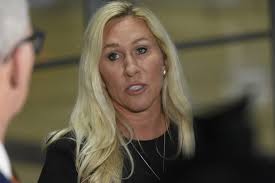
Blue Press Journal – Former Georgia Representative Marjorie Taylor Greene, once a staunch ally of Donald Trump, has publicly turned against the former president, calling his “Make America Great Again” (MAGA) slogan a “lie.” In a recent interview with journalist Kim Iversen, Greene sharply criticized Trump’s second administration, claiming it prioritizes big donors and corporate interests over ordinary Americans.
According to Greene, the MAGA agenda has become a vehicle for wealthy benefactors who bankroll Trump’s political operations. “It was a big lie for the people,” she said, noting that Trump’s closest financial supporters are the ones “getting special favors, government contracts, and even pardons.”
Greene’s comments come after her highly publicized resignation from Congress, where she cited deep divisions within the GOP, concerns about rising health care costs, and frustration over the U.S. role in the Gaza conflict. Her departure underscores a broader rift within the Republican Party as more conservative figures question Trump’s leadership and political motives.
Reports from outlets such as Reuters and The Washington Post have corroborated Greene’s claims that Trump has increasingly leaned on private donors to fund projects like a planned White House ballroom and the 250th anniversary celebration of U.S. independence—initiatives critics say blur the line between public service and personal gain.
Greene also accused Trump of focusing on foreign policy that benefits corporate and global interestsrather than addressing domestic challenges. “It’s the big corporations and foreign countries running the show,” she warned, describing what she believes is a “new world order” emerging under Trump’s leadership.
Her remarks add to a growing body of criticism suggesting that the MAGA movement no longer represents working-class Americans, but rather the wealthy elite it once claimed to oppose.
Why a Free Press is Essential for Democracy—and Why We Must Defend It…the Arrest of Don Lemon
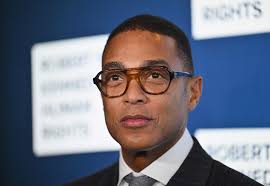
Blue Press Journal – In recent months, the integrity of the First Amendment has come under unprecedented scrutiny, raising alarms about press freedom in America. The alarming arrest of independent journalist Don Lemon, along with fellow reporters Georgia Fort, Trahern Jeen Crews, and Jamael Lydell Lundy, while covering protests in Minnesota, exemplifies the growing hostility toward the press under the Trump administration. This troubling trend is further exacerbated by Attorney General Pam Bondi’s vocal support for measures that actively undermine journalistic freedoms.
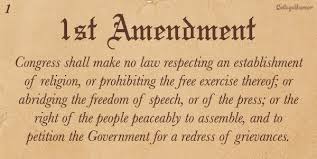
The First Amendment is a cornerstone of American democracy, safeguarding the freedoms of speech, press, assembly, and the right to petition the government. As Thomas Jefferson famously stated, “Our liberty depends on the freedom of the press, and that cannot be limited without being lost.” Jefferson’s insightful words highlight the critical role of a free press in holding those in power accountable and ensuring that citizens have access to the truth.
The circumstances surrounding Lemon’s arrest in Los Angeles during the Grammy Awards underscore a worrisome trend. His attorney, Abbe Lowell, described the incident as a direct assault on the First Amendment. “Don has been a journalist for 30 years,” Lowell emphasized, underscoring the constitutional protections surrounding Lemon’s work. “There is no more important time for people like Don to be doing this work.”
Instead of focusing on accountability for federal agents responsible for the deaths of peaceful protesters, the Trump Justice Department appears more intent on silencing journalists. This alarming pattern points to a broader trend of authoritarianism, aiming to suppress dissent and manipulate narratives. The Trump administration’s approach to the press has shifted dramatically, and Bondi’s characterization of protests as a “coordinated attack” further illustrates this troubling rhetoric. By labeling journalists as threats, the administration undermines the very principles that uphold democracy, sending a chilling message to those striving to report the truth.
Georgia Fort’s poignant remark, “I don’t feel like I have my First Amendment right as a member of the press,” resonates deeply. Such sentiments reflect the broader implications of these actions, which represent a direct assault on the freedoms that define American society. This incident is not an isolated event; it fits into a disturbing pattern of hostility towards the press, including previous raids on journalists’ homes and ongoing lawsuits against news organizations. House Minority Leader Hakeem Jeffries has aptly condemned the Trump Justice Department as “illegitimate,” echoing widespread concerns about the violation of constitutional rights.
The significance of a free press is beyond measure, yet it’s often taken for granted. The American public demands unfiltered access to the truth, especially when it pertains to the powerful elite. The egregious acts of Donald Trump and Pam Bondi starkly highlight the urgent need for relentless vigilance in safeguarding the liberties guaranteed by the First Amendment.
The recent arrests of journalists like Don Lemon signify more than isolated incidents; they reflect a broader, more troubling trend that threatens our democracy. It is imperative for all Americans to stand up for the First Amendment, ensuring the press remains a vital component of our society—one that can freely report, investigate, and hold power accountable. As we navigate these challenging times, let us heed Jefferson’s words and strive to protect the freedoms that are the bedrock of our nation.
The Dangerous Intersection of Election Denial and Federal Overreach: A Critical Look at Trump’s Actions in Minnesota
Blue Press Journal – In an alarming display of federal overreach, former President Donald Trump has leveraged the power of Immigration and Customs Enforcement (ICE) to pursue his unfounded claims of election fraud in Minnesota. Critics argue that his obsession with the state stems from a desperate need to validate his belief that he won Minnesota in 2016, 2020, and 2024—claims that have been thoroughly dismissed by the courts and factual evidence.
Norm Eisen, a former White House lawyer under Barack Obama, bluntly captures the chaos: “It’s almost unbelievable to think that election denial wasn’t a key factor driving his reckless animus, which in turn led to the ICE surge and the horrific fallout. This entire debacle reeks of a concoction built on nothing but lies.”
The Trump administration’s recent tactics in Minnesota include a demand from Attorney General Pam Bondi for extensive voter data. This request arrives amid a backdrop of tragic incidents related to ICE operations, including the recent shooting of protester Alex Pretti. Bondi’s assertion that obtaining this data is essential for “free and fair elections” is seen by many as a thinly veiled attempt to intimidate voters and suppress legitimate electoral participation.
In 2020, courts across the nation refuted Trump’s baseless allegations of widespread voter fraud, yet he continues to propagate these falsehoods. During a gathering in St. Paul in May 2024, Trump proclaimed, “I thought we won in 2016. I know we won it in 2020.” This starkly contrasts with the reality that he lost Minnesota in all three elections, including a 7.1-point defeat to Joe Biden in 2020—one of many losses that continue to fuel his unfounded claims.
Democratic National Committee Chair Ken Martin, a Minnesota native, emphasized the absurdity of Trump’s fixation: “Minnesota voters rejected Donald Trump three times, a fact that he either willingly ignores or his addled, aging brain can’t remember.” Martin further noted that Trump’s obsession with Minnesota is intertwined with his administration’s unlawful ICE tactics aimed at instilling fear among voters.
Marc Elias, a prominent election lawyer, pointed out that Bondi’s request for voter data is part of a broader strategy to suppress Democratic votes in upcoming elections. “He is punishing those states by sending in federal officers, federal officials to terrorize the population,” Elias stated. This alarming strategy underscores how Trump is willing to weaponize federal agencies to support his false narrative of election fraud.
The troubling reality is that Trump’s historical pattern of claiming electoral theft dates back to his first political run. After losing the Iowa caucuses in 2016 to Ted Cruz, he immediately accused Cruz of cheating. Following his electoral victory, Trump continued to claim that he lost the popular vote to Hillary Clinton due to illegal immigrant voting—a conspiracy theory he later abandoned after a task force found no evidence to substantiate it.
As recently as his speech in Davos, Switzerland, Trump reiterated his false claims, stating, “It was a rigged election. Everybody now knows that they found out. People will soon be prosecuted for what they did.” This rhetoric not only undermines democracy but also threatens the integrity of federal institutions, as Trump continues to blur the lines between political ambition and lawful governance.
The situation in Minnesota serves as a critical reminder of the potential dangers posed by the abuse of federal power in the pursuit of unfounded claims. As federal agencies like ICE become entangled in Trump’s political vendettas, the safety and rights of citizens hang in the balance, raising urgent questions about the future of democracy in America.
Trump, Pam Bondi, and the Epstein Files: Ignoring Congressional Law and Justice for Survivors
Blue Press Journal – More than a month has passed since the December 19 deadline for the Department of Justice (DOJ) to release all files related to investigations into convicted sex offender Jeffrey Epstein. Under the Epstein Files Transparency Act, passed by Congress and signed into law by then‑President Donald Trump, the DOJ was legally required to make every document public by that date.
Yet here we are — with less than 1% of the materials released, and millions of pages still hidden from public view. This is not just bureaucratic delay. It is a blatant violation of federal law and a betrayal of survivors, the public, and the principle of transparency.
Trump’s Broken Promise on Epstein Files
Donald Trump signed the Epstein Files Transparency Act in November, making a public show of supporting accountability. But by December 19, his administration openly admitted it would not comply with the law. The excuse? That “extensive redactions” were needed to protect victims’ identities.
Protecting victims is essential — but this rationale rings hollow when weeks pass without new releases, and when heavily‑redacted documents obscure far more than is necessary. Survivors themselves have demanded full disclosure, arguing that secrecy only protects powerful individuals connected to Epstein.
The Trump DOJ has held back over two million documents, as reported by The Guardian and Politico. In doing so, it has effectively shielded the network of elites Epstein associated with from public scrutiny.
Pam Bondi’s Silence and Complicity
Former Florida Attorney General Pam Bondi, a close Trump ally, has been conspicuously silent about the DOJ’s illegal noncompliance. Bondi’s tenure in Florida was marked by controversial decisions involving powerful figures, and her unwillingness to call for transparency here adds to her record of protecting political allies over public interest.
Bondi has repeatedly positioned herself as a defender of “law and order,” yet she stands by as the Trump administration ignores a law passed by Congress. Her silence is not neutrality — it is complicity.
Public Outcry and Congressional Frustration
Senate Majority Leader Chuck Schumer has condemned the DOJ’s failure, noting:
“It’s been 33 DAYS since Trump DOJ broke the law and failed to release all the Epstein files. The DOJ admits it has released less than 1% of the total files. The silence from congressional Republicans is deafening.”
Survivors and advocacy groups have also voiced outrage, pointing out that the longer the delay, the greater the risk that crucial evidence will be buried forever.
Why This Matters
The Epstein case is not just about one man’s crimes. It is about a system that protects the wealthy and politically connected at the expense of justice. Every day these files remain hidden is another day the public is denied the truth about how Epstein operated, who enabled him, and who may still be in positions of power.
Pam Bondi and Donald Trump cannot claim to stand for justice while ignoring the law. The American people deserve the full release of the Epstein files now — not next month, not next year.



 Blue Press Journal