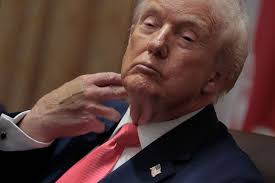
Blue Press Journal – When President Donald Trump boasts about “acing” a cognitive exam for the third straight time, it raises more questions than it answers. Cognitive tests are not intelligence contests; they’re simple screening tools doctors use to evaluate memory, attention, and problem-solving skills—often in patients showing signs of cognitive decline. So why does Trump keep taking them, and why does he feel the need to advertise the results?
A standard cognitive test, such as the Montreal Cognitive Assessment (MoCA), might ask someone to identify animals from pictures, recall five words after a few minutes, or draw a clock showing a certain time. Scoring well doesn’t prove genius—it simply indicates that basic cognitive functions are intact. Most adults without impairment would easily “ace” it. That’s why medical experts find Trump’s repeated emphasis on his performance puzzling, even concerning.
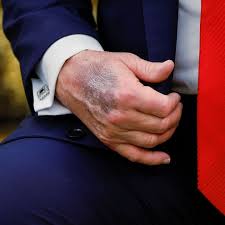
Trump’s latest Truth Social post, insisting that anyone running for high office should undergo a “strong, meaningful” cognitive exam, feels less like a policy suggestion and more like projection. If he’s indeed taken the test three times, it suggests that either his doctors or his team are monitoring potential issues—or that he wants to preempt speculation about his health by loudly proclaiming his mental sharpness. The bruises spotted on his hands and his occasional slurred speech have only fueled public curiosity.
Critics argue that Trump’s obsession with “acing” a basic screening betrays insecurity rather than strength. Instead of reassuring voters, it highlights how defensive he becomes over any hint of vulnerability. After all, a healthy, confident leader doesn’t need to brag about remembering five words or drawing a clock correctly.
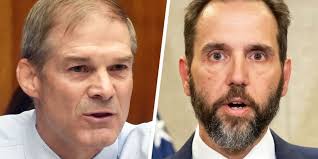
BLUE PRESS JOURNAL – The latest revelations from former Special Counsel Jack Smith’s closed-door interview with the House Judiciary Committee offer a sobering reminder of how far Donald Trump and his allies were willing to go to hold onto power after losing the 2020 election. While the session was held behind closed doors, reports of what was said inside make clear why some Republican lawmakers, including Committee Chair Jim Jordan, had no interest in making the testimony public.
Smith’s investigation—now dismissed—had sought to determine the extent of Trump’s direct involvement in efforts to overturn the election and his mishandling of classified documents after leaving the White House. What’s emerging from this new account is not just a picture of political hardball, but of a deliberate campaign built on lies that even Trump’s closest associates didn’t believe.
One of the most striking details involves Rudy Giuliani, Trump’s personal lawyer and architect of his post-election legal strategy. Smith’s inquiry reveals Giuliani admitted he didn’t believe the conspiracy theories he promoted—and neither did Donald Trump. This confession undermines the “Stop the Steal” narrative: it was not based on genuine grievance, but a calculated deception to inflame supporters and delegitimize a lawful election.
If Trump and Giuliani both knew their claims were false, then the entire post-election chaos—from the flood of lawsuits to the violence of January 6th—was built on a conscious lie. This undermines any argument that Trump was simply misled or acting out of misguided conviction. It paints a portrait of a leader willing to endanger democracy itself for personal gain.
The Republicans who sought to limit public access to Smith’s testimony likely understood how damaging such revelations could be. A clear-eyed look at the evidence doesn’t just implicate Trump; it also raises uncomfortable questions about those in Congress who continue to defend him, even as the factual record grows darker.
Trump’s defenders often dismiss these investigations as partisan witch hunts, but Smith’s work reveals a graver truth: a former president, aware of his loss, attempted to weaponize the government and his followers to maintain power. This behavior is not that of a patriot—it’s someone who views democracy as expendable.
As more details come to light, the question is no longer whether Trump believed his own lies. It’s whether the country is prepared to hold him accountable for them.
Blue Press Journal – President Trump’s recent revelation that he’s doubling down on aspirin therapy to “thin” his blood has once again exposed a confusing blend of self-diagnosis and bedside intuition—and it drew swift rebuttal from experts. In an interview with the Wall Street Journal, the 79-year-old commander in chief explained, “I don’t want thick blood pouring through my heart. I want nice, thin blood pouring through my heart. Does that make sense?”
Dr. Jonathan Reiner, a respected cardiologist who treated former Vice President Dick Cheney, didn’t mince words when asked about Trump’s unconventional regimen on CNN’s The Lead. “That actually makes no sense,” Reiner declared. “When we use anticoagulant medications to prevent clotting, they don’t ‘thin’ the blood like changing gumbo to chicken soup. They simply reduce the chance of clot formation.” In other words, the president’s catchy metaphor has no basis in medical reality.
Beyond the semantics, Trump’s high-dose aspirin use carries risks. The American Heart Association warns that people over 70 using aspirin to prevent a first heart attack or stroke may face more harm than benefit due to increased bleeding risk. Self-medicating at that age is a gamble with serious consequences.
Trump, who has dismissed health concerns, favors his instincts over medical advice. At a time when cardiovascular vigilance is crucial, his cavalier attitude and reliance on pseudo-medical explanations highlight a troubling trend: expertise is overlooked when it conflicts with his gut feelings or media soundbites.
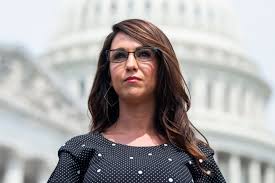
Blue Press Journal – President Donald Trump’s recent veto of a bipartisan measure to secure clean drinking water for thousands of Colorado residents has ignited a firestorm of controversy—particularly from within his own party. Rep. Lauren Boebert, a staunch MAGA ally, is publicly questioning whether the President’s decision constitutes “political retaliation” against her.
The bill in question, the Finish the Arkansas Valley Conduit Act, aimed to fund a critical pipeline delivering clean water to roughly 50,000 people in the Arkansas River Valley. Despite Boebert’s sponsorship and the bill’s bipartisan support, the President rejected the measure.
While Boebert has consistently championed Trump’s “America First” agenda, she recently broke ranks over the administration’s handling of the Jeffrey Epstein files. The Congresswoman has been vocal in demanding full transparency regarding the late child predator, who once referred to Trump as his “closest friend.”
In a statement released on X, Boebert expressed her dismay: “I sincerely hope this veto has nothing to do with political retaliation for calling out corruption and demanding accountability.” She emphasized that the American people deserve leadership that prioritizes essential needs over partisan squabbles.
This clash highlights a rare fracture in the Republican front. As constituents in Colorado await access to clean water, the situation raises uncomfortable questions about the cost of dissent and whether the White House is prioritizing personal grievances over the public good. For Boebert, the veto serves as a stark reminder that even loyal allies can find themselves at odds with the President when seeking accountability.
The latest cascade of documents released by Judge Waverly D. Crenshaw Jr. has turned another spotlight on the Trump administration’s flagrant disregard for the rule of law. A trove of roughly 3,000 internal files—of which a “few dozen” were handed over to the defense of Kilmar Ábrego García—reveals that Deputy Attorney General Todd Blanche’s office deliberately elevated Ábrego’s case to a “top priority” after a Supreme Court order forced the government’s hand. The timing, tone, and sheer obstinacy of the Justice Department’s actions paint a picture of vindictive prosecution that should alarm anyone who cares about a fair and impartial legal system.
Ábrego, a low‑level immigrant mistakenly deported in March 2025, had no pending criminal case when a routine traffic stop on November 30, 2022, was logged. After three years of inaction from the DOJ, on April 1, 2025—shortly after the Supreme Court ordered his return—the Justice Department abruptly closed his arrest file and initiated a prosecution campaign seemingly driven by political retribution.
The documents make clear that Deputy Attorney General Blanche’s office was the conduit for an explicit directive to Tennessee U.S. Attorney Robert McGuire: “targeting Kilmar Ábrego García was a top priority.” Blanche himself later confirmed to Fox News that the push came after a Maryland judge accused the government of “doing something wrong,” effectively admitting that the prosecution was a reactionary, punitive move rather than a genuine pursuit of justice.
The Supreme Court’s order, which was ignored for more than two months, demonstrates the administration’s contempt for judicial authority. In a system supposedly built on checks and balances, a president’s cabinet cannot simply trounce a high court’s mandate and then claim ignorance. The delay was not a bureaucratic hiccup; it was a calculated gamble that the political consequences of defying the Court would be minimal—a gamble that failed spectacularly.
What makes this case troubling is the broader pattern it reflects. Throughout Trump’s tenure, the Justice Department was weaponized to settle scores, targeting political opponents and silencing dissent. The Ábrego saga exemplifies this: a vulnerable immigrant, an ordinary traffic stop, and a sudden, high-profile prosecution following pressure on the administration.
The vindictive nature of this case hinges on timing, as legal scholars like Parloff have noted. No evidence suggests that Ábrego posed any danger or that his conduct warranted a federal indictment. Instead, the prosecution appears to be a punitive response to a judicial rebuke—exactly the kind of abuse of power the Constitution seeks to prevent.
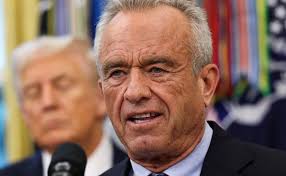
Blue Press Journal – The Trump administration’s second term has been marked by controversy, but one of the most alarming developments has been the transformation of the Department of Health and Human Services under the leadership of Robert F. Kennedy Jr. Since taking office in February, Kennedy has been on a mission to reshape the department in his image, rejecting the medical establishment and promoting his own brand of pseudoscience.
One of the most significant changes has been the elimination of thousands of jobs within the department, a move that has been widely criticized by experts and lawmakers alike. According to a report by the Washington Post, the cuts have “decimated” the department’s capacity to respond to public health crises. The Post reported that the department had lost over 3,000 employees since Kennedy took office, with many more facing uncertainty about their future.
In addition to the job cuts, Kennedy has also frozen or canceled billions of dollars in scientific research, a move that has been denounced by the scientific community. The New York Times reported that the cancellations have “halted or delayed research into some of the most pressing health issues of our time, including cancer, Alzheimer’s disease, and infectious diseases”.
Kennedy’s Make America Healthy Again movement has been the driving force behind these changes, and has been characterized by a rejection of established medical wisdom. He has used his position to promote discredited ideas about vaccines, seed oils, fluoride, and Tylenol, often citing debunked research and conspiracy theories to support his claims.
For example, Kennedy has repeatedly used his authority to promote the false claim that vaccines are linked to autism, a claim that has been thoroughly debunked by the scientific community. The Centers for Disease Control and Prevention (CDC) and the World Health Organization (WHO) have both concluded that there is no evidence to support a link between vaccines and autism.
The consequences of Kennedy’s actions are already being felt. The department’s abandonment of evidence-based medicine has created confusion and uncertainty among the public, and has undermined trust in the medical establishment. As Dr. Eric Widera, a professor of medicine at the University of California, San Francisco, told the New York Times, “When you have a government that’s not grounded in science, it’s a recipe for disaster”.
The Trump administration’s decision to put Robert F. Kennedy Jr. in charge of the Department of Health and Human Services has been a disaster for public health. By rejecting the medical establishment and promoting pseudoscience, Kennedy has undermined the department’s ability to respond to public health crises and has put the health and well-being of Americans at risk.
BLUE PRESS JOURNAL – While most Americans were spending Christmas Eve with family, friends, and traditions steeped in warmth, Donald Trump was doing something else entirely: furiously posting online well past midnight. In a torrent of over 100 posts, the former president lashed out at his usual list of perceived enemies — Democrats, people of color, and anyone who dares question his legacy. He even went so far as to once again rage about the 2020 election, a grievance he has refused to let go more than three years later.
The language was particularly ugly. Trump referred to his political opponents as “Radical Left Scum,” a phrase that, aside from its cruelty, underscores his inability to engage in the kind of unifying rhetoric expected from a national leader. It was a performance not of strength, but of bitterness, pettiness, and obsession.
An Unraveling in Public View
Trump’s late-night posting spree is part of a broader pattern that has become more visible over the past year: an almost compulsive need to relitigate the past, settle scores, and portray himself as a perpetual victim. Instead of presenting coherent policy ideas or offering a positive vision for the future, his public communication is increasingly dominated by personal vendettas and conspiracy-laden grievances.
It’s not simply that these angry outbursts are unbecoming — they are politically self-destructive. Every minute spent rehashing old battles is a minute not spent persuading undecided voters, articulating solutions to real-world problems, or showing leadership in moments of national challenge. For someone seeking (or holding) high office, that’s a glaring red flag.
The Epstein Cloud
One of the more telling aspects of this latest meltdown is the apparent sensitivity Trump shows whenever Jeffrey Epstein’s name comes up. While public records confirm that Trump and Epstein knew each other in the late 1980s and early 1990s, Trump has since tried to distance himself. Yet, his social media eruptions suggest the mere mention of Epstein still touches a nerve. The defensiveness is striking — and it fuels curiosity about why this particular topic provokes such an intense reaction.
Why It Matters
Even if one sets aside the moral and ethical concerns about Trump’s rhetoric, the practical political consequences are significant. A leader who spends Christmas Eve in a rage spiral online is not projecting stability, discipline, or focus. Instead, he is reinforcing an image of someone consumed by grudges, unable to move forward, and increasingly out of step with the broader electorate.
For his base, these moments might feel like evidence of “fighting” against the establishment. But for everyone else — including moderates and independents — they serve as a reminder of why Trump remains one of the most polarizing and exhausting figures in American politics.
If this pattern continues, it won’t simply be a problem for Trump’s public image. It will raise deeper questions about his capacity to lead — questions that grow louder every time he chooses rage over reason.
BLUE PRESS JOURNAL – Remember when President Trump announced his so-called “Liberation Day” tariffs back in April 2025? He promised they’d be a shot in the arm for American workers — especially in manufacturing. The message was simple: slap big taxes on most imports, force companies to “buy American,” and watch U.S. factories roar back to life.
Well, fast-forward to today, and the “roaring” sounds you’re hearing are more like the groans of laid-off workers.
The Job Numbers Tell the Story
Let’s start with the cold, hard math: Since the tariffs went into effect, the U.S. economy has been adding jobs at one-tenth the pace it did under President Biden. According to the Bureau of Labor Statistics (BLS), Biden’s term saw an average of around 400,000 jobs per month in 2021–2022 (BLS Jobs Data). Under Trump’s post-tariff economy in 2025, that’s closer to 40,000 per month — a stunning slowdown for a country not in a recession.
And manufacturing? The very sector Trump claimed he was rescuing? It’s been shrinking. Every single month since the tariffs were announced in April 2025, manufacturing employment has ticked downward. The most recent BLS data shows 67,000 fewer manufacturing jobs now than when the tariffs began (BLS Manufacturing Employment).
Why Tariffs Backfire
Economists have been warning for years that tariffs don’t work the way politicians promise. Sure, they make imported goods more expensive, but they also raise costs for U.S. businesses that depend on imported parts and materials. That means higher prices for consumers and squeezed profit margins for manufacturers — the very people you’re supposedly helping.
Back in 2018, during Trump’s first term, the Peterson Institute for International Economics estimated that his steel and aluminum tariffs actually cost more manufacturing jobs than they preserved (PIIE Analysis). The same pattern seems to be repeating in 2025.
The Domino Effect on the Economy
When manufacturers cut jobs, it doesn’t just hurt factory towns. It ripples out to suppliers, shipping companies, local restaurants, and pretty much any business that depends on those workers’ paychecks. Even sectors not directly tied to imports can get caught in the drag because tariffs slow overall economic activity.
And let’s not forget — these tariffs function like a tax increase on everyday Americans. When the cost of imported goods goes up, so do the prices on store shelves. That’s inflationary pressure at a time when many families are still trying to get their budgets under control.
The Political Spin vs. Economic Reality
Of course, the White House is spinning this as “short-term pain for long-term gain.” The problem is, we’ve heard that before. In 2018 and 2019, Trump’s trade war with China was supposed to bring manufacturing roaring back. Instead, U.S. manufacturing output fell and job growth slowed (Federal Reserve Industrial Production Data).
Now in 2025, history is repeating itself — only the tariffs are broader, the job losses faster, and the excuses flimsier. You can call it “Liberation Day” if you want, but for tens of thousands of American workers, it feels more like eviction day.
Bottom Line
Tariffs make for great political theater. They let a president look “tough” on trade without having to pass complicated legislation. But the economic reality is that they’re a blunt instrument — and when you swing a blunt instrument, you often hurt the very people you claim to be protecting.
If the goal was to “liberate” Americans, the 2025 tariffs have certainly done that — they’ve liberated them from their jobs, from stable paychecks, and in some cases, from their ability to keep the lights on.
BLUE PRESS JOURNAL – After a strong rally in November, U.S. consumer confidence lost steam in December, dropping to its lowest point since President Donald Trump first imposed sweeping tariffs on major trading partners. According to The Conference Board’s latest report, the consumer confidence index fell 3.8 points—sliding from a revised 92.9 in November to 89.1 last month. That reading is perilously close to the 85.7 level recorded back in April, when the administration unveiled tariffs on steel, aluminum and a host of imported goods.
What’s behind this renewed slump in confidence? Consumers’ write-in responses to the survey shed light on two persistent worries: rising prices and inflation, and the economic fallout from trade tensions. In short, Americans are feeling squeezed by day-to-day costs even as they fret over the prospect of higher import taxes driving prices further upward.
Although overall confidence dipped, the survey’s so-called “expectations” component—gauging short-term outlooks for income, business conditions and the job market—remained unchanged at 70.7. While stability may sound positive, the figure still sits well below the 80-point threshold many economists consider a yellow flag for an impending recession. In fact, this marks the 11th consecutive month that consumers’ expectations have lingered below that critical 80-point mark.
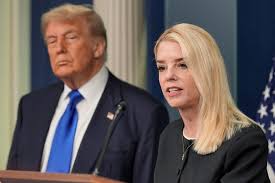
BLUE PRESS JOURNAL – A rare bipartisan alliance in Congress is turning up the heat on the Department of Justice (DOJ), after the agency failed to hand over all documents tied to the late convicted sex offender Jeffrey Epstein — despite a legal requirement to do so. The controversy has sparked an unusual push for “inherent contempt” proceedings against Attorney General Pam Bondi, including the threat of daily fines until the full cache of files is released.
The Dispute Over Epstein Records
Earlier this year, lawmakers passed legislation mandating the DOJ to make public all federal documents related to Epstein, whose death in federal custody in 2019 continues to fuel questions about his network of associates and possible enablers. The bill — backed across party lines — was seen as a step toward transparency in one of the most notorious criminal cases in recent memory.
However, reports emerged last week that the DOJ had only delivered a portion of the mandated files, withholding several categories of records. According to congressional aides cited by Politicoand The Hill, these missing documents include internal communications, investigative notes, and certain sealed grand jury materials that lawmakers say should have been reviewed for public release under the new law.
Massie and Khanna’s Bipartisan Push
Reps. Thomas Massie (R-Ky.) and Ro Khanna (D-Calif.) — an unlikely pairing from opposite ends of the political spectrum — co-led the original transparency bill and are now spearheading the enforcement effort. In a joint statement, they accused the DOJ of “flouting the clear will of Congress” and undermining public trust.
Their solution: invoking Congress’s inherent contempt powers, a rarely used tool that allows lawmakers to directly penalize executive branch officials without going through the courts. Historically, this power has been employed to compel testimony or document production, though its use in the modern era is virtually unheard of.
Under their proposal, Attorney General Bondi could face monetary fines until the DOJ hands over the full tranche of Epstein-related records.
What Is “Inherent Contempt”?
The inherent contempt process dates back to the 19th century, when Congress asserted its authority to enforce subpoenas by detaining or fining noncompliant witnesses. While the Supreme Court has upheld the power in principle, it has fallen out of favor in the last century, replaced by criminal contempt referrals to the DOJ itself — an awkward arrangement when the DOJ is the target.
Massie and Khanna argue that the exceptional nature of the Epstein case warrants reviving the old enforcement mechanism. “When the agency breaking the law is the one that normally prosecutes contempt, Congress has to act for itself,” Massie said in recent interviews.
Why It Matters
The DOJ’s partial release has reignited public suspicion over Epstein’s connections to prominent figures in politics, finance, and entertainment. Transparency advocates say withholding the documents fuels conspiracy theories and undermines accountability for potential crimes beyond Epstein’s own convictions.
Bondi, a former Florida attorney general appointed to lead the DOJ last year, has defended the department’s approach, saying certain materials are too sensitive to release for reasons ranging from ongoing investigations to privacy concerns for individuals not charged with wrongdoing.
Still, with both Republicans and Democrats pressing for full disclosure — and willing to test the boundaries of congressional enforcement — the standoff could set a precedent for how lawmakers respond when executive agencies defy statutory mandates.
What’s Next
The Massie-Khanna resolution for inherent contempt is expected to be formally introduced in the coming weeks. If adopted, it could trigger a high-profile constitutional clash between Congress and the DOJ, potentially landing before the courts if Bondi challenges the fines.
Political analysts note that while bipartisan cooperation on transparency is rare, the Epstein case has cut across partisan lines due to its disturbing subject matter and unanswered questions. Whether this unity holds through a drawn-out enforcement battle remains to be seen.
Bottom line: The fight over the Epstein files is more than just a dispute over documents — it’s a test of Congress’s ability to compel compliance from the executive branch in the face of resistance. If Massie and Khanna succeed, they could revive an enforcement power unused for decades, reshaping the balance between the legislative and executive branches.




 Blue Press Journal