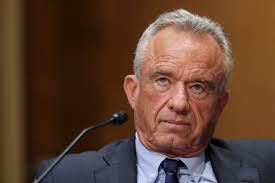
Blue Press Journal – The Trump administration’s recent executive order to boost glyphosate production represents a stark, cynical betrayal of public health concerns, and a glaring indictment of political opportunism. This move particularly resonates with those drawn to Robert F. Kennedy Jr.’s (RFK Jr.) “Make America Healthy Again” (MAHA) movement. Initially fueled by RFK Jr.’s rhetoric against environmental toxins and skepticism towards mainstream health, this coalition later gravitated towards Trump after Kennedy’s withdrawal, believing their faith would be rewarded with genuine action on chemical protection.
The expansion of a pesticide deemed “probably carcinogenic” by the WHO highlights a contradiction in the principles upheld by RFK Jr. and MAHA, showcasing the Trump administration’s preference for industrial agriculture over public health. This inconsistency forces RFK Jr. to address the disillusionment among his former supporters, reflecting how health concerns can be marginalized for political gain, ultimately alienating voters and jeopardizing health protections.
Glyphosate: A Growing Threat to Ecosystems and Human Health
Glyphosate, the most commonly used herbicide, poses significant environmental risks as it harms non-target plants and reduces plant diversity, which is crucial for resilient ecosystems. Additionally, it negatively affects soil microorganisms that are vital for nitrogen fixation and organic matter turnover, leading to decreased soil fertility and greater reliance on synthetic fertilizers.
Intensive application has led to lasting residues in soil and water, which can contaminate groundwater and affect aquatic life and human health through chronic toxicity and endocrine disruption.
For environmental and public health professionals, there is an urgent need to reassess glyphosate use and implement integrated weed management and monitoring of residue levels.
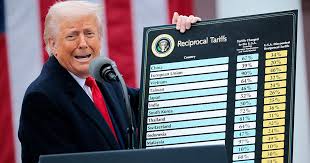
Blue Press Journal – In a move that has once again ignited concerns across the economic landscape, the Trump administration has announced a sweeping 10% tariff on goods imported to the U.S. from across the globe. This comes hot on the heels of a Supreme Court ruling on Friday, which deemed the administration’s previous use of the International Emergency Economic Powers Act (IEEPA) for issuing tariffs as unjustified. Despite this judicial setback, the President quickly pivoted, citing Section 122 of the 1974 Trade Act to impose these new levies, which are set to take effect on February 24th.
While the administration touts these “import taxes” as a strategy to address “large and serious” trade deficits, the overwhelming consensus among economists and trade experts is clear: tariffs are not paid by foreign producers; they are a tax paid by American consumers and businesses.
The Illusion of Protection: Who Really Pays?
The notion that tariffs are a punitive measure exclusively against foreign nations is a dangerous misconception that has plagued Trump’s economic policy. In reality, when a tariff is imposed, it’s the American importer—a company, large or small, that brings goods into the country—who pays that tax to the U.S. Treasury. To recoup these costs, importers typically do one of two things:
Raise Prices: They pass the increased cost directly onto consumers through higher retail prices.
Absorb Costs: They absorb the cost, leading to reduced profits, which can translate into lower wages for employees, less investment in their businesses, or even job cuts.
A comprehensive analysis by the National Bureau of Economic Research (NBER), for instance, found that “U.S. tariffs were almost entirely borne by U.S. domestic consumers and importers.” This sentiment is echoed by the Peterson Institute for International Economics (PIIE), which concluded that the burden of previous Trump administration tariffs fell “almost entirely on American consumers and firms.” These aren’t abstract economic theories; they are concrete realities felt in every American household.The Hidden Costs of Tariffs for American Households
Impact Category
Description
**Higher Consumer Prices**
Increased costs for everyday goods, from clothing and electronics to household appliances, directly reducing purchasing power.
**Reduced Business Investment**
Companies face uncertainty and higher input costs, leading to less investment in expansion, innovation, and job creation.
**Slower Wage Growth**
As profits are squeezed, businesses have less capacity to offer competitive wages or bonuses.
**Supply Chain Disruptions**
Forced reshuffling of global supply chains can lead to inefficiencies, product shortages, and further price hikes.
**Retaliatory Tariffs**
Other countries often impose their own tariffs on U.S. exports, harming American farmers and manufacturers who rely on international markets.
A Familiar, Flawed Playbook
This latest round of tariffs, while excluding agricultural products, pharmaceuticals, electronics, certain vital minerals and metals, and goods from Canada and Mexico (due to a 2020 trade agreement), still casts a wide net over the global economy. It’s a return to the same protectionist policies that characterized the administration’s first term, often leading to costly “trade wars” that hurt American industries and consumers alike.
The economic consequences of such policies are often multifaceted:
Inflationary Pressures: Tariffs contribute to rising prices across the board, fueling inflation and eroding the value of American wages.
Supply Chain Instability: Businesses struggle to plan and maintain efficient supply chains, leading to higher operational costs and potential product shortages.
Reduced Competitiveness: American companies that rely on imported components become less competitive globally.
Facing Domestic Opposition
Even within his own party, the President’s tariff strategy is facing significant pushback. Rep. Don Bacon (R-Neb.) was quick to signal that these tariffs will likely “be defeated” in Congress. As he told CNN in an interview, “It may not have a veto-proof majority, but it will have a majority that will go against that 10 percent global tariff, so I think the president is making a mistake here.”
This confidence stems from the foundational principle that under the 16th Amendment, lawmakers hold broad authority over federal taxes, including tariffs. The legislative branch has the power to reject what many view as an economically damaging policy being unilaterally imposed.
The True Cost of Protectionism
The evidence is overwhelming: tariffs are a self-inflicted wound. They masquerade as a solution to trade imbalances but function as a regressive tax on hardworking American families and a burden on businesses. Instead of fostering economic growth, they invite retaliatory measures, disrupt supply chains, and ultimately make everyday life more expensive for millions.
It’s time to move past the misleading rhetoric and embrace policies that truly strengthen the American economy through open markets, fair trade, and genuine competitiveness, rather than punishing our own citizens with higher taxes disguised as patriotism.
Blue Press Journal – The U.S. economy experienced a stark slowdown in the final quarter of 2025, with GDP growth reaching only 1.4%—significantly below the anticipated 3% and casting a long shadow over market optimism. This disappointing performance, coupled with a slightly higher-than-expected inflation rate (PCE up 2.9%), paints a challenging picture for American households.
Economic analysts widely agree, including Heather Long, chief economist at Navy Federal Credit Union, that the prolonged 43-day government shutdown was a major culprit, significantly eroding year-end growth and impacting federal workers’ incomes. Leading financial publications like The Wall Street Journal and Bloomberg similarly highlighted the shutdown’s disruptive effect on economic indicators, validating the Bureau of Economic Analysis’s findings.
Curiously, President Donald Trump took to Truth Social to declare the “Democrat Shutdown” cost the U.S. “at least two points in GDP,” while also attacking Federal Reserve Chair Powell. Such statements are not only legally problematic—federal law prohibits executive branch officials from discussing sensitive economic data pre-release—but are fundamentally false. His administration’s own political brinkmanship and demands often precipitated these very shutdowns, making his blame on Democrats a misleading deflection from policies that directly contribute to economic instability. His repeated calls for “LOWER INTEREST RATES,” while appealing, often disregard the complex factors the Federal Reserve must balance, and could exacerbate inflationary pressures.
The economic headwinds of Q4 2025, therefore, are less an external conspiracy and more a consequence of Trump’s erratic governance and political tactics that undermine economic predictability and consumer confidence.
BLUE PRESS JOURNAL (D.C) – In a landmark decision, the Supreme Court delivered a significant blow to President Donald Trump’s trade policies, ruling 6-3 on Friday to invalidate certain “emergency” tariffs imposed during his administration. The high court’s verdict decisively reasserts Congress’s constitutional authority over taxation, curtailing unchecked executive power in international trade.
The ruling centered on the International Emergency Economic Powers Act (IEEPA), which the Court determined did not authorize the President to unilaterally impose tariffs. Chief Justice John Roberts, writing for the majority, critically observed that the expansive interpretation of IEEPA by the administration to levy broad tariffs was unsustainable. “Those words cannot bear such weight,” Roberts stated, referring to the Act’s language.
This decision marks a rebuke of Trump’s trade war tactics, which often bypassed congressional oversight, and suggests a costly reckoning. A U.S. appeals court had previously ruled many “reciprocal” tariffs unlawful, pausing refund processes until the Supreme Court weighed in [Source: Reuters, “U.S. appeals court says Trump’s China tariffs unlawful,” e.g., August 2023 report]. While small businesses that sued stand to gain refunds, the path ahead for others seeking redress is still being clarified. This ruling underscores the critical importance of democratic checks and balances against executive overreach in economic policy, potentially paving the way for substantial financial implications for the government.
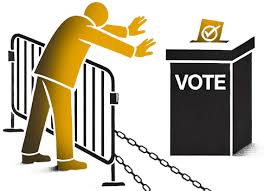
Blue Press Journal – Last week, Republican lawmakers reignited a deeply troubling campaign to pass the SAVE Act, introducing new bills in both the House and Senate. This renewed push, following the widespread rejection of last year’s attempt, represents a blatant effort to undermine the fundamental right to vote for millions of American citizens. Far from securing elections, these proposals, particularly the House’s “Make Elections Great Again Act,” are poised to create chaos, impose significant burdens on voters and election officials, and disproportionately silence marginalized communities.
At its core, the SAVE Act mandates a “show your papers” requirement for voter registration, demanding documents like passports or birth certificates. This seemingly straightforward requirement masks a harsh reality: over 21 million American citizens lack ready access to these specified documents. As analyses from organizations like the Brennan Center for Justiceconsistently show, millions of Americans, nearly half the population, don’t possess a passport, and many more lack easy access to a physical copy of their birth certificate. This policy would erect formidable barriers, particularly for younger voters, voters of color, and rural communities who often face greater logistical and financial hurdles in obtaining these documents. Moreover, millions of women whose married names may not align with their birth certificates or passports would be forced to navigate additional, costly bureaucratic hoops simply to exercise their constitutional right.
The financial burden on voters is undeniable. Obtaining a birth certificate or passport incurs fees, which, for many, represent an unnecessary and prohibitive cost to participate in democracy. This effectively imposes a poll tax, placing the responsibility on individual citizens to pay for documentation that, in most cases, is entirely unneeded to confirm their eligibility.
Beyond the immediate impact on voters, the SAVE Act proposals threaten to inject unprecedented chaos into election administration. The bills would place unfunded mandates on already stretched state and local election officials, compelling them to manage complex new verification processes. Officials making honest mistakes could face severe civil and even criminal penalties, risking punishment for allowing an eligible citizen to vote if the “papers” aren’t deemed sufficient. A rushed implementation, set to take effect within a year or two, would inevitably lead to widespread confusion, further hindering citizens’ ability to cast ballots.
The House’s “Make Elections Great Again Act” introduces an alarming array of additional obstacles. It demands not only proof of citizenship but also proof of residence at registration, potentially disenfranchising millions who have recently moved but haven’t updated their driver’s licenses. The bill also proposes a restrictive photo ID requirement at the polls, a standard more stringent than nearly every current state law. Student IDs, even from state universities, would be prohibited, and many tribal IDs would be rendered invalid due to the lack of an expiration date. Furthermore, it mandates voter roll purges every 30 days, disrupting the vital 90-day quiet period before elections and increasing the risk of eligible voters being mistakenly removed. The legislation also aims to eliminate universal mail voting, forcing all mail voters to apply for a ballot – a move that would upend the primary voting method in eight states and Washington, D.C.
Even the Senate’s “SAVE America Act” presents its own set of challenges, requiring voters to present documents twice – at registration and again when casting a ballot – unless states agree to routinely share their voter rolls with the Department of Homeland Security’s (DHS) SAVE program. This raises serious privacy concerns, especially given the Trump administration’s history of requesting state voter files under questionable pretenses. As reported by news outlets like The Washington Post, the administration faced significant pushback from dozens of states unwilling to provide sensitive voter data due to concerns about misuse, even admitting that Social Security Administration team members had turned over voter rolls to an advocacy group seeking to “find evidence of voter fraud and to overturn election results.”
Crucially, the SAVE Act offers no solution to a non-existent problem. All available evidence, including findings from the Trump administration’s own inquiries, consistently demonstrates that instances of non-citizens voting are vanishingly rare. States that have meticulously investigated their voter rolls, such as Louisiana and Utah, have repeatedly confirmed this fact. These bills are not about “election integrity”; they are about suppressing votes and sowing distrust in our democratic processes.
The League of Women Voters of the United States rightly shares “grave concerns and strong opposition” to the Make American Elections Great Again Act, stating it is “not an attempt to secure our elections, but rather an attempt to make it harder for eligible Americans to register and vote.” This legislation, in any form, is a dangerous and undemocratic proposal. Congress must reject the SAVE Act once again and protect the freedom to vote for all American citizens.
Judge Cynthia Rufe Critiques the Trump’s Administration’s Actions as Comparable to Orwell’s “1984”
February 16, 2026
Blue Press Journal – In a landmark ruling, a federal court has directed the National Park Service (NPS) to fully restore the slavery-related exhibits at Philadelphia’s President’s House, reversing an earlier unlawful removal. This decision sends a powerful message about the importance of presenting an honest, unvarnished narrative of America’s origins.
The President’s House, once the residence of George Washington and John Adams, also housed nine enslaved individuals who lived, labored, and resisted bondage there. For decades, the site has balanced telling the stories of liberty and bondage, coexisting at the nation’s founding. However, on January 22, 2026, the NPS abruptly removed 34 interpretive panels and deactivated videos centered on the enslaved without consulting the City or following long-standing cooperative agreements, federal law, or its own interpretive frameworks.
The Court’s ruling not only reinstalls the removed exhibits but also reestablishes public trust. Each missing panel represented a crucial piece of the nation’s complex story, with one advocate likening the removal to “pulling pages from a history book with a razor.” Now, the exhibits must be reinstalled as they were on January 21, 2026, and no further changes can be made without the City’s written approval.
As the United States approaches its 250th anniversary, this ruling serves as a reminder that our commitment to truth must remain unwavering. History, in all its complexities, demands to be seen and told in its entirety, without selective editing. By preserving the full story, including the experiences of the enslaved, we can work towards a more honest understanding of our nation’s past and its impact on our present.
Trump Tariffs Increase your Valentine’s Day Your Sweet Treat Costs
Blue Press Journal – This Valentine’s Day, many are noticing that their beloved chocolates come with a higher price tag. Beyond general inflation, a specific economic policy is playing a significant role: import tariffs on cocoa and chocolate.
During the Trump administration, the U.S. imposed substantial tariffs, impacting the global chocolate supply chain. Cocoa-producing countries faced average tariffs of 15% on their exports to the U.S., while finished chocolate products from the European Union saw duties as high as 20%. Given that the vast majority of cocoa used in American chocolate is imported, these tariffs directly escalated costs for manufacturers.
When companies pay more to import essential ingredients or ready-made chocolate, these expenses inevitably trickle down, leading to higher prices at checkout. If your Valentine’s candy budget feels strained this year, these historical trade adjustments explain the extra cost. Trump promised to lower prices day one…he lied.
Trump’s White House Ballroom: A Lavish Distraction from America’s Core Challenges
Blue Press Journal (DC)
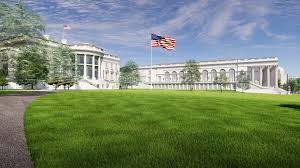
President Donald Trump frequently promised to revitalize the American economy, lower healthcare costs, and put “America First.” Yet, a controversial “East Wing Modernization” project, centered around plans for a sprawling new ballroom, revealed a glaring disconnect between rhetoric and perceived reality. This ambitious, and ultimately legally challenged, renovation proposal only raised eyebrows for its scale and potential disregard for historical preservation but also for its murky funding mechanisms, bypassing traditional congressional oversight.
Renderings Revealed, Then Removed: A Glimpse into Presidential Ambition
In a curious turn of events, new architectural renderings of what was dubbed President Donald Trump’s “East Wing Modernization” ballroom project briefly surfaced on the National Capital Planning Commission’s website, only to be swiftly removed without public explanation, as reported by The Washington Post (Philip Kennicott, “White House project plan briefly visible on commission website”). Shared by the architectural firm managing the project, these images depicted a massive 90,000-square-foot expansion, designed to maintain the White House’s existing height. One particularly contentious rendering showcased the removal of a large triangular pediment from the southern portico – a significant alteration to an iconic structure.
Further insights came from a White House memo also posted to the site, which, ironically, claimed the White House was “excellently preserved” during the demolition associated with the East Wing project. This memo also detailed engineering studies exploring the addition of a second story to the colonnade connecting the White House to the West Wing, all “in the interest of creating symmetry.” These proposals ignited a firestorm of criticism, questioning the administration’s priorities.
A “Rube Goldberg Contraption”: Bypassing Oversight with Private Funds
Perhaps the most troubling aspect of the proposed ballroom was its funding strategy. Instead of seeking appropriations through standard congressional channels, the Trump administration indicated an intent to finance the project through private donations. This approach immediately drew the skepticism of U.S. District Court Judge Richard Leon, who presided over a challenge brought by the National Trust for Historic Preservation.
In a pivotal hearing, Judge Leon pressed an administration lawyer on the legal authority behind the renovations and the legitimacy of private funding, famously labeling the proposed mechanism a “Rube Goldberg contraption” that would effectively “evade congressional oversight,” as reported by CNN Politics(“Judge skeptical of Trump administration arguments over White House East Wing renovation”). The precise monetary value of the project, shielded by the private donation model, remained largely opaque, further fueling concerns about accountability and the potential for undue influence. The lack of transparency around the East Wing Renovation Cost was a significant point of contention.
The National Trust for Historic Preservation filed a lawsuit to halt the construction, insisting that the project undergo the federal review process standard for such federal building projects and allow for public comment on the proposed changes. This legal challenge highlighted a deep concern that the White House, a national treasure, was being treated as a personal property rather than a revered public institution.
Beyond the Ballroom: A Question of Presidential Priorities
For many, the focus on an extravagant ballroom project stood in stark contrast to the pressing issues facing the nation. Voters elected Donald Trump on promises of decreasing prices on day one, boosting the economy, and reforming healthcare policy. Yet, while these critical areas demanded full attention, the administration seemed preoccupied with a vanity project shrouded in secrecy and legal challenges. This perceived misdirection of energy and resources raised fundamental questions about Presidential Priorities and Political Accountability.
The saga of the East Wing Modernization ballroom highlights how an administration’s priorities can diverge from electorate expectations. It emphasizes the importance of oversight bodies, historic preservation groups, and a vigilant judiciary in safeguarding national institutions and ensuring that government resources—public or private—are used judiciously and transparently, rather than for controversial projects that distract from the nation’s pressing needs.
The security of Kyiv directly impacts the security of Main Street.
Blue Press Journal – Ukraine’s ongoing struggle for sovereignty is often framed as a moral imperative or an act of generosity from its allies. However, a closer look reveals that sustained U.S. support for Ukraine is not just altruistic; it is a strategic investment in American national and economic security. This pivotal moment demands that U.S. policymakers and the public understand the profound implications for their own prosperity and global stability.
Ukraine’s Unwavering European Path & Enduring American Partnership
At its core, Ukraine is irrevocably committed to a future intertwined with Europe. This profound aspiration, coupled with a deep appreciation for American partnership, shapes their daily decisions, from energy infrastructure to military planning and economic recovery. Despite fluctuating political signals from Washington (Donald Trump), Ukrainians continue to view the United States with remarkable gratitude. Their primary concern isn’t outright abandonment, but rather the destabilizing inconsistency that could undermine long-term planning and deterrence.
American Support: A Nuanced Reality
A persistent misconception in Washington suggests a waning of public support for Ukraine. Yet, the data tells a more reassuring story. Polling from organizations like the Atlantic Council, utilizing data from HarrisX, consistently demonstrates that a majority of Americans – approximately six in ten – continue to support U.S. assistance to Ukraine, including vital military aid. [Source: Atlantic Council via HarrisX polling data, often cited in their analyses of public opinion, e.g., “The Resilience of American Support for Ukraine”]. Americans largely view Russia as the aggressor, express deep distrust of the Russian government, and oppose territorial concessions that would reward aggression.
The challenge isn’t public opposition, but rather a lack of sustained attention. Domestic concerns like inflation, housing costs, and electoral politics understandably dominate daily discourse. Ukraine often doesn’t top these lists, not because Americans oppose assistance, but because they assume the issue is being competently managed. The public is distracted, not hostile, highlighting a crucial communication gap that U.S. advocates must bridge.
The Economic Stakes: Why Global Stability Benefits Every American
The most critical aspect often overlooked is how Ukraine’s fight directly safeguards the foundational principles of the international order that underpin American prosperity. For decades, the U.S. economy has thrived within a predictable global framework: secure trade routes, stable borders, enforceable rules, and alliances that deter major conflicts. This stability reduces risk, lowers costs, stimulates investment, creates American jobs, and allows the U.S. to shape global standards for trade, technology, and finance.
The immediate aftermath of Russia’s full-scale invasion in 2022 offered a stark preview of these economic vulnerabilities. Energy prices surged globally, food costs climbed due to disrupted grain and fertilizer markets, and shipping and insurance rates increased, fueling inflation across the economy. [Source: International Monetary Fund (IMF) analysis on the economic impact of the war in Ukraine, e.g., “Global Economic Outlook: A Rocky Road Ahead” – specific chapter on Ukraine impacts]. These ripple effects led to higher interest rates, impacting mortgages, auto loans, credit cards, and small businesses – hitting American pocketbooks directly.
If Russian aggression goes unchecked, the economic consequences will only deepen. A world where aggression is rewarded leads to structural risk, higher costs for everything, and diminished confidence for investment. This means slower growth, fragile supply chains, and greater volatility in retirement savings. Governments would spend more reacting to crises and less investing in domestic priorities. As the Council on Foreign Relations notes, “allowing Russia to dictate terms… would set a dangerous precedent for revisionist powers globally, destabilizing key trade routes and investment climates.” [Source: Council on Foreign Relations, e.g., “The Global Economic Impact of the War in Ukraine”].
A Clear-Eyed National Security Imperative
Beyond economics, supporting Ukraine is vital for U.S. national security. Ukraine is not asking the United States to fight its war, but to recognize that American security and prosperity are inextricably linked to its outcome. A failure to deter Russian aggression in Ukraine would signal weakness, inviting further challenges to the post-World War II international order. This would directly impact the credibility of NATO, the cornerstone of European security and a vital alliance for the U.S. [Source: NATO Official Statements, e.g., “NATO’s Response to Russia’s War in Ukraine”].
If the United States desires a world governed by rules, predictability, and sovereign choice rather than coercion and chaos, it cannot afford to waver now. The cost of inaction – both economic and strategic – will far outweigh the investment required to ensure Ukraine’s success and uphold a stable global environment. Supporting Ukraine isn’t just about Ukraine; it’s about safeguarding America’s own power, prosperity, and the principles upon which its security rests.
Unveiling the Architects of Online Division: A Critical Look at Trump’s Digital Strategy
Blue Press Journal – The digital landscape of federal agencies under the Trump administration has increasingly become a battleground, raising alarms among transparency advocates and former government officials. Critics point to a notable shift in official government social media accounts, where content has veered from public service announcements towards narratives steeped in nationalism and anti-immigrant sentiment. This evolving communication strategy, often characterized by its opaque nature, has fueled concerns about who is crafting these messages and why.
A recent report by The New York Timesbrought into sharp focus the controversial appointment of Peyton Rollins to the Department of Homeland Security (DHS). At just 21 years old, Rollins’ arrival at DHS was shrouded in a peculiar lack of transparency; while a DHS spokesperson initially denied new personnel changes, Rollins himself updated his LinkedIn profile, indicating he had already been with the department for a month.
Rollins’ tenure at his previous post, the Department of Labor (DOL), offers a revealing glimpse into his approach. According to former colleagues, his time there was marked by a dramatic departure from standard government communication practices. Helen Luryi, a former communications team member at the DOL’s Women’s Bureau, told The New York Times of her shock: “We’re used to seeing posts about things like apprenticeships, benefits, and unions. Then all of a sudden, we get white-nationalist rhetoric.”
Indeed, multiple DOL employees reportedly raised concerns about Rollins’ use of official channels to promote what they perceived as xenophobic content and even material resembling QAnon conspiracy theories. These allegations underscore a broader critique: that the administration seemingly prioritizes ideological alignment over professional qualifications and traditional government messaging, transforming federal platforms into conduits for political messaging.
This pattern extends beyond Rollins. The administration has faced scrutiny for other appointments, such as Paul Ingrassia, whose nomination to head the Office of Special Counsel was withdrawn after comments about having a “Nazi streak” surfaced, only for him to secure another high-level position. Such instances, coupled with reports of controversial figures — like those from the New York “Young” Republicans group chat known for their extremist views — finding pathways into the administration’s orbit, paint a troubling picture.
The elevation of individuals like Rollins suggests a deliberate strategy within the Trump administration to harness government resources, including social media, to disseminate a particular ideological agenda. This approach not only compromises the integrity of federal communications but also erodes public trust in institutions designed to serve all Americans, irrespective of political leanings. The digital front, it appears, has become a key arena for shaping public perception, often at the expense of established democratic norms.