Tag: donald-trump

  • FBI’s Civil Rights Probe Into ICE Officer’s Killing of Renee Good Abruptly Shifted — Critics Say DOJ Is Covering Up for Trump Allies

    Blue Press Journal – In early January, the FBI quietly opened a civil rights investigation into Jonathan Ross, an Immigration and Customs Enforcement (ICE) officer who fatally shot Renee Good in Minneapolis. According to reporting from The Washington Post and CNN, the probe initially focused on whether Ross had violated Good’s civil rights during the deadly encounter. 

    But within days, the investigation took a sharp and controversial turn. Instead of scrutinizing Ross’s actions, the FBI began targeting Good herself — and even her grieving widow. CNN reports that at least six federal prosecutors in Minnesota resigned in protest over what they viewed as an unjustifiable and politically motivated pivot directed by senior Trump-era DOJ officials. 

    Political Motivation and DOJ Bias Under Todd Blanche

    Deputy Attorney General Todd Blanche, appearing on Fox News Sunday, dismissed the need to investigate Ross entirely, claiming that the DOJ does not “just go out and investigate every time an officer is forced to defend himself.” Critics argue this stance ignores the seriousness of potential civil rights violations and sends a dangerous message that law enforcement officers are above scrutiny when politically convenient. 

    Blanche’s comments align with a broader pattern under Trump’s Department of Justice — shielding federal agents from accountability while aggressively targeting civilians, especially those on the receiving end of government force. Civil rights advocates and legal scholars have pointed out that such selective enforcement corrodes public trust and undermines the DOJ’s stated mission of impartial justice. 

    Signs of a Cover-Up

    The resignation of multiple prosecutors, the abrupt shift in investigative focus, and the refusal to examine Ross’s conduct all point to what critics call a calculated cover-up. By redirecting the probe toward Good’s widow, the DOJ appears to be deflecting attention from possible misconduct by a federal officer — a move that benefits Trump’s political allies and protects ICE from public scrutiny. 

    As passionate advocates for justice emphasize, the politicization of investigations threatens to undermine the integrity and independence of federal law enforcement, transforming the Justice Department into a mere instrument of partisan agendas. The situation is glaringly evident: the FBI was bravely seeking accountability, yet the actions of Trump’s DOJ leadership abruptly halted that crucial progress.

  • Transatlantic Rift Deepens as Trump’s Greenland Tariffs Ignite Calls for EU ‘Trade Bazooka’

    Donald Trump’s punitive tariffs on European nations supporting Greenland security have sparked unprecedented EU retaliation talks, risking a historic breakdown in transatlantic relations.

    Blue Press Journal – The fragile fabric of transatlantic relations is fraying at an alarming pace, as U.S. President Donald Trump’s decision to impose tariffs on European nations involved in Greenland security exercises triggers outrage across the European Union. What began as a geopolitical skirmish over the Arctic has rapidly escalated into a confrontation that EU leaders say could fundamentally reshape the balance of power between Washington and Brussels. 

    At the heart of the crisis is Trump’s move to punish countries — including France, Germany, Sweden, Finland, Norway, and the Netherlands — that deployed troops to participate in a Danish-led military exercise in Greenland. The exercise, part of a broader European effort to secure the Arctic amid rising Russian and Chinese activity, was described by participating governments as entirely defensive and non-provocative. Yet Trump’s administration framed the deployments as a direct affront to U.S. interests, slapping punitive tariffs in a move critics say is both reckless and diplomatically corrosive. 

    Europe’s Retaliatory Options: From Restraint to Confrontation

    For months, EU leaders have tolerated Trump’s unpredictable foreign policy in the hope of preserving NATO unity. They have weathered his wavering support for Ukraine, his pressure for lopsided trade agreements, and his demands for massive defense spending increases. But the Greenland tariffs appear to have crossed a line. 

    French President Emmanuel Macron has emerged as one of the loudest voices demanding a robust response, calling for the activation of the EU’s Anti-Coercion Instrument — a powerful trade retaliation tool originally designed to counter China’s economic intimidation. Deploying it against the United States would be unprecedented, signaling a profound shift in the EU’s willingness to confront Washington head-on. 

    “The EU must resist humiliation and economic vassalization,” said Jérémie Gallon, a former French diplomat now based in Washington. His sentiment echoes a growing consensus among centrist and left-leaning EU lawmakers who argue that Europe must assert itself as a geopolitical actor rather than simply react to U.S. pressure. 

    Diplomatic Fallout and Strategic Calculations

    Even leaders with warmer ties to Trump, such as Italian Prime Minister Giorgia Meloni, have acknowledged the severity of the rift. While urging dialogue to avoid escalation, Meloni conceded that tariffs on NATO allies “are a mistake” and risk undermining shared security goals. 

    The European Parliament is already signaling its readiness to derail ratification of a recently negotiated EU-U.S. trade deal — a move that would have been unthinkable only months ago. Blocking the agreement would be a symbolic yet potent act, but triggering the Anti-Coercion Instrument would represent a direct economic counterstrike. 

    The Bigger Picture: Europe’s Geopolitical Awakening

    This crisis coincides with the EU’s broader push for strategic autonomy. European Commission President Ursula von der Leyen has announced a new security framework, while plans to bolster cybersecurity are set to be unveiled imminently. The Greenland standoff may accelerate this trajectory, forcing Europe to invest in defense and economic resilience without relying on U.S. goodwill. 

    The fact that Trump’s tariffs came just days after the EU signed a major trade deal with Latin America adds insult to injury, deepening perceptions that the U.S. is willing to use economic coercion to undermine Europe’s global aspirations. 

    As EU leaders return from Latin America to Brussels for emergency talks, the stakes could not be higher. The decision they face — whether to retaliate against their most powerful ally — may define Europe’s role on the world stage for decades. 

  • Americans Increasingly Condemn Harsh ICE Tactics, New Poll Reveals

    Americans Increasingly Reject Harsh ICE Tactics, Poll Shows

    Blue Press Journal – A growing majority of Americans believe U.S. Immigration and Customs Enforcement (ICE) is using excessively harsh tactics, according to a new CBS News/YouGov poll. Conducted January 14–16, the survey of 2,523 adults found 61% now say ICE’s methods when stopping or detaining individuals are too tough. This marks a significant shift from November, when 53% held that view.

    Rising Discontent Across Political Lines

    The sharpest increases in criticism came from Democrats and independents, with 94% of Democrats and 68% of independents now condemning ICE’s approach — both up nine percentage points from November. Even among Republicans, the share who say ICE has been too tough rose to 19%.

    This growing skepticism extends to the Trump administration’s stated deportation priorities. 56% of respondents believe the government is targeting people who are not dangerous criminals, up from 52% in November. Overall support for the administration’s deportation program has dropped from 52% to 46%.

    Recent Incidents Fuel Public Concern

    The shift in public opinion comes in the wake of two high-profile shootings involving ICE officers in Minneapolis. In one case, 37-year-old Renee Good was killed during a standoff with protesters. Officials claim the officer acted in self-defense, but critics say video evidence shows Good was attempting to drive away, not harm the officer. Days later, another ICE officer shot and injured a Venezuelan migrant after a traffic stop, alleging the individual attacked him during a foot chase.

    A Call for Accountability

    These incidents underscore concerns that ICE’s aggressive enforcement methods blur the line between lawful policing and excessive force. Civil rights advocates argue that prioritizing community safety means de-escalation, transparency, and focusing on truly dangerous individuals — not broad sweeps that ensnare non-criminal migrants.

    With public opinion turning sharply against ICE’s tactics, pressure is mounting for policy reforms that protect human rights while maintaining legitimate law enforcement objectives.

  • President Trump’s Greenland Tariffs and Military Threat: A Strategic Misstep That Risks NATO Unity

    Trump Risks to NATO and Global Stability

    Blue Press Journal – President Donald Trump’s recent announcement of a 10 percent tariff on Denmark and key European allies — paired with hints at possible military action to acquire Greenland — has sparked outrage across the political spectrum. Criticism has poured in not only from Democrats but also from prominent Republican senators like Thom Tillis (R-N.C.) and Lisa Murkowski (R-Alaska), who warn that these moves could fracture the NATO alliance, damage U.S. businesses, and hand geopolitical advantages to adversaries such as Russia and China.


    The Tariff Announcement

    On Saturday, Trump announced that 10 percent import taxes would be applied to Denmark, Norway, Sweden, France, Germany, the United Kingdom, the Netherlands, and Finland starting February 1, with rates rising to 25 percent by June 1. This sweeping measure targets some of America’s closest allies — nations that form the backbone of the North Atlantic Treaty Organization (NATO).

    The timing was no accident. Just days earlier, troops from several European countries arrived in Greenland to participate in joint military exercises led by Denmark. Rather than view this as a sign of allied cooperation, Trump framed it as a challenge to U.S. ambitions to control Greenland — ambitions he has been vocal about since 2019, when he publicly expressed interest in buying the territory.


    Greenland: Strategic Importance and Diplomatic Tensions

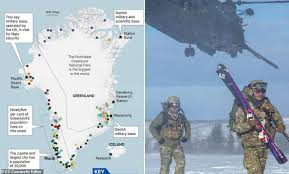
    Greenland’s location in the Arctic makes it strategically vital for defense and trade routes, especially as melting ice opens new shipping lanes. The U.S. already maintains a presence at Thule Air Base, but Trump’s suggestion of outright acquisition — and now the threat of military force — represents a sharp escalation.

    According to Danish officials, Greenland is not for sale. Denmark’s Prime Minister Mette Frederiksen famously called Trump’s proposal “absurd” in 2019, a remark that reportedly prompted Trump to cancel a state visit. That diplomatic rift has never fully healed, and the new tariffs risk deepening the divide.


    Republican Pushback

    While Trump often enjoys unified support from his party, this issue has triggered rare public dissent. Senator Thom Tillis criticized the idea of seizing territory from a NATO ally as “beyond stupid,” warning that it undermines Trump’s own stated goal of strengthening NATO.

    Lisa Murkowski echoed these concerns, calling the tariffs “unnecessary, punitive, and a profound mistake.” She stressed that such actions push European allies further away while offering zero tangible benefit to U.S. national security.

    Their warnings align with polling data showing that Americans overwhelmingly oppose military action to acquire Greenland. The notion of using force against an ally has alarmed foreign policy experts, who argue that it sets a dangerous precedent and erodes trust.


    Risks to NATO and Global Stability

    NATO’s strength lies in unity and mutual defense commitments. By imposing punitive tariffs on member states and suggesting military intervention against one of them, Trump risks splintering the alliance. This plays directly into the hands of leaders like Vladimir Putin, who have long sought to weaken NATO from within.

    The Danish-led exercises in Greenland were intended to bolster Arctic security against potential Russian expansion. Trump’s hostile response undermines that effort, forcing allies to divert resources toward defending against a hypothetical U.S. incursion rather than focusing on shared threats.


    Economic Consequences

    Beyond geopolitical fallout, Trump’s tariffs will likely hurt American businesses and consumers. Denmark and other targeted allies export high-quality goods — from pharmaceuticals to renewable energy technology — that support U.S. industries. Tariffs will raise costs, reduce competition, and strain supply chains at a time when global markets are already volatile.

    Trade wars have historically led to retaliatory measures. European nations could respond with tariffs of their own, further escalating tensions and harming sectors like agriculture, manufacturing, and technology.


    A Path Toward Diplomacy, Not Division

    President Trump’s aggressive stance toward Greenland — combining economic punishment with the possibility of military force — represents a high-stakes gamble that could damage U.S. credibility, weaken NATO, and aid rival powers. The bipartisan criticism from Senators Tillis and Murkowski underscores that this is not a partisan issue, but a matter of national interest and international stability.

    Rather than pursuing coercive tactics, the United States should focus on collaborative Arctic strategies with Denmark and its allies. Diplomacy, joint security initiatives, and respect for sovereignty are far more likely to strengthen America’s position in the Arctic than tariffs or threats.

  • Pentagon Blasted For Turning U.S. Military Newspaper Into Trump ‘Mouthpiece’

    Critics say the Trump administration’s move to limit editorial independence at Stars and Stripes threatens press freedom for U.S. service members

    Blue Press Journal – The Pentagon faced a backlash following its decision to effectively take control of the legendary U.S. military newspaper Stars and Stripes and crack down on its apparent “woke” tendencies.

    Defense Department spokesperson Sean Parnell on Thursday announced the publication would be returning to “its original mission: reporting for our warfighters.”

    It follows a controversial Pentagon’s press corps edict that saw scores of reporters leave the building, and a new Trump “loyalty test” for Stars and Stripes reporters.

    But free speech advocates hit out at out the decision to throttle an outlet that was first published during the Civil War, and whose editorial independence is mandated by Congress despite being part of Defense Department.

    Tim Richardson, journalism and disinformation program director of PEN America, said the country “needs more independent reporting – not less” as Trump’s foreign policy positions turn increasingly aggressive. 

    “American troops overseas deserve credible, trustworthy news guaranteed by the First Amendment, a cornerstone of the Constitution they defend,” he said in a statement. “Instead, the Pentagon is trying to turn this independent newsroom into a mouthpiece for the administration’s political messaging.”

    In a message to staff published in Stars and Stripes, Erik Slavin, the newspaper’s editor-in-chief, said “the people who risk their lives in defense of the Constitution have earned the right to the press freedoms of the First Amendment.”

    “We will not compromise on serving them with accurate and balanced coverage, holding military officials to account when called for,” he added.

  • Trump’s ICE Playbook: Cruelty as Policy — And Why Minneapolis Should Be a Turning Point

    Blue Press Journal Editorial

    This is a Turning Point for America … Where do you stand?

    In the wake of yet another deadly incident involving federal immigration enforcement, this time in Minneapolis, we’re forced to confront the grim reality of Donald Trump’s approach to law enforcement: cruelty isn’t a bug in the system — it’s the feature. 

    On Thursday, an Immigration and Customs Enforcement (ICE) agent fatally shot a 32-year-old Minneapolis woman during what officials described as a “targeted operation.” Eyewitnesses say she was sitting in her car, unarmed, when the agent fired. The incident has sparked outrage across the city and reignited criticism of ICE’s tactics, which have long been accused of operating with excessive force and little accountability. 

    The Politics of Defending the Indefensible

    Some pundits claim that Trump’s—and the GOP’s—unwavering defense of these actions is “smart politics,” shifting public discourse away from other controversies like Jeffrey Epstein’s resurfaced ties to political elites or the worsening cost-of-living crisis. But let’s be clear: defending ICE after an act that looks, to many, like an execution in broad daylight, isn’t “smart.” It’s reckless. 

    ICE’s track record is already deeply unpopular. Polling from Pew Research and Gallup shows a majority of Americans disapprove of its methods, especially the high-profile deportations of families, the detention of children, and the use of militarized raids in immigrant communities. Trump’s ICE administration doesn’t just alienate progressives — it turns moderates and even some conservatives off. 

    When law enforcement violence starts landing squarely on U.S. citizens — particularly white, middle-class citizens who don’t fit the GOP’s caricature of “illegal immigrants” — it hits differently. The thought quickly shifts from “I don’t like seeing people brutalized” to “That could happen to me or my family.” That’s not a winning political strategy; it’s a ticking time bomb.

    Minneapolis Officials Aren’t Staying Quiet

    Minneapolis Mayor Jacob Frey condemned the shooting, saying: 

    “We cannot normalize federal agents using deadly force in situations where it’s clearly avoidable. Our residents deserve safety, not fear.” 

    City Council Member Aisha Chughtai went further: 

    “This department operates with impunity, and it’s costing lives. ICE has no place in our city.” 

    Their words reflect a growing frustration among urban leaders over Trump-era immigration enforcement policies that have persisted well beyond his presidency. 

    Lessons from 2020 That Trump Still Hasn’t Learned

    Trump’s political instincts on law enforcement are stuck in the summer of 2020 — a moment of mass racial justice protests and public reckoning over police brutality. Back then, he doubled down on defending every police action, no matter how egregious, and lost reelection in the process. 

    The reality is that public opinion doesn’t reward defending indiscriminate violence. People want safety, but they also want accountability. Minneapolis is still living with the trauma of George Floyd’s murder, and defending another federal killing in the city won’t play well — locally or nationally.

    Why This Matters for 2026 and Beyond

    With the 2026 mid-term elections looming, Trump’s embrace of ICE’s most aggressive tactics could further alienate swing voters. It’s one thing to talk about “law and order” in abstract terms; it’s another to defend an ICE agent shooting an unarmed woman in her car. 

    The GOP may think they’re steering the narrative toward “dangerous cities” and “radical protestors,” but the images coming out of Minneapolis tell a different story — one of excessive force, unchecked power, and an administration willing to defend the indefensible.

  • The Trump DOJ’s Attack on the Federal Reserve: A Dangerous Precedent That Could Damage the U.S. Economy

    Trump DOJ’s Attack on Federal Reserve Independence Threatens U.S. Economic Stability

    Blue Press Journal (DC) – In a stunning and unprecedented move, the Trump Administration’s Department of Justice (DOJ) has issued subpoenas to the Federal Reserve and threatened criminal indictment against Fed Chair Jerome Powell. The action stems from Powell’s testimony before the Senate Banking Committee in June regarding the Fed’s $2.5 billion renovation of two office buildings — a project President Trump criticized as excessive. 

    While the stated justification for the investigation is alleged misuse of taxpayer funds, Powell has bluntly called the charges a “pretext” designed to undermine the central bank’s independence. This is not a routine dispute over budgetary planning — it is a direct confrontation that could shatter the long-standing separation between America’s political leadership and its monetary policy authority.

    Why the Federal Reserve’s Independence Matters

    The Federal Reserve is not a partisan institution. Its ability to set interest rates based solely on economic data, rather than political pressure, is a cornerstone of stable economic governance. Market confidence in the U.S. dollar, Treasury bonds, and the overall financial system depends heavily on the perception that Fed decisions are insulated from political whims.

    If political actors can intimidate or remove Fed officials for refusing to follow a preferred interest rate path, the consequences will be severe. Investors may begin to doubt whether U.S. monetary policy is being driven by sound economic analysis or short-term electoral calculations. That uncertainty could increase borrowing costs, destabilize markets, and weaken the dollar’s position as the world’s reserve currency.

    The Risk to Markets and the Economy

    President Trump has repeatedly attacked Powell for not cutting interest rates as aggressively as he wants — especially with an eye toward stimulating short-term growth. But artificially low rates set for political purposes can have damaging effects:

    • Inflation Risk: Sustained rate cuts without economic justification can overheat the economy, driving up consumer prices. 
    • Asset Bubbles: Cheap credit can fuel excessive speculation in housing, stocks, and other markets, leading to bubbles that eventually burst. 
    • Weakened Global Confidence: If international investors believe the Fed is being controlled by political operatives, they may reduce exposure to U.S. assets, raising borrowing costs and hurting the dollar.

    History offers clear warnings. Countries where central banks have been politicized — such as Turkey and Argentina — often face runaway inflation, capital flight, and prolonged economic instability.

    Weaponizing the DOJ Against Independent Institutions

    The DOJ’s role in this episode is equally troubling. Traditionally, the Justice Department has operated independently from the White House, refraining from targeting political adversaries without clear and compelling evidence. Under the Trump Administration, however, the DOJ has pursued investigations against a growing list of perceived opponents.

    Serving subpoenas to the Fed in the midst of a dispute over interest rates sends a chilling message: any independent official who resists political directives could face criminal investigation. This politicization of law enforcement erodes public trust, not only in the DOJ but in the broader legal system.

    Even some Republican lawmakers are sounding alarms. Senator Thom Tillis of North Carolina has stated that this legal maneuver removes any doubt about efforts within the administration to dismantle the Fed’s independence — warning that credibility is now at stake for both the DOJ and the Federal Reserve.

    Short-Term Politics, Long-Term Damage

    While the administration may view the investigation as a way to pressure Powell into lowering rates before his term ends in May, the long-term damage far outweighs any short-term gain. The moment global investors suspect that U.S. monetary policy is politically manipulated, they will adjust their strategies — moving capital elsewhere, demanding higher returns on U.S. debt, and hedging against instability.

    Economic stability is built on trust in the institutions that manage it. Undermining that trust for political advantage is a dangerous gamble that could cost the United States dearly.

    Defending the Fed Means Defending the Economy

    The Federal Reserve’s independence is not a luxury — it is a necessity. Strong economies require central banks to act based on evidence, not election-year strategy. The Trump DOJ’s aggressive move against Jerome Powell is about more than building renovations; it is about whether America’s monetary policy will remain guided by data and public interest, or whether it will be subordinated to political intimidation.

    If history teaches us anything, it’s that once the credibility of a central bank is lost, restoring it is painfully difficult. The United States must resist any effort to politicize the Fed — because protecting its independence is protecting the future of the American economy.

  • Federal Stonewalling in the Renee Good Case Raises Serious Questions About Justice

    Federal Obstruction: Breaking Norms and Undermining Justice

    Blue Press Journal – The recent killing of Renee Good in Minneapolis by Immigration and Customs Enforcement (ICE) agent Jonathan Ross has become a flashpoint in the ongoing debate over transparency, accountability, and the role of federal law enforcement in local investigations. What should have been a cooperative, multi-agency effort to uncover the truth has instead devolved into a troubling example of federal obstruction — with the FBI and Department of Justice (DOJ) refusing to share critical evidence with Minnesota’s state investigators.

    Minnesota Attorney General Ellison made multiple attempts to resolve the situation privately, but his requests were ignored. Only after holding a joint press conference with the Hennepin County District Attorney did he receive confirmation: the directive to block state access reportedly came directly from President Trump, who publicly referred to Minnesota officials as “crooked.” This raises a troubling question — why would the FBI and DOJ prioritize political loyalty over transparency in a homicide investigation? Justice requires evidence, and withholding it undermines public trust.

    A Breakdown in Cooperation

    According to Minnesota Attorney General Keith Ellison, the FBI initially agreed to work with the Minnesota Bureau of Criminal Apprehension in a joint investigation. That agreement was abruptly rescinded, with federal agents reportedly withholding key evidence — including ballistic reports, weapon data, and crime scene materials — from state authorities.

    Ellison, who has a history of productive collaboration with federal law enforcement, attempted to intervene. He reached out to contacts within the FBI and DOJ to resolve the impasse, but his requests were ignored. Even a formal letter pleading for cooperation went unanswered. The silence speaks volumes about the federal government’s approach to oversight in this case.

    Political Interference at the Expense of Justice

    The most concerning revelation emerged when Ellison discovered the reason behind the denial of his requests: the directive to exclude Minnesota authorities seemingly originated from President Donald Trump. This political interference — alongside Trump’s public declarations branding Minnesota officials as “crooked” — severely compromises the integrity of federal investigations.

    The DOJ and FBI are supposed to serve the public interest, not political agendas. Yet the decision to block state investigators suggests that decisions within these agencies may be influenced more by partisan loyalty than by a commitment to truth.

    A Troubling Double Standard

    Even more disturbing is the selective release of evidence. While federal authorities refused to share investigative files with state officials, video footage from Ross’s cellphone was leaked to Alpha News, a Minnesota-based right-wing media outlet. This raises legitimate questions:

    • If the evidence is too sensitive to share with official investigators, why is it being provided to a partisan outlet? 
    • Does this behavior reflect professional investigative standards — or an attempt to shape public perception before all the facts are known?

    Ellison called this move “fundamentally unprofessional” and noted that the leaked footage undermines any rationale for withholding evidence from state authorities.

    Echoes of the George Floyd Case

    Ellison’s office previously prosecuted the officers responsible for George Floyd’s murder in 2020, an effort that relied heavily on gathering every available piece of evidence. He recognized a familiar pattern here: when government agencies are connected to a controversial killing, certain officials attempt to smear the victim’s character.

    In the case of Renee Good, Ellison has been outspoken in defending her reputation. He emphasized that she was neither a domestic terrorist nor a threat to Ross at the time of the shooting, and that she was engaged in helping her vulnerable neighbors.

    Why Transparency Matters

    The refusal of the FBI and DOJ to cooperate with Minnesota’s investigation sends a dangerous message: federal agencies can act without meaningful oversight, even in cases involving lethal force against civilians. This erodes public trust and undermines the principle that justice must be both done and seen to be done.

    Without full access to the evidence, state investigators are forced to rely on incomplete information, raising the risk of an inadequate or flawed conclusion. For the family of Renee Good — and for the public — this is unacceptable.

    A Call for Accountability

    The Renee Good case is more than an isolated incident. It is a test of whether the FBI and DOJ are truly committed to transparency, fairness, and cooperation with local authorities. If federal agencies can unilaterally block state-level investigations into killings by federal agents, then our system of checks and balances is in jeopardy.

    Minnesota officials will continue their parallel investigation, seeking information directly from the public. But the broader question remains: will the FBI and DOJ choose accountability over political expediency?

    Until they do, cases like Renee Good’s will serve as stark reminders that justice delayed — or denied — is justice betrayed.


  • What Is a Cognitive Test—and Why Does Donald Trump Keep Taking Them?

    Blue Press Journal – When President Donald Trump boasts about “acing” a cognitive exam for the third straight time, it raises more questions than it answers. Cognitive tests are not intelligence contests; they’re simple screening tools doctors use to evaluate memory, attention, and problem-solving skills—often in patients showing signs of cognitive decline. So why does Trump keep taking them, and why does he feel the need to advertise the results?

    A standard cognitive test, such as the Montreal Cognitive Assessment (MoCA), might ask someone to identify animals from pictures, recall five words after a few minutes, or draw a clock showing a certain time. Scoring well doesn’t prove genius—it simply indicates that basic cognitive functions are intact. Most adults without impairment would easily “ace” it. That’s why medical experts find Trump’s repeated emphasis on his performance puzzling, even concerning.

    Trump’s latest Truth Social post, insisting that anyone running for high office should undergo a “strong, meaningful” cognitive exam, feels less like a policy suggestion and more like projection. If he’s indeed taken the test three times, it suggests that either his doctors or his team are monitoring potential issues—or that he wants to preempt speculation about his health by loudly proclaiming his mental sharpness. The bruises spotted on his hands and his occasional slurred speech have only fueled public curiosity.

    Critics argue that Trump’s obsession with “acing” a basic screening betrays insecurity rather than strength. Instead of reassuring voters, it highlights how defensive he becomes over any hint of vulnerability. After all, a healthy, confident leader doesn’t need to brag about remembering five words or drawing a clock correctly.

  • Jack Smith’s Testimony and the Truth Trump Never Wanted Revealed

    BLUE PRESS JOURNAL – The latest revelations from former Special Counsel Jack Smith’s closed-door interview with the House Judiciary Committee offer a sobering reminder of how far Donald Trump and his allies were willing to go to hold onto power after losing the 2020 election. While the session was held behind closed doors, reports of what was said inside make clear why some Republican lawmakers, including Committee Chair Jim Jordan, had no interest in making the testimony public.

    Smith’s investigation—now dismissed—had sought to determine the extent of Trump’s direct involvement in efforts to overturn the election and his mishandling of classified documents after leaving the White House. What’s emerging from this new account is not just a picture of political hardball, but of a deliberate campaign built on lies that even Trump’s closest associates didn’t believe.

    One of the most striking details involves Rudy Giuliani, Trump’s personal lawyer and architect of his post-election legal strategy. Smith’s inquiry reveals Giuliani admitted he didn’t believe the conspiracy theories he promoted—and neither did Donald Trump. This confession undermines the “Stop the Steal” narrative: it was not based on genuine grievance, but a calculated deception to inflame supporters and delegitimize a lawful election.

    If Trump and Giuliani both knew their claims were false, then the entire post-election chaos—from the flood of lawsuits to the violence of January 6th—was built on a conscious lie. This undermines any argument that Trump was simply misled or acting out of misguided conviction. It paints a portrait of a leader willing to endanger democracy itself for personal gain.

    The Republicans who sought to limit public access to Smith’s testimony likely understood how damaging such revelations could be. A clear-eyed look at the evidence doesn’t just implicate Trump; it also raises uncomfortable questions about those in Congress who continue to defend him, even as the factual record grows darker.

    Trump’s defenders often dismiss these investigations as partisan witch hunts, but Smith’s work reveals a graver truth: a former president, aware of his loss, attempted to weaponize the government and his followers to maintain power. This behavior is not that of a patriot—it’s someone who views democracy as expendable.

    As more details come to light, the question is no longer whether Trump believed his own lies. It’s whether the country is prepared to hold him accountable for them.