Tag: politics

  • If America Does Not Stand With Ukraine, What Do We Stand For?

    The recent decision by President Donald Trump to cancel a planned weapons shipment to Ukraine has sent shockwaves around the world, raising concerns about the United States’ commitment to defending democracy and sovereignty. This move is not only a betrayal of Ukraine’s trust but also a sign of weakness in the face of Russian aggression.

    Ukraine has been embroiled in a conflict with Russian-backed separatists in the eastern part of the country since 2014, resulting in the loss of thousands of lives and the displacement of millions of people. The international community, including the United States, has consistently condemned Russia’s actions and provided support to Ukraine in its efforts to defend its territory and democratic institutions.

    The canceled weapons shipment, which included anti-tank missiles and other defensive equipment, was a critical component of Ukraine’s ability to defend itself against Russian aggression. By canceling this shipment, the Trump administration is effectively abandoning Ukraine to the mercy of its more powerful neighbor, undermining the country’s ability to protect its sovereignty and territorial integrity.

    This decision is not only a strategic mistake but also a moral failure. If the United States is not willing to stand with Ukraine in the face of Russian aggression, what do we stand for? Do we not believe in the principles of democracy, freedom, and self-determination? Do we not recognize the importance of defending the sovereignty and territorial integrity of nations against external threats?

    The implications of this decision go far beyond Ukraine. If the United States is willing to abandon a country that is fighting for its very existence, what message does this send to other nations around the world? Does it not embolden authoritarian regimes and aggressors to pursue their expansionist agendas, knowing that the United States will not stand in their way?

    This decision undermines the credibility of the United States as a global leader and a defender of democracy. If we are not willing to stand up to Russian aggression in Ukraine, how can we expect other nations to trust us to defend their interests and security? The consequences of this decision will be far-reaching, damaging the reputation of the United States and emboldening our adversaries around the world.

    Standing with Ukraine would be a powerful statement of American values and principles. It would demonstrate our commitment to defending democracy, freedom, and sovereignty, and our willingness to stand up to authoritarian regimes and aggressors. It would also send a strong message to Russia and other nations that the United States will not tolerate aggression and expansionism, and that we will defend our allies and partners around the world.

    Trump’s decision to cancel the weapons shipment to Ukraine is a sign of weakness and a betrayal of American values. If we do not stand with Ukraine, what do we stand for? We must recognize the importance of defending democracy, freedom, and sovereignty, and we must be willing to take a stand against authoritarian regimes and aggressors. The United States must reaffirm its commitment to Ukraine and the international community, and we must work to strengthen our alliances and partnerships around the world to defend our shared values and interests.

  • Trump’s “90 Deals in 90 Days” Promise Falls Flat: Tariffs

    In an unsurprising turn of events, President Donald Trump failed to deliver on his highly touted promise of securing “90 deals in 90 days” with foreign countries. The deadline, which was set to coincide with the 90-day mark since his self-proclaimed “Liberation Day” in April, has come and gone with little to show for it.

    Instead of unveiling a slew of completed deals with foreign nations, as he had previously boasted, Trump appeared to waffle and downplay the expectations surrounding his trade policy. When questioned by a reporter on Monday about the status of the promised deals, the president seemed to deflect, discussing only a few potential frameworks and agreements that are still in the works.

    In a vague and unconvincing explanation, Trump suggested that his administration’s plan now focuses on sending letters to foreign governments, notifying them of the tariffs that their products will be subject to when imported into the United States. This lackluster response has left many wondering what happened to the bold promises of a major trade overhaul that Trump had made just a few months ago.

    The “90 deals in 90 days” pledge was a key component of Trump’s trade policy by placing Tariffs on every nation, aimed at renegotiating and improving America’s trade relationships with countries around the world. The president had touted this goal as a major achievement, claiming that his administration would be able to secure dozens of new trade agreements within a short period.

    Despite the administration’s claims that tariffs are a necessary measure to protect American industries and workers, the reality is that they are having a profoundly negative effect on the economy. Tariffs have led to higher prices for consumers, reduced exports, and disrupted global supply chains.

    However, as the deadline approached, it became increasingly clear that the president’s ambitious goal was unlikely to be met. Clearly Trump is not the deal maker he has touted. The complexity of international trade negotiations, combined with the need for careful consideration and compromise, made it difficult for the administration to finalize deals at the rapid pace promised by Trump.

    The failure to deliver on this promise has raised questions about the effectiveness of Trump’s trade policy and his ability to negotiate successful agreements with foreign nations. As the president’s trade agenda continues to unfold, it remains to be seen whether his administration will be able to secure meaningful deals that benefit American businesses and workers.

    For now, the “90 deals in 90 days” promise appears to be nothing more than a distant memory, a reminder of the challenges and complexities of international trade negotiations.

    Donald Trump is undeniably overwhelmed and out of his depth!

  • A Devastating Consequence of Medicaid Cuts: Healthcare Crisis in Rural America

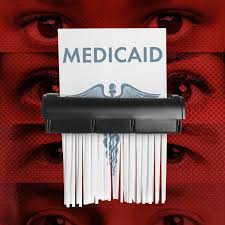
    As researchers specializing in rural health and health policy, are sounding the alarm on the impending healthcare crisis in rural America. The recent legislation signed into law by President Donald Trump on July 4, 2025, is expected to have a disproportionate impact on the 66 million people living in rural areas, nearly 1 in 5 Americans. We might add these voters heavily supported the Republican Party and Donald Trump. This law will reduce Medicaid spending by over $1 trillion over the next decade, resulting in an estimated 11.8 million people losing health insurance coverage.

    Rural residents are more likely to rely on Medicaid for health insurance, making them more vulnerable to losing coverage. The changes brought about by this new law will likely lead to an increase in unpaid care, forcing small, local hospitals to make difficult decisions, such as reducing or eliminating services, laying off staff, and delaying equipment purchases. Many rural hospitals will be forced to close their doors, leaving millions of Americans without access to vital healthcare services.

    The legislation restricts how states can finance their share of the Medicaid program, limiting the use of taxes and fees from hospitals, managed care organizations, and other healthcare providers. This will significantly reduce payments to rural hospitals, which rely heavily on Medicaid to remain operational. The Congressional Budget Office estimates that the work requirements instituted through this legislative package will result in nearly 5 million people losing Medicaid coverage.

    The impact on rural areas will be severe, with an estimated reduction of $155 billion in federal spending over 10 years. While the Senate has allocated only $50 billion over the next five years for the Rural Health Transformation Program, this amount is insufficient to offset the cuts to Medicaid and other programs that will reduce funding for rural health facilities. As a result, many rural hospitals will be forced to close, leaving rural Americans without access to healthcare services.

    An analysis by University of North Carolina researchers found that, as of June 2025, 338 hospitals are at risk of reducing vital services or converting to alternative types of healthcare facilities. Rural hospitals are not only essential healthcare providers but also vital economic engines, and declines in rural healthcare will undermine local economies.

    The root cause of this crisis is the desire to provide tax breaks to billionaires and millionaires, led by President Trump and the Republican party. The consequences of these actions will be devastating for rural America, exacerbating existing healthcare disparities and further eroding the social and economic fabric of these communities.

  • The Gutless Party: How Republicans Abandoned Their Principles to Appease Donald Trump

    The Republican Party has long been known for its values of fiscal responsibility and limited government intervention. However, recent events have exposed a stark reality: the party has lost all credibility and has become a mere puppet of Donald Trump. The latest example of this is the passage of the, “Big Beautiful Bill”, that increases the national debt and cuts vital social programs, despite numerous Republican lawmakers expressing strong opposition to it beforehand.

    In the days leading up to the vote, several prominent Republicans spoke out against the bill, citing concerns over its impact on the nation’s finances and vulnerable populations. Senator Ron Johnson (R-Wis.) warned that the bill would “steal from our children and grandchildren” by adding to the $37 trillion national debt. Senator Josh Hawley (R-Mo.) vowed not to support the bill due to its “real Medicaid benefit cuts,” which he deemed unacceptable for any Republican. Representatives Chip Roy (R-Texas) and Keith Self (R-Texas) also expressed strong reservations, with Roy calling the bill a “travesty” and Self emphasizing the need to avoid saddling future generations with an exploding national debt.

    Moreover, Representative Ralph Norman (R-S.C.) was adamant in his opposition, stating that he would vote against the bill on the floor. These statements suggest that many Republicans were deeply troubled by the bill’s provisions and were willing to take a stand against it.

    However, when it came time to cast their votes, many of these same lawmakers caved to pressure and supported the bill. The most notable example is Senator Lisa Murkowski (R-Alaska), who provided the tie-breaking vote in favor of the bill. This is particularly egregious given that Alaska is one of the most rural states in the country, and the cuts to Medicaid, Medicare, and SNAP (Supplemental Nutrition Assistance Program) will disproportionately harm its residents.

    So, why did Murkowski and other Republicans who had previously spoken out against the bill ultimately vote for it? The answer is simple: gutlessness. They prioritized their loyalty to Donald Trump and the party leadership over their principles and the well-being of their constituents.

    This lack of backbone is not limited to Murkowski. The fact that so many Republicans who had expressed strong reservations about the bill ultimately voted for it suggests that the party has become beholden to Trump’s demands, rather than standing up for their own values and constituents.

    The implications of this are far-reaching. If Republicans are willing to abandon their principles and ignore the needs of their constituents to appease Trump, then they have lost all credibility as a party. They can no longer claim to be the champions of fiscal responsibility, limited government, and social conservatism. Instead, they have become a party of sycophants, willing to do whatever it takes to maintain power and appease their leader.

    As the country moves forward, it is essential to recognize the Republican Party for what it has become: a gutless party that prioritizes loyalty to Trump over all else. The American people deserve better than a party that is willing to sacrifice its principles and values for the sake of political expediency. It is time for Republicans to take a stand and reclaim their party from the grip of Trump’s authoritarianism. Until then, they will remain a party without credibility or conscience.

  • Democrats Need the Change their Social Media Campaigns: or Start One!

    As the country moves forward, the Republican Party’s Big Bill has been met with overwhelming disapproval from the American public. Despite its grandiose name, the legislation has been widely panned by voters, with a mere 27% of registered voters supporting it in a Quinnipiac University survey. Similar polls conducted by Fox News, Morning Consult, and The Washington Post and ABC News show a solid majority of the public opposing the bill, with approval ratings ranging from 23% to 38%.

    The core components of the law are particularly egregious, as they prioritize tax cuts for the wealthy while slashing essential health and food aid for the poor. Additionally, the bill pours money into an increasingly unpopular deportation machine and explodes the federal debt. These measures are not only astoundingly unpopular but also seem to harm the very voters who elected the Republicans in the first place.

    However, the problem is not just the bill itself, but also the lack of awareness about its existence and implications. Many Americans, particularly those who consume more social media content than traditional television, may not even know that the bill exists or what it entails. This is where the Democratic Party needs to step in and take action.

    Democrats need to adapt to the new social media environment

    To counter the Republican’s Big Bill, Democrats need to do more than just convince voters to oppose it. They need to educate the public about the bill’s existence, its provisions, and its far-reaching consequences. This requires repeating the facts over and over again, using various media platforms to reach a wider audience. By doing so, Democrats can ensure that voters are informed and equipped to make informed decisions about the bill.

    Unfortunately, the Democratic Party has failed to adapt to the changing media landscape, where algorithmic video dominates most people’s consumption and attention is a scarce resource. To effectively reach voters, Democrats need to utilize the same media platforms that the average voter consumes, such as social media and online content creators. By doing so, they can counter the Republican’s narrative and provide voters with the facts about the Big Bill.

    The stakes are high, as the Big Bill threatens to take away essential services like affordable healthcare, cheap energy, and food stamps from voters, while handing tax cuts to the wealthy. It is essential that Democrats reach out to voters and provide them with accurate information about the bill’s implications.

    The Big Beautiful Bill is not only bad for American voters but also bad for the country as a whole. It gives billionaires and millionaires an unneeded tax break at the cost of the nation’s debt and the average American’s well-being. Democrats must take action to educate the public, repeat the facts, and provide a clear alternative to the Republican’s disastrous bill.

    Please share or like this post. Spread the word!

  • GOP Tax Cut Legislation Threatens to Upend America’s Healthcare System

    The recent passage of massive tax cut legislation by the House and Senate has sent shockwaves through the American healthcare system. While the bill’s proponents claim it will boost economic growth, the reality is that it poses a significant threat to the stability of rural and safety-net hospitals, and ultimately, the patients who rely on them.

    At the heart of the issue is a provision that alters state-levied provider taxes, resulting in a substantial reduction in spending – to the tune of nearly $191 billion over the next decade, according to estimates from the Congressional Budget Office (CBO). An analysis by the National Rural Health Association and Manatt Health found that an earlier version of the bill introduced in the Senate would have resulted in a staggering $58 billion in Medicaid cuts over the next 10 years for rural hospitals.

    The final bill that passed includes a five-year, $50 billion rural health relief fund, but provider groups argue that this is merely a Band-Aid solution compared to the overall cost of the cuts. In reality, this temporary fix is unlikely to mitigate the long-term damage caused by the legislation.

    As a direct consequence of the bill’s provisions, hospitals are poised to experience an alarming surge in uncompensated care and an overwhelming influx of patients flooding emergency rooms. This crisis will unfold as millions of American families are pushed to the brink, losing their essential healthcare coverage due to the draconian Medicaid work requirements and the heartless eligibility alterations embedded in this legislation. The repercussions will be catastrophic, leaving our hospitals grappling desperately to provide the care that every patient and community so profoundly deserves.

    “We are in a crisis,” said Bruce Siegel, president and CEO of America’s Essential Hospitals, a group that represents hospitals serving primarily low-income patients. “Widespread coverage losses plus weakened hospitals is a recipe for disaster, and patients will pay the price.”

    The impact on rural hospitals will be particularly severe, as they are often the lifeline for communities with limited access to healthcare services. The loss of funding will exacerbate existing challenges, such as staffing shortages and outdated infrastructure, making it even more difficult for these hospitals to provide essential care to their patients.

    While the tax cut legislation may have been touted as a economic stimulus, its true impact will be felt in the healthcare sector, where it threatens to destabilize rural and safety-net hospitals.

  • Declaration of Independence: Historical Grievances and Trump’s Presidency

    As we commemorate the anniversary of our country’s independence, it is fitting to reflect on the reasons behind our decision to separate from England and the grievances that led to this historic split. In the weeks leading up to July 4, 1776, the Declaration of Independence was crafted, and its authors sought to justify the case for separation from Great Britain by citing specific examples of the King’s abuses of power.

    The Declaration of Independence lists 27 grievances against the King and his regime, many of which are eerily relevant to the presidency of Donald Trump. Two hundred and forty-nine years later, it is striking to see how many of these grievances apply to Trump’s actions and policies.

    Let us examine a few examples. The King was accused of refusing to assent to laws that were wholesome and necessary for the public good. Similarly, Trump has shown disregard for Congress by ignoring existing laws and using his executive power to unilaterally impose his will. For instance, he launched a military attack on Iran without consulting Congress, and he has impounded funds approved by Congress.

    The King was also accused of forbidding his governors to pass laws of immediate and pressing importance unless they were suspended until he gave his assent. Trump has attempted to do something similar by introducing a provision in his tax and spending bill that would ban states from enacting measures to regulate artificial intelligence and withhold federal funds from states that do not comply with his policies.

    Furthermore, the King was accused of refusing to pass laws that would accommodate large districts of people unless they relinquished their right to representation in the legislature. Trump has threatened to deny disaster relief to California unless it abandons its legislative independence and changes its water policies to his liking. He has also threatened to cut off federal funding to New York City if it enacts laws or policies that he opposes.

    The King was also accused of calling together legislative bodies at unusual and distant locations to fatigue them into compliance with his measures. Trump’s administration has moved to relocate federal agencies and repurpose their office buildings, making life uncomfortable for employees and officials.

    In addition, the King was accused of dissolving representative houses repeatedly for opposing his invasions on the rights of the people. Trump’s Department of Homeland Security has sent Marines and National Guard troops to Los Angeles, allegedly to “liberate” the city from its elected representatives.

    The King was also accused of endeavoring to prevent the population of the states by obstructing laws for naturalization and refusing to pass laws to encourage migration. Trump has revealed a plan to denaturalize certain American citizens, imposed a ban on migration from many nations, and undone the immigration status of hundreds of thousands of people living in the United States. He has also taken steps to block foreign students from attending American colleges and universities.

    The King was accused of obstructing the administration of justice by refusing to establish judiciary powers. Trump has been accused of obstructing justice during the Russia investigation, and his administration has faced contempt proceedings for not abiding by court orders.

    Moreover, the King was accused of keeping standing armies in times of peace without the consent of the legislature. Trump ordered Marines and National Guard troops into Los Angeles without the consent of the state legislature or the governor, and over the objection of local officials.

    The King was also accused of cutting off trade with all parts of the world. Trump has proposed draconian global tariffs that would bring trade to a halt, claiming that trade deficits with countries such as Lesotho are a national emergency.

    Finally, the King was accused of depriving citizens of the benefits of trial by jury. The Trump administration has rounded up Venezuelan migrants and sent them to an infamous Salvadoran prison without affording them due process or court hearings.

    As we reflect on the grievances listed in the Declaration of Independence, it is striking to see how many of them are relevant to the presidency of Donald Trump. It is a sobering reminder of the importance of holding our leaders accountable and protecting the rights and freedoms that our founding fathers fought so hard to establish.

  • Republicans Push Through Tax Cut Bill, Leaving Millions to Suffer the Consequences

    In a move that has been widely criticized, the Republican-controlled House of Representatives passed a massive bill on Thursday that cuts taxes and slashes Medicaid funding, sending the legislation to President Donald Trump’s desk for signature. The bill, which passed by a narrow margin of 218-214, is expected to have far-reaching and devastating consequences for millions of Americans.

    The bill’s passage was made possible by Republican lawmakers who, despite previously expressing concerns about the legislation, ultimately caved to pressure from the Trump administration and party leadership. All Democrats and two Republicans, Reps. Brian Fitzpatrick (R-Pa.) and Thomas Massie (R-Ky.), voted against the bill.

    The legislation threatens to strip millions of Americans of their health insurance, as devastating cuts to Medicaid funding will leave hospitals, especially those in rural areas, teetering on the brink of financial collapse. Moreover, the harsh reductions to SNAP, which provides crucial nourishment for countless children, are simply inexcusable. To add insult to injury, the bill’s tax cuts, which primarily benefit the wealthiest households, will only serve to deepen the national debt, inflating it by an astronomical $3.4 trillion.

    The $4.5 trillion price tag of the tax cuts is only partially offset by $1 trillion in cuts to federal food and health programs, a move that will have serious consequences for vulnerable populations. The bill’s fiscal irresponsibility and slapdash legislative process are hallmarks of Republican governance in the Trump era, where ideology and party loyalty have taken precedence over responsible policymaking.

    The bill’s passage is also expected to supercharge Trump’s efforts to round up, detain, and deport millions of immigrants who lack legal authorization to remain in the country, further exacerbating an already fraught immigration system.

    In a stark illustration of the bill’s priorities, the tax cuts will largely benefit wealthy households, while the Medicaid cuts and other reductions in federal health and food programs will harm low- and middle-income Americans. The bill’s supporters have touted it as a “big, beautiful bill,” but the reality is that it is a deeply flawed piece of legislation that will have serious and long-lasting consequences for the country.

    When President Trump signs the bill into law, it is clear that the Republican Party has chosen to prioritize the interests of the wealthy and large corporations over those of ordinary Americans. The bill’s passage is a stark reminder of the deep partisan divisions in Washington and the need to elect a Democratic Majority in 2026!

  • Trump Is Lying Through his Teeth: On Gas Prices

    Donald Trump has once again misrepresented the truth about fuel prices in the United States. In a recent statement, he claimed that gasoline had reached a price of $1.99 in five states, with prices as low as $1.98 in some areas. He also asserted that this low price was spreading to other states, stating, “Now we have no inflation. Gasoline just hit $1.99 in five states: $1.99, isn’t that a nice sound?” He even went so far as to claim that prices had previously reached as high as $7.70 in California, but were now decreasing.

    However, this claim is entirely false. At the time of Trump’s statement, the average gas price in the United States was actually $3.17 per gallon, according to AAA. Even in the state with the lowest average gas price, Mississippi, the price was still $2.71 per gallon. This is a far cry from the $1.99 and $1.98 prices that Trump claimed.

    It is unclear whether Trump is intentionally lying or if his cognitive decline is becoming more apparent. Regardless, his desperation to tout an improved economy has led him to stoop to a new low of deceiving the American public about prices that they experience every day. Fortunately, it is easy to fact-check Trump’s claims by simply checking the prices at a local gas station. The evidence is clear: Trump is lying about gas prices, and it is essential to hold him accountable for his dishonesty.

    It is worth noting that Trump’s claim of low gas prices is not only false but also misleading. Gas prices have actually increased since he took office, with the national average price rising by 5 cents per gallon. This is a stark contrast to Trump’s claims of decreasing prices and no inflation. The American public deserves accurate and truthful information, and it is essential to call out Trump’s lies and hold him accountable for his words.

  • Paramount’s Settlement with Trump: A Threat to Press Freedom

    In a disturbing development, Paramount Global, the parent company of CBS News, has agreed to pay former US President Donald Trump $16 million to settle a widely criticized lawsuit. The lawsuit, which was deemed entirely meritless by legal experts, concerned the media organization’s handling of a pre-election “60 Minutes” interview with Kamala Harris. This settlement sets a troubling precedent for free speech, as it appears to reward Trump’s attacks on the media and undermines the principles of a free press.

    As Paramount engaged in negotiations with Trump’s legal team, press freedom advocates and members of Congress urged the company not to settle, warning that doing so would embolden Trump’s ongoing efforts to intimidate and silence media outlets that he perceives as his political enemies. Unfortunately, their warnings were ignored, and the settlement was finalized. This decision has been condemned as “shameful” and a blow to the integrity of the media.

    It has been reported that Paramount’s controlling shareholder, Shari Redstone, supported the settlement in the hopes that it would facilitate federal approval of the company’s merger with Skydance, an entertainment company. However, this reasoning has been criticized by the Freedom of the Press Foundation, a Paramount shareholder, which argued that the settlement could be seen as a bribe to the Trump administration in exchange for approval of the merger. The advocacy group had threatened to sue Paramount if the company gave in to Trump’s demands.

    The implications of this settlement are far-reaching and alarming. At a time when the Trump administration’s authoritarian tendencies are becoming increasingly pronounced, the need for a free and independent press has never been more urgent. By settling this lawsuit, Paramount has sent a chilling message that the media can be intimidated and silenced by those in power. This undermines the fundamental principles of democracy and sets a dangerous precedent for the future of journalism. As the Trump administration continues to pose a threat to press freedom, it is more important than ever that we defend the right to a free and unfettered press, un beholden to the whims of those in power.