Tag: tariffs

  • Farmers Feel the Sting of Trump’s Trade Wars as Looming Crisis Threatens Livelihoods

    Blue Press Journal – The consequences of President Donald Trump’s trade wars are finally coming home to roost, and farmers are bearing the brunt of the damage. Despite record yields during the fall harvest, many farmers are struggling to find buyers for their crops, thanks to the loss of significant export markets. The prices of top U.S. crops like soybeans and corn have plummeted, while the cost of farm equipment and fertilizer has skyrocketed due to Trump’s tariffs.

    This perfect storm is threatening to unleash a “looming farm crisis” that could devastate the livelihoods of farmers across the country. According to Politico, crop farmers are especially suffering, with many facing financial ruin as a result of the trade wars. The situation is so dire that Trump Agriculture Department officials have privately begun preparing for a bailout fund, although it’s unlikely that any relief payments will be made this fall.

    Ironically, many of the farming-dependent counties that backed Trump in 2020 with an average of 77.7% of the vote are now feeling the pain of his trade policies. However, neither farmers nor Republicans are ready to completely abandon the president just yet. While some farmers are beginning to question their support for Trump, others remain loyal, hoping that he will eventually deliver on his promises to restore American agriculture to its former glory.

    The crisis facing farmers highlights the unintended consequences of Trump’s trade wars. Instead of protecting American industries, the tariffs have shifted the burden to agriculture. As the situation worsens, it remains uncertain if Trump will address farmers’ suffering or prioritize his trade agenda over rural Americans’ livelihoods. One thing is clear: the fate of American farmers is precarious, and the effects of these trade wars will linger for years.

  • The Bitter Harvest of Bad Choices: How Trump’s Policies Are Devastating Arkansas Farmers

    Blue Press Journal (Opinion) – The old adage “you reap what you sow” has never been more apt than in the case of Arkansas farmers who are now facing the dire consequences of their support for President Trump and his disastrous trade policies. Despite being warned about the potential risks of Trump’s tariffs and trade wars, many farmers in the state enthusiastically backed the president, hoping that his “America First” agenda would somehow magically benefit them. Fast forward to the present, and it’s clear that their decision has come back to haunt them.

    A Perfect Storm of Problems

    This year, Arkansas farmers have been hit with a perfect storm of problems that have left them on the brink of bankruptcy. A dismal global market, plunging commodity prices, and sky-high input costs due to inflation and tariffs have combined to create a perfect storm of financial woes. As the table below illustrates, the numbers are stark:

    Category20242025
    Soybean Prices$9.50/bushel$7.50/bushel
    Corn Prices$3.50/bushel$3.00/bushel
    Farm Input Costs$500/acre$600/acre

    As one farmer lamented, “We’re facing a situation where we can’t even break even, let alone make a profit. The prices are so low, and the costs are so high, it’s like we’re being squeezed from both sides.” Another farmer added, “I’ve been farming for 30 years, and I’ve never seen it this bad. We’re talking about farms that have been in families for generations, and now they’re on the verge of closure.”

    The Elephant in the Room

    Despite the obvious connection between Trump’s policies and their predicament, not one of the farmers is willing to speak out against the president or the Republicans in Congress. As one farmer sheepishly admitted, “We can’t really say anything bad about Trump, because we supported him. It’s like we’re stuck between a rock and a hard place.” This reluctance to criticize the president is understandable, given the fact that many farmers voted for him in the hopes that he would help their industry.

    However, as the saying goes, “you can’t have your cake and eat it too.” By supporting Trump and his policies, farmers essentially made a bet that has not paid off. As economist and trade expert, Dr. Jennifer Hillman, notes, “The tariffs have had a devastating impact on farmers, and it’s only going to get worse. The administration’s policies have created a perfect storm of problems that will take years to recover from.”

    The Free Market Solution

    So, what’s the solution to this mess? Some might argue that the government should step in and provide a bailout to struggling farmers with our tax taxdollars.. However, this approach only serves to reward bad decision-making and perpetuate a cycle of dependency. As the old saying goes, “if you make a bad bet, you should have to pay the price.” In this case, the price is the loss of their farms and livelihoods.

    As columnist and economist, Paul Krugman, argues, “The free market has a way of weeding out inefficient producers and rewarding those who make smart decisions. If farmers made a bad bet on Trump, that’s not the government’s problem to fix.” This approach may seem harsh, but it’s the only way to ensure that farmers and other businesses make informed decisions that benefit the economy as a whole.

    The plight of Arkansas farmers serves as a cautionary tale about the dangers of making decisions based on ideology rather than facts. By supporting Trump and his disastrous trade policies, farmers have essentially sealed their own fate. As the old saying goes, “you made your bed, now lie in it.” Perhaps next time, they will think twice before voting for a party and president that is bad for America and the economy.

  • Postal Traffic to US Plummets 80% After Trump Administration Ends Exemption on Low-Value Parcels

    Blue Press Journal – In a move that has been widely criticized, the Trump administration’s decision to end the “de minimis exemption” for low-value parcels has resulted in a staggering 80% decline in postal traffic to the US. The exemption, which has been in place since 1938, allowed for duty-free entry of parcels valued below a certain threshold. However, the administration claims that it had become a loophole for foreign businesses to evade tariffs and for criminals to smuggle drugs into the country.

    The Universal Postal Union (UPU) has expressed frustration with the sudden change, stating that its members were not given sufficient time or guidance to comply with the new procedures. The UPU has started rolling out measures to help postal operators calculate and collect duties, but the damage has already been done. As of August 29, 2025, the global postal network has seen a near-halt in traffic to the US, with carriers and customs agencies struggling to cope with the new rules.

    The Trump administration’s decision has been criticized as protectionist, harming international trade. The UPU warns that the new rules will raise costs and delays for consumers, possibly pushing some businesses to leave the US market. This move also negatively impacts small businesses and individuals dependent on international trade.

    The elimination of the de minimis exemption is a recent protectionist measure by the Trump administration, raising concerns about global economic impact and potential retaliation. As the US postal network struggles to adapt, it’s uncertain how the administration will respond to international backlash.

  • Trump’s Tariff Regime Under Fire as Manufacturing Jobs Plummet

    Blue Press Journal – The latest jobs report has delivered a devastating blow to US President Donald Trump’s promise to revive the country’s manufacturing sector. Despite his boasts of turning the US into a “manufacturing powerhouse,” the numbers tell a starkly different story. Since Trump’s tariff announcement on April 2, the manufacturing sector has lost a staggering 42,000 jobs, with job openings and new hires declining by 76,000 and 18,000, respectively.

    The Center for American Progress (CAP) has slammed Trump’s tariff policies, stating that they have had a disproportionately negative impact on the manufacturing sector. “The manufacturing sector is struggling more than the rest of the labor market under Trump’s tariffs, and manufacturing workers’ wage growth is stagnating,” wrote policy analyst Kennedy Andara and economist Sara Estep. This grim assessment is a far cry from Trump’s campaign promises, which touted his tariff regime as a key component of his plan to revive American manufacturing.

    Experts are unanimous in their criticism of Trump’s approach. Michael Hicks, director of the Center for Business and Economic Research at Ball State University, told the CBC that “no treasure trove of jobs” is likely to come out of Trump’s tariffs. The US Supreme Court is expected to review Trump’s tariffs soon, following a ruling by the Court of Appeals for the Federal Circuit that many of them are illegal.

    The facts are clear: Trump’s tariffs have not created jobs or boosted manufacturing but have led to losses and stagnant wages.

  • Bad Job Numbers Point to Trump’s Failed Economy Policies

    Blue Press Journal (DC) – The latest jobs report from the Labor Department has revealed a worrying trend in the US economy, with hiring decelerating to 79,000 in July, down from previous months. The unemployment rate has also ticked up to 4.3%, its highest level since 2021, exceeding expectations. This slump in job growth is a clear indication that President Donald Trump’s policies, including his trade wars, are creating uncertainty that is leaving managers reluctant to make hiring decisions.

    So far in 2025, the economy has generated a mere 85,000 new jobs per month, a significant drop from the 168,000 jobs created last year under Biden and a far cry from the average 400,000 jobs per month during the hiring boom of 2021-2023. This boom was a result of the US economy recovering from COVID-19 lockdowns, but Trump’s policies seem to be reversing this progress.

    According to Heather Long, chief economist at Navy Federal Credit Union, “The labor market is showing signs of cracking. It’s not a red siren alarm yet, but the signs keep growing that businesses are starting to cut workers.” The Labor Department’s report on Thursday also showed that the number of Americans applying for unemployment benefits rose to the highest level since June, although the number of claims remained within a healthy range.

    In a surprising move, President Trump fired Erika McEntarfer, head of the Bureau of Labor Statistics, following the weak July jobs report. Trump claimed the report was rigged against him, a statement that faced widespread criticism. This decision has raised concerns about the Bureau’s independence and the integrity of its data.

    The latest jobs report indicates that Trump’s economic policies are failing. His trade wars and uncertain decisions are causing businesses to hesitate, slowing job growth.

  • The Alarming Reality of Donald Trump’s Ignorance

    Opinion – Blue Press Journal – As the world grapples with the challenges of the 21st century, it has become increasingly evident that Donald Trump’s presidency is marked by a disturbing trend: his staggering ignorance. While his propensity for lying and throwing temper tantrums has been well-documented, it is his lack of understanding and lack of intellectual curiosity that pose the greatest threat to the nation and the world at large.

    A recent episode illustrates this point starkly. In a misguided attempt to solve Los Angeles’ wildfire problem, Trump unilaterally decided to “open up” taps to release billions of gallons of water from two reservoirs in the Sierra Nevada foothills. However, as experts quickly pointed out, not a single drop of that water could have possibly reached Los Angeles, and instead would have overflowed the banks of rivers, threatening residents in nearby communities. As one observer noted, “It was clearly nothing but a poor publicity stunt. And it was a dangerous one.”

    Fortunately, disaster was averted thanks to the quick action of local water management officials who intervened to prevent the Army Corps of Engineers from carrying out Trump’s ill-conceived order. However, the incident highlights the alarming reality of Trump’s decision-making process, which is often driven by misinformation, conspiracy theories, or sheer whim.

    As Charles Leerhsen, who co-wrote Trump’s book “Surviving at the Top” in 1990, noted, “I’ve never met anyone else remotely like him. He is and was profoundly stupid, completely lacking in intellectual curiosity.” This assessment is echoed by former top aides, including Defense Secretary James Mattis, who reportedly said Trump had the understanding of a “fifth- or sixth-grader,” and chief of staff John Kelly, who called him an “idiot.” Former Secretary of State Rex Tillerson’s description of Trump as a “moron” – later clarified as a “fucking moron” – is particularly telling.

    Trump’s ignorance has real-world consequences, particularly in the area of economic policy. His trade war, which has been broadened to target the entire world, is a prime example. Based on his flawed understanding of how tariffs work, Trump has sparked a drag on the U.S. and global economies, leading to higher prices for consumers and devastating impacts on domestic farmers and manufacturers.

    As one of his top advisers in the first term noted, Trump’s decisions often happen because he is “astonishingly ignorant.” His insistence on pursuing policies that defy evidence and expertise has little to do with ideology and everything to do with his own misinformed views. Whether it’s his claim that sea-level rise will create more oceanfront property or his certainty that other countries pay tariff revenue to the United States, Trump’s ignorance is having a profound impact on the nation and the world.

    Donald Trump’s ignorance is a notable aspect of his presidency. While his lies and temper tantrums are troubling, it is his lack of understanding and intellectual curiosity that poses a significant threat. We must recognize the dangers of Trump’s ignorance and strive for a more informed, evidence-based approach to governance. The stakes are too high to overlook this alarming reality any longer.

  • Trump’s Tariffs Dealt Significant Blow as Federal Appeals Court Rules Them “Basically All Illegal”

    Blue Press Journal (DC) – In a major setback for the Trump administration, a federal appeals court has invalidated vast portions of the president’s sweeping tariffs, ruling that he lacked the authority to impose them under the International Emergency Economic Powers Act (IEEPA) of 1977. The 7-4 decision, which upholds a lower court’s opinion, marks a significant defeat for Trump’s global trade war.

    The appellate court’s majority found that Trump’s argument, which relied on declarations of national emergencies to establish the power to enact wide-ranging taxes, was “a wafer-thin reed on which to rest such sweeping power.” The judges concluded that Trump unlawfully stretched the 1977 statute to impose the import tariffs, which affects nearly all goods from nearly every country importing to the United States.

    This ruling has significant implications, as it may require the administration to repay billions of dollars in duties, a move that customs and trade experts warn would be “a logistical nightmare.” The court emphasized that “tariffs are a core congressional power” and that there is “no clear congressional authorization by IEEPA for tariffs of the magnitude of the reciprocal tariffs and trafficking tariffs.”

    The decision affirms a May ruling from the US Court of International Trade, which also found that Trump exceeded his authority. This latest ruling is a major blow to Trump’s trade policies, which have been widely criticized for their potential to harm American businesses and consumers.

  • Federal Appeals Court Deals Blow to Trump’s Tariff Policy

    Blue Press Journal – In a significant setback to President Trump’s trade agenda, a federal appeals court rejected his claim that emergency powers justify imposing tariffs on a global scale. On Friday, the U.S. Court of Appeals for the Federal Circuit ruled 7-4 that the President’s tariffs were not authorized by the statute he cited to justify them.

    The court’s decision affirms a lower court’s ruling that the International Emergency Economic Powers Act (IEEPA) does not permit the President’s sweeping moves. The IEEPA allows the President to issue certain economic sanctions in response to an “unusual and extraordinary threat” during an emergency. However, the court ruled that this authority does not extend to the imposition of tariffs.

    The majority opinion stated, “Because we agree that IEEPA’s grant of presidential authority to ‘regulate’ imports does not authorize the tariffs imposed by the Executive Orders, we affirm.” This decision is a significant blow to the Trump administration’s efforts to refashion global trade through tariffs.

    The ruling will not take effect immediately, as the court has withheld the mandate for its decision until October 14. This delay allows the administration to appeal the decision to the Supreme Court. The Trump administration is likely to pursue an appeal, as the tariffs are a key component of the President’s trade policy.

    This decision has significant implications for ongoing trade disputes between the United States and other countries. The Trump administration’s tariffs on goods from several nations, including China, Canada, and Mexico, were justified by national security concerns and unfair trade practices. The court’s ruling suggests these tariffs may not be legally justified, potentially leading to a re-evaluation of the administration’s trade policy.

  • Stupid is as Stupid does… TRUMP Tariffs

    BLUE PRESS JOURNAL – In a move that is set to infuriate Americans and disproportionately harm his core base, President Donald Trump is eliminating the de minimis rule, a century-old exemption that allowed goods valued at $800 or less to enter the United States duty-free. This policy change, which takes effect on Friday, will subject approximately 1.4 billion packages to tariffs ranging from 10-50% or flat fees of $80, $160, or $200 per package.

    The de minimis rule was designed to facilitate trade in low-value items, reduce customs paperwork, and keep the mail moving efficiently. However, with its elimination, Trump’s latest tariff will have a devastating impact on low-wage earners and young voters, two groups that were crucial to his election victory. These demographics, which have been loyal to Trump, will now face significant price hikes on everyday items, including online purchases and gifts.

    The numbers are stark, and the consequences will be far-reaching. The tariffs will not only increase costs for consumers but also burden small businesses and e-commerce platforms that rely on international trade. The move is a stark reminder of Trump’s failed promise to bring prices down “on Day 1” of his presidency. Instead, his policies have consistently driven prices up, hurting the very people who voted for him.

    The timing of this policy change could not be worse for Trump, whose job approval ratings have been steadily declining. The elimination of the de minimis exemption will likely drive a stake deep into the heart of his already struggling ratings. Voters, who were initially swayed by Trump’s promises of pain-free tariffs paid by other countries, are now facing the harsh reality of his policies. As they begin to feel the pinch of higher prices, they will undoubtedly reevaluate their support for the president.

    Trump’s latest tariff is a self-inflicted wound that will have far-reaching consequences for his base and the American economy as a whole. As the saying goes, “stupid is as stupid does,” and this policy change is a prime example of the administration’s tone-deaf approach to trade and economics. With the midterm elections looming, it remains to be seen how voters will respond to this latest affront to their wallets. One thing is certain, however: Trump’s approval ratings will continue to suffer as the full weight of his tariffs becomes apparent to the American people.

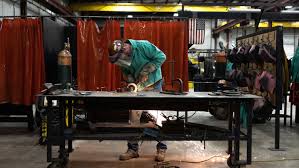
  • John Deere Announces Layoffs Amid Slow Farm Orders and Tariffs

    Blue Press Journal (IA) – John Deere, the leading manufacturer of agricultural equipment, has announced layoffs at three of its manufacturing facilities in Iowa and Illinois. The move comes in response to a downturn in farm commodity prices, which has negatively impacted the company’s sales and shares.

    According to a statement released by the company on Monday, August 18, 71 workers will be laid off at its foundry in Waterloo, Iowa, effective September 19. Additionally, 167 workers will be laid off in the Quad Cities area of Illinois: 115 from its harvester works in East Moline, effective August 29, and 52 from its seeding and cylinder works in Moline, effective September 26.

    Tariffs Directly Result in Layoffs

    The layoffs are a direct result of the company’s gloomy earnings report, which showed a significant decline in sales due to slow demand for farm equipment. The report, released on August 14, sent the company’s shares down 6%. The downturn in farm commodity prices has led to a decrease in farmers’ purchasing power, causing them to opt for renting machinery instead of buying.

    The ongoing trade tensions and tariffs imposed by President Donald Trump have added to the woes of farm-equipment makers. The tariffs on raw materials such as aluminum and steel have increased the cost of production, making it even more challenging for companies like John Deere to maintain profitability.

    The layoffs highlight the trade war’s impact on agriculture. Farmers, already battling low commodity prices, face rising costs from tariffs, which reduces demand for farm equipment and leads to layoffs and regional economic uncertainty.

    The announcement has raised concerns about the economic impact on communities where John Deere is a major employer. The decision to lay off workers highlights the challenges in the agricultural industry and the need to resolve trade tensions. It remains unclear how the industry will adapt to changing market conditions and what measures will be taken to mitigate the effects of tariffs.