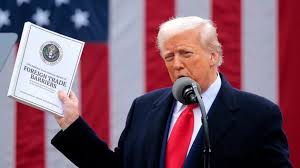
Blue Press Journal – Since the second half of 2025, the U.S. economy has been teetering under the weight of President Donald Trump’s aggressive trade and fiscal policies—policies that were once hailed as pillars of a booming economy but now stand as key drivers of inflation, stagnating job growth, and mounting public discontent.
Despite repeated denials from the White House, data paints a troubling picture. Prices have risen steadily over the past several months, fueled in large part by the sweeping tariffs reimposed by the Trump administration. These tariffs, intended to protect domestic industries, have backfired—increasing the cost of imported goods and materials, which businesses are passing on to consumers. The result? A surge in inflation that is hitting American households where it hurts most.
“Tariffs are taxes—paid by consumers,” said Dr. Elsie Peng, research economist at Goldman Sachs. “The recent wave of import restrictions has created ripple effects across supply chains, contributing directly to climbing food and energy prices—two categories that disproportionately affect lower- and middle-income families.”
The upcoming consumer price index (CPI) report for September is expected to reflect this reality, with economists anticipating a notable uptick in inflation. Food prices alone have increased by 5.6% year-over-year, while energy costs have jumped nearly 12%, according to preliminary data from the Bureau of Labor Statistics. For many Americans, these are non-negotiable expenses, leaving families with fewer options to adjust spending and maintain financial stability.
At the same time, the labor market is cooling at an alarming rate. Job growth, which averaged 150,000 new positions per month at the beginning of 2025, has plummeted to just 25,000 by August. Businesses, facing higher input costs and uncertain trade conditions, are scaling back hiring and freezing expansions.
“This slowdown isn’t random—it’s policy-driven,” Peng noted. “When uncertainty rises and costs climb, companies don’t invest, and they don’t hire. The private sector is responding rationally to an increasingly unstable economic environment.”
The consequences are tangible. Millions of Americans are now grappling with tighter budgets, stagnant wages, and shrinking opportunities. The unemployment rate, though not yet in crisis territory, has begun to climb, especially in manufacturing and export-dependent sectors.
Public sentiment has followed the same downward trajectory. A recent Quinnipiac University poll reveals that only 38% of voters approve of President Trump’s handling of the economy—the lowest approval rating since February 2017. That marks a nearly 20-point gap between approval and disapproval, a rare low for a president who staked his legacy on delivering an “unprecedented economic boom.”
“President Trump promised a vibrant and muscular economy,” said political analyst Maria Thompson. “But what voters are seeing now is a contraction of opportunity, not expansion. His policies are no longer delivering on their promises.”
While tax cuts and deregulation may have boosted corporate profits in the short term, the long-term toll of protectionist trade measures and erratic fiscal policy is becoming clear. Inflation is eroding purchasing power, job creation is stalling, and confidence in economic leadership is waning.
The American economy was once seen as resilient and adaptive. But when core economic policies prioritize political rhetoric over measurable results, the foundation cracks. Right now, that foundation is under serious strain.
As the nation faces economic turbulence, one fact is clear: sustainable growth cannot rely on tariffs, denial, and dwindling public trust. Ignoring this truth is already affecting grocery stores, job fairs, and households nationwide.
 Blue Press Journal
Leave a comment