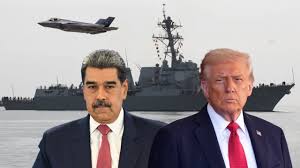
BLUE PRESS JOURNAL (NYC) – In a stunning courtroom admission, the (Trump) U.S. Department of Justice (DOJ) has now acknowledged that the so-called Cartel de los Soles — once touted as the centerpiece of the Trump administration’s anti-Venezuela narrative — is not an actual criminal organization. This admission undermines years of political rhetoric, raises serious questions about U.S. foreign policy credibility, and reignites comparisons to past military interventions justified by questionable intelligence.
From “Kingpin” to Fictional Cartel
The Trump administration declared Venezuelan President Nicolás Maduro a “kingpin” of international drug trafficking, claiming he headed the Cartel de los Soles. The name, which translates to “Cartel of the Suns,” was presented as evidence of a sophisticated criminal syndicate.
However, as Latin American experts have long explained — and as the New York Times reported — Cartel de los Soles is not a literal cartel. Instead, it is a colloquial expression dating back to the 1990s, used to refer to corrupt Venezuelan military officials accused of involvement in drug smuggling. The “suns” refer to insignia worn by Venezuelan generals, much like stars worn by American officers.
The DEA’s own National Drug Threat Assessment has never listed Cartel de los Soles among recognized trafficking organizations. Nor has the United Nations Office on Drugs and Crime included it in its World Drug Report.
Why the DOJ’s Admission Matters
Following Maduro’s capture by U.S. forces, a new indictment dropped the claim that Cartel de los Solesexists. While the DOJ continues to allege Maduro’s involvement in drug trafficking, it has abandoned one of its most high-profile accusations — likely because proving the cartel’s existence in court would be impossible.
This reversal casts doubt on the integrity of the original charges. As Elizabeth Dickinson of the International Crisis Group told the New York Times, labeling Cartel de los Soles as a foreign terrorist organization was “far from reality.”
Ben Norton, editor of the Geopolitical Economy Report, argued that the abrupt change reveals “the entire US war is based on lies,” drawing a direct parallel to the false “weapons of mass destruction” narrative used to justify the 2003 Iraq invasion.
Oil Reserves, Not Drug Boats?
Initially, Trump’s escalation against Venezuela was framed as a mission to stop drug shipments from reaching U.S. shores. But Trump later admitted the real goal was to seize control of Venezuela’s vast oil reserves and hand them over to American companies.
This revelation further supports the view that the Cartel de los Soles narrative was a manufactured pretext for economic and geopolitical gain, rather than a legitimate counter-narcotics operation.
A Pattern of Manufactured Threats
The DOJ’s retreat on this claim is not an isolated incident. It fits a broader historical pattern in which U.S. adminstrations — have used exaggerated or false threats to justify sanctions, regime change, and even military intervention.
From Iraq’s alleged WMDs to Libya’s “imminent massacre,” the tactic is familiar: craft a compelling but misleading danger, rally public support, and pursue strategic objectives under the guise of humanitarian or security concerns.
Accountability Is Overdue
The erosion of the Cartel de los Soles narrative should serve as a wake-up call. If U.S. government agencies can promote unfounded claims to justify aggressive foreign policy, public trust is at risk — and so is the integrity of democracy itself.
As the DOJ’s courtroom admission shows, truth eventually surfaces. But for Venezuela, and for the American public, the cost of these fabricated narratives is measured in human lives, economic destabilization, and decades of mistrust.
 Blue Press Journal
Leave a comment