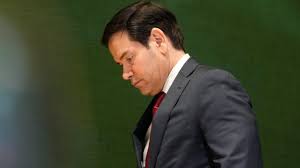
A federal judge ruled against alleged Trump-era targeting of campus activists, warning officials not to alter immigration status as retaliation.
Blue Press Journal – In a landmark ruling, U.S. District Judge William Young has warned the Trump administration against altering the immigration status of certain university association members in what he described as unconstitutional retaliation for their political speech.
The ruling follows a high-profile trial last year where Judge Young found evidence that senior Cabinet officials conspired to target noncitizens — particularly pro-Palestinian activists critical of Israel’s military actions in Gaza — for deportation. The plaintiffs, members of the American Association of University Professors (AAUP) and the Middle East Studies Association (MESA), alleged that the administration’s actions were designed to silence dissent on U.S. campuses.
“Unconstitutional Conspiracy”
At a recent hearing, Judge Young accused Homeland Security Secretary Kristi Noem and Secretary of State Marco Rubio of orchestrating an “unconstitutional conspiracy” intended to chill free speech. He went further, suggesting that the president himself was complicit in violating First Amendment protections.
“The big problem in this case is that the Cabinet secretaries, and ostensibly, the president of the United States, are not honoring the First Amendment,” Young said. “There doesn’t seem to be an understanding of what the First Amendment is by this government.”
Young, a Reagan appointee, emphasized that his order serves as a remedial safeguard for noncitizen plaintiffs who are lawfully present in the U.S. and engaged in constitutionally protected political expression.
Relief Criteria Under the Court’s Order
To seek relief if their immigration status changes, affected individuals must:
- Be members of AAUP or MESA between March 25, 2025, and September 30, 2025.
- Have valid immigration status with no criminal convictions after September 30, 2025. If these conditions are met, any change in immigration status will be presumed retaliatory unless the government can prove otherwise.
Reaction from Advocacy Groups
Ramya Krishnan, senior staff attorney at the Knight First Amendment Institute, hailed the decision as a clear rebuke to what she called a “campaign of intimidation.”
“Students and scholars shouldn’t have to live in fear that ICE agents could seize them from their homes merely for engaging in political expression,” Krishnan stated.
High Stakes for Academic Freedom
The case, which Judge Young labeled “perhaps the most important ever to fall within the jurisdiction of this district court,” exposed that more than 5,000 pro-Palestinian protestors were identified using online blacklists like Canary Mission. ICE officials admitted shifting resources from counterterrorism and cybercrime units to compile profiles on demonstrators.
With appeals looming and campus activists closely watching, Young’s order may prove to be a defining moment in the intersection of immigration law, political speech, and academic freedom.
 Blue Press Journal
Leave a comment