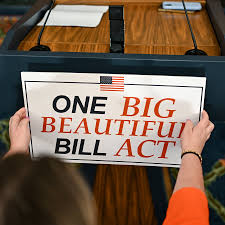
President Donald Trump often champions his legislative initiatives with grand, optimistic titles. Among them, the “One Big Beautiful Bill” stands out – a flagship package of proposed tax and spending cuts currently being debated by his party in the Senate. Yet, beneath the veneer of its aspirational name, a stark reality is emerging: when ordinary Republican voters are given the unvarnished details of what this bill entails, they often find it anything but beautiful.
In its current form, this monumental legislative proposal aims to slash spending on vital social safety net programs like Medicaid and food stamps. Simultaneously, it projects an estimated addition of a staggering $2.8 trillion to the national deficit. The stated goal for proponents is to streamline government and stimulate the economy. However, the anticipated impact on American families paints a very different picture.
The “One Big Beautiful Bill” is designed to be passed without Democratic input, leveraging a parliamentary manoeuvre known as “reconciliation” to bypass the filibuster threat. Despite this strategic legislative pathway, the bill has been consistently polling poorly. As noted by political scientists Jacob Hacker and Paul Pierson in a recent op-ed, “Americans have yet to fully understand the special alchemy of inegalitarianism that defines it.”
This “alchemy” refers to the bill’s profound redistribution of wealth. While proponents often speak in broad strokes about economic growth, a closer examination reveals that the proposed cuts and changes would disproportionately benefit the nation’s wealthiest households, potentially at the significant expense of the poor and middle class.
And this is where the disconnect truly becomes apparent. When Trump’s die-hard supporters are presented with a clear, factual breakdown of how the bill’s provisions would affect the finances of the nation’s richest and poorest households – including their own potential loss of critical services or increased economic strain – their initial enthusiasm often dissolves into apprehension, if not outright dismay. The vision of a universally beneficial “beautiful bill” quickly gives way to the unsettling truth of its highly partisan and unequal consequences.
This shift in sentiment among the Republican base highlights a critical information gap. While the bill is debated in the halls of power, and its merits are extolled on certain media platforms, the specific, granular details of its impact often remain obscured. For many of Trump’s most fervent supporters, the full scope of the bill’s “inegalitarian” nature – the way it could exacerbate economic disparities – is simply not part of the narrative they typically encounter, particularly not through sources like Fox News, which often provides a carefully curated perspective on the administration’s policies.
The “One Big Beautiful Bill” thus serves as a potent example of the chasm that can exist between political rhetoric and tangible reality. When the lofty promises are stripped away, and the specific financial implications for ordinary families are laid bare, even those within the President’s core constituency are forced to confront an uncomfortable truth: beauty, in this case, truly is in the eye of the informed beholder, and for many, that informed glance reveals very little to admire.


Leave a comment