Trump’s 2026 Iran War: How $140 Oil Tanked the American Economy
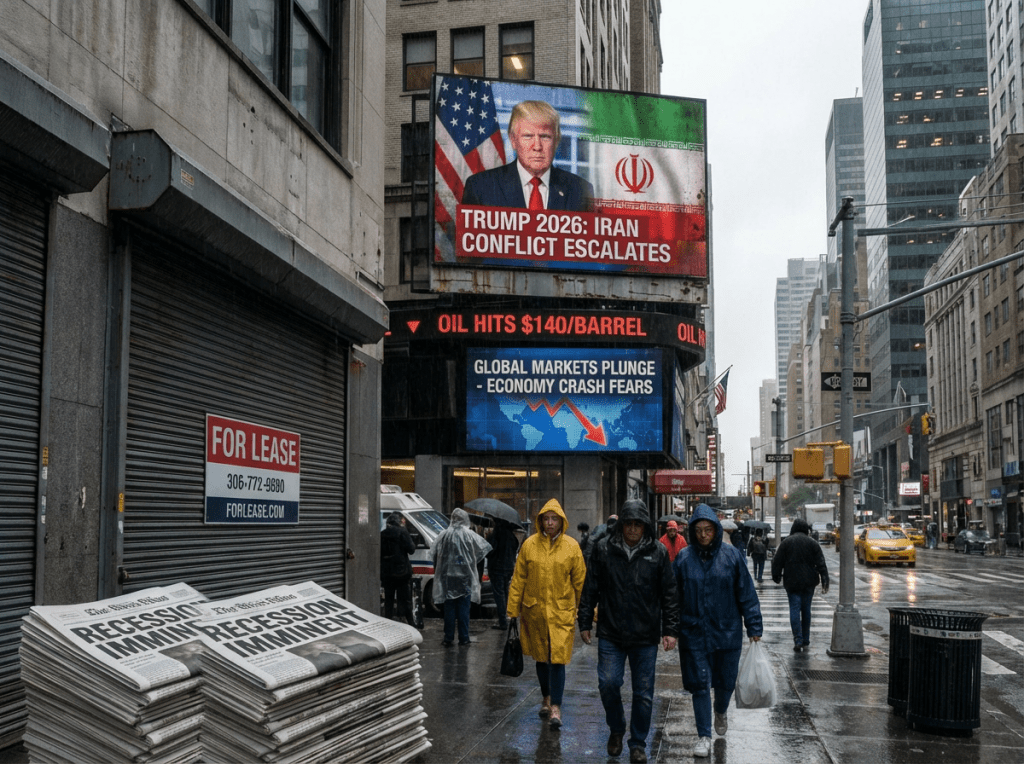
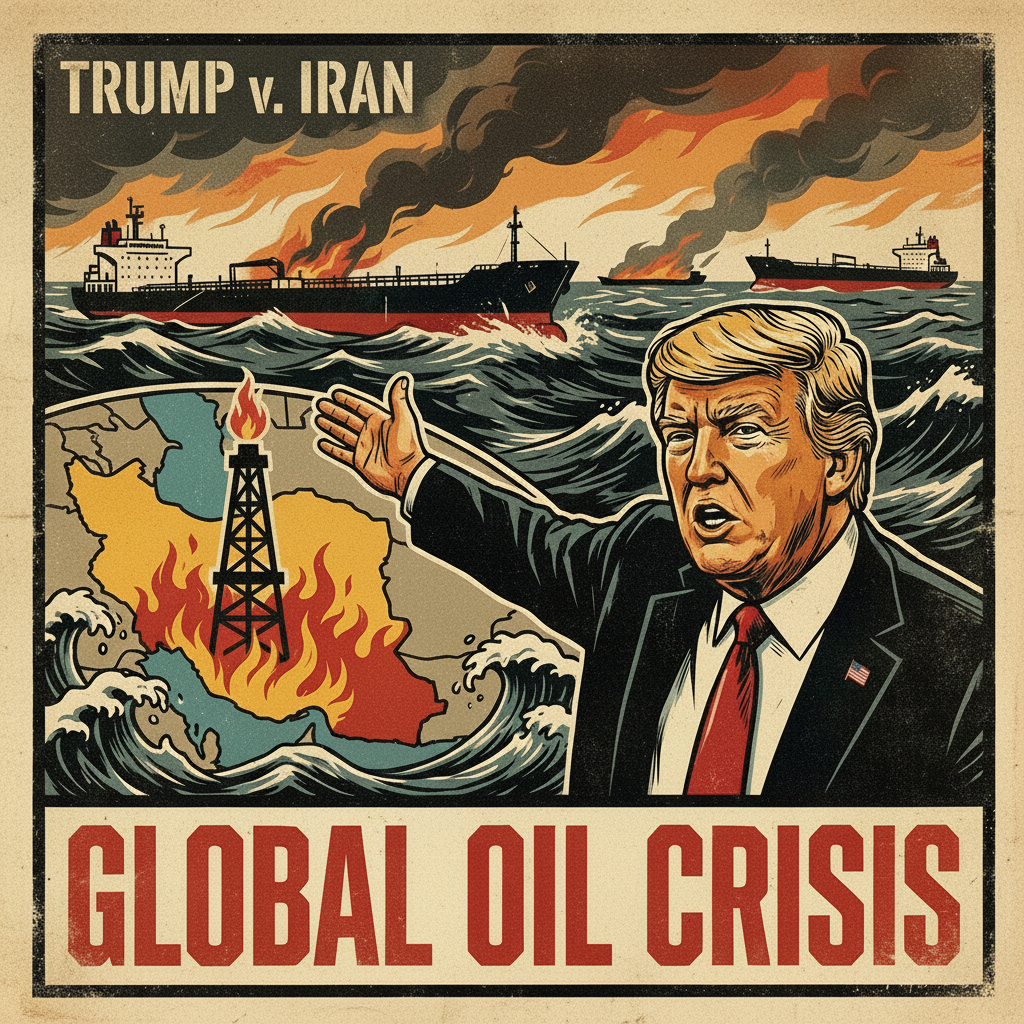
Blue Press Journal – When President Trump ordered strikes on Iran, administration officials promised a “short, decisive conflict.”What Donald Trump failed to calculate—catastrophically—was the immediate collapse of energy markets and the devastating ripple effect across the American economy.
West Texas Intermediate (WTI) Crude vs. Retail Gasoline Prices – Jan 2026 → Apr 2026 – based on estimates
Month
WTI Crude (USD / bbl)
Retail Gas (USD / gal)
Jan
$86.0
$2.98
Feb
$100.0
$3.48
Mar
$114.0 +
$3.86
Apr projected
$140.0 +
$6.80
The economic impact was immediate and brutal. As Iranian mines and missile threats choked the Strait of Hormuz, global supply chains seized. American consumers can face $6+ per gallon gasoline within weeks, triggering which will cause inflationary pressure that will erase wage gains, stock market prices and crush discretionary spending. The transportation sector will hemorrhaged profits while manufacturing faced energy costs not seen since 2008.
The administration’s war planning contained no credible energy contingency strategy. Despite Pentagon warnings that Hormuz closure would disrupt 20% of global oil shipments, Trump dismissed price concerns as “temporary fluctuations” and failed to coordinate with allies on alternative supply routes. Strategic Petroleum Reserve releases will provide insufficient against sustained disruption.
The result: can be a stagflationary spiral that pushes the economy into recession by Q3 2026, with middle-class families bearing the burden of strategic miscalculation.
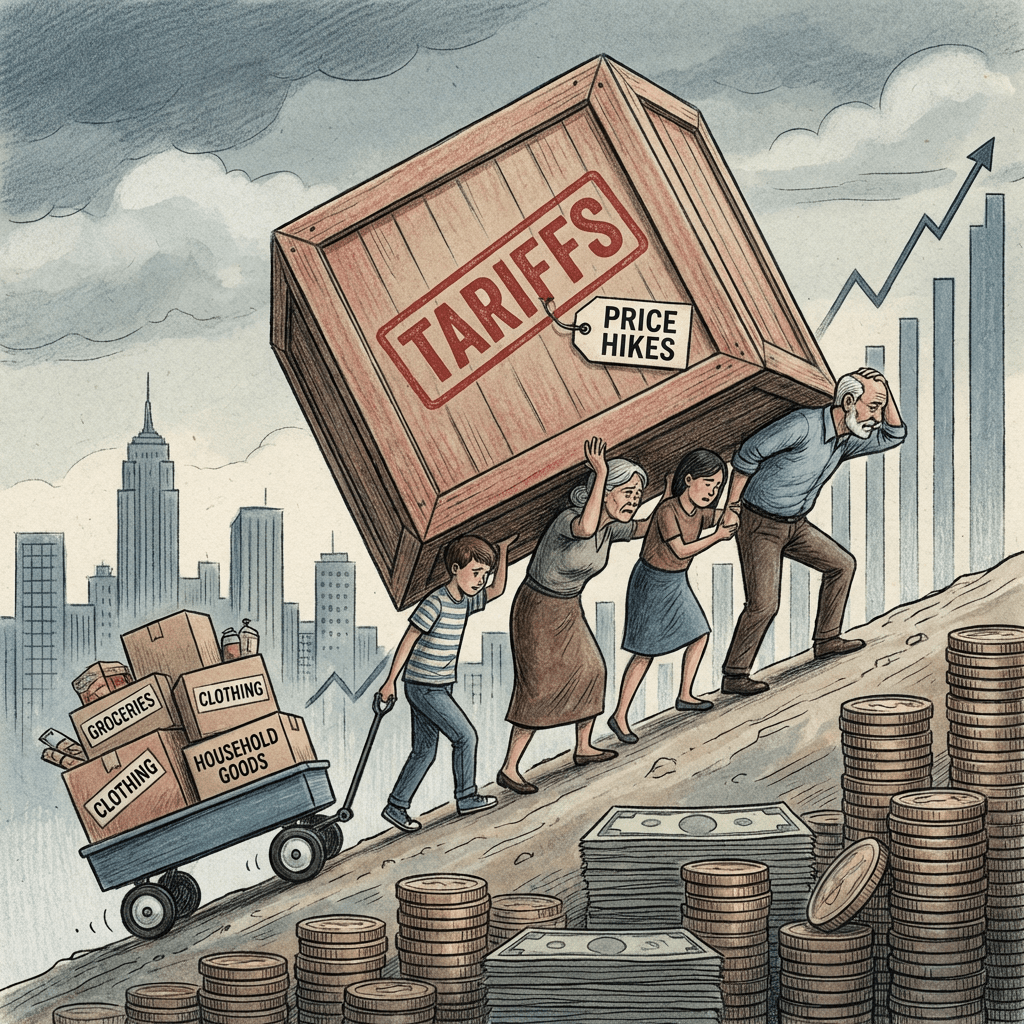
Blue Press Journal (DC) – American households are on track to endure an unprecedented financial hit this year, with combined costs from import duties totaling an estimated $330 billion. This colossal sum, translating to over $2,500 for the average family, underscores the severe economic strain inflicted by President Donald Trump’s aggressive trade policies. A recent report from the Democratic minority on the Joint Economic Committee (JEC) as reported by news outlets like Reuters, paints a stark picture of these escalating expenses, a considerable jump from the $1,700 Americans reportedly paid in 2025.
Despite a Supreme Court ruling last month that invalidated Trump’s use of emergency powers for imposing widespread tariffs, the administration appears undeterred. US Treasury Secretary Scott Bessent has projected “virtually unchanged tariff revenue in 2026,” suggesting a continued reliance on these trade taxes through different legal avenues to circumvent the high court’s decision. This persistent strategy means continued pressure on consumer wallets.
The burden of these customs charges falls disproportionately on everyday Americans. Independent analysis from the nonpartisan Congressional Budget Office (CBO) detailed in reports by organizations like the Associated Press, revealed that foreign entities bear only about 5% of tariff expenses. Domestic companies absorb roughly 30%, but a staggering 65% is ultimately shouldered by consumers through higher prices on goods and services.
A Tale of Two Refunds: Businesses Get Relief, Families Don’t
While American families grapple with surging costs, businesses impacted by what were deemed unlawful duties are poised for substantial relief. The US Court of International Trade (CIT) recently mandated that the Treasury Department and Customs and Border Protection must reimburse approximately 330,000 importers a staggering $166 billion for duties collected under the invalidated tariffs a development covered by outlets such as The Wall Street Journal. Customs officials indicate that a system for processing these refund requests for over 53 million entries could be operational as early as mid-April.
However, a stark disparity remains for ordinary citizens. Senator Maggie Hassan (D-NH), a ranking member of the Joint Economic Committee, sharply criticized this imbalance. She lamented that while businesses are set to receive reimbursements with interest, “the Trump administration refuses to provide relief for families” and is instead “choosing to institute new tariffs that will push prices even higher.”
Senator Heinrich emphasized the measure’s intent: “This is money that belongs to working families—not to CEOs of big corporations.” He criticized the administration’s rhetoric, stating, “The president may call the affordability crisis a ‘hoax,’ but working people feel it every time they pay for essentials. This bill will return the money lost to Trump’s tariffs back to those who paid the price.”
Public sentiment reflects growing dissatisfaction with economic policies. An NBC News poll showed that 55% of voters believe trade taxes have harmed the economy, while only 33% view them as beneficial. With 62% disapproving of the administration’s handling of inflation and living costs, the financial strain on American families is clear. Heinrich’s bill includes a provision to prevent the president from labeling rebate checks with his name, acknowledging previous political optics around stimulus payments.
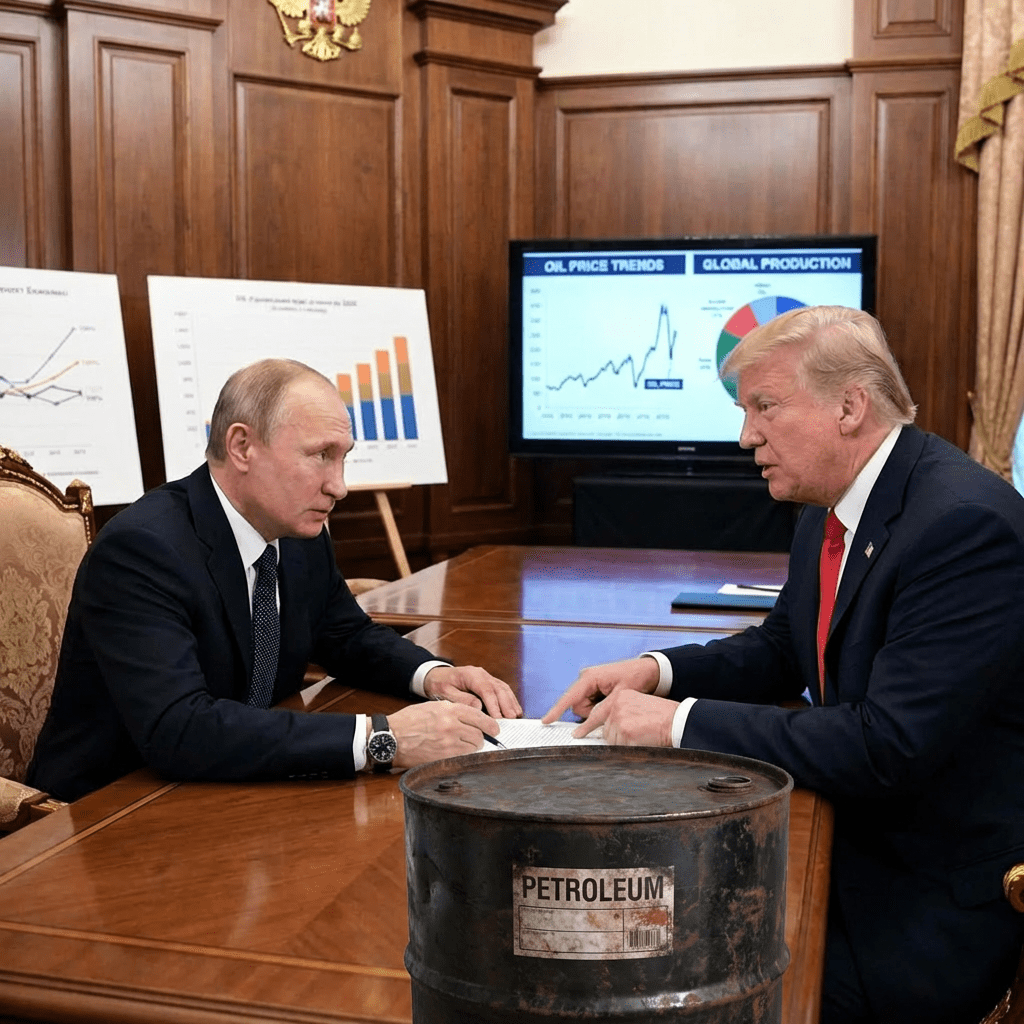
Blue Press Journal – The Trump administration’s temporary lifting of Russian oil sanctions represents a stark admission that its Iran military campaign is backfiring economically. In a move rich with geopolitical irony, the White House is easing restrictions on Moscow—a direct concession to Vladimir Putin—to counteract crude price spikes triggered by the President’s own Persian Gulf escalation (The Guardian).
The decision undermines years of bipartisan measures designed to punish Russia’s Ukraine invasion while revealing acute strategic shortsightedness. According to CNN, officials failed to contingency-plan for Iran’s threatened Strait of Hormuz closure despite this scenario being “a bedrock principle of US national security policy for decades” (CNN). By treating Putin’s regime as an economic “pressure relief valve,” Trump prioritizes electoral survival over principled opposition to Russian aggression, deepening scrutiny of the administration’s crisis planning and longstanding Kremlin entanglements.
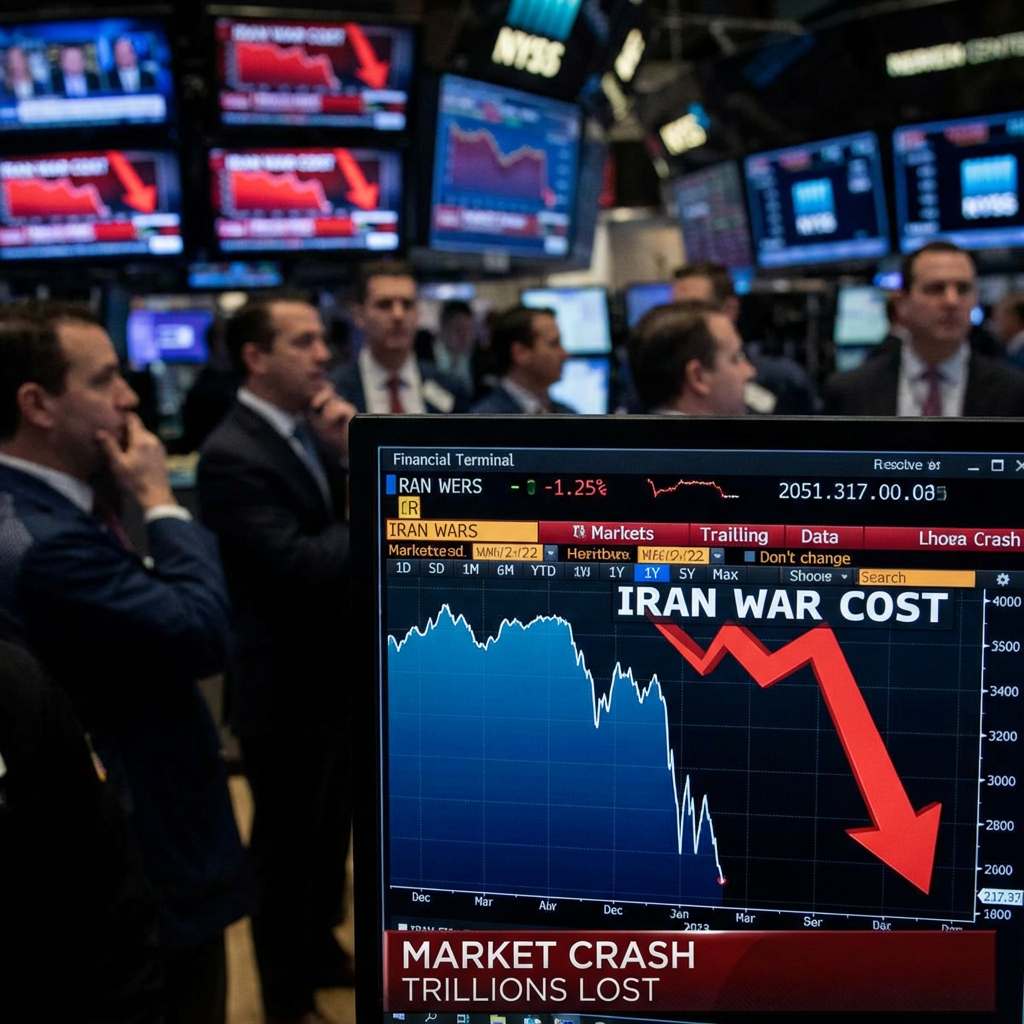
Blue Press Journal – The recent deep decline in the stock market, triggered by Trump’s Iran war, has left investors reeling. Financial advisers are quick to reassure their clients that the losses will be recouped, and the market will bounce back. However, they often fail to mention a crucial aspect of market volatility: the lost time.
When the market is down, the clock keeps ticking, and the time lost is not recoverable. The gains made prior to the decline are not just put on hold; the opportunity to make new gains during that time is also lost. To illustrate this point, let’s consider a hypothetical example.
Month
Market Performance
Cumulative Gains
January
10% gain
$10,000 to $11,000
February
15% loss
$11,000 to $9,350
In this example, an initial investment of $10,000 in January yields a 10% gain, bringing the total to $11,000. However, in February, a 15% loss wipes out the gains, leaving the investor with $9,350. While the financial advisers might say that the market will recover, the reality is that the two months of lost time cannot be regained. The investor missed out on potential gains that could have been made during those two months.
The tone of the article is cautionary, highlighting the often-overlooked consequence of market volatility. By using hypothetical numbers, we can see that the lost time can have a significant impact on an investor’s overall returns. As investors, it’s essential to be aware of this hidden cost and not solely rely on the promise of a market rebound.
Trump’s Oil‑Price Spin Masks an Affordability Crisis and an Unnecessary Iran War
Blue Press Journal – President Donald Trump tried to portray today’s surge in gasoline prices as a boon for U.S. producers, posting on TruthSocial that “the United States is the largest oil producer, so when oil prices go up, we make a lot of money.” But the reality, reported by Reuters and CNN, is that consumers are feeling the pinch of a “fuel shock” not seen since the 1970s, deepening an already‑severe affordability crisis for middle‑class families (Reuters).
Trump’s rhetoric also drifts into dangerous territory. He claims the war with Iran is necessary to stop a nuclear threat, yet The New York Times notes that diplomatic talks were nearing a mutually acceptable agreement and no credible evidence shows Tehran is building a bomb (NYT). Energy Secretary Chris Wright’s dismissal of a $200‑per‑barrel scenario as “unlikely” ignores Tehran’s explicit warning that regional destabilization will drive prices sky‑high (CNN).
Meanwhile, the president’s ongoing effort to suppress the Epstein files diverts attention from these urgent economic issues, raising questions about his priorities. As oil prices fluctuate, the real cost falls on American drivers, not on the Trump‑aligned oil lobby.
Trump’s Iran Escalation Threatens Catastrophic Oil Crisis for American Consumers
Blue Press Journal – As working Americans face mounting costs at the pump, Saudi Aramco’s CEO has issued a stark warning that President Donald Trump’s escalating conflict with Iran could trigger “catastrophic consequences” for global oil markets. Amin Nasser told reporters Tuesday that blocking the Strait of Hormuz—through which roughly 20% of global oil shipments flow—represents “the biggest crisis the region’s oil and gas industry has faced” (Reuters).
The Iranian Revolutionary Guards have vowed to halt “one litre of oil” from passing if U.S. attacks persist, already choking shipments through the vital artery. Despite Brent crude surging to three-year highs near $120 per barrel, Trump has doubled down on aggression, threatening “much harder” strikes while proposing an unrealistic naval escort plan that energy officials dismiss as insufficient (Bloomberg).
With global inventories at five-year lows and Aramco suspending Gulf exports entirely—removing 350 million barrels from the market—Trump’s brinkmanship directly threatens American consumers with sustained price spikes across aviation, agriculture, and transportation sectors. As one Gulf energy official noted to CNBC (2026), only stopping the war—not escalating it—can reopen these critical shipping lanes.
Chart: Brent Crude Price Surge During Iran Crisis
Date
Price (USD)
Event
Pre-Escalation
$70
Baseline pricing
Week 1
$85
Initial Hormuz tensions
Current Peak
$118-120
Iran blocks shipping threats
Source: Market data via Bloomberg/New York Mercantile Exchange
Supreme Court’s Delay Thwarts GOP Plan to Gut Black Voting Power Ahead of 2026
Blue Press Journal – A Republican-led scheme to systematically dismantle Black-majority congressional districts across the South has been temporarily thwarted, not by a legal defense, but by the Supreme Court’s own delayed timetable, according to election law experts.
The plan hinged on the high court’s anticipated ruling in Louisiana v. Callais, a case that could severely weaken or outright strike down Section 2 of the landmark Voting Rights Act. This provision prohibits voting practices that discriminate based on race, a critical tool used to prevent the dilution of Black voting power through gerrymandering.
Had the conservative-majority Court, shaped by three justices appointed by President Donald Trump, issued a ruling gutting the VRA shortly after re-hearing the case in October, it would have greenlit a frantic redistricting process. GOP-controlled state legislatures would have been empowered to “crack” and “pack” Black voters, effectively eliminating districts currently represented by Black Democrats.
According to a stark analysis by the voting rights groupFair Fight Action, this could have targeted up to 19 House seats across nine Southern states. The move was a blatant partisan power grab, designed to permanently entrench a white conservative majority and make it “increasingly hard for Democrats to win back control of the House,” as reported by HuffPost.
However, the Court’s failure to issue a decision has now made this scenario “functionally impossible” for the 2026 elections, as primary calendars have rendered it too late for states to redraw maps.
“We’re at the point where it’s functionally impossible for most Southern states to redraw their maps, unless they do something extraordinary like move or redo primaries,” Michael Li, a redistricting expert at the Brennan Center for Justice, confirmed. States like North Carolina and Texas have already held primaries, while others face imminent deadlines to print ballots for military and overseas voters.
The GOP’s intent was clear. Louisiana’s Republican Governor, Jeff Landry, called a special legislative session on redistricting last fall, anticipating a swift ruling from the Supreme Court. This tactic aligns with the Republican project, championed by Donald Trump, to roll back voting rights protections for Democratic-leaning minority voters.
The delayed ruling is a temporary reprieve, but the case remains a loaded weapon aimed at the heart of American democracy.
Blue Press Journal – The past week has laid bare the consequences of President Trump’s overreach—a mix of policy missteps and self‑inflicted damage that is tanking his poll numbers and eroding congressional support. A stagnant labor market, combined with skyrocketing gas prices tied to the Iran‑U.S. conflict, is pushing the U.S. economy toward stagflation, a scenario Wall Street analysts now warn could become a reality (Reuters, March 5).
Trump’s immigration agenda, already unpopular, hit a new low with the abrupt removal of DHS Secretary Kristi Noem. Critics argue the move was less about policy competence and more about political retaliation, exposing the administration’s chaotic leadership style (The New York Times, March 4). The fallout has amplified voter frustration, as households grapple with higher gasoline costs that directly counter the president’s “America First” promises to ease living expenses.
Meanwhile, the labor market shows little sign of recovery. The Bureau of Labor Statistics reported a flat employment growth rate for the second consecutive month, while wages remain stagnant (BLS, March 2). This paradox of weak job creation and rising inflation undermines the administration’s narrative that its tax cuts and deregulation are revitalizing the economy.
Polls reflect the shifting tide. A recent Quinnipiac survey placed Trump’s approval at a historic low, with many Republicans citing “economic anxiety” as the primary concern (Quinnipiac, March 3). As the GOP struggles to keep voters focused on its agenda, the cascade of bad news threatens to derail any attempt to regain momentum before the midterm elections.
Blue Press Journal – The U.S. labor market suffered a stunning reversal in February, shedding 92,000 jobs while the unemployment rate climbed to 4.4%, according to Bureau of Labor Statistics data released Friday. The contraction—marking a dramatic miss from economists’ projections of 59,000 new positions—exposed an economy reeling from the dual pressures of protectionist trade policies and widening military conflict in the Middle East.
Revisions to December and January data eliminated an additional 69,000 positions, revealing the labor market entered 2025 on weaker footing. Manufacturing sustained its 14th job loss in 15 months, shedding 12,000 positions, while healthcare dropped 28,000 jobs amid disputes. Construction lost 11,000 jobs, administrative services shed 19,000, and restaurants cut nearly 30,000 positions, suggesting softening consumer demand.
The economic bleeding coincides with oil market volatility driven by the Trump administration’s military operations in Iran. Global benchmark Brent crude surged to $89.50 per barrel, the highest level in nearly two years, while U.S. crude jumped 5% to $86.70, Reuters reported. This price shock led Qatar’s energy minister to warn the Financial Times that Gulf producers may halt exports, potentially driving prices to $150 per barrel and inflicting “extensive economic damage.”
Financial markets reacted sharply to the confluence of labor weakness and energy inflation. The S&P 500 futures declined 0.84% while the MSCI all-world index headed for its steepest weekly drop since March 2025. Treasury yields fell as traders recalibrated expectations for Federal Reserve rate cuts.
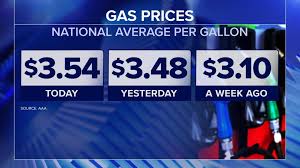
Amid economic turbulence, President Donald Trump struck a dismissive tone regarding pocketbook concerns. In an exclusive interview with Reuters, he expressed “no concern” about rising gasoline prices, currently averaging $3.25 per gallon, stating the military campaign is “far more important.” These remarks contradict his February State of the Union address, where he celebrated declining energy costs as an economic win.
The administration’s prioritization of military expansion over economic stability threatens to deepen voter discontent ahead of November’s midterm elections, as households already grappling with elevated interest rates and tariff-driven uncertainty face a new inflationary shock at the pump.
Surprise bipartisan vote to subpoena Pam Bondi underscores mounting frustration over her handling of the Jeffrey Epstein files
Blue Press Journal
When the House Oversight Committee’s chair, Rep. James Comer (R‑KY), convened a hearing on Wednesday, he did not anticipate a sudden, bipartisan push to summon Florida’s former attorney general, Pam Bondi, to a closed‑door deposition. Five Republican members of the committee, joined by every Democratic colleague, voted to subpoena Bondi for her “foot‑dragging” on the release of Jeffrey Epstein‑related files. The move has ignited fresh criticism of Bondi’s handling of the high‑profile investigation and raised serious questions about transparency, accountability, and political expediency.
A Surprise That Exposed a Growing Frustration
Kurt Bardella, who served as the committee’s spokesperson while it was under Republican control, described the episode on MS NOW as a “blindside” for Chair Comer. “Members of Congress on both sides of the aisle are frustrated with the redactions, with files going up, files being taken down, other media entities doing investigative work, coming up with information that the committee doesn’t actually have in real time,” Bardella said. “So frustration finally reached this boiling point.”
The language is stark: “boiling point” signals that the committee’s patience with Bondi’s approach has run out. The underlying issue is not mere partisan rivalry; it is a perceived obstruction of a national inquiry into the Epstein scandal—an inquiry that has already produced a torrent of public curiosity and media scrutiny.
Why Bondi’s Record Is Under the Microscope
Pam Bondi, who served as Florida’s Attorney General from 2011‑2019, has a reputation for bold, often theatrical, political maneuvering. Her most recent “grandstanding” moment occurred during a Senate Judiciary Committee hearing, where she used procedural delays to filibuster questions—an approach that many lawmakers now view as an attempt to evade substantive answers.
Bardella emphasized that the upcoming deposition will be closed‑door, stripping Bondi of any public platform to “grandstand.” He noted:
“It’s a closed‑door deposition; it’s not a public hearing. She will not be able to grandstand and filibuster the way she did in the Senate Judiciary Committee meeting a few weeks ago. This is a time where you have unlimited amounts of time, there’s no five‑minute rule. There’s no ‘Oh, I only have a few minutes to get my question in so you can run out the clock on me.’ It’s a deposition.”
The distinction matters. In a public hearing, Bondi could control the narrative, limit the depth of questioning, and rely on media spin. In a deposition, however, unrestricted time and real‑time questioning put her on the hook for every detail she may have concealed or delayed.
The Bipartisan Vote: An Unusual Signal
In a narrow‑majority House, genuine bipartisan cooperation is rare. Yet, the vote to subpoena Bondi saw five Republicans side with every Democratic member of the Oversight Committee. This unusual alignment suggests that concerns about Bondi’s conduct transcend party lines.
Comer’s own response—“scrambling” to reschedule the vote later in the day—highlights the pressure the committee now faces. If the chair can be caught off‑guard by his own party members, the broader implication is clear: the issue has become a matter of institutional integrity, not just partisan politics.
What’s at Stake?
Public Trust: The Epstein case remains a touchstone for public confidence in the justice system. Any perception that key figures, like Bondi, are obstructing the flow of information erodes that trust.
Legal Accountability: The subpoena aims to uncover whether Bondi’s office redacted or withhelddocuments that could be vital to ongoing investigations. Failure to produce full records could expose the former attorney general to contempt or other legal repercussions.
Political Consequences: Bondi has hinted at future political ambitions, including potential runs for higher office. How she handles this deposition may shape voter perception and influence her standing within the Republican Party.
The Road Ahead
The closed‑door deposition is scheduled for later this week. While the public will not see the exchange directly, the transcript will likely be released, providing a detailed account of Bondi’s answers. Lawmakers have signaled that any further stone‑turning will be met with additional subpoenas or, if necessary, referrals to the Department of Justice.
In the meantime, analysts are watching closely how Bondi navigates the interrogation. Will she finally provide the unredacted Epstein files, or will she employ the same tactics that have drawn sharp criticism? The answer will likely influence not only her personal legacy but also the broader narrative surrounding the Epstein investigation.



 Blue Press Journal