Category: Posts

  • From Motorcade Trunk to White House Confidante: The Rising Influence of Natalie Harp

    by Winston Wendell

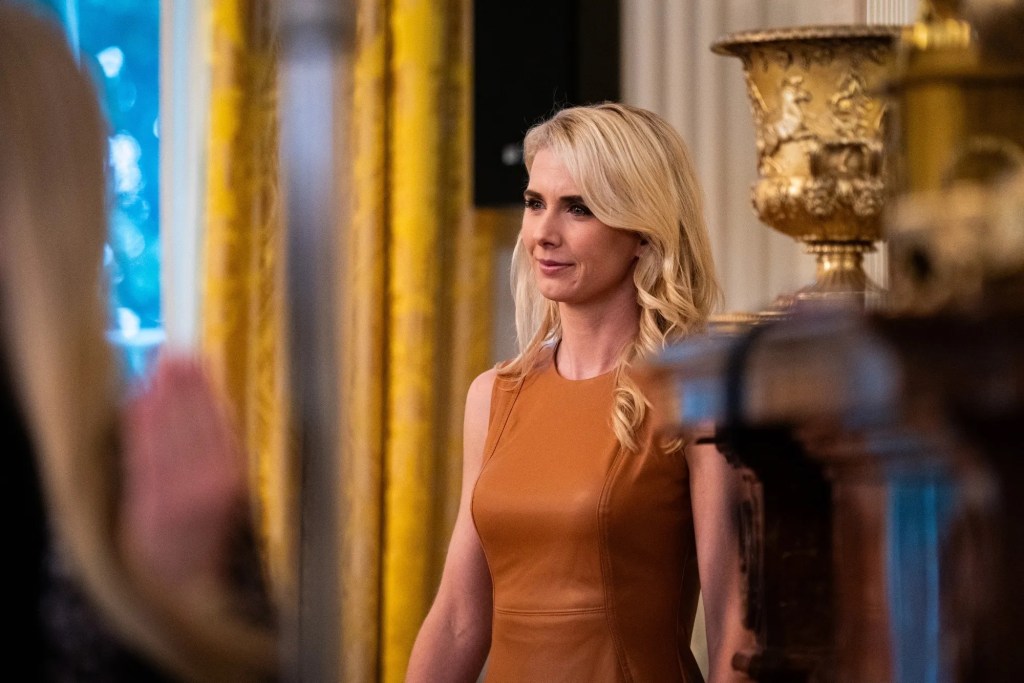
    Remarks by Senator Jon Ossoff (D‑Ga.) that President Trump “travels with Natalie” has rekindled interest in the relationship between the president and his 35-year-old aide Natalie Harp. Known as the “human printer” for providing printouts of positive online stories about Donald Trump while he was in transit, Ms. Harp was once again in the news for an alleged altercation over her travel arrangements following the president’s recent court appearance in New York City.
    According to a CNN report from October 24, 2023, Ms. Harp was brought to New York City to brief Trump in the days leading up to his court appearance. The news outlet reported that when the President’s motorcade arrived at the destination, the staff told Ms. Harp that there were no available seats for her in the front of the vehicle. Nevertheless, Ms. Harp insisted that she would only return with Mr. Trump because she had previously been requested by the President to accompany him to the courtroom. Following a “screaming match” with the President’s staff, Ms. Harp climbed into the trunk of one of the SUVs and arrived in New York City. In addition, CNN reported that it had received a photograph of Ms. Harp in the trunk of the vehicle, which has since been shared on several news websites.

    The alleged incident in the trunk of the SUV is the latest development in the ongoing controversy surrounding Ms. Harp’s relationship with Mr. Trump. In September 2023, Politico reported that Ms. Harp has served as the President’s “gatekeeper,” providing him with printouts of online articles containing information that the president may find of interest. According to Politico , since her hiring, Natalie Harp has been responsible for screening news feeds and choosing which news items to print out for the President based on their perceived relevance. Similarly, The New York Times , in its March 2024 article about Trump’s staff, noted that Harp has been a “near-constant presence” at both the president’s rallies and court proceedings.

    Although the White House did not respond directly to the allegations regarding the trunk incident, former Trump officials told Reuters that the president sometimes engaged in “unorthodox” behavior with his staff. According to the news outlet, the President’s staff members are generally willing to comply with his requests due to his status as a national leader.

    Senator Ossoff’s remarks were made during a hearing of the Senate Judiciary Committee on January 15, 2024. Following his comments, several representatives laughed and discussed the extent to which staff members are permitted to travel with the President. However, as this story continues to gain traction in the national news, it is likely to raise additional questions about the potential risks and dangers facing Trump’s staff. From this standpoint, the “trunk controversy” may have significant implications for the White House.


    Fediverse Reactions
  • A Score Card: Examining the Economic, Legal, and Social Legacy of the Trump and GOP Era

    by Winston Wendell

    As the 2026 political cycle approaches, America faces a question it can’t keep skirting: Is Trump’s strongman persona and brand of hardline republicanism really what this country needs, or a risky step backward with consequences we haven’t fully reckoned with?

    Donald Trump and officials standing in a line inside an ornate marble hall

    A compilation of legal, academic, and investigative articles presents a detailed list of failures of the president throughout his time in office.

    It all started long before he became president when Atlantic City casinos were his main asset. His numerous bankruptcies as a businessman became a major subject of investigation, with critics pointing out that his financial decisions negatively affected the local economy, trying to save his own skin while billions of other people’s dollars went down the drain. Simultaneously, labor rights protesters accused Trump of knowingly allowing illegal immigration and subjecting those immigrants to substandard working conditions, using threats of deportation to force them to work for lower than allowed wages.

    The controversies followed him home and impacted his personal life as well as his presidential campaign. Throughout his professional life, dozens of women accused him of sexual harassment, which, during his presidential campaign, led to a hush-money indictment—a felony charge connected to the Stormy Daniels scandal.

    His presidency began with a major challenge, COVID-19, and, according to many experts, failed to adequately address the situation. It resulted in hundreds of thousands of preventable deaths, with Columbia University’s Mailman School of Public Health estimating the mortality rate to be as high as 210,000 due to the administration’s downplaying of the coronavirus and inadequate measures to combat it. The president’s tweets and the lack of a nationwide policy, as well as frequent conflicts with the scientific community contributed to a disjoined response that made things worst

    Of economic matters, the president’s legacy includes corporate tax cuts from the 2017 Tax Cuts and Jobs Act, a bill that, according to many economists, failed to stimulate the economy as promised while adding billions of dollars to the national debt that could have been used for federal investments and programs.

    His administration’s environmental policy is widely regarded as counterproductive, with Trump openly calling climate change a hoax, directing the EPA to roll back emissions regulations, and defunding federal disaster preparedness. Researchers suggest that the deregulation, along with the lack of funding for safety equipment for emergency officials, may have contributed to the increased impact of extreme weather.

    When it comes to Trump’s social legacy, his anti-immigrant rhetoric and controversial policies such as family separation and capping SNAP benefits for legal immigrants have disproportionately affected minorities and disadvantaged groups. The president’s rhetoric toward veterans, workers, and officials also created a divisive atmosphere around the key founding pillars of the country.

    Law and order were the foundation of Trump’s campaign and a major part of his presidential term. The only thing he did’t say was it apparently did not apply him and his inter- circle. A compilation of articles tells the story of how he used his presidential powers to pardon political donors and business associates while neglecting to hold his allies accountable for their actions. The list of his subordinates and political allies accused of fraud and tax evasion is rather lengthy, with all of them getting away due to Trump’s intervention. However, those interventions seem to have had limited impact on white-collar criminals, with agencies such as the Consumer Financial Protection Bureau and the SEC having their budgets cut and investigations halted.

    Perhaps unsurprisingly, the most lasting legacy of his term as president is the dispute over the integrity of the 2020 election. A number of constitutional scholars and Democrats argue that his allegations of fraud and obstruction of vote counting will have long-lasting effects on the future of democratic elections in the US.

    We have to remind everyone that you get the government you vote for.

    Fediverse Reactions
  • Economists Warn of Imbalance as Trump Cheers Stock Market Success

    by Winston Wendell

    Despite Trump’s optimism about the US economy, there are growing concerns about the gap between main street and wall street. In recent months, the stock market has seen a three week long rise. This has put the S&P 500 close to a record high which Trump is quick to point out as proof of his economic genius, especially when it comes to those with retirement plans. But many would say that the market’s success is misleading given the state of the economy for most Americans.

    Busy stock exchange trading floor beneath electronic market index boards

    “The economic realities for most Americans are not nearly as positive as suggested by the president,” said Laura Tyson, a former Chair of the President’s Council of Economic Advisers for President Clinton. “While the stock market is doing well, wages are not keeping pace with inflation, therefore most Americans are not seeing an increase in their purchasing power.”

    According to the latest report from the Labor Department, July saw an unexpected decrease in the number of new jobs. Although wages are rising, they are not keeping up with the increase in the size of the economy. The result? Average living standards for most of the population are actually dropping.

    The impact of these numbers are being felt most by Americas’ middle and lower classes who are living from paycheck to paycheck. Credit card debt has skyrocketed as families with low wages are forced to use their savings or charge purchases to cover essentials such as groceries, housing and healthcare. Added to all this the price of electricity alone has jumped 12 percent since Trump took office, leaving many households struggling to pay their bills.

    “Most people in America are not benefiting from the dramatic rise in profits of the large companies in the S&P 500, many of which are in the healthcare and energy industries,” said Joseph Stiglitz, a Nobel Prize-winning economist. “This imbalance cannot be beneficial to America’s future as it breeds social unrest amongst many groups due to growing inequalities in income and wealth.”

    As Trump promotes the success of the stock market, many are concerned about the health of the American economy. Although those on the top of the economic ladder are enjoying the best increase in wealth in five years, many others are finding life as a middle class family becoming harder and harder to manage.

    Fediverse Reactions
  • Retrograde Engineering: Why Trump’s Steam Catapult Order is a Bad Move for the Navy

    by Winston Wendell

    Now is not the time to be worrying about the technical specifications of catapults when America’s households are drowning in the rising costs of gasoline, food, and healthcare. Yet, that is exactly what former President Donald Trump seems to be doing as he wakes up from his delusionary stupor. In one of his latest nonsensical outbursts, Trump ordered the Pentagon to abandon future aircraft carrier catapults that utilize cutting-edge electromagnetic technology and revert back to the old steam-powered systems.

    President Trump’s order instructs the Navy to equip future carriers with old steam catapults instead of future electromagnetic aircraft launching systems.

    The president defended his decision by claiming that such a move would be better for the shipbuilding industry as it would allow them to use existing infrastructure to get contracts. However, military officials and senators have condemned the decision as ill-informed and short-sighted. Electromagnetic systems are undeniably better than their steam-powered predecessors in almost every regard.

    The consensus among critics of Trump’s order is that the new electromagnetic systems are far better than the old steam ones. Therefore, canceling their development and returning to the previous technology is a huge waste of resources.

    The cancellation of EMALS would lead to enormous financial losses for the Navy, contractors, and the US economy in general.

    The decision to cancel the EMALS program would lead to “wasteful spending” as there was already a $500 million investment in the development of electromagnetic catapults. It’s argued that the Pentagon does not even have the necessary infrastructure to produce the older catapults.

    A senior fellow at the Hudson Institute, noted that the president’s order creates “unimaginable complications.”

    Senators reacted furiously to the news of the president’s intentions. Senator Kelly served in the Navy and was a pilot during the Gulf War. He accused the former president of interfering with complex military matters that he does not understand.

    “I’ve launched off the front of aircraft carriers hundreds of times, have a Master’s degree in aeronautical engineering, and am a test pilot and even I wouldn’t suggest to the Navy how to engineer specific systems on its ships,” Sen. Mark Kelly (D-Ariz.), a former Navy pilot who sits on the Senate Armed Services Committee.

    Fediverse Reactions
  • Trump’s Secret Flight: Did the President Jeopardize Lives for a Risky Decoy Plan?

    by Winston Wendell

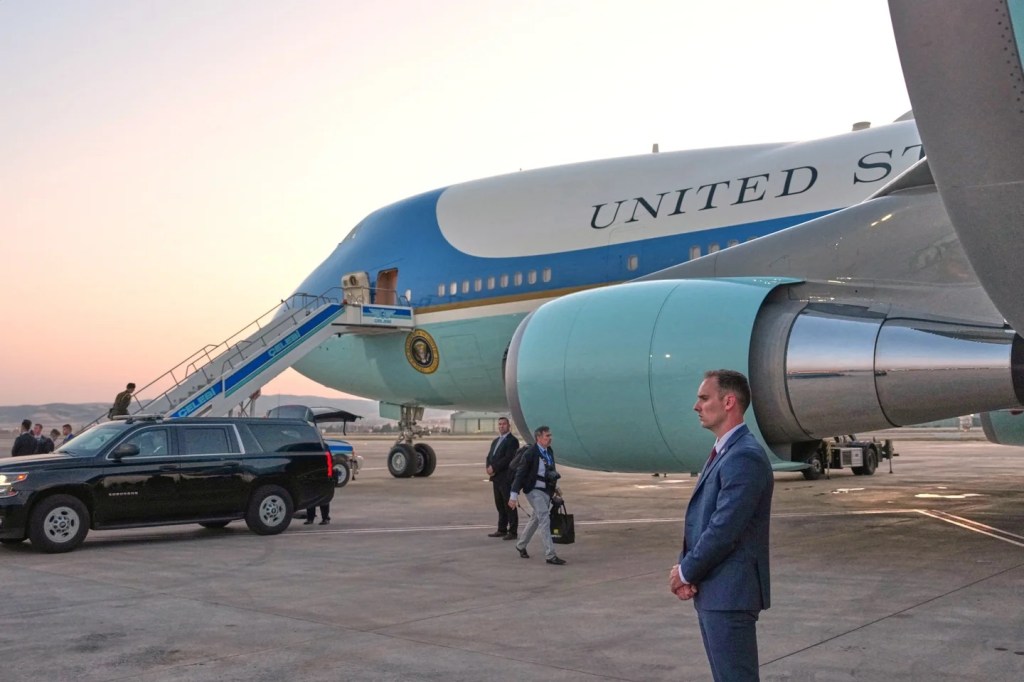
    Last month at a NATO meeting in Turkey, President Trump abruptly left his plane and used decoys to guard against a possible Iranian attack, despite safer options. He left his bodyguards, reporters, and security detail on the tarmac, secretly exiting via a catering truck, boarding a smaller plane back to England, and later reappearing on a luxury Boeing 747 donated by the Qatari royal family, which lacked the advanced missile defense system of his usual aircraft.

    The presidential entourage left behind consists of heavyweights such as Secretary of State Marco Rubio, Defense Secretary Pete Hegseth, Deputy Chief of Staff Dan Scavino, executive assistant Natalie Harp, and a number of military and press personnel, possibly numbering over a hundred decoys.

    The President could have chosen a much safer route.

    His advisors suggested using F-35s for close protection detail, including electronic warfare pods, and utilizing other aircraft to obscure the movement. In addition, a straightforward departure with minimal fanfare, announcing his intentions after leaving danger zones, could have prevented the chaos.

    Presidents do not make it a habit to vanish under the radar, it seems. History offers instances of FDR inviting reporters to accompany his staff to the front lines, Biden making surprise stops in Kyiv, and Bush bringing along the press during the Somalia operation. In any case, Trump has stirred up controversy by questioning his own conduct as commander-in-chief. If presidents are ever going to make decisions based on national security, they must understand that they will be subjected to withering criticism for any misstep.

    Fediverse Reactions
  • Inside the Trump DOJ Corruption Scandal: Why a Federal Judge Just Torched a Top Official Over the Adani Case

    by Winston Wendell

    When the machinery of American justice begins to wheeze and grind to a halt, it’s rare that we get to see proceedings from behind the velvet curtains. Every now and then, however, a federal judge feels inclined to pull back the curtain for good and show us the workings of the system for all to see.

    That’s exactly what U.S. District Judge Nicholas Garaufis proceeded to do in a 47-page ruling that exposed the Trump DoJ’s corruption at the heart of the case against Indian billionaire Gautam Adani.

    Front facade of the Robert F. Kennedy Department of Justice Building in Washington, D.C. with American flags and people walking nearby

    For context, Adani is a billionaire businessman and major political donor to the Republican party whose federal criminal fraud and foreign bribery indictment was revoked by none other than the Principal Associate Deputy Attorney General Trent McCotter. When Judge Garaufis ruled against the intervention, he made sure to deliver a stern dressing down to McCotter for dismissing the case in the first place.

    In particular, the judge seemed especially concerned with the fact that McCotter didn’t think highly of the investigative authorities that worked on the case before he decided to drop the charges.

    As per the ruling, McCotter’s actions were “inexplicable,” as the judge found it “particularly troubling” that the high-ranking DOJ official had the “independent judgment” to ignore the FBI, SEC, and prosecutors. The judge even remarked on how it was totally “unbecoming of someone in [McCotter’s] position” to rely on the private conversations with Adani’s lawyers concerning the case, as he “failed” to take into account all relevant information.

    You see, in order to dismiss the five-count indictment against Adani, McCotter only had to rely on the “advice of his legal counsel” and have “direct communications with the defense,” ignoring all other factors. He claimed that the case was dismissed due to “political interference,” but the judge quickly retorted that it would be “unbecoming of someone in [McCotter’s position]” to rely on private communications with the defendant’s lawyers.

    After all, as we know, political pressure has a way of interfering with due process. That’s why the case was dismissed, according to the ruling.

    On the other hand, Garaufis pointed out, it would be “unconscionable” for the President Trump to simply accept a bribe in exchange for dropping the case. So, in short, if there really were no bribes involved, the case shouldn’t have been dropped in the first place.

    It appears that in order to get the charges dropped against Adani, the defendant’s defense team made a “personal appeal” to DOJ’s Principal Associate Deputy Attorney General Trent McCotter. This, according to CBS News, happened during a meeting with Adani’s lawyer Bob Giuffra of Sullivan & Cromwell and included an offer of a $10 billion donation to the U.S. if the indictment was revoked.

    The foreign bribery and fraud charges that were dropped are crimes that the current government has long since given up on prosecuting and it’s high time that we reminded them of their sworn duty to protect and serve.

    It’s absolutely sickening to witness politicians and government officials alike selling justice for money while the rest of the taxpayers fund their obscene salaries. It’s also heartening to see judges like Nicholas Garaufis take matters into their own hands and finally bring these corrupt officials to task.

    Fediverse Reactions
  • The Illusion of a “Golden Age”: How the Iran War Impacts the Economy and the Nation’s Security

    by Winston Wendell

    President Donald Trump has asserted that America has entered upon a new “Golden Age.” This is a far cry from the reality we see on the ground today, where over one hundred thousand jobs have been lost in just the past two months. Gas prices are skyrocketing, and groceries are costing a record amount.

    Yet another consequence of the Trump administration’s disastrous war with Iran is that we are facing unprecedented deficits and soaring gas prices. More concerning still, the military’s most vital missiles for the defense of America’s allies and military installations in the Middle East are nearly depleted.

    The Washington Post recently reported that the Pentagon’s stores of precision guided missiles and large diameter rockets needed for its most sophisticated missile-defense systems are nearly depleted after more than five months of relentless strikes on Iran. This leaves the president with only limited options regarding renewed attacks on the Islamic Republic.

    At the same time, however, Reuters looked at this issue from a different angle, citing security analysts for the statement that the U.S. would be unable to respond adequately to a Chinese attack on Taiwan or other regional provocations if they were to occur, given the current levels of defense readiness. This development is exceptionally concerning given the heightened tensions with China at the moment, and it is not reassuring that the U.S. has so few options available in the event of a large-scale attack on any of its allies.

    If Trump decides to continue with his campaign of airstrikes against Iran, the limited number of precision-guided weapons in the Pentagon’s inventory poses a potentially dangerous dilemma for the President. Reuters added that the U.S. is already down to just eight THAAD missiles and thirteen Patriot missiles, having burned through nearly 80% of THAAD and 50% of Patriot since the beginning of hostilities with Iran.

    Despite the urgent need, defense officials estimate it will take several years before America’s missile inventory will be back to where it was before the war with Iran began, even if the defense-contracting companies ramp up their production rates to maximum.

    It all boils down to the President himself, who, with his unilateral declaration of war on Iran, has placed the U.S. in an exceptionally perilous position both at home and abroad. Neither the American public nor our allies wanted this, and it is clear that Trump thought through the economic impact of his decision much too little. By launching this kind of reckless campaign, he has undermined both the economic and national security of the United States.

    Fediverse Reactions
  • The Price Of hubris: Iran, Gas Prices, And Polls Put Trump In Tight Spot

    by Winston Wendell

    President Trump and the military establishment are learning that the campaign to strike Iran has been an expensive affair with diminishing returns and that the President’s political capital may be quickly running out.

    In a tight presidential election year, Iran appears to have the best hand at the table. According to a number of media reports, Tehran has calculated that it already has the most to gain from whatever confrontation may unfold – and believes it may soon have reason to stop playing the game.

    At this stage, the war may prove to be too costly, too long and too unpopular to achieve its political aims.

    War Chest is Empty

    The President’s options are being severely limited by the growing realization that the Pentagon is running low on long-range precision-guided munitions.

    While the President’s press secretary has quickly dismissed such reports as false, the costs of war are nevertheless proving to be very real.

    The Iranians know that time is not on America’s side and they have little doubt that eventually, even the most bellicose elements in Washington will come to realize the same thing.

    At the Gas Pump

    Meanwhile, back on American soil, the President’s economic policies are taking their toll: after another month of heightened hostilities, the national average for a gallon of gasoline now exceeds $4 and voters are not happy.

    For the GOP, this is especially bad news, since it is the party that has benefited most from the recession and the voters who feel the effects of a tightening economy are likely to remain leery about any further adventures abroad.

    With the midterms looming, voters are already starting to think about their options and higher prices at the pump are unlikely to help Trump’s chances.

    Approval Ratings Plummet

    According to a survey conducted last month by YouGov, Trump’s overall job approval rating has plunged to a shocking 34 percent – the lowest it has ever been, according to this pollster.

    When it comes to the war, his numbers were even worse: according to a recent Associated Press-NORC survey, only 28 percent of voters approved of the job he has done in handling the crisis.

    A president engaged in an unpopular war, with an economy that is still struggling under the weight of inflation, is likely to have an exceptionally difficult time during the electoral cycle.

    Looking For An Exit Strategy

    According to a recent report by the Wall Street Journal , Trump has already started considering ways to cut his losses and end his involvement in the crisis. In this scenario, Trump has apparently proposed to declare victory if and when Iranian forces open up the Strait of Hormuz for commercial traffic to resume.

    However, this “win” scenario does not appear to include limiting Iran’s nuclear capabilities, the original goal of the campaign which, ironically, no longer seems desirable to its initiators.

    In effect, if Trump were to declare victory, he would have to do so even as he leaves in place the very policies that continue to threaten America’s national security.

    The lesson to be learned from his campaign of aggression against Iran appears to be that endless wars of decision have an unfortunate habit of making even the most well-intentioned politicians look like fools.

    Gas prices, his own party, the polls, and the military budget are all combining to put unprecedented pressure on the President and he is beginning to feel it. Tehran certainly realizes it, and so does the GOP, which is already looking for ways to spin a hasty withdrawal as a presidential triumph.

    Fediverse Reactions
  • The Art of Safe Dissent: How Susan Collins Mastered the Illusion of Rebellion

    by Winston Wendell

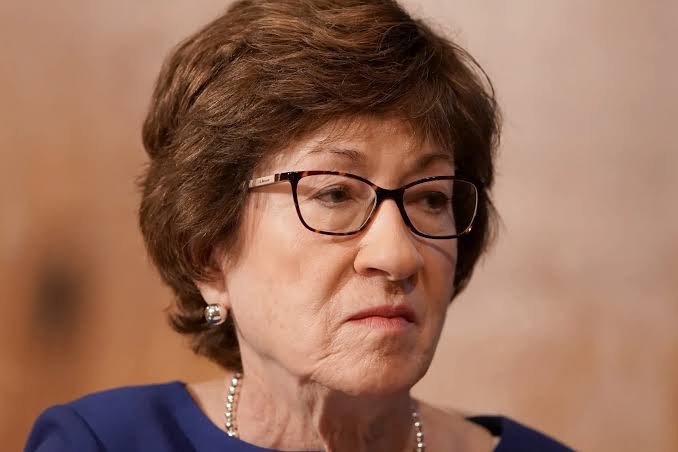
    I have always been interested in theater, but there are not many people who could describe Senator Susan Collins’s art as political theater so convincingly. Her most recent performance regarding the confirmation hearings of Todd Blanche, Trump’s former attorney, perfectly illustrates the art of rebellion.

    When Senator Lisa Murkowski announced her opposition to the confirmation in the Senate, I felt delighted, believing that a real GOP rebellion had occurred. Soon after her announcement, Senator Collins followed suit, adding fuel to the idea that GOP senators had staged a magnificent show of disapproval against Trump’s choice for the position. However, my political nose began to itch as the next statements began pouring in. After all, it was none other than Senator Bill Cassidy who revealed his support for Blanche’s confirmation. The curtain quickly dropped, exposing the lack of real GOP opposition to Trump’s nomination.

    To my surprise, Cassidy defended Blanche’s confirmation with nothing more than a good enough excuse for his “no” vote. After all, who has not criticized Blanche’s record before? At a time when the majority of Senate Republicans have voiced concerns about Todd Blanche’s confirmation, his “not perfect,” yet ultimately tolerable voting record, is a good enough excuse for a limited “rebellion” against Trump’s nominee.

    I believe that the most crucial detail regarding Collins’s performance involves the “rebellion.” In this respect, I can understand Chris Hayes’s unease when Collins announced her “no” vote on Blanche’s confirmation because, shortly thereafter, he realized that the required votes for passage had already been secured. In fact, according to Susan Collins Watch, a website monitoring Collins’s voting record, her “no” vote has failed to stop a single nominee in her 29-year Senate career. To me, it seemed that Collins’s “rebellion” against Trump’s choice was yet another well-orchestrated play designed to mislead Collins’s constituents.

    Moreover, I was quick to recall the events of 2018 involving Collins’s confirmation of Brett Kavanaugh. She was confident in stating that her vote for Kavanaugh’s confirmation did not undermine abortion rights or Roe v. Wade, yet her promise rang hollow four years later when her “yes” vote secured Kavanaugh’s confirmation. As such, I do believe that Collins has demonstrated a pattern of behavior suggesting that she rarely votes “no” when her “no” vote cannot change anything.

    Collins’s “carefully crafted image as a bipartisan gatekeeper” begins to fade, her constituents must ask themselves what really matters when casting a “no” vote against a presidential nominee for the Supreme Court. Collins’s performance in voting for Kavanaugh’s nomination and subsequently defending her decision as one of “reasoned pragmatism” appears to suggest that “no” votes do not come easy for Collins. In fact, for Collins, it seems that they only occur when they fail to accomplish anything.

    Fediverse Reactions
  • Federal Appeals Court Halted Construction on Trump’s Ballroom Project

    Blue Press Journal

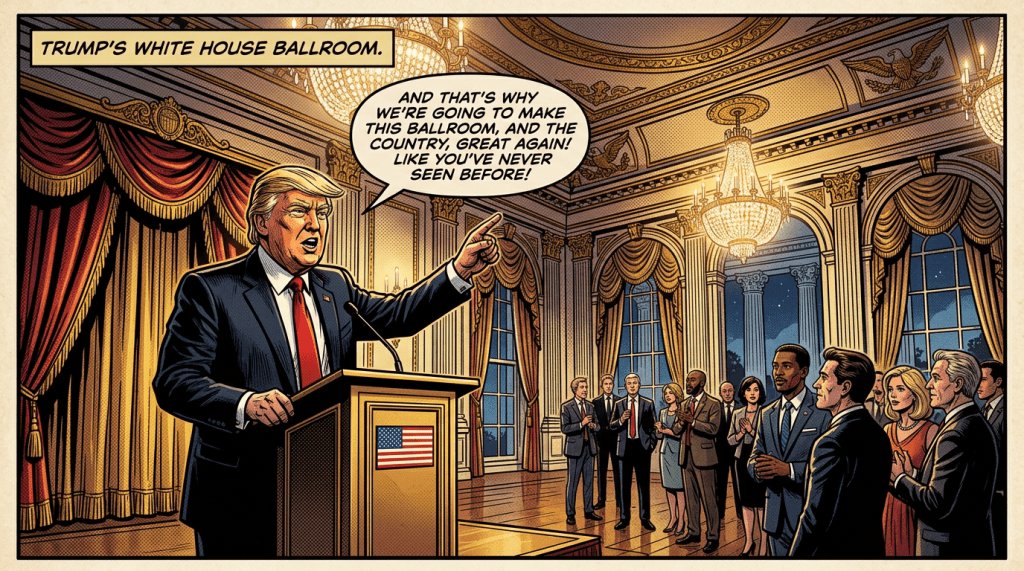
    WASHINGTON – A federal appeals court has paused construction on President Donald Trump’s budgeted 400 million-dollar project of the White House ballroom. The court ruled that building the ballroom should be immediately stopped from proceeding with any jobs “above ground”, including features the government claims are necessary security measures.

    Donald Trump speaking at a podium in the White House ballroom with an audience listening
    .

    On Friday, a 2-1 panel of the D.C. Circuit Court of Appeals ruled to uphold a preliminary injunction against the President. The National Trust for Historic Preservation, an organization that protects buildings, filed the injunction in December 2025 after the administration began demolition of the East Wing to make way for a 90,000 square foot subterranean ballroom not approved by Congress.

    Patricia Millett’s and Bradley Garcia’s opinions, in which they ruled in favor of preservation, were joined by judges who were appointed by President Barack Obama and Joe Biden. They stated that the Constitution does not permit presidential edicts to dictate the use of federal resources.

    They continued, “whether a large ballroom should be built…is a decision for Congress, not the President” due to the fact that the Constitution grants spending authority over the federal assets to lawmakers, not the executive branch, despite the security reasons cited by the administration.

    However, the decision to halt the work was only made official for two weeks in order to allow the Trump administration to appeal to the U.S. Supreme Court.

    Neomi Rao, who was nominated by President Trump, filed a dissenting opinion in response to the majority’s ruling. She stated that the injunction which stopped the work was an act of judicial activism.

    “By stepping in and taking control over something as monumental as the White House, the district court engaged in judicial activism,” she wrote. “Courts shouldn’t be running building projects”

    The administration’s original plan was to decommission the East Wing while keeping the West Wing as a separate unit. However, the White House Complex’s budget requires funding beyond the president’s official salary so the administration argued that the entire wing be demolished to make way for the expansion of the subterranean chamber.

    Furthermore, the administration claims that the ballroom project is part of larger security upgrades to the complex.

    President Trump expressed dissatisfaction with the decision in his Truth Social page. He stated that the ruling was “politically motivated and completely illegal.” He argued that not completing the ballroom project endangered future presidents, staff, diplomats, and the general public.

    The two-week pause in the construction of the ballroom project means that the future of the project depends on whether or not Trump’s emergency appeal to the Supreme Court is granted.

    Fediverse Reactions