Category: Posts

  • Ty Cobb warns Trump’s obsessive Truth Social rants signal cognitive collapse, demands 25th Amendment Activation

    Donald Trump using a smartphone at a desk in the Oval Office late at night.

    Blue Press Journal

    Former White House attorney Ty Cobb has issued a stark assessment of President Donald Trump’s mental fitness, declaring the Commander-in-Chief “gone” during a bombshell interview with journalist Jim Acosta. Cobb identified Trump’s obsessive late-night Truth Social activity—sometimes hundreds of posts within hours—as symptomatic of cognitive decline requiring immediate constitutional intervention.

    The former White House lawyer excoriated the Cabinet for refusing to invoke the 25th Amendment while criticizing the Department of Justice for failing to investigate mounting evidence of presidential unfitness. “It’s not a surprise that we’re in this much trouble,” Cobb stated, blaming institutional cowardice for the current crisis.

    Research from Business Insider documents Trump’s history of erratic social media behavior, including 200-tweet sprees during 2020 protests. Meanwhile, a Reuters/Ipsos poll confirms 60% of Americans view Trump as increasingly unstable as he approaches his 80th birthday, contradicting the President’s claims that closed eyes during meetings merely indicate “boring” Cabinet sessions.

  • Trump’s Rambling Iran Address Offers No Timeline While Sparking Constitutional Crisis and NATO Withdrawal Threats

    Donald Trump speaking at a podium with the Seal of the President of the United States.

    Blue Press Journal (DC) – President Donald Trump’s recent prime-time address regarding the ongoing military conflict with Iran delivered neither a strategic roadmap nor a withdrawal timeline, instead raising serious constitutional questions about unauthorized military action and threats against NATO allies that legal scholars say lack legal merit.

    Speaking for a mere 18 minutes, the President failed to outline how tens of thousands of deployed personnel would return home or how the United States would secure the Strait of Hormuz, through which one-fifth of global petroleum flows. According to constitutional experts cited by The Washington Post, the President’s unilateral initiation of hostilities without congressional authorization as required under Article I, Section 8 of the Constitution represents a significant overreach of executive power, violating the War Powers Resolution that mandates legislative approval for sustained military engagements.

    The address also featured renewed attacks on NATO, despite the alliance’s defensive nature under Article 5 of the Washington Treaty. As Foreign Policy analysts note, NATO membership involves Senate-ratified treaty obligations that a president cannot simply terminate without legislative consent—a constitutional reality Trump’s rhetoric appears to ignore. The alliance, designed for collective defense rather than offensive wars of choice, holds no obligation to join member-initiated conflicts of aggression.

    Trump’s threats to destroy Iran’s electrical generation facilities—civilian infrastructure protected under international humanitarian law—have drawn condemnation from human rights monitors and Human Rights Watch, which classify such actions as potential war crimes. These warnings accompany reports of approximately 1,500 civilian casualties, including 175 children killed in a February 28 strike on a school.

    The President’s historical comparisons—equating one month of conflict to World War I, Vietnam, and Iraq—offered little comfort to families of 13 fallen service members or hundreds wounded. His contradictory statements regarding Iran’s nuclear program, simultaneously claiming the material is inaccessible yet monitored by satellite, suggest strategic incoherence rather than diplomacy.

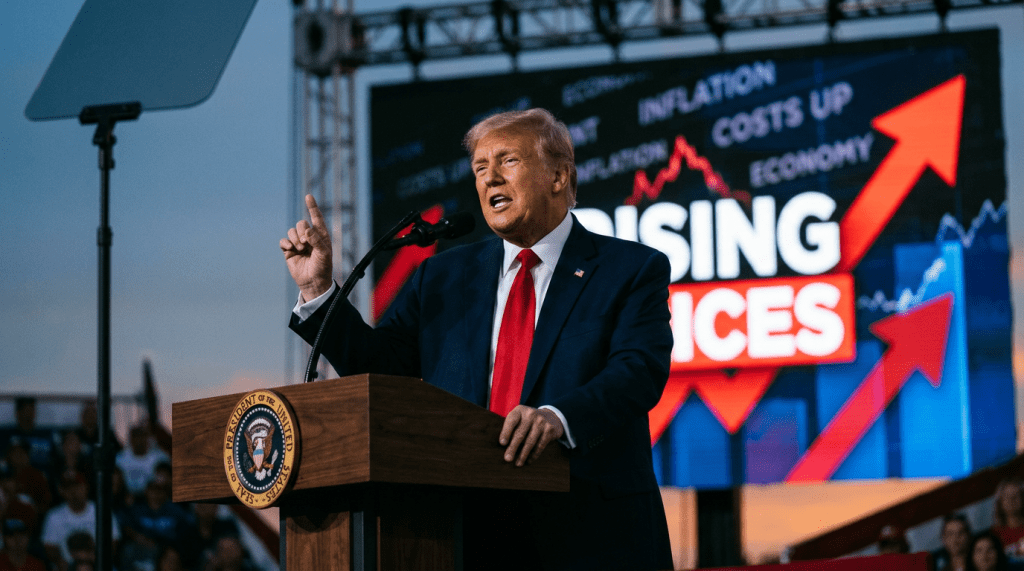
    Meanwhile, Trump attributed rising domestic fuel costs to Iranian “terror attacks” rather than wartime market volatility, a deflection that Reuters economic analysts dispute given the conflict’s disruption of regional oil flows.

    As constitutional scholars underscore, the commitment to perpetual conflict demands the explicit consent of the democratic populace rather than unilateral decisions by the executive branch.

    WATCH: The White House took down this video, but we still have it. Trump: We can't take care of daycare. We're a big country. We're fighting wars. It's not possible for us to take care of daycare, Medicaid, Medicare, all these things.

    The Lincoln Project (@lincolnproject.us) 2026-04-02T15:45:28.821986468Z
  • Executive Overreach: Trump’s Unconstitutional Assault on Voter Sovereignty

    Donald Trump tearing a document titled "UNITED STATES CONSTITUTION" in half in front of American flags.

    Blue Press Journal – Donald Trump’s recent executive order mandating a federalized voter database and restricting mail-in balloting represents a radical departure from American constitutional norms. By attempting to seize control over electoral administration, Trump is engaging in blatant federal overreach that threatens the foundational principles of states’ rights and democratic integrity.

    Under the U.S. Constitution, specifically Article I, Section 4, the authority to regulate the “Times, Places and Manner” of elections resides primarily with the states. Trump’s attempt to centralize this power through an executive mandate is not only legally dubious but fundamentally anti-American. As noted by legal experts cited in The New York Times, the administration lacks the statutory authority to dictate state-level voter registration requirements or supervise the U.S. Postal Service’s internal distribution protocols to serve a partisan agenda.

    Furthermore, his directive to the U.S. Postal Service is demonstrably illegal. The Postal Service operates as an independent agency under the Postal Reorganization Act of 1970; it is not a tool for the executive branch to suppress voter access. Ordering the USPS to withhold ballots based on an unauthorized federal list constitutes a severe violation of the agency’s mandate to facilitate national correspondence. 

    This move is a transparent attempt to disenfranchise voters under the guise of “election security,” a claim debunked by the Brennan Center for Justice. By ignoring congressional oversight and the rights of states, the Trump administration is eroding the checks and balances that define our republic. This power grab is not about election integrity; it centralizes control over the democratic process. True American patriots must reject this subversion of the Constitution and defend the autonomy of our state-run elections against this unprecedented interference.

  • Trump’s $200 Billion Iran Conflict: Funding Forever Wars by Slashing American Healthcare

    Cartoon THE BIG SNIP: GOP elephant cuts HEALTHCARE FUNDING ribbon; signs read SAVE OUR CARE and PEOPLE OVER PROFITS.

    Blue Press Journal – The escalating prospect of a $200 billion conflict with Iran under Donald Trump’s “America First” banner is exposing a deep hypocrisy in current Republican fiscal policy. National leadership is now eyeing drastic cuts to Medicaid and essential nutrition programs to bankroll foreign military intervention—a move that prioritizes global volatility over domestic survival.

    As reported by The Hill, House Budget Committee Chair Jodey Arrington is championing this pivot, framing a “war on fraud” as a convenient mask for gutting social safety nets. However, this strategy is meeting fierce resistance from those who see it as a betrayal of the working class. HuffPost notes that millions of Americans have already lost insurance coverage due to previous GOP maneuvers, yet Trump’s allies seem intent on further dismantling healthcare to finance a reckless Middle East strategy.

    Critics argue this policy shift is not only economically dangerous but morally bankrupt. According to The New York Times, the reliance on “reconciliation” to bypass legislative debate shows a willingness to sacrifice the health of the American public for unilateral executive aggression. Rather than focusing on the surging cost of living, which Reuters reports remains a primary concern for the electorate, this administration’s trajectory trades the well-being of families for the catastrophic costs of an avoidable war.

  • Trump’s Reckless Rhetoric: Provoking War Crimes in Iran?

    Blue Press Journal – Donald Trump’s recent threats to obliterate Iran’s energy infrastructure and desalination plants have ignited a firestorm of criticism, drawing widespread condemnation from international legal experts and human rights organizations. Such declarations, made on his Truth Social platform, are not merely bombastic; they represent a dangerous escalation that eminent figures warn could constitute war crimes under international law.

    Trump’s explicit warning of striking “all of their Electric Generating Plants, Oil Wells, and Kharg Island (and possibly all desalinization plants!)” has been met with urgent concern. Former Swedish Prime Minister Carl Bildt unequivocally stated that “attacking civilian infrastructure, and acutely desalination plants, is a war crime.” Brian Finucane, a senior adviser at the International Crisis Group, echoed this sentiment, calling the categorical framing of these threats a clear indication of a “threat to commit war crimes.”

    The humanitarian implications are catastrophic. Erika Guevara-Rosas of Amnesty International highlighted that such actions would “plunge an entire country into darkness,” potentially depriving millions of their fundamental human rights to water, food, healthcare, and an adequate standard of living. As Kenneth Roth, former executive director of Human Rights Watch, told The New York Times, there’s “no difference between what Trump is threatening to do in Iran and what the International Criminal Court charged four Russian commanders for doing in Ukraine,” referencing recent ICC arrest warrants for targeting civilian objects.

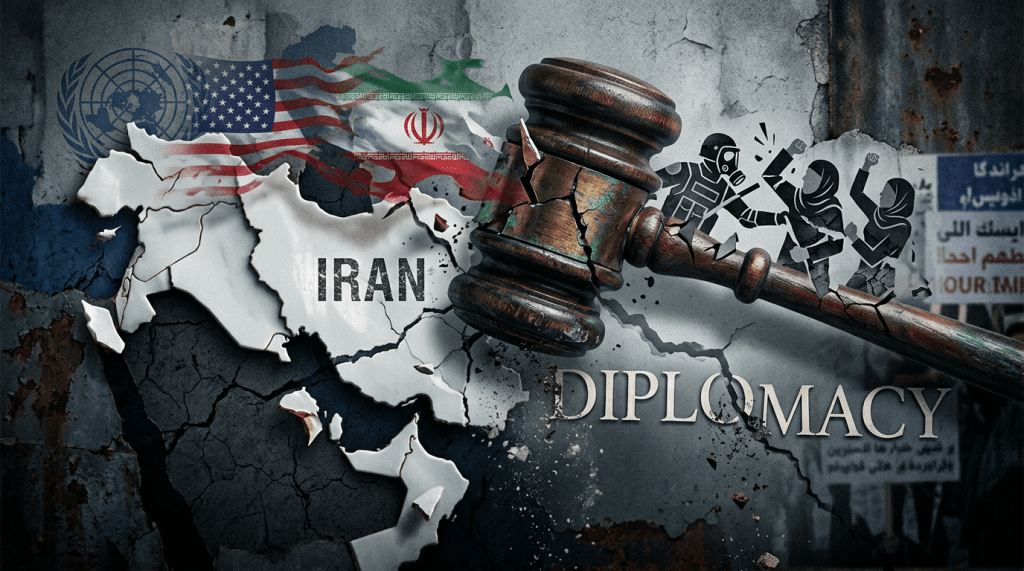
    Iran, a water-stressed nation, faces suffering despite the aid of desalination plants. Grist’s Frida Garza noted that attacks on power plants could cripple water treatment, causing scarcity and disease. Iran’s refusal for direct diplomatic talks threatens Middle East stability and adherence to international law. Trump’s reckless policies invite further instability and humanitarian disaster.

  • Trump’s Approval Rating Collapses to Record Low as Iran War Plans Face Resounding Rejection

    Blue Press Journal – President Donald Trump has hit the lowest approval mark of his political tenure, with a national survey conducted by the University of Massachusetts Amherst showing only 33% of Americans support his leadership while 62% disapprove. According to Zeteo, this collapse comes days after the president floated an unconstitutional third term—timing that highlights increasing concerns about his grasp on political reality.

    The UMass data reveals stark opposition to military adventurism. While the administration considers authorizing a ground invasion of Iran, the poll indicates just 8% of citizens support deploying troops, with 67% opposing the measure. Even among Trump’s MAGA loyalists, enthusiasm crumbles: Zeteo reports that among strong supporters, only 30% back boots on the ground while 36% reject intervention.

    As Reuters boldly highlights, Iranian officials have debunked Trump’s hollow peace talk claims, reminding everyone of the U.S. strikes that marred negotiations in the past. With oil prices skyrocketing as a direct result of the chaos Trump unleashed last month, his administration is now facing a devastating isolation, alienating not just international allies but also its own domestic supporters.


  • Nationwide May 1 Strike Targets Trump’s Authoritarian Agenda

    Protesters holding "NO KINGS" and "ABOLISH THE MONARCHY" signs in front of a cathedral.

    Blue Press Journal – Indivisible co‑founder Ezra Levin announced a coordinated “May Day” general strike slated for May 1, aiming to turn a day of economic resistance into a national statement against President Donald Trump’s increasingly authoritarian policies. Levin, speaking at the flagship No Kings rally in Minneapolis, praised the bold stand taken by Minnesotans earlier this year when they challenged an ICE sweep of their city. He said the upcoming strike will be “more than a protest”—it will be an economic show of force that puts workers ahead of corporate elites and “kings” in Washington (the New York Times).

    Levin outlined the plan: no work, no school, no shopping, a unified pause that demonstrates ordinary Americans as the biggest obstacle to fascism. Indivisible’s Leah Greenberg echoed this, insisting the strike sends a clear demand for a government that invests in communities rather than enriching billionaires or fueling endless wars (reported by Reuters).  With the March “No Kings” rally estimated to have drawn over five million participants—potentially the largest single‑day protest in U.S. history (CNN)—the May  1 action could further cripple Trump’s agenda and force a reckoning on his immigration, tax and foreign‑policy strategies.

  • Rubio Clashes with EU’s Kallas at G7 as Trump Foreign Policy Alienates Allies and Shifts to Iran

    Marco Rubio and Kaja Kallas confer behind swapped ESTONIA and USA nameplates.

    Trump’s administration refusal not keep word to escalate sanctions on Russia creates flash point at meeting

    Blue Press Journal – At a recent G7 foreign ministers meeting in Canada, a heated exchange between U.S. Secretary of State Marco Rubio and EU foreign policy chief Kaja Kallas laid bare the growing transatlantic fracture over the Trump administration’s contradictory approach to global security, according to Axios.

    The confrontation erupted when Kallas, a vocal Kremlin critic and former Estonian prime minister, challenged Rubio’s wavering commitment to pressuring Moscow. Citing Rubio’s own pledge from the previous year that Washington would escalate sanctions if Russia obstructed peace efforts, Kallas pointedly asked, “When is your patience going to run out?” Sources present told Reuters that Rubio visibly bristled at the interrogation, snapping back that if European powers believed they could negotiate a better settlement, America would simply “step aside.”

    The remark, witnessed by stunned allied ministers, reflects mounting desperation within Donald Trump’s foreign policy team as they face scrutiny over shifting strategic priorities. Critics argue the administration’s escalating focus on Middle East conflicts—particularly the expanding Iran War—has come at the direct expense of coherent Russia policy.

    According to The Guardian, Ukrainian officials recently departed Miami talks with Trump envoys Jared Kushner and Steve Witkoff without concessions, confirming that Washington’s diplomatic energy has pivoted entirely toward Tehran. Concurrently, Bloomberg reported that the administration has quietly permitted Russian oil sales to continue, effectively undermining the economic isolation previously promised to Kyiv.

    Trump’s reckless bifurcated strategy—coddling the Kremlin while posturing aggressively in Tehran—doesn’t just jeopardize global stability; it outright fuels authoritarian regimes and throws our democratic allies under the bus exactly when we need strong American leadership the most.

  • Trump’s Iran War Faces Diplomatic Revolt as Allies Declare ‘Not Our Conflict’

    Blue Press Journal – As the Trump administration escalates military operations in Iran, Washington confronts mounting isolation from its closest Western partners. During a tense G7 foreign ministers’ summit at Vaux-de-Cernay Abbey outside Paris, major NATO allies made clear they want no part in offensive operations against Tehran, according to coverage from Reuters and the Associated Press.

    French Defense Minister Catherine Vautrin explicitly distanced Paris from the conflict, declaring the war “is not ours” while emphasizing strictly defensive positioning. The remarks, reported by France 24 and European outlets, underscore deepening transatlantic fractures four weeks into the American and Israeli military campaign that has roiled global oil markets and threatened regional stability.

    Multiple EU governments revealed they received no prior consultation before Washington launched strikes, despite facing severe economic consequences from the resulting instability. British Foreign Secretary Yvette Cooper acknowledged London’s divergence from U.S. strategy, favoring diplomatic channels over offensive military action, while German Foreign Minister Johann Wadephul emphasized post-conflict planning for Strait of Hormuz security rather than active combat participation, according to BBC and Guardian reports.

    The diplomatic rupture widened when Trump publicly berated NATO allies during a Thursday Cabinet meeting, falsely claiming the alliance had done “absolutely nothing” regarding Iran. This criticism ignores that Canada, France, Germany, Italy and Britain—all G7 members—belong to NATO while maintaining sovereign foreign policies independent of Washington’s unilateral decisions.

    Compounding anxieties, Secretary of State Marco Rubio suggested Ukraine might face diverted weapon shipments for Middle East demands, prompting urgent German warnings against compromising Kyiv’s defense. French Foreign Minister Jean-Noël Barrot secured G7 consensus on immediate civilian protection and freedom of navigation in Hormuz, sidelining the administration’s go-it-alone approach as Trump complains about insufficient support for his widening war.

  • The Big Beautiful Bill Tax Giveaway: How Billionaires Pay Lower Rates Than Workers While Social Security Faces Insolvency

    Giant 'ONE BIG BEAUTIFUL BILL ACT' scroll rolls toward a man holding 'WHAT ABOUT US?' sign.

    Blue Press Journal – The Republican-passed One Big Beautiful Bill Act—championed by Donald Trump and GOP leadership—represents one of the largest tax giveaways to the ultra-wealthy in modern American history. While working families face stagnant wages and rising costs, multiple independent analyses using IRS data confirm a stark reality: America’s billionaires and richest households often pay lower effective tax rates than the average teacher, nurse, or construction worker.

    The discrepancy stems from systemic favoritism toward wealth over work. Because much of billionaire income derives from unrealized capital gains rather than taxable wages, the ultra-rich exploit structural loopholes that the Big Beautiful Bill expands rather than closes. Independent economic analyses suggest that equalizing effective tax rates—ensuring billionaires pay roughly what middle-class workers contribute—could generate between $500 billion and $1 trillion annually in new revenue.

    Instead, current trajectory is fiscally catastrophic. As of late 2025, U.S. national debt exceeds $38 trillion, driven significantly by Trump-era and GOP tax cuts favoring millionaires and billionaires. The debt grows by over $2 trillion per year, with nearly $1 trillion consumed annually by interest payments alone—crowding out investments in infrastructure, healthcare, and elder security.

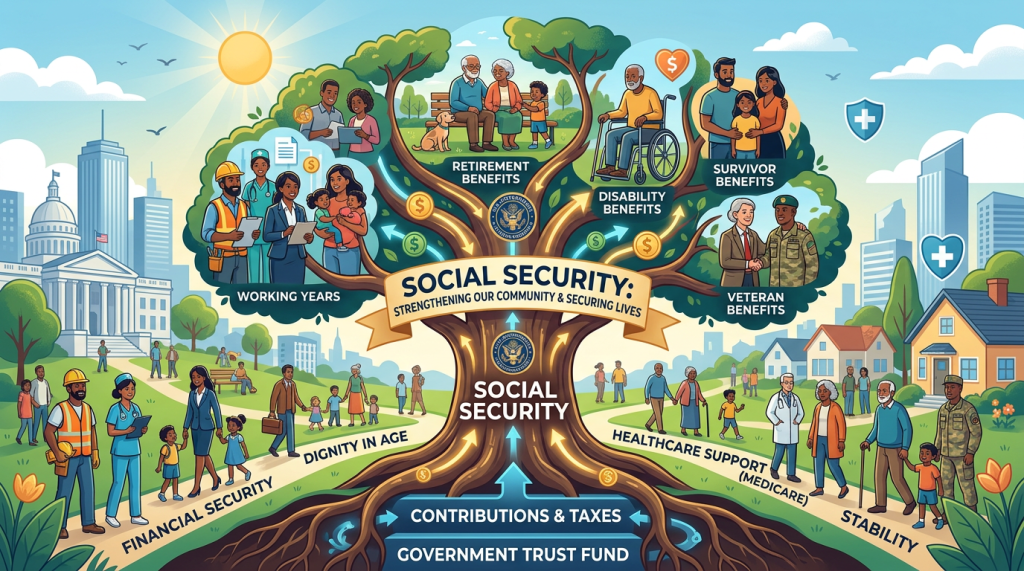
    Simultaneously, Social Security faces an imminent solvency crisis. According to the Social Security Administration (ssa.gov), the trust fund faces depletion between 2032–2034, triggering automatic benefit cuts of 20–28% unless Congress intervenes [^1^][^2^]. While Social Security’s 75-year funding gap remains smaller than the national debt, relatively modest revenue increases—derived from billionaire wealth taxes—could delay or prevent these devastating cuts.

    However, current law limits Social Security financing to payroll taxes. Redirecting wealth-based taxes to the trust fund would need congressional action for modification—a feasible yet politically blocked solution by lawmakers who approved the Big Beautiful Bill giveaways.

    Sources: [^1^]: Social Security Administration. “Status of the Social Security and Medicare Programs.” ssa.gov. [^2^]: Newsweek. “Social Security Benefit Cuts Projected Timeline.” newsweek.com. [^3^]: WGME. “Social Security Trust Fund Shortfall Analysis.” wgme.com.