Category: Posts

  • Elise Stefanik’s Defense of Trump’s Iran Genocide Threat Exposes Political Hypocrisy and Religious Contradiction

    CNN’s Jake Tapper confronted the GOP Representative over her double standards on inflammatory rhetoric, her justification for “civilizational obliteration” revealed dangerous inconsistencies in MAGA’s moral calculus. By Windsor Wendell – Blue Press Journal

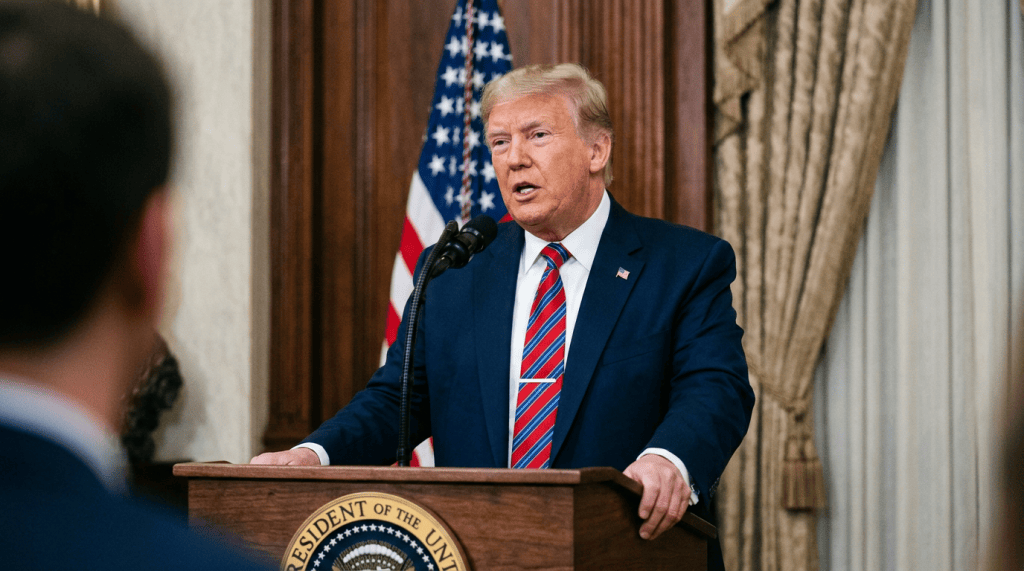
    On the latest episode of CNN’s State of the Union, Jake Tapper pressed Representative Elise Stefanik about Donald Trump’s comments on Iran. But it wasn’t just routine political back-and-forth—you could actually see the strain of trying to defend her party over what was said. The whole thing was sparked by Trump’s latest social media post, where he basically threatened to wipe out Iran’s entire civilization.

    I watched Stefanik twist herself up, scrambling to make Trump’s words sound harmless. Tapper called out Trump’s post as, essentially, a “call for genocide,” even quoting the “your whole civilization will die tonight” line almost directly. Stefanik immediately jumped in, insisting Tapper was just misrepresenting what Trump meant, brushing off the threat against eighty million people as no more than “diplomatic back-and-forth.” But Tapper wasn’t stretching the truth—he was quoting Trump almost word-for-word. This was way more than a warning to the Iranian regime. It was aimed right at a whole culture, one with a long, rich history. That distinction matters, especially when you think of international law and the rules we have in place to stop genocide.

    It’s tough to ignore the double standard here, remembering how fiercely Stefanik grilled college presidents in 2023. The Guardian covered the way she went after them, claiming students who chanted “from the river to the sea” were making genocidal threats, demanding the schools condemn those protests immediately. But now, when the President uses even stronger language about annihilating Iranians, Stefanik suddenly gets cagey, refusing to call it out—and always finding a way to protect Trump. The hypocrisy is hard to watch.

    The part that really gets to me is how easily religious values get sidelined for politics. Both the Pew Research Center and the National Catholic Register say Stefanik’s a Roman Catholic. That faith puts God and the Pope above any politician. Scripture lays it out plainly—faith comes first, not political leaders. Yet here she is, making excuses for threats against civilians, showing more loyalty to a political figure than to the principles her faith is supposed to stand for. This is all happening as tensions with Tehran ratchet up even further, all thanks to President Trump pulling the U.S. out of the JCPOA and pushing his “maximum pressure” approach. The Iran nuclear deal—the JCPOA—was a 2015 agreement between Iran and the P5+1 to roll back Iran’s nuclear program as sanctions were lifted. And honestly, it was working.

    Now, with war looming, Stefanik’s shifting logic feels like a betrayal—of both her oath to the Constitution and the heart of her religious beliefs. Her district up in Northern New York deserves real answers, not dodges and blind loyalty. The bigger question is, will voters call her out and finally demand she put basic decency over political showmanship?

  • Supreme Court Faces Unprecedented Internal Turmoil as Justices Air Public Disputes

    Front facade of the U.S. Supreme Court with visitors on its steps and flags flying

    Blue Press Journal – The United States Supreme Court is experiencing a rare public breakdown of institutional decorum as ideological tensions between justices spill into open view. According to the Wall Street Journal, the traditionally cloistered bench is witnessing uncharacteristic friction between liberal and conservative members, signaling what analyst James Romoser describes as a highly unusual departure from the Court’s characteristic restraint.

    The discord reached a notable peak when Justice Sonia Sotomayor publicly challenged Justice Brett Kavanaugh’s judicial reasoning regarding ethnicity-based immigration stops, later issuing an apology that underscored the chamber’s increasingly volatile atmosphere. As reported by legal observers, these internal fractures coincide with sustained external pressure from President Donald Trump, who has frequently disparaged the judiciary amid contested rulings on birthright citizenship and trade tariffs.

    Despite the public friction, the Court maintains its constitutional role as a check on executive authority. New York Times columnist Ross Douthat notes that despite the administration’s efforts to advance its agenda, the judiciary continues to deliver significant legal setbacks to presidential policies. As justices navigate both interpersonal conflicts and politically explosive cases, the institution faces a precarious moment of transparency that risks permanently altering its traditional deliberative culture.

  • Blurred Lines: Trump’s AI Imagery and the Evangelical Crisis of Identity – Franklin Graham

    by Winston Wendell

    A Cultural Commentary – April 16, 2026

    The recent controversy surrounding Donald Trump’s AI-generated social media posts—depicting him in messianic imagery—has unveiled a disturbing reality within the American evangelical movement. When Trump shared an image suggestive of Christ, he wasn’t just committing a lapse in judgment; he was engaging in a form of narcissism that borders on blasphemy. However, more alarming than the post itself is the blatant toadyism displayed by Franklin Graham.

    In a display of political opportunism disguised as piety, Graham rushed to defend the president, dismissing the offense as harmless. By claiming Trump’s image was “no big deal” and asserting that Trump simply needs to “listen to Jesus,” Graham has abandoned his duty as a spiritual leader to play the role of political operative. When a preacher consistently prioritizes the ego of a secular leader over the sanctity of his own faith, one must question whether he is serving God or the GOP.

    Even Marjorie Taylor Greene, an unlikely critic, hit the nail on the head: Graham should be guiding Trump toward humility, not running interference for his manipulations. Instead, Graham continues to offer Trump moral absolution for secular sins in exchange for political proximity. This transactional relationship betrays the true essence of Christianity, which demands repentance and humility—two virtues consistently absent in Trump’s public life. When faith is used to shield a politician from accountability, it ceases to be a religion and becomes a cult of personality.

  • Trump’s Attack on Pope Leo XIV Is a Test of Faith for Catholic Conservatives

    Historic stone church with tall steeple, stained glass, and wooden doors

    I never thought I’d see an American president openly attack the Vicar of Christ. Yet that’s where we are—President Donald Trump, after promising to protect the dignity of every person, is launching unprecedented attacks against Pope Leo XIV. Meanwhile, Vice President J.D. Vance, a new Catholic, jumps in with theological arguments that sound more invented than inherited.

    Calling this just “non-presidential” doesn’t begin to cover it. It’s a basic misunderstanding of what American leadership and Catholic teaching really are. When Trump and Vance tell the Pope to stay out of discussions on war, they show they’ve missed the point entirely. They treat the Successor of Peter as just another pundit, not the guardian of a moral tradition that stretches back millennia.

    Vance, especially as someone who just joined the Church, should understand this. Catholic faith isn’t a buffet—you’re not supposed to pick and choose the teachings that suit your political goals. The doctrine of just war theory, shaped and refined from Augustine to Aquinas for over a thousand years, doesn’t bend for convenient military actions. The Catechism lays it out: “the use of arms must not produce evils and disorders graver than the evil to be eliminated.”

    That gets us to the root issue: the President’s apparent conflict with Iran. The administration claims the Pope has gone too far by commenting on “politics.” But the Pope isn’t speaking as a politician—he’s speaking as Christ’s representative, reminding us, “just wars are defense and after no other road is possible.” Wars aren’t something you choose if there’s still a chance for negotiation.

    Several diplomatic sources confirm that talks with Iran weren’t just possible—they were close to working out. Choosing violence while peace is still possible isn’t self-defense. It’s aggression dressed up as strength. The Pope, whose duty is to defend human life, can’t stay silent while thousands are put at risk because of one man’s pride.

    “The Church is based on morality, peace, and how we treat our fellow man.” That’s what I remind myself when I read the White House spin. This isn’t a partisan catchphrase—it’s what the Gospel actually says. When the Vicar of Christ speaks on war, he’s not acting like a pundit. He’s voicing two thousand years of Christian opposition to unjust violence.

    So, to Catholics still defending these attacks: look inward. Ask yourself if your political loyalty has overtaken your religious values. Be honest—would you defend this rhetoric if it targeted your own parish priest who was urging peace? The faith Vance embraced demands more than showing up on Sundays. It calls for real courage—standing up to power when it tramples on human dignity.

    The Church has survived rulers who thought they stood above moral law. It will survive this president, too. The real question is whether American Catholics will come through this with their consciences intact. We can’t serve two masters. When Trump’s administration demands silence from the Pope on war and peace, they’re asking us to ignore Christ’s teachings.

    I stand with the Pope. I choose tradition. I choose innocent lives over the bruised ego of a president who confuses restraint with weakness. The faith makes it clear: war must always be the last resort—not the first option. Any Catholic who takes their faith seriously needs to recognize that truth, even if it means sacrificing political convenience.

  • White House’s Shift to New Media: Posobiec’s Controversial Role

    Woman opening door marked 'Press Briefing Room' at the White House with briefing podium visible inside

    Blue Press Journal – The second Trump administration is making it clear they want to shake up how executive communication works, ditching the usual journalistic filters for a hand-picked “new media” crowd. You saw this in action at a recent press conference—Press Secretary Karoline Leavitt gave Jack Posobiec, a far-right YouTuber and activist known for pushing fringe theories, a front-row guest seat again.

    The administration is making a point of ignoring mainstream outlets. They set up a rotating seat for digital creators, and these guests get to ask the first question. But bringing in Posobiec has raised a lot of eyebrows. The Southern Poverty Law Center says Posobiec has a history of connections with white nationalist figures. He also played a leading role spreading the “Pizzagate” conspiracy—a wild theory claiming a child sex-trafficking ring ran out of a Washington D.C. restaurant. That conspiracy actually led to someone showing up at the restaurant with a gun in 2016.

    At the briefing, Leavitt called Posobiec someone from the independent media landscape. This wasn’t just a one-time thing. NBC News found that the administration has used Posobiec in this way at least three times to help kick off their new media strategy.

    Looking closely at how Posobiec interacted with Treasury Secretary Scott Bessent, you see the change: there’s less tough questioning and more reinforcing the administration’s narrative. Posobiec asked about what he called a “media narrative” that criticized the current tax season and said it was “too soft.” That pretty much gave Secretary Bessent a free shot to dismiss critics and celebrate the administration’s work, saying the season has been “incredible.”

    Critics say this strategy makes it hard to tell where official government info ends and partisan messaging begins. The New York Times reported that bringing in content creators known for right-wing misinformation can shield the administration from having to field tough questions, while making everything look open and transparent. Instead of experienced political reporters, digital influencers who line up with the White House’s views take over—basically creating a curated reality in the briefing room.

    The Trump administration claims this is about opening up the First Amendment and letting nontraditional voices have a say, but picking figures like Posobiec again and again shows they’re really building up alternative media narratives right at the top of government.

  • Trump’s Iran Conflict Fuels Highest Wholesale Inflation in Three Years

    Grocery store shelves showing price increases on milk, bread, eggs, and cereal

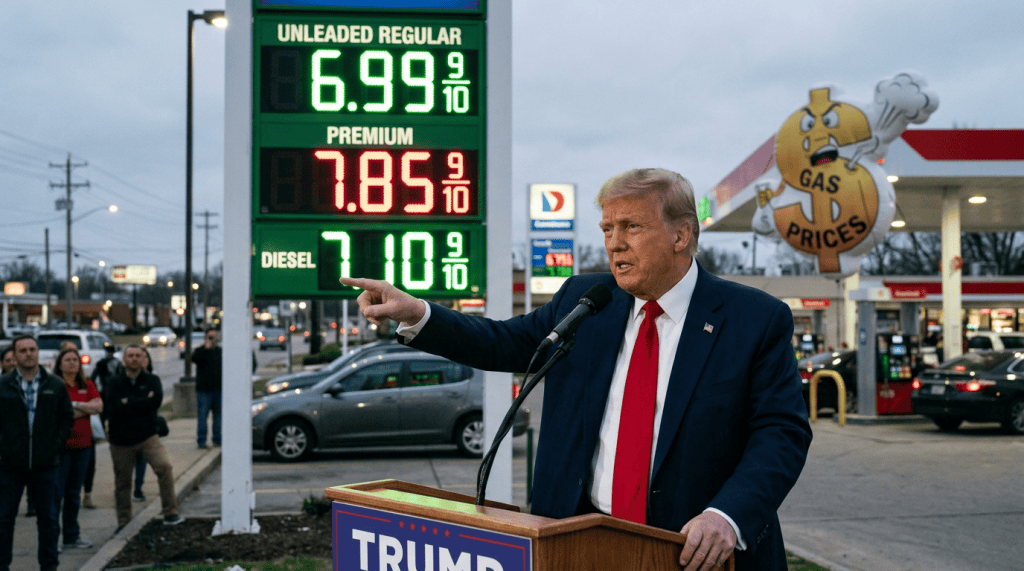
    Blue Press Journal (DC) – The escalating military engagement with Iran has propelled American producer inflation to its highest level in over three years, with the Labor Department confirming that the Producer Price Index surged 0.5% in March 2026 and climbed 4% annually. According to Bloomberg, the spike stems primarily from an 8.5% monthly explosion in energy costs as regional hostilities disrupt critical supply chains, while the Washington Post reports that retail gasoline prices have pushed consumer inflation to 3.3% over the past year.

    In spite of this growing pressure, President Trump continues to insist on reducing interest rates further, an action that the Financial Times observes runs counter to the emerging agreement between policymakers that there is a need to adopt stricter measures to avoid the economy from overheating. Even though inflation growth was only 0.1% when volatile industries were stripped off, Reuters points out that the International Energy Agency has recently made its first reduction of global oil demand forecasts since the COVID-19 period due to infrastructure sabotage and the closing of the Strait of Hormuz.

    Given that food costs offer little in terms of relief following the volatility seen in February, the potential disconnect between the government’s military and economic policies suggests that market uncertainty may persist even after the mid-term elections.

  • The Golden Idol vs. The Gospel: Why Trump’s Attack on the Pope Is a Moral Line Crossed

    Large golden statue of a man sitting on an ornate throne surrounded by people looking up

    Blue Press Journal – In the landscape of modern politics, Trump politics, we have become accustomed to the daily barrage of inflammatory rhetoric from Donald Trump. However, Sundays unhinged tirade against Pope Leo XIV—the first American-born pontiff—marks a chilling departure from political discourse and signals a complete detachment from reality. 

    When the president decided to attack the head of the planet’s biggest religious group, debate over decisions and policies fades away. Instead comes a breakdown in basic thinking. It is a fundamental collapse of cognitive reasoning and a direct affront to the core tenets of the Christian faith.

    The Tirade: A Distortion of Reality

    The attack, posted to Truth Social, was as erratic as it was vitriolic. Trump took issue with the Pope’s calls for global peace—calls that were not directed at any specific individual, but were instead a broader warning against the “delusion of omnipotence” that threatens international stability. 

    Instead of measured responses, Trump responded with sharp criticism, calling the Pope ineffective regarding crime and poorly suited for international affairs. Not stopping there, he suggested his own influence shaped events, insisting the cardinals chose the pontiff as a calculated effort against his administration.

    “I don’t want a Pope who criticizes the President of the United States because I’m doing exactly what I was elected, IN A LANDSLIDE, to do,” Trump griped.

    The Conflict: Omnipotence vs. Peace

    The Pope’s message was a clarion call for de-escalation, particularly regarding the growing tensions with Iran. Throughout history, the Papacy has stood as a bastion for peace, preaching the message of brotherly love and the sanctity of human life. 

    What stands out is how a plea for worldwide calm was taken as an offense to Donald Trump. Only a narcissist would view the Popes remarks as against himself.  Trump targeted the Catholic Church’s head over messages favoring peace, it went beyond criticism of an individual. Instead, it became defiance of principles rooted deeply in Christian doctrine.

    A Choice for Christians: The Mirror Test

    For millions of American Christians, this moment serves as an urgent, defining mirror test. We must ask ourselves: Has the political movement surrounding Donald Trump become a golden idol that demands the sacrifice of our spiritual integrity? 

    The Bible is clear. It calls for humility, mercy, and the pursuit of peace. It does not call for the idolization of political figures who view spiritual leaders as enemies simply because they speak truth to power. If we claim to follow the teachings of Christ, we cannot remain silent while those same teachings are mocked and maligned by a leader who values his own ego above the sanctity of the faith.

    Christians and Followers of Christ

    Donald Trump’s descent into attacking the Pope is more than just another news cycle; it is a warning. It reveals a worldview where there is no room for moral authority, no room for spiritual guidance, and no room for peace if it does not serve Donald Trump’s narrative. 

    Future directions require clarity on priorities. One path follows a leader whose authority rests on unquestioned devotion. In contrast, another reflects quiet principles long professed within spiritual tradition. These are not compatible routes. Commitment to one weakens alignment with the other. Choice becomes unavoidable when values diverge so fully. The time has come to choose.

  • The Hidden Tax: How Global Conflict is Quietly Draining Our Bank Accounts

    Editorial

    Man in denim jacket refueling black car with gas pump at gas station

    Blue Press Journal – I was standing at the pump this Sunday morning, watching the numbers tick upward on the digital display, and I couldn’t help but feel that familiar, sinking pit in my stomach. Like millions of Americans, I’m constantly balancing the household budget, but lately, that balance feels more like a tightrope walk. 

    With tensions escalating in the Middle East—specifically the war with Iran, which many experts claim was unnecessary, have caused the global oil markets to spike. When crude prices jump in response to the war in Iran, the ripple effect isn’t just felt at the pump; it’s felt at the grocery store, the pharmacy, and every single time we make a decision about our daily commute.

    The Immediate Pain at the Pump

    Energy markets are inherently reactive. According to the U.S. Energy Information Administration (EIA), even a minor disruption in supply chains or a mere risk will cause a push to national averages. When gas prices spike, they act as a “hidden tax” on every American worker.

    Mark Zandi, Chief Economist at Moody’s Analytics, and other economic analysts, have pointed to the regressive nature of high energy prices, noting that they act as a hidden tax that disproportionately impacts low- and middle-income households. When you spend a larger percentage of your income on fuel, you have significantly less discretionary capital left for housing, food, or savings.

    The “Follow-On” Cost: Our Grocery Bill

    What many of us don’t immediately account for is the logistical cost of getting goods to market. Almost everything we buy—from fresh produce in California to electronics in New York—traveled on a truck or train to get to our shelves. As diesel prices climb alongside gasoline, those transportation costs are passed directly to the consumer.

    Consider a hypothetical breakdown of how these costs impact our monthly spending:

    Expenditure CategoryEstimated Weekly Impact of High Gas Prices
    Commuting+$15 – $25 per week
    Grocery/Food Staples+$10 – $20 per week (transportation surcharges)
    Family Activities+$10 – $15 per week (sports/errands)
    Total Estimated Hit$35 – $60 per week

    Tough Choices for Our American Families

    For the average family, an extra $50 a week isn’t just “pocket change.” It’s the difference between a savings account contribution and a credit card balance. I’ve found myself cutting back on non-essential trips, consolidating errands to save on mileage, and—regrettably—choosing generic brands at the grocery store to offset the rising cost of “transported” goods.

    We are entering a season of adaptation. Americans are experts at tightening their belts, but it’s becoming increasingly difficult to find more “slack” in the rope under the Trump administration. We are choosing between the kid’s soccer tournament and an extra trip to the grocery store; we are opting for home-cooked meals over dining out; and we are delaying major purchases while we wait for the economic and political smoke to clear.

    Our Bottom Line

    As of today, analysts from sources like Bloomberg and The Wall Street Journal suggest that while the U.S. is more energy-independent than it was a decade ago, we are still beholden to the global price of oil. Until stability returns to the Middle East, volatility will remain the “new normal.”

    For those of us at the pump this weekend, my advice is simple: track your expenses, prioritize your essential travel, and keep a close watch on your budget. We may not be able to control the price of a barrel of oil or the war in Iran, but we can manage how we navigate the political choices at home. It’s clear the Trump administration has made bad choices so let’s not compound them with ours. The midterms should be where we make a clear choice for change.

  • The Shadow of the Past: Why Is Melania Trump Addressing the Epstein Connection Now?

    Blue Press Journal – In a move that has left many political observers searching for answers, First Lady Melania Trump issued a preemptive statement on Thursday, April 9, 2026, at the White House distancing herself from the late convicted sex offender Jeffrey Epstein. While no major mainstream media outlets had run a story on the topic, the timing suggests a defensive posture against a brewing digital storm.

    The catalyst appears to be a volatile social media campaign waged by Amanda Ungaro, a former model and the ex-partner of Paolo Zampolli—the well-connected businessman credited with introducing Melania to Donald Trump in September 1998 at the Kit Kat Club in Manhattan during Fashion Week.  

    The Ungaro Factor

    Why has the former First Lady focused so intensely on an individual like Ungaro who appears to taking to social media to be making accusations? The answer lies in the deeply personal X (formerly Twitter) and explosive accusations of the Trump inner circle by Ungaro. She was deported to Brazil following her arrest in Miami in June 2025. Ungaro (40) and her husband, Joao Batista Cunha De Araujo, were arrested by police on charges including unlicensed practice of medicine.

    Ungaro’s narrative is complex: she claims to have been a passenger on Jeffrey Epstein’s private aircraft during her teenage years, alleging she was funneled into his orbit via modeling industry scouts. This linked her own history to the Epstein scandal and claiming a two-decade-long knowledge of the Trumps’ social circles, Ungaro has positioned herself as a potential whistleblower. Many have questioned of the Trump-Epstein historical timeline, the public remains fascinated by the intersection of high-society modeling and Epstein’s network.

    A History of Entanglements

    To understand the conflict, one must look at the timeline. Melania Knauss met Donald Trump at a party in 1998, hosted by Zampolli at the Kit Kat Club. At the time of their introduction, Donald Trump was separated from his second wife, Marla Maples, but their divorce was not finalized until 1999. 

    The situation is further complicated by the federal government’s involvement in Ungaro’s life. According to reporting by The New York Times on the accusations of political favoritism by the White House. It is alleged that Zampolli leveraged his status as a diplomatic envoy to influence her deportation proceedings during a bitter custody battle. Zampolli has vehemently denied these claims, labeling them as “nonsense”. 

    Why the Preemptive Strike?

    The First Lady’s decision to air these concerns—despite the lack of a formal mainstream media probe—indicates a strategic choice to control the narrative before Ungaro’s online campaign gains further traction. By addressing the “Epstein connection” head-on, she is attempting to neutralize a figure who claims to possess insider knowledge of a “corrupt system.”

    Whether Ungaro can substantiate her claims or if this remains a case of digital theater, the story serves as a reminder that Donald Trump and the First Lady’s past social circles continue to pose a significant reputational challenge.

  • Economic Instability Deepens as March Inflation Surges Amid Geopolitical Uncertainty

    Tattered American flag over city skyline with stormy skies, tornado, and plunging red arrow in floodwaters

    Blue Press Journal – The United States faces mounting economic headwinds as March Consumer Price Index data reveals a troubling 0.9% monthly acceleration, pushing annual inflation to 3.3% and marking the most significant price surge in nearly twenty-four months. According to Bloomberg analysis, the primary catalyst stems from escalating militarization in the Middle East, where the Strait of Hormuz blockade has choked global energy supplies, driving gasoline costs up 21.2% and overall energy indices higher by 10.9%.

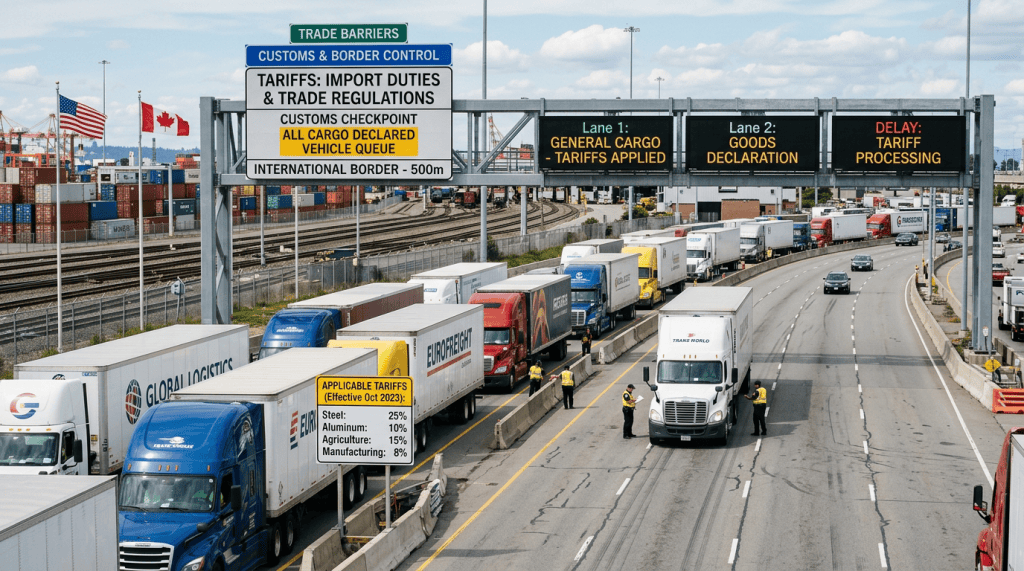
    These inflationary pressures have been intensified by the Trump administration’s erratic tariff implementations, which Reuters reports have destabilized manufacturing supply chains already strained by conflict. The Federal Reserve now confronts a policy quandary: with benchmark rates hovering between 3.5% and 3.75%, officials must weigh intervention against a fragile labor market, while the Wall Street Journal notes that producer input costs have registered their largest decade spike.

    Despite modest GDP growth revisions to 0.5%, University of Michigan survey data indicates consumer sentiment has cratered to unprecedented lows, directly linking economic contraction to geopolitical volatility. Business leaders warn that without sustainable diplomatic solutions and coherent trade strategies, April indicators promise continued fiscal turbulence.