Category: Posts

  • Rising Gas Prices: What It Means for Everyday Americans

    by Winston Wendell

    Every time I see the numbers ticking higher at my local gas station, I get the strangest sense of déjà vu. We’ve gone through these price spikes before, but this time it feels heavier somehow, almost suffocating. The rising military tension with Iran, which has taken center stage for the Trump administration, isn’t just a headline; it’s merging with everyday life, impacting budgets and cranking up stress for millions across the country.

    This isn’t just another blip, it’s a shift you can feel in the air. CNBC says economic anxiety hasn’t hit these heights since the inflation surge right after the pandemic in late 2023. People are tired, and honestly, the numbers just back up what everyone feels.

    The Grim Reality Behind the Figures

    The CNBC All-America Economic Survey doesn’t pull any punches. Sixty-one percent of people are now pretty pessimistic about the country’s financial future. Only around a quarter are still holding out hope.

    So, what’s really lighting this fire? It’s basic stuff. Anyone in line at the grocery store or waiting to fuel up will tell you, it’s all about the cost of just getting by. Food and gas aren’t minor expenses anymore, they’re completely reworking how people live.

    Sacrificing the Basics

    This squeeze is making people choose between necessities. The latest survey hits hard:

    Almost half of Americans (47%) are skimping on essentials, things like medical care, groceries, everyday basics, just to keep their heads above water.

    Two out of three have slashed anything extra. The empty restaurants and quiet movie theaters are proof enough that people are choosing survival over fun.

    Policy-Driven Discontent

    Frustration is clear, and it’s pointed straight at the White House. Right now, President Trump’s handling of the economy gets just 38% approval, with about 60% giving him a thumbs down.

    The administration’s approach to Iran is just as divisive. Only 35% of voters support the military moves, while 63% are against them. The link between decisions overseas and money woes at home is starting to look obvious to everyone.

    The “Trauma” of Persistent Inflation

    So why does the anxiety stick around, even when prices dip for a while? Democratic pollster Jay Campbell put it plainly to CNBC: that brief break in gas prices earlier this year didn’t fix the “financial trauma” everyday people feel.

    Even when prices drop, nobody forgets what it felt like when they were sky-high for two years. That memory sticks, so small changes just don’t erase the frustration.

    What the Pump Is Telling Us

    AAA backs this up with tough stats. Last Friday, the national average for a gallon of regular gas hit $3.98, a ten-cent jump in just a week. Diesel’s hitting even harder, climbing past $5 per gallon and putting more pressure on the folks who keep the trucks and supply chains running.

    Implications for Washington

    Even with all these grim numbers, the political fallout is, for now, kind of muted. Democrats still have a slight four-point edge for Congress, but Campbell warns there’s no massive political wave building, not yet.

    But things feel shaky. With the Iran conflict not cooling down and people’s savings evaporating, anxiety is running high. Folks across the country are just holding their breath, wondering if the costs of Trump’s foreign policy will end up outweighing the price of keeping things steady at home.
    Fediverse Reactions
  • An Analysis of Trump’s Address on the 2020 Election

    JUL 17, 2026

    by Winston Wendell

    Trump’s 2020 Election Address: A First‑Person Dissection of Foreign‑Interference Claims, the SAVE America Act, and the “Deep State” Narrative

    When I watched President Donald Trump’s thirty-minute televised address on the 2020 election, I immediately recognized the pattern: a mix of familiar grievances, framing the world in geopolitical terms, and pushing for policy change. Trump wasn’t so much recounting votes as trying to reshape the story, blaming outside forces like the People’s Republic of China and pointing at vague, shadowy bureaucracy here at home. I want to break down what he argued, see how that stacks up to the facts, and get into the main solution he pitched, the “SAVE America Act.”

    Foreign Interference Claims vs. Intelligence Reality

    Trump kicked things off with a scary number: “220 million voter records stolen by Chinese actors,” framing this as a national-security crisis. But when you look closer at what intelligence agencies actually found, most of those records came from public state-level voter files or commercial databases, it wasn’t some shadowy hack into federal voting systems. Experts such as Ryan Macias, who works on cybersecurity, point out that buying voter rolls is legal in many states. Sure, that’s a privacy problem, but it’s not the same as messing with ballots or vote counts.

    Go deeper into the intelligence reports, and the story gets clearer. A declassified report from March 2021 says Beijing used influence tactics like turning up the volume on social media or applying diplomatic heat, but they didn’t actually mess with counting votes. One small part of the assessment did mention China trying to damage the Trump campaign, but even then, it stopped short of saying anyone pulled off real technical sabotage. So, where Trump talks about a “deep-state cover-up,” the reality is a jumble of bureaucratic debate and normal government back-and-forth, not some coordinated plot.

    The “SAVE America Act” – Safeguard or Suppression?

    A major piece of Trump’s address was pitching the SAVE America Act. This bill would require everyone to have a government-issued photo ID and proof of citizenship just to register to vote. Fans of the idea say it’ll make elections trustworthy again. Critics say it puts up roadblocks, especially for minorities, seniors, and low-income people, groups that already face obstacles. The law’s language claims it’s all about “integrity,” but in practice, it comes off as code for making it harder to vote. And this glosses over the safeguards already in place in the U.S., pre-election checks, secure handling of equipment, and paper ballots you can actually count if there’s a problem.

    Election-Integrity Experts Weigh In

    Pamela Smith from Verified Voting pointed out that American elections have multiple security layers set up specifically to catch the sort of problems Trump mentions. Physical ballots, audits after the vote, and bipartisan oversight have all shown that our system stands up well against both hacking from abroad and attempts to cheat from the inside. The fear of a “stolen” election is a strong political weapon, but it doesn’t match up with what solid audits and evidence tell us about 2020, it was, by any fair look, secure.

    Geopolitical Context

    Trump insisted China “actively sought his defeat” because of things like trade fights or military standoffs. He’s not wrong that Beijing saw his administration as a problem. But those same intelligence reports also found China wasn’t reckless; they realized trying to mess with a hotly contested U.S. election could backfire on them, no matter which party won. Also he did mention the Russian state’s attempt to put their thumb on the scale for him. You all remember his call for Hilary’s emails, then like magic Russia released them from their hacks on her campaign. 

    What I think

    When I step back, I see the address less as a stripped-down briefing and more as a call to arms. It mixes up privacy breaches with tampering at the ballot box, makes standard bureaucratic debate look like a unified “deep state,” and pitches stricter voting laws as the answer to threats that don’t match the evidence. There’s an important line here: one thing is trying to sway what people think; another is meddling with the vote itself. We have to see that difference if we want to protect public trust and keep American democracy as open as it’s supposed to be.

  • Analysis of Upcoming Presidential Discourse on Electoral Integrity

    Let’s keep to the facts

    By Winston Wendell

    I’m at my desk, coffee going cold next to a stack of briefing notes, trying to make sense of the noise before Trump’s primetime address on July 16, tonight. Networks keep dropping hints, he’ll talk about “integrity of the U.S. electoral process.” No surprise there. He’s been crying about this topic ever since 2020, and the tension tonight isn’t just about midterms coming up. There’s hype about new declassified intel that’ll supposedly back up claims of foreign meddling.

    After years following these political showdowns, I see three simple layers.

    First, Trump’s story really hasn’t changed much. Since 2016, he’s warned that mail-in ballots and voting machines are risks. His warnings turned into bills like the SAVE America Act, which push for stricter voter ID and tighter registration. Even when his own team ran election security in 2020, he stuck to the same talking point: the system’s rigged and only tough reforms can rebuild trust.

    Second, the intel folks and outside experts don’t buy it. Renee DiResta at Georgetown reminds everyone that Trump’s own appointees led security through the last election, and oversight was intense. Her point, echoed by Lawrence Norden at the Brennan Center, is that you have to separate foreign “influence”, the usual disinformation, from actual “interference,” which would mean someone hacked votes or tampered with databases. All the credible sources say that just didn’t happen in a way that could’ve shifted results. In 2021, the NIC, DOJ, and DHS all agreed: sure, Russia, Cuba, and Venezuela ran influence ops, but nobody messed with the vote counts themselves.

    Third, the courts didn’t see any evidence, either. Over sixty lawsuits challenged the results, none succeeded. The 2020 election was watched closer than any before, and Biden’s 306 electoral votes and seven-million lead stand. In 2022, a bipartisan panel went through everything again and said the same. Despite all the noise and lawsuits, the system worked.

    So what’s Trump going to say? If the new “declassified” info just recycles old news about small-scale influence campaigns, it’ll land as more rerun than revelation. But the goal is pretty transparent: keep doubts alive, energize his base, push for stricter voting rules, and keep this issue hot as 2024 gets closer.

    As the clock drags toward primetime tonight, I wonder what viewers are really in for, a real call for better election security, or another round of practiced accusations, heavy on suspicion, short on facts. All the data points one way. In the end, the question is whether Americans can tell the difference between a real threat and a story told for political effect from Trump’s deranged mind. 

    Fediverse Reactions
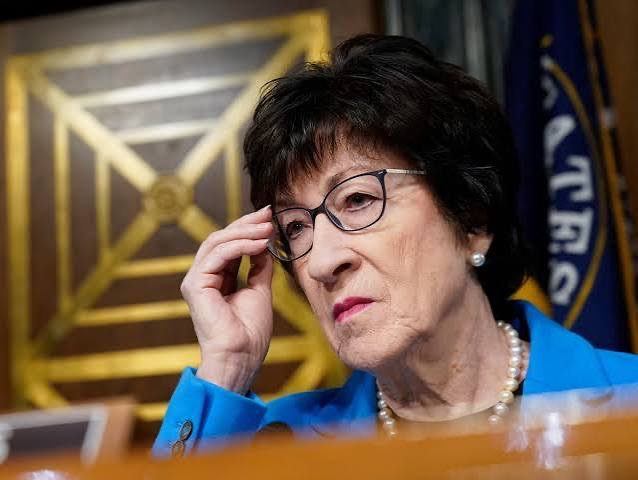
  •  Senator Susan Collins’ ICE Vote and the Fatal Shooting of Johan Sebastián Guerrero

    Biddeford, Maine is usually a quiet place. National tragedies—they don’t happen here. But then you see the headlines: 26-year-old Johan Sebastián Guerrero, shot and killed. This wasn’t random; no, it fits a larger, ugly pattern. He was a young father, a legal resident, a husband. Gone in a flash because of an operation that completely missed the mark.

    I read that ICE agents shot him while looking for someone else entirely. That shakes me. It exposes something broken far beyond a single mistake. How does a mission meant to catch one person end with the death of an uninvolved man just sitting in his car? People should answer for this, but watching the political response, it’s clear many would rather look away.

    I can’t help thinking about Senator Susan Collins. She keeps voting to pour more money into ICE, never pairing that support with real reform. That’s not just an abstract policy corner—it’s now the reality lived by a widow and a child suddenly without a father. Funding an agency without demanding accountability means backing its methods, whether you intend to or not. When Senator Collins doesn’t push for transparency or structural change, to me, she’s decided the way things are is good enough.

    But what really gets me is her silence afterward. No regret, no acknowledgment. That says a lot: she’ll defend the system as it stands, even if it costs innocent lives in her own state. A Senate candidate called her approach “signing the checks and hoping for the best.” That stings because it’s painfully true. Hope isn’t policy—it’s shirking responsibility.

    Biddeford’s tragedy shows you can’t separate immigration enforcement from real lives. This stuff unfolds where we live—our driveways, our neighborhoods, right in front of us. When we give agencies huge power and little oversight, we have to own what happens next.

    Watching all this, I think we’ve hit a turning point. This isn’t just about borders anymore—it’s public safety and the worth we assign to each person’s life. With elections heating up and talk of immigration on the rise, I’ll be paying close attention. Will Senator Collins stick to her choices? Because for the Guerrero family, her vote wasn’t about politics. It was a failure that left a wound no speech or policy spin can ever heal.

  • The Art of the About-Face: A Critical Look at Lindsey Graham’s Political Evolution

    American politics doesn’t usually give you a transformation as sharp, or as revealing as Lindsey Graham’s. Watching him shift in Washington has become almost surreal. The man bends with the wind, sure, but the cost of that flexibility has been his integrity.

    Just look at his record. Over the years, Graham has mostly acted like his main goal is just to hang on to his seat. He went from bashing Trump at every turn to openly praising him. If you need a case study in plain old political opportunism, this is it.

    Remember the 2016 Republican primaries? Graham didn’t pull any punches. He called Trump a “race-baiting, xenophobic, religious bigot.” He sounded like someone who actually believed what he was saying. Then, almost instantly, once Trump became the nominee, Graham dropped the act and threw in his lot with Trump. That wasn’t some sudden epiphany, it was survival mode, pure calculation.

    The shift was impossible to miss during the Brett Kavanaugh hearings in 2018. After Dr. Christine Blasey Ford’s testimony, the Senate was in chaos. Graham could have played the role of the rational adult in the room, but he didn’t. He went full throttle with a fiery defense of Kavanaugh, turning the hearings into political theater. In doing so, he shored up his spot in Trump’s camp, tossing aside the usual committee rules for a shot at the spotlight.

    Fast forward to 2020, and Graham’s credibility took another hit. After Justice Ruth Bader Ginsburg died, the same man who’d argued in 2016 that Supreme Court picks should wait until after the election did an immediate about-face. He fast-tracked Amy Coney Barrett’s nomination, just weeks before voters went to the polls. It wasn’t just a flip-flop, it was proof that his stated principles didn’t mean much when power was at stake.

    So, when does a politician stop serving the public and start just playing the angles? With Graham, it was obvious: keeping his place at the table matters more than sticking to his beliefs. He changed course whenever it suited him, and yes, it’s helped him stay in power, but at the expense of his credibility.

    Graham’s story serves as a cautionary tale. When individuals abandon their convictions to maintain relevance, they risk losing the very respect that initially earned them admiration. Politicians who remain apolitical will eventually succumb to any political pressure. Moreover, if you support someone whose principles fluctuate with the political climate, what can you truly rely on during challenging times?

    In the wake of his passing, it is customary for Washington to offer a eulogy extolling his virtues. While he was undoubtedly a remarkable individual when collaborating with John McCain, it is imperative that we draw lessons from his tenure in office. Was his primary motivation the nation and the Constitution, or was it driven by political gain and the pursuit of power?

  • The Billion-Dollar Gap: Analyzing Trump’s 2025 Financial Disclosure

    by Winston Wendell

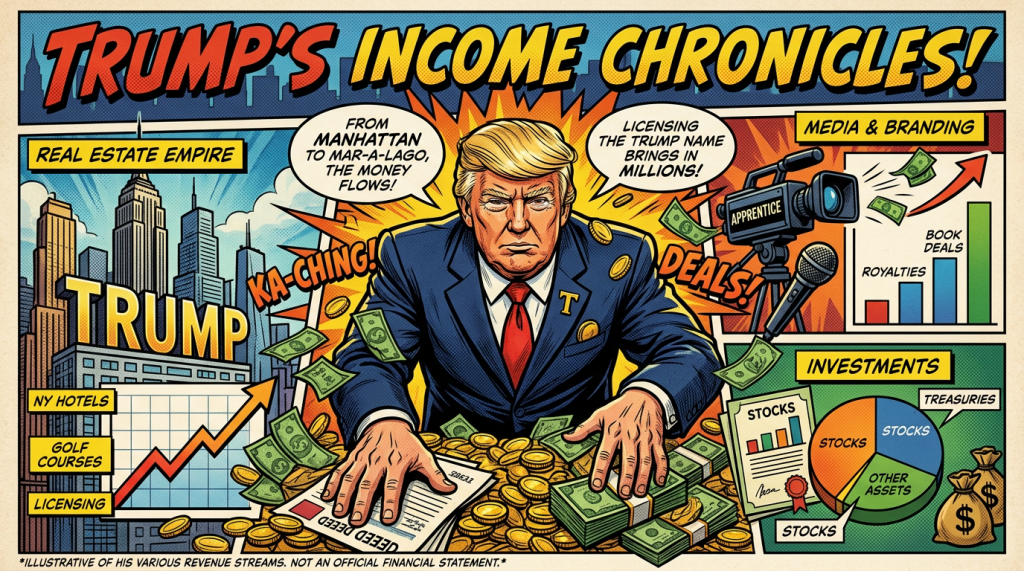
    Comic illustration of Donald Trump with money, charts, and labels showing income from real estate, media, and investments.

    As I sifted through the 927 pages of President Donald Trump’s 2025 financial disclosure, I was struck by a central narrative the President continues to push: that his staggering two-billion-dollar fortune increase is merely a byproduct of a rising broader market. During a July 1 press conference, Trump dismissed concerns about presidential profiteering with a wave of his hand, pivoting to the universal language of the 401(k). “We’re all gaining,” he insisted. 

    However, as I examined the granular data buried within the document, the math simply does not align with the narrative of passive market growth. While Trump credits the bull market for his windfall, his own filing paints a different picture—one where speculative digital assets and aggressive revenue streams play a far more significant role than his equity portfolio.

    The most glaring departure from the “market rally” explanation is the $1.4 billion generated by his cryptocurrency ventures. Projects like World Liberty Financial and the TRUMP meme token have proven to be gold mines for the President, even as they have proven disastrous for his followers. Blockchain-analytics firm Nansen reports that nearly a million everyday investors lost over $3.8 billion collectively in those meme tokens by mid-year. It is a sobering realization: while the President’s balance sheet surged, the capital of his supporters was effectively hollowed out.

    Beyond the digital frontier, the filing details $400 million in non-equity income. This includes approximately $196 million from his real estate empire, $88.5 million in legal settlements from media and tech entities, and $65 million from overseas licensing deals spanning from the Middle East to Southeast Asia. When I weigh these figures against the total growth, it becomes clear that the stock market is, at best, a secondary player in this financial explosion.

    Critics like Kedric Payne of the Campaign Legal Center argue that the “lion’s share” of this wealth growth is independent of the market. Even when looking at the most charitable estimates, non-stock gains account for between 67% and 81% of his increase. 

    The White House maintains that this is simply the result of a “wildly successful business career,” yet the sheer velocity of these earnings—particularly from speculative crypto assets—raises inevitable questions about the intersection of governance and private gain. When a sitting president derives the majority of his annual wealth increase from sources far removed from traditional index funds, it is no longer just a case of “everyone benefiting.” It is a financial ecosystem unto itself, one that thrives on volatility and branding in ways that leave the average 401(k) holder behind.

    Fediverse Reactions
  • One Year Later: The One Big Beautiful Bill’s Devastating Toll on America’s Working Class

    Donald Trump signing tax cuts and jobs bill in Oval Office with speech bubble saying tax cuts are here

    A closer look at how landmark legislation signed by President Trump has enriched the wealthy while leaving millions of vulnerable Americans behind

    by Winston Wendell

    When President Trump signed the “One Big Beautiful Bill Act” last year, his fans cheered for sweeping change. And they sort of got it—just not for everyone. If you’re in one of America’s wealthiest families, you’re probably thrilled. For most people, though, it’s a different story.

    I’ve been following this law since day one, and every new report just confirms what a lot of folks feared. Defend America Action laid out the numbers for Common Dreams, and it’s pretty clear: the richest are cashing in, while working-class Americans are stuck on the sidelines.

    The numbers tell their own story, and—wow. The Institute on Taxation and Economic Policy says the richest 1% will get $117 billion in tax breaks by 2026, which averages out to about $66,000 per wealthy household. Meanwhile, if you add up all the tax breaks for the bottom 60% of earners, their total doesn’t even match what one rich person gets. And with prices creeping up and surprise fees stacking on, a whole lot of working families are actually worse off.

    Nobody’s really surprised. Critics just call it the same old playbook: benefits for corporations and the ultra-rich, scraps (if that) for everyone else.

    But it’s not just about paychecks. Healthcare’s taken a beating, too. The law chopped more than $1 trillion from Medicaid and the Affordable Care Act. We’re already feeling it—a year later, Medicaid enrollment has dropped by 3.8 million people. Experts predict 15 million could lose coverage by 2034.

    The Affordable Care Act marketplace is a mess. Premiums have more than doubled. One out of every five people on ACA plans has already dropped coverage. If you’re buying insurance yourself, you’ll shell out over a third more than before. More than 8 million folks have lost health insurance so far, and it’s not slowing down.

    It’s not just about national numbers, either. Take Nevada—about 100,000 people there could lose Medicaid coverage. That’s 22,000 in one congressional district alone.

    Then there’s food assistance. The bill ripped $187 billion from SNAP, the program that helps people buy food. Four million people—kids and seniors included—have already lost that support, and the hurdles to keep benefits are higher than ever. Young adults are getting hit especially hard. They’re losing food help even though steady jobs are still tough to find.

    Clean energy took a major blow, too. When Congress gutted clean energy tax credits, hundreds of projects vanished. That cost around 140,000 jobs and scared off $69 billion in investment. Now consumers are facing an extra $92 billion in energy bills, and dirty, expensive energy is all that’s left for many.

    Electric vehicles? Same story. Killing off the $7,500 EV tax credit tanked sales. So, people stick with less efficient cars that cost more to run—especially with gas prices climbing, thanks in part to foreign policy headaches.

    Jared Bernstein—a former White House adviser—didn’t sugarcoat it: ditching clean energy isn’t just about falling behind, it’s about giving that lead away to China. “This isn’t China just eating our lunch. This is us serving our lunch to them,” he said.

    People see what’s happening, and they’re not buying the spin. Just a few months after the bill passed, 55% disapproved, and only 31% were on board. Not much has shifted—today, just a third support it.

    Rep. Dina Titus from Nevada put it straight: “They’re always up for cutting programs. They call it fraud, waste, and abuse, but it’s not. It’s benefits people needed.”

    With the midterms coming, it’s tough to hide the fallout. The law really did change America, just like they promised—but not for the better, and definitely not for most of us.

    Fediverse Reactions
  • The Maine Meltdown: How Political Ego and Corner-Cutting Threaten the Future of the Supreme Court

    by Winston Wendell

    I’ve been watching the Maine Senate race with this weird combination of fascination and dread, and after a while, you just can’t keep quiet about the slow-motion disaster that might hand Susan Collins another term. Everybody knows that seat matters—a single Republican win could lock in their Senate majority, which means control over Supreme Court appointments for years to come. It’s no exaggeration to say this race feels like a vote on the country’s future.

    Thing is, it’s not just the big stakes—the whole race has been utter chaos. Out of nowhere, Morris Katz, this young New Yorker best known for splashy viral videos with John Fetterman, parachutes into Maine. He brings along his firm, The Fight Agency, and decides to build a “man of the people” candidate from scratch for the Democrats. That’s how Graham Platner shows up—a guy who, on the surface, seems to tick every box for working-class appeal. Thanks to Katz’s flashy campaign launch, Platner’s poll numbers shot up almost overnight.

    But they cut corners to make it happen. Instead of running the usual, thorough background checks (the stuff that keeps campaigns from blowing up), Katz just grabbed a quick-and-dirty memo from some boutique outfit and called it a day. That left them exposed. Sure enough, it didn’t take long for a stack of explicit texts and an ugly online past to surface—stuff anyone should’ve spotted. Once the scandals broke (with everything from domestic trouble to abuse claims in the mix), Platner’s team tried circling the wagons and blaming “coastal elites.” All that stonewalling just made things uglier.

    And don’t let the Democratic leadership off the hook. Chuck Schumer brought his signature top-down style—pushing Governor Janet Mills to be the party’s favorite. Then, just as Platner started getting traction, Mills backed out and left the party stuck trying to rally around a candidate who was already a liability. Now, as the general election creeps closer, the Democrats are left with a nominee who’s unraveling in front of everyone.

    It’s honestly a joke—the very consultants and leaders who were supposed to guard the party’s chances are the ones who blew it up. If Collins wins, well, the consequences for the Supreme Court are enormous. With Justices Alito and Thomas likely to retire soon, a Republican majority could stack the Court with even more hard-right judges—locking in their decisions for a generation.

    What gets under my skin is the arrogance that started all this. Katz, the Hollywood kid, treated picking a candidate like casting for a movie—another part for Manhattan insiders to play. Schumer, with all his experience, doubled down on party machinery, and it ended up backfiring. They both forgot the basics: voters actually want real people, some honesty, and accountability.

    Now, Maine Democrats are scrambling to put the pieces back together at the last possible moment. I can’t shake the feeling that the fallout is going to stick with us long after the voting wraps up. If Collins keeps her seat because of these screwups, the consequences will show up at the Supreme Court for years. That’s the warning: when you skip the unglamorous hard work and any sense of humility, even the sharpest political team can implode from its own hype.

  • Trump’s “Communist” Rhetoric: A Desperate Political Strategy

    by Winston Wendell

    Watching this election season unfold, I can’t help but notice how much Donald Trump seems to have run out of new tricks. Same old slogans, the usual list of complaints, those rallies loaded with nostalgia and bitterness, they’re just not hitting like they used to. Now, with his usual playbook worn thin, Trump’s decided to go back to one of the oldest strategies around: fearmongering, this time in the threadbare costume of anti-communism. It’s basically Cold War reruns, and honestly, it should have stayed in the past.

    Trump’s Playbook Feels Tired

    Here’s what stands out to me: Trump’s running on empty. He can’t lean on the economy, it’s a tough sell when folks see their paychecks eaten up by inflation each month, buying less and less while everything keeps getting pricier. That “economic revival” he pushed in 2016? People know it never materialized.

    Foreign policy? Not much shelter there either. The situation with Iran is unresolved, his tariffs fell flat both as leverage and as economic policy, and he didn’t end the war in Ukraine like he’d said he would. These aren’t just small blips, this is the story falling apart, top to bottom. Any claims that Trump had some special knack for foreign affairs ring hollow now.

    Even his supposed home turf—immigration and mass deportations—has run out of steam. The drama just doesn’t whip up crowds the same way. The talking points sound old, and voters seem to see his proposals for what they are: more show than action.

    Dragging Out the Red Scare

    So, what does he do when the old moves don’t work? He leans on the most cynical tactic in conservative politics: calling progressive leaders “communists.” This isn’t new. It’s almost identical to the “Red Scare” playbook from after both world wars—a moment when anti-communist panic was turned into a weapon to smear the left, ruin reputations, and block policies that might actually help people.

    When Senator Joe McCarthy whipped up anti-communist frenzy, he wasn’t protecting democracy. He was out for power, and he used fear to silence critics and strengthen his own hand, tearing down any institution that didn’t fit his vision. It’s the same story, just dusted off for a new generation.

    This wasn’t just McCarthy, either. After World War II, Republicans tried to brand the New Deal as communism, which couldn’t be further from reality. Southern segregationists then used the same trick to demonize civil rights activism and labor movements. This tactic helped the GOP grab power in 1946 and launched careers like Richard Nixon’s. But strip away the drama, and it was always about fear and spin, not the truth.

    Take Trump’s speech at Mount Rushmore, he stood there and painted the country’s 250th birthday as a final battle against “radicals” threatening American values. He made it sound like you either vote for him or open the door to communist takeover. It’s right out of the old playbook, like a rerun that hopes to scare up different results.

    Completely Out of Step

    What stuns me most is just how out of touch this approach is with what’s happening today. Trump tries to paint people like Zohran Mamdani or Alexandria Ocasio-Cortez as dangerous left-wing radicals, but it just doesn’t stick. Their ideas, Medicare for All, affordable childcare, making big corporations play fair—these aren’t communist schemes. They’re attempts to fix real, everyday problems for Americans. 

    And the old scare words are losing their bite, especially for younger people. Look at the numbers from the Cato Institute or Axios-Generation Lab—Gen Z doesn’t have much faith in a capitalist system that leaves them struggling to afford housing, healthcare, or any sense of security. “Socialism” isn’t an insult to them; it’s looking more and more like a possible solution. The same solution “ Social Security” was for their grandparents and parents. 

    The fearplay that fired up older crowds just doesn’t connect with young voters who already feel the system’s failed them. It’s not that Democrats are messaging badly. The ground is shifting, and younger Americans simply see the economy differently.

    What Trump’s Really After

    If I’m honest, Trump’s jump into anti-communist theatrics isn’t going to do much for him in the midterms. More than that, it says something larger about who he really is. People care more about trust in their government right now—they’re worried about corruption and democracy falling apart, not labels that have lost their punch.

    What bugs me most is that Trump doesn’t have any real philosophy or plan. He’s not out to save America from socialism. He just craves the spotlight. It’s self-preservation masquerading as political battle, a last-ditch attempt to stay relevant by recycling the ghosts of McCarthy and his mob.

    The guy who once bragged about being a “stable genius” is grabbing for the loudest, tiredest tricks in the book. This isn’t leadership. It’s just survival, and that really says it all: Trump isn’t leading anybody, he’s just refusing to take the exit. The anti-communist schtick is just his latest attempt to find an audience.

    So, as the midterms draw closer, I’m not really scared. I’m almost curious. The show goes on, but the crowd’s losing interest. Eventually, even the most desperate act has to face the music when the seats are empty.

    Fediverse Reactions
  • GOP Texas Representative Faces Criticism for Lavish July 4th Plans as Economic Worries Grow

    Washington D.C. — With financial pressures rising for many Americans, Representative Troy Nehls (R-TX) is catching heat for talking up his extravagant Fourth of July celebration. He told journalist Pablo Manríquez he’ll be enjoying lobster tails and rib-eye steaks at home with family and neighbors—an image that’s not sitting well with folks feeling the pinch right now.

    When Manríquez brought up affordability, Nehls just laughed it off. “Affordability — what are you talking about?” he said, before diving into details about his plans for the holiday. He also mentioned he’ll use the occasion to honor “the greatest president of my lifetime,” meaning President Donald Trump. At one point, Nehls even questioned if people living paycheck to paycheck “work as hard as I do,” making the gap between his outlook and everyday Americans’ reality even more obvious.

    People were quick to react, and not in a good way. In the current U.S. economy, things are tight. A recent CNN/SSRS poll says 61% of Americans have cut back on groceries, and 30% have racked up credit card debt just to cover the basics. Inflation’s not helping, either—the consumer price index shot up to a 3-year high of 4.2% in May. On top of that, higher fuel costs—driven by the conflict with Iran—are hitting lower-income families even harder.

    Still, Nehls, Trump, and other Republicans are downplaying the price hikes, saying they’re just “temporary” and necessary to stand up to Iran and block its pursuit of nuclear weapons. “I’m OK with the increase in fuel, because it was going to happen,” Nehls said, pointing to Iranian military restrictions in the Strait of Hormuz that kicked off the energy spike.

    Nehls’ comments are out of touch. While Americans struggle to get by, he’s flaunting plans for an expensive holiday feast—something that only deepens the disconnect between GOP lawmakers and the people they represent. The uproar is fueling the partisan fight over the economy, and many are questioning whether House Republicans really get what the average American is up against.

    Fediverse Reactions