Category: Posts

  • Inside the Donald Trump’s $2B Conflicts of Interest

    by Winston Wendell

    When I look at what’s happening in politics right now, I just can’t brush past the way presidential power seems tangled up with personal profit. People ask me all the time why President Trump is so dead set on shaping the story around midterm election integrity. It doesn’t feel like it’s just about scoring points for his party, that’s only part of it. The real answer jumps out in a single, staggering number: $2.2 billion.
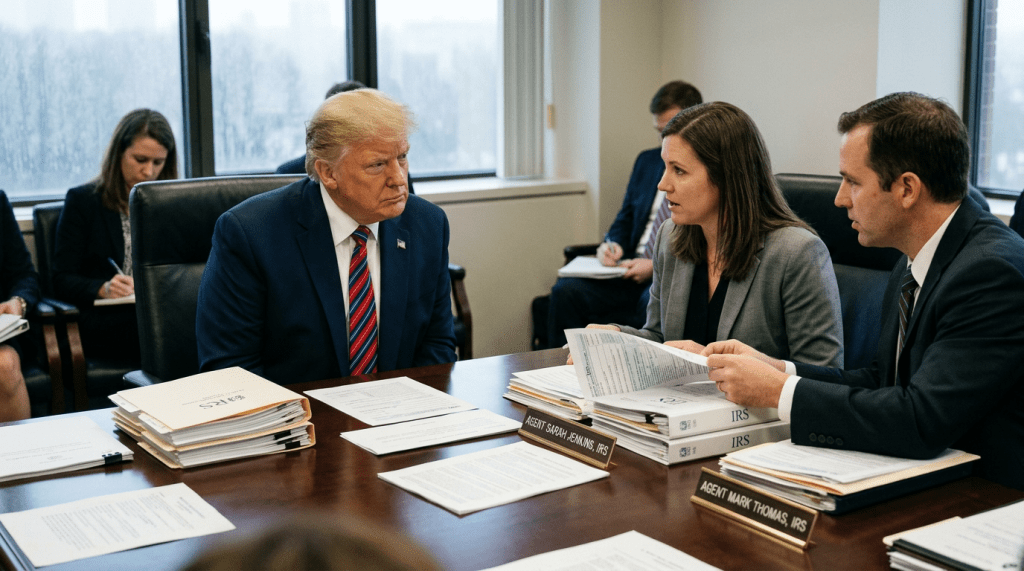
    Donald Trump in a suit and tie talking with two IRS agents with paperwork and folders on the table

    That’s how much the President’s reported wealth grew in 2025. You look at this and it’s tough to call it a fluke. Every sign points to an administration acting like it’s converted the whole executive branch into its own private equity fund. When people in power bend government to chase after profit and cover for their allies, the cost goes way beyond dollars. It chips away at the core of America’s democracy.

    The White House as a Private Estate

    When you walk through the halls of this administration, it’s hard not to feel like “the People’s House” has become someone’s private mansion. Lavish renovations funded by taxpayers, gold-plated decor everywhere, it all sends one clear message: this isn’t about public service. It’s about personal gain.

    And sure, it looks bad, but it goes deeper. There’s a pattern. Strategic pardons. Huge payouts from the top. Rules that just so happen to benefit the President’s closest circle. When policy is written to help the person in charge make money, government stops being about the people. It turns into a business.

    The Pardon Economy and Asset Recovery

    Legal scholars always said the President’s power to pardon is almost unlimited. But it was never supposed to be about cash. When you hear about a “pardon economy” , lobbyists taking huge fees to get folks through the Oval Office door, it’s a reminder that asset recovery is one of the few tools we still have, even if it isn’t used often enough.

    The pardon of crypto billionaire Changpeng Zhao stands out as a glaring example. Pardoning him right after he donated proprietary software to a Trump-connected crypto project? That should make anyone nervous. If the government puts the crypto-elite ahead of basic justice, you have to wonder: is this just side-effect corruption, or is it the core strategy?

    Lessons from Abroad: An Anti-Corruption Framework

    We don’t have to make up a new playbook for fixing this. Look at Hungary. When they faced intense corruption, they set up the National Asset Recovery and Asset Protection Office. They brought together financial investigators, police, lawyers , the whole lot and they froze dirty assets, clawed back public money, and didn’t flinch. Not only did it rebuild some trust, it freed up billions in locked-up EU funding.

    It’s a real path to accountability. It proves that if you treat corruption as a threat to your whole system, not just an awkward issue, you get results.

    A Roadmap for Accountability

    If you’re watching all this unfold, whether you’re an investigator, accountant, or just a citizen who pays attention, there’s really only one way forward: dig deep and audit the executive branch, top to bottom. Here’s how you do it:

    Contractual Oversight:  Carefully review every federal contract awarded to family and friends.  Identify and rectify any conflicts of interest.

    Cryptocurrency Accountability:  Monitor profits derived from insider government information.  Recover any stolen funds from the public.

    Payout Recovery:  Reclaim taxpayer money funneled to political cronies or anyone connected to unrest and shady dealings.

    Emoluments Audit:  Compile a comprehensive list of all foreign gifts and emoluments.  Ensure that these are returned to the public, as they are considered public property, not personal gifts.

    Pay-to-Play Investigation:  Examine the selection process for government spaces and privately connected vendors at major events.

    Regulatory Settlement Review:  Investigate whether authorities coerced private companies into large settlements as retribution.

    Pardon-Linked Financials:  Trace the flow of money, including payments, middleman fees, and shell companies associated with controversial pardons.

    This Trump “anything goes” era is unsustainable.  As political dynamics shift and they inevitably do, those who misappropriated public funds will face legal consequences.

    Anyone who treats America’s treasury as a personal piggy bank should be aware that accountability is on the horizon. 

    HERE A LIST OF A FEW

    Ethics experts, watchdogs, and legal scholars highlight several primary categories of potential conflicts:

    1. Real Estate & Hospitality Holdings

    • Foreign Government Spending: Properties like the Trump International Hotel or Mar-a-Lago frequently host foreign diplomats, officials, and state-backed entities. Spending at these properties raises concerns under the U.S. Constitution’s Emoluments Clause, which bars federal officials from receiving gifts or payments from foreign governments without Congressional approval.Campaign Legal Center+ 1
    • Foreign Licensing & Development Deals: The Trump Organization maintains brand-licensing and real estate agreements in various nations (including Saudi Arabia, the UAE, Oman, and South Korea). Critics point out that these deals create potential overlaps between personal profit and foreign policy, trade negotiations, or diplomatic decisions. Center for American Progress

    2. Cryptocurrency & Tech Ventures

    • World Liberty Financial: Trump and his family launched a digital currency and decentralized finance project.Because executive branch agencies—such as the Securities and Exchange Commission (SEC) and Commodity Futures Trading Commission (CFTC)—regulate the crypto industry, presidential policy or regulatory rollbacks can directly impact the financial value of these family-backed token ventures. Defense One
    • Publicly Traded Stock & Media Ventures: Major stakes in publicly traded ventures (like Trump Media & Technology Group, owner of Truth Social) make it possible for domestic special interests or foreign entities to buy large blocks of stock, potentially attempting to gain political favor or influence stock prices. Campaign Legal Center

    3. Domestic Business Regulation & Federal Contracts

    • Policy & Deregulation Directives: Decisions regarding tax codes, environmental rollbacks, labor regulations, or antitrust actions directly affect real estate, hospitality, and golf resort operations.
    • Federal Use of Properties: When the president, secret service detail, or federal staff stay at or utilize Trump-owned properties, taxpayer dollars are paid directly to those businesses for lodging, food, and security equipment rental.

    4. Foreign Trademarks & Debt

    • International Trademarks: Decisions by foreign governments (such as China or European nations) to approve or fast-track valuable trademark protections for the Trump brand while trade negotiations are active create potential leverage issues.
    • Outstanding Debt: Commercial properties owned or co-owned by his businesses carry significant loans held by various domestic and foreign financial institutions. Negotiating or refinancing large debts while holding executive office presents a potential conflict regarding lender oversight and regulatory enforcement. Defense One
    Fediverse Reactions
  • Why Trump’s New Tariff Obsession is a Dangerous Gamble

    The Tariff Trap: Why Trump’s Economic Obsession Risks a “Catastrophic” Reckoning

    by Winston Wendell

    Watching the latest news about Donald Trump and his planned wave of new tariffs, I can’t help but feel like we’ve seen this before—and not in a good way. Trump likes to talk up these tariffs, spinning them as a way to force other countries to play by our rules and to shield the American economy. But truthfully, the reality looks a lot harsher. What we’re seeing is a strategy built for show, not for the real grind of keeping supply chains steady and costs down for everyday Americans.

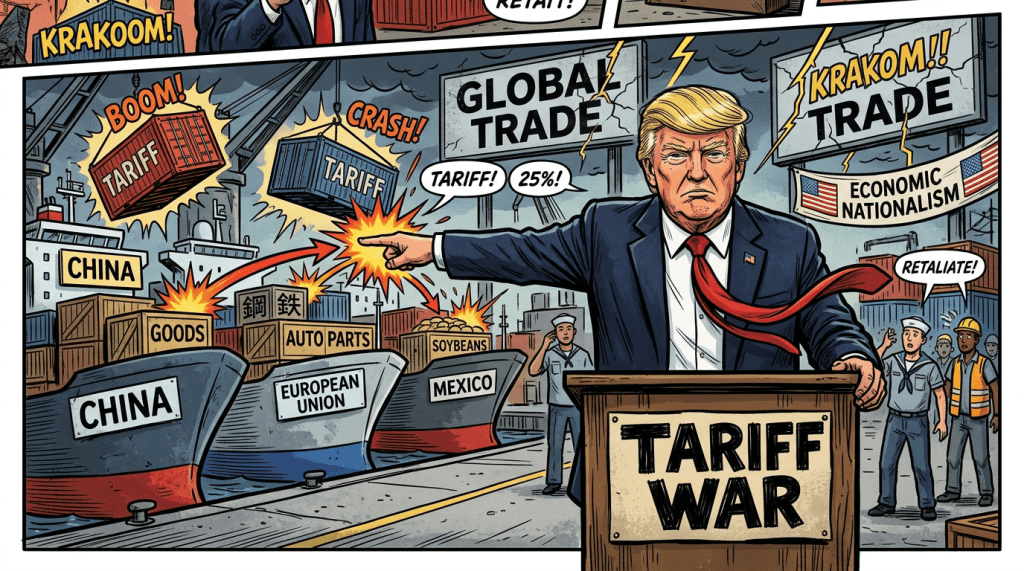
    Political cartoon of a man pointing at cargo ships labeled China, European Union, Mexico with tariff containers causing explosions and trade conflict

    Inside Trump’s own circle, people seem alarmed. The Financial Times reported that his advisers are scrambling behind the scenes, trying to steer him off this dangerous path. These aren’t just casual disagreements; his team is pulling the fire alarm, warning that this move could turn out to be a disaster.

    What really worries me is how this policy feels like a classic “shoot the messenger” move. We all saw what happened during Trump’s first term: other countries fired back with their own tariffs, American factories struggled, and farmers got stuck with huge losses as export markets dried up. Even with the economy on shaky ground right now, Trump looks set to gamble one more time.

    People are stretched thin—prices at the gas pump are heading toward $4 because of turmoil in places like Iran, and Americans are feeling the squeeze every time they shop or drive. Most voters aren’t happy with how Trump has handled living costs. And now, he wants to slap on new tariffs, knowing that every extra tax at the border gets passed straight to shoppers. That’s not just risky for a campaign—it really feels like economic arrogance.

    Then there are those behind-the-scenes talks about dodging Supreme Court limits by labeling the tariffs as probes into “forced labor.” It’s a tactic, sure, but a pretty cynical one. Instead of leading with sound economic thinking, this approach depends on bending the rules to please his supporters, even if it causes bigger problems for everyone else.

    At the end of the day, Trump’s advisers have good reasons to worry about the political fallout. If the idea is to protect American jobs, these tariffs could backfire and hurt the same prosperity he talks about defending. By shutting out the practical warnings from his own team, Trump is gambling with the one thing that was supposed to be his strongest campaign argument: the economy. At this point, we’re staring down the road to a trade war that could make life a lot more expensive for the people he swore to help.

    Fediverse Reactions
  • Donald Trump Heading for the Golf Course Instead of the Situation Room

    The Disconnect: Leadership Challenges Amidst Escalating Conflict and Economic Strain
    by Winston Wendell

    The Middle East is inching toward a crisis. Two U.S. service members lost their lives this week, and the Pentagon confirmed it. All out war with Iran doesn’t just seem possible, it feels closer than it has in months. Meanwhile, inflation keeps gnawing away at paychecks, and gas prices are spiking again thanks to more trouble in the Persian Gulf. At home, folks are feeling squeezed, but the White House gives off this strange sense of being elsewhere, almost detached.

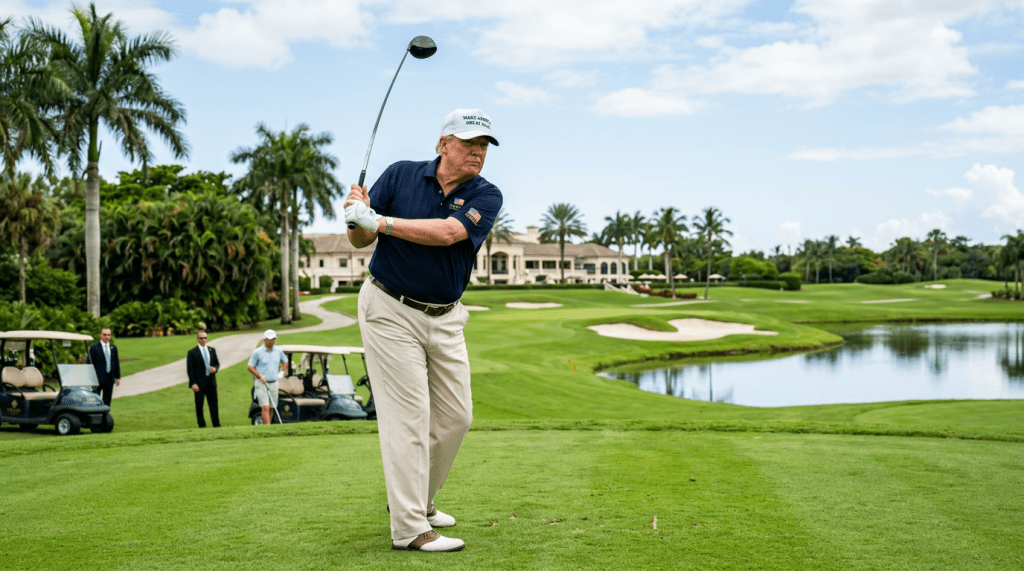
    Golfer in navy shirt and white pants completing a swing on a golf course near water and palm trees

    Life on Main Street looks pretty rough right now. The latest numbers from the Bureau of Labor Statistics show that prices won’t budge. Every week, it’s the same story: another trip to the grocery store, more sticker shock, and it’s getting tougher and tougher for families just to make it to Friday. People want the president in the thick of things during times like these, steady, present, and reassuring.

    That’s not what they’re getting. Instead, public schedules and social media updates show President Donald Trump heading for the golf course instead of the Situation Room. Over the weekend, while everyone waited for updates from the Middle East, he was out golfing at his club in New Jersey.

    And this didn’t come out of nowhere, people have noticed a pattern. Analysts and writers, including The Atlantic, keep pointing out: when tension flares abroad, the president’s often seen prioritizing downtime over direct action. Well he is 80 years old. For plenty of Americans, especially anyone worried about national security, this feels out of step with the country’s needs.

    Then there’s his upcoming itinerary. It’s right there in the official plan, while families grieve and the economy faces more pressure, President Trump’s next high-profile event is the FIFA World Cup Final at MetLife Stadium, right alongside the First Lady.

    So, here’s the tension. The country’s teetering at the edge of war. Prices keep rising. And the president is taking in a soccer match. News sites like Reuters aren’t letting it slide, they’re highlighting how serious things with Iran have become. And regular people are starting to ask, “Is this really the time for leisure?”

    That’s the crux of the matter: Americans are demanding their leader to step up, particularly in these tumultuous times. With war looming and expenses skyrocketing, the chasm between public expectations and presidential reality is widening. It’s a question everyone is left grappling with where is President Donald Trump when we need him most?

    Fediverse Reactions
  • Trump’s Electronic Voting Machine Claims: The Real Security Risks Explained

    by Winston Wendell

    Voting Machines and Election Security

    Watching election security evolve has been a strange ride, especially when high-profile politicians start making claims that shake people’s confidence in the whole system. Lately, Donald Trump has been all over the idea that America’s electronic voting machines are just waiting to be hacked. That’s got a lot of election officials and cybersecurity pros on edge. But if you really dig into what he’s saying, his claims do more damage than they highlight any real problem.

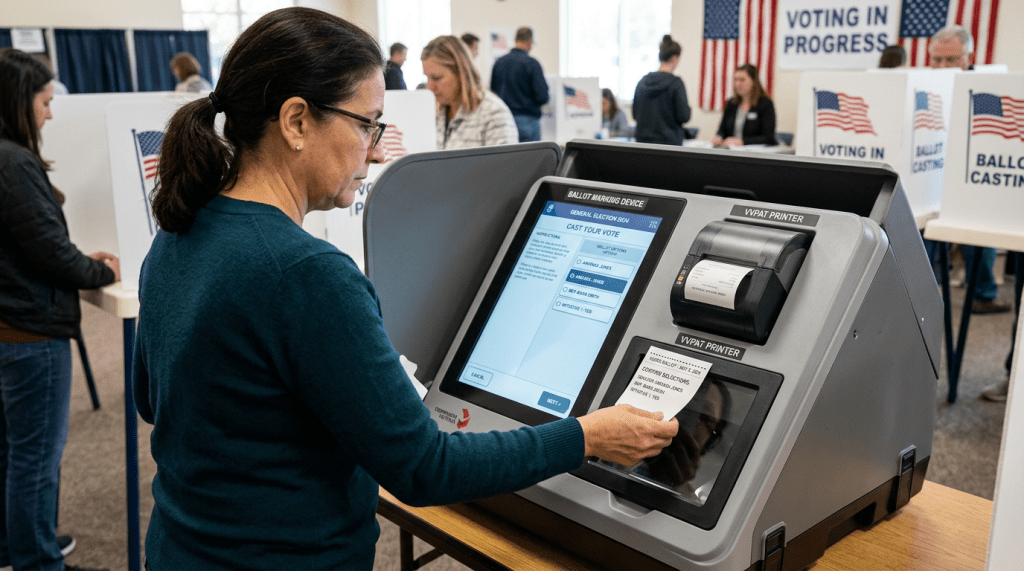
    Woman printing a ballot with a ballot marking device at a voting station

    Trump went on TV and basically told Americans that everything they’ve heard about secure elections is a lie, and that electronic machines are easy targets for anyone wanting to mess with results. It’s true, researchers have found weak spots—DEFCON’s Voting Village loves demonstrating just that. But here’s the part everyone keeps missing: nobody’s shown real evidence of these flaws getting used to change an election’s outcome. That’s what matters.

    Remember when Russian hackers went after our elections in 2016? That was a wake-up call. Now, we’re seeing way more states using paper ballots or machines that spit out a paper record. Most voters today leave behind something you can physically check. Plus, elections aren’t managed from a single office—they’re split across every state and county. That makes a giant, coordinated hack pretty far-fetched.

    Election experts keep saying that these kinds of claims just eat away at trust. Colorado Secretary of State Jena Griswold put it simply: Trump’s story isn’t new, and it’s not about some overlooked threat. Yeah, there’s probably an audience for this stuff, but spinning these tales just pushes people away from voting or sets them up to question any results they don’t like.

    Government records released Thursday didn’t back up Trump’s claims of widespread voting machine hacking. The National Intelligence Council checked for proof of foreign tampering as recently as 2020 and came up empty. Cybersecurity and Infrastructure Security Agency—CISA—admitted there are always risks, but said they haven’t seen any evidence of actual votes being changed.

    That doesn’t mean the job’s done. Local officials are still squeezed for cash and can’t always upgrade equipment or boost cybersecurity training. Congress has dropped about $1 billion since 2018, but just $45 million was set aside last year—barely enough to keep things running.

    Benjamin Hovland, former commissioner at the Election Assistance Commission, keeps calling for more funding. He’s not shy about it: if we’re serious about protecting elections, we need to pay for better tools and train the people who use them. States hear a lot of talk, but the actual resources just aren’t reaching them.

    So where does that leave us? Election security is messy, but it’s getting better, not worse. The people running our elections and the experts backing them up are working on real fixes, not just trading in outrage.

    Instead of fanning the flames, it’s time for everyone—politicians, tech companies, and regular voters—to sit down and talk about how to keep improving things. That’s going to mean real investment, honesty, and showing our work so everyone can see the system doing its job.

    The future of our democracy depends on facts and clear policy-making, not scare tactics. Let’s argue about solutions, not sow distrust.

    Fediverse Reactions
  • Rising Gas Prices: What It Means for Everyday Americans

    by Winston Wendell

    Every time I see the numbers ticking higher at my local gas station, I get the strangest sense of déjà vu. We’ve gone through these price spikes before, but this time it feels heavier somehow, almost suffocating. The rising military tension with Iran, which has taken center stage for the Trump administration, isn’t just a headline; it’s merging with everyday life, impacting budgets and cranking up stress for millions across the country.

    This isn’t just another blip, it’s a shift you can feel in the air. CNBC says economic anxiety hasn’t hit these heights since the inflation surge right after the pandemic in late 2023. People are tired, and honestly, the numbers just back up what everyone feels.

    The Grim Reality Behind the Figures

    The CNBC All-America Economic Survey doesn’t pull any punches. Sixty-one percent of people are now pretty pessimistic about the country’s financial future. Only around a quarter are still holding out hope.

    So, what’s really lighting this fire? It’s basic stuff. Anyone in line at the grocery store or waiting to fuel up will tell you, it’s all about the cost of just getting by. Food and gas aren’t minor expenses anymore, they’re completely reworking how people live.

    Sacrificing the Basics

    This squeeze is making people choose between necessities. The latest survey hits hard:

    Almost half of Americans (47%) are skimping on essentials, things like medical care, groceries, everyday basics, just to keep their heads above water.

    Two out of three have slashed anything extra. The empty restaurants and quiet movie theaters are proof enough that people are choosing survival over fun.

    Policy-Driven Discontent

    Frustration is clear, and it’s pointed straight at the White House. Right now, President Trump’s handling of the economy gets just 38% approval, with about 60% giving him a thumbs down.

    The administration’s approach to Iran is just as divisive. Only 35% of voters support the military moves, while 63% are against them. The link between decisions overseas and money woes at home is starting to look obvious to everyone.

    The “Trauma” of Persistent Inflation

    So why does the anxiety stick around, even when prices dip for a while? Democratic pollster Jay Campbell put it plainly to CNBC: that brief break in gas prices earlier this year didn’t fix the “financial trauma” everyday people feel.

    Even when prices drop, nobody forgets what it felt like when they were sky-high for two years. That memory sticks, so small changes just don’t erase the frustration.

    What the Pump Is Telling Us

    AAA backs this up with tough stats. Last Friday, the national average for a gallon of regular gas hit $3.98, a ten-cent jump in just a week. Diesel’s hitting even harder, climbing past $5 per gallon and putting more pressure on the folks who keep the trucks and supply chains running.

    Implications for Washington

    Even with all these grim numbers, the political fallout is, for now, kind of muted. Democrats still have a slight four-point edge for Congress, but Campbell warns there’s no massive political wave building, not yet.

    But things feel shaky. With the Iran conflict not cooling down and people’s savings evaporating, anxiety is running high. Folks across the country are just holding their breath, wondering if the costs of Trump’s foreign policy will end up outweighing the price of keeping things steady at home.

    Fediverse Reactions
  • An Analysis of Trump’s Address on the 2020 Election

    JUL 17, 2026

    by Winston Wendell

    Trump’s 2020 Election Address: A First‑Person Dissection of Foreign‑Interference Claims, the SAVE America Act, and the “Deep State” Narrative

    When I watched President Donald Trump’s thirty-minute televised address on the 2020 election, I immediately recognized the pattern: a mix of familiar grievances, framing the world in geopolitical terms, and pushing for policy change. Trump wasn’t so much recounting votes as trying to reshape the story, blaming outside forces like the People’s Republic of China and pointing at vague, shadowy bureaucracy here at home. I want to break down what he argued, see how that stacks up to the facts, and get into the main solution he pitched, the “SAVE America Act.”

    Foreign Interference Claims vs. Intelligence Reality

    Trump kicked things off with a scary number: “220 million voter records stolen by Chinese actors,” framing this as a national-security crisis. But when you look closer at what intelligence agencies actually found, most of those records came from public state-level voter files or commercial databases, it wasn’t some shadowy hack into federal voting systems. Experts such as Ryan Macias, who works on cybersecurity, point out that buying voter rolls is legal in many states. Sure, that’s a privacy problem, but it’s not the same as messing with ballots or vote counts.

    Go deeper into the intelligence reports, and the story gets clearer. A declassified report from March 2021 says Beijing used influence tactics like turning up the volume on social media or applying diplomatic heat, but they didn’t actually mess with counting votes. One small part of the assessment did mention China trying to damage the Trump campaign, but even then, it stopped short of saying anyone pulled off real technical sabotage. So, where Trump talks about a “deep-state cover-up,” the reality is a jumble of bureaucratic debate and normal government back-and-forth, not some coordinated plot.

    The “SAVE America Act” – Safeguard or Suppression?

    A major piece of Trump’s address was pitching the SAVE America Act. This bill would require everyone to have a government-issued photo ID and proof of citizenship just to register to vote. Fans of the idea say it’ll make elections trustworthy again. Critics say it puts up roadblocks, especially for minorities, seniors, and low-income people, groups that already face obstacles. The law’s language claims it’s all about “integrity,” but in practice, it comes off as code for making it harder to vote. And this glosses over the safeguards already in place in the U.S., pre-election checks, secure handling of equipment, and paper ballots you can actually count if there’s a problem.

    Election-Integrity Experts Weigh In

    Pamela Smith from Verified Voting pointed out that American elections have multiple security layers set up specifically to catch the sort of problems Trump mentions. Physical ballots, audits after the vote, and bipartisan oversight have all shown that our system stands up well against both hacking from abroad and attempts to cheat from the inside. The fear of a “stolen” election is a strong political weapon, but it doesn’t match up with what solid audits and evidence tell us about 2020, it was, by any fair look, secure.

    Geopolitical Context

    Trump insisted China “actively sought his defeat” because of things like trade fights or military standoffs. He’s not wrong that Beijing saw his administration as a problem. But those same intelligence reports also found China wasn’t reckless; they realized trying to mess with a hotly contested U.S. election could backfire on them, no matter which party won. Also he did mention the Russian state’s attempt to put their thumb on the scale for him. You all remember his call for Hilary’s emails, then like magic Russia released them from their hacks on her campaign. 

    What I think

    When I step back, I see the address less as a stripped-down briefing and more as a call to arms. It mixes up privacy breaches with tampering at the ballot box, makes standard bureaucratic debate look like a unified “deep state,” and pitches stricter voting laws as the answer to threats that don’t match the evidence. There’s an important line here: one thing is trying to sway what people think; another is meddling with the vote itself. We have to see that difference if we want to protect public trust and keep American democracy as open as it’s supposed to be.

  • Analysis of Upcoming Presidential Discourse on Electoral Integrity

    Let’s keep to the facts

    By Winston Wendell

    I’m at my desk, coffee going cold next to a stack of briefing notes, trying to make sense of the noise before Trump’s primetime address on July 16, tonight. Networks keep dropping hints, he’ll talk about “integrity of the U.S. electoral process.” No surprise there. He’s been crying about this topic ever since 2020, and the tension tonight isn’t just about midterms coming up. There’s hype about new declassified intel that’ll supposedly back up claims of foreign meddling.

    After years following these political showdowns, I see three simple layers.

    First, Trump’s story really hasn’t changed much. Since 2016, he’s warned that mail-in ballots and voting machines are risks. His warnings turned into bills like the SAVE America Act, which push for stricter voter ID and tighter registration. Even when his own team ran election security in 2020, he stuck to the same talking point: the system’s rigged and only tough reforms can rebuild trust.

    Second, the intel folks and outside experts don’t buy it. Renee DiResta at Georgetown reminds everyone that Trump’s own appointees led security through the last election, and oversight was intense. Her point, echoed by Lawrence Norden at the Brennan Center, is that you have to separate foreign “influence”, the usual disinformation, from actual “interference,” which would mean someone hacked votes or tampered with databases. All the credible sources say that just didn’t happen in a way that could’ve shifted results. In 2021, the NIC, DOJ, and DHS all agreed: sure, Russia, Cuba, and Venezuela ran influence ops, but nobody messed with the vote counts themselves.

    Third, the courts didn’t see any evidence, either. Over sixty lawsuits challenged the results, none succeeded. The 2020 election was watched closer than any before, and Biden’s 306 electoral votes and seven-million lead stand. In 2022, a bipartisan panel went through everything again and said the same. Despite all the noise and lawsuits, the system worked.

    So what’s Trump going to say? If the new “declassified” info just recycles old news about small-scale influence campaigns, it’ll land as more rerun than revelation. But the goal is pretty transparent: keep doubts alive, energize his base, push for stricter voting rules, and keep this issue hot as 2024 gets closer.

    As the clock drags toward primetime tonight, I wonder what viewers are really in for, a real call for better election security, or another round of practiced accusations, heavy on suspicion, short on facts. All the data points one way. In the end, the question is whether Americans can tell the difference between a real threat and a story told for political effect from Trump’s deranged mind. 

    Fediverse Reactions
  •  Senator Susan Collins’ ICE Vote and the Fatal Shooting of Johan Sebastián Guerrero

    Biddeford, Maine is usually a quiet place. National tragedies—they don’t happen here. But then you see the headlines: 26-year-old Johan Sebastián Guerrero, shot and killed. This wasn’t random; no, it fits a larger, ugly pattern. He was a young father, a legal resident, a husband. Gone in a flash because of an operation that completely missed the mark.

    I read that ICE agents shot him while looking for someone else entirely. That shakes me. It exposes something broken far beyond a single mistake. How does a mission meant to catch one person end with the death of an uninvolved man just sitting in his car? People should answer for this, but watching the political response, it’s clear many would rather look away.

    I can’t help thinking about Senator Susan Collins. She keeps voting to pour more money into ICE, never pairing that support with real reform. That’s not just an abstract policy corner—it’s now the reality lived by a widow and a child suddenly without a father. Funding an agency without demanding accountability means backing its methods, whether you intend to or not. When Senator Collins doesn’t push for transparency or structural change, to me, she’s decided the way things are is good enough.

    But what really gets me is her silence afterward. No regret, no acknowledgment. That says a lot: she’ll defend the system as it stands, even if it costs innocent lives in her own state. A Senate candidate called her approach “signing the checks and hoping for the best.” That stings because it’s painfully true. Hope isn’t policy—it’s shirking responsibility.

    Biddeford’s tragedy shows you can’t separate immigration enforcement from real lives. This stuff unfolds where we live—our driveways, our neighborhoods, right in front of us. When we give agencies huge power and little oversight, we have to own what happens next.

    Watching all this, I think we’ve hit a turning point. This isn’t just about borders anymore—it’s public safety and the worth we assign to each person’s life. With elections heating up and talk of immigration on the rise, I’ll be paying close attention. Will Senator Collins stick to her choices? Because for the Guerrero family, her vote wasn’t about politics. It was a failure that left a wound no speech or policy spin can ever heal.

  • The Art of the About-Face: A Critical Look at Lindsey Graham’s Political Evolution

    American politics doesn’t usually give you a transformation as sharp, or as revealing as Lindsey Graham’s. Watching him shift in Washington has become almost surreal. The man bends with the wind, sure, but the cost of that flexibility has been his integrity.

    Just look at his record. Over the years, Graham has mostly acted like his main goal is just to hang on to his seat. He went from bashing Trump at every turn to openly praising him. If you need a case study in plain old political opportunism, this is it.

    Remember the 2016 Republican primaries? Graham didn’t pull any punches. He called Trump a “race-baiting, xenophobic, religious bigot.” He sounded like someone who actually believed what he was saying. Then, almost instantly, once Trump became the nominee, Graham dropped the act and threw in his lot with Trump. That wasn’t some sudden epiphany, it was survival mode, pure calculation.

    The shift was impossible to miss during the Brett Kavanaugh hearings in 2018. After Dr. Christine Blasey Ford’s testimony, the Senate was in chaos. Graham could have played the role of the rational adult in the room, but he didn’t. He went full throttle with a fiery defense of Kavanaugh, turning the hearings into political theater. In doing so, he shored up his spot in Trump’s camp, tossing aside the usual committee rules for a shot at the spotlight.

    Fast forward to 2020, and Graham’s credibility took another hit. After Justice Ruth Bader Ginsburg died, the same man who’d argued in 2016 that Supreme Court picks should wait until after the election did an immediate about-face. He fast-tracked Amy Coney Barrett’s nomination, just weeks before voters went to the polls. It wasn’t just a flip-flop, it was proof that his stated principles didn’t mean much when power was at stake.

    So, when does a politician stop serving the public and start just playing the angles? With Graham, it was obvious: keeping his place at the table matters more than sticking to his beliefs. He changed course whenever it suited him, and yes, it’s helped him stay in power, but at the expense of his credibility.

    Graham’s story serves as a cautionary tale. When individuals abandon their convictions to maintain relevance, they risk losing the very respect that initially earned them admiration. Politicians who remain apolitical will eventually succumb to any political pressure. Moreover, if you support someone whose principles fluctuate with the political climate, what can you truly rely on during challenging times?

    In the wake of his passing, it is customary for Washington to offer a eulogy extolling his virtues. While he was undoubtedly a remarkable individual when collaborating with John McCain, it is imperative that we draw lessons from his tenure in office. Was his primary motivation the nation and the Constitution, or was it driven by political gain and the pursuit of power?

  • The Billion-Dollar Gap: Analyzing Trump’s 2025 Financial Disclosure

    by Winston Wendell

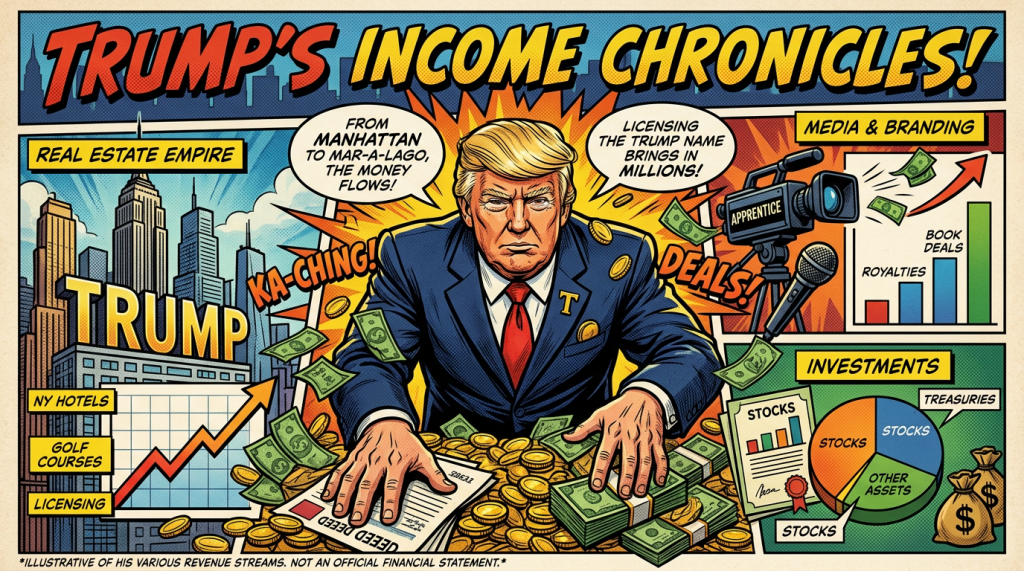
    Comic illustration of Donald Trump with money, charts, and labels showing income from real estate, media, and investments.

    As I sifted through the 927 pages of President Donald Trump’s 2025 financial disclosure, I was struck by a central narrative the President continues to push: that his staggering two-billion-dollar fortune increase is merely a byproduct of a rising broader market. During a July 1 press conference, Trump dismissed concerns about presidential profiteering with a wave of his hand, pivoting to the universal language of the 401(k). “We’re all gaining,” he insisted. 

    However, as I examined the granular data buried within the document, the math simply does not align with the narrative of passive market growth. While Trump credits the bull market for his windfall, his own filing paints a different picture—one where speculative digital assets and aggressive revenue streams play a far more significant role than his equity portfolio.

    The most glaring departure from the “market rally” explanation is the $1.4 billion generated by his cryptocurrency ventures. Projects like World Liberty Financial and the TRUMP meme token have proven to be gold mines for the President, even as they have proven disastrous for his followers. Blockchain-analytics firm Nansen reports that nearly a million everyday investors lost over $3.8 billion collectively in those meme tokens by mid-year. It is a sobering realization: while the President’s balance sheet surged, the capital of his supporters was effectively hollowed out.

    Beyond the digital frontier, the filing details $400 million in non-equity income. This includes approximately $196 million from his real estate empire, $88.5 million in legal settlements from media and tech entities, and $65 million from overseas licensing deals spanning from the Middle East to Southeast Asia. When I weigh these figures against the total growth, it becomes clear that the stock market is, at best, a secondary player in this financial explosion.

    Critics like Kedric Payne of the Campaign Legal Center argue that the “lion’s share” of this wealth growth is independent of the market. Even when looking at the most charitable estimates, non-stock gains account for between 67% and 81% of his increase. 

    The White House maintains that this is simply the result of a “wildly successful business career,” yet the sheer velocity of these earnings—particularly from speculative crypto assets—raises inevitable questions about the intersection of governance and private gain. When a sitting president derives the majority of his annual wealth increase from sources far removed from traditional index funds, it is no longer just a case of “everyone benefiting.” It is a financial ecosystem unto itself, one that thrives on volatility and branding in ways that leave the average 401(k) holder behind.

    Fediverse Reactions