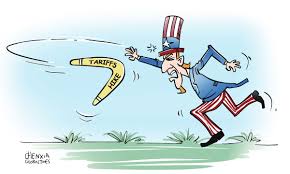
Blue Press Journal D.C. — A significant political maneuver on Capitol Hill this week has thrown President Trump’s favored trade weapon, tariffs, back into the spotlight, exposing deep divisions within the Republican Party and rekindling critical debate about their economic impact on American consumers. House Speaker Mike Johnson’s attempt to block future votes on Trump-era tariffs failed dramatically on Tuesday, signaling a growing bipartisan unease with protectionist trade policies.
In a rare display of internal dissent, three Republican lawmakers – Thomas Massie of Kentucky, Kevin Kiley of California, and Don Bacon of Nebraska – joined forces with Democrats to defeat a crucial procedural measure by a slim 217-214 margin. This unexpected revolt clears the path for the House to consider resolutions disapproving of President Trump’s 25% duties on Canadian goods, and potentially others.
For nearly a year, House Republican leadership had shielded its members from politically difficult votes on these tariffs, a strategy that crumbled on Tuesday. The procedural block, last extended in September, allowed members to avoid taking a stand on duties that have fomented uncertainty and drawn criticism from various economic sectors. Rep. Kiley, speaking after his “no” vote, emphasized the importance of institutional integrity, stating, “I don’t think that the House should be limiting the authority of members and enlarging the power of leadership at the expense of our members.”
The Hidden Cost: Tariffs and Your Pocketbook
While often framed as tools to protect domestic industries, economic analyses, including those from organizations like the Tax Foundation and reports cited by outlets such as The Wall Street Journal, have consistently demonstrated that tariffs act as a direct tax on American consumers and businesses. These import duties inevitably drive up costs for manufacturers and retailers, ultimately leading to higher prices on store shelves for everything from imported components to finished goods. Consumers, often unknowingly, bear the burden of these added expenses, seeing their purchasing power eroded.
Indeed, the long-term imposition of Trump’s “reciprocal” tariffs on a multitude of countries has generated economic headwinds, stifling competition and adding significant overhead for companies across various sectors.
With the shield now gone, Democrats are poised to force votes, even if largely symbolic given potential presidential vetoes. Their goal is clear: to put House Republicans on record regarding their support for these controversial duties. As the Supreme Court weighs the legality of the President’s authority to impose such sweeping tariffs, the renewed congressional focus underscores a critical question: At what cost do these protectionist policies come, and who ultimately pays the price?
Exposed: The Perilous Playbook of Debunked Election Lies and Trump’s Weaponization of the FBI
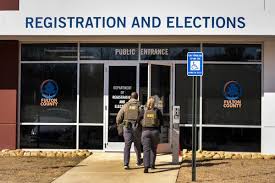
Blue Press Journal – The recent FBI raid on Fulton County, Georgia, seizing nearly 700 boxes of 2020 election ballots and records, has unveiled a deeply disturbing pattern: the aggressive recycling of thoroughly debunked election lies. Far from uncovering new evidence, the court-ordered affidavit supporting the raid reads like a greatest hits compilation of conspiracy theories, long-ago disproven in countless courts and by exhaustive audits. This alarming development signals a dangerous escalation in the campaign to undermine American democracy, leveraging law enforcement agencies for overtly political ends.
The Return of Baseless Allegations
The FBI’s affidavit, intended to establish probable cause for a criminal offense, relies heavily on claims that have been exhaustively investigated and widely discredited. Georgia’s Republican Secretary of State Brad Raffensperger, who famously resisted pressure to “find” votes in 2020, aptly dismissed these assertions as “baseless and repackaged.” [Source: The Atlanta Journal-Constitution] Even Fulton County Board of Commissioners Chair Robb Pitts described the affidavit as based on “recycled rumors, lies, untruths and unproven conspiracy theories.” [Source: CNN]
Consider the affidavit’s core arguments:
Missing Scanned Images: The FBI highlighted that Fulton County “does not have scanned images of all the 528,777 ballots.” Yet, this was not a violation of Georgia law at the time of the 2020 election. The requirement was added by the GOP-led state legislature months later, in March 2021. To present this as evidence of wrongdoing is deliberately misleading.
Multiple Ballot Scans: The affidavit also pointed to instances of ballots being scanned multiple times. Independent investigations into this issue, including those in Fulton County, found no evidence of fraud. Ballots can be rescanned due to tabulation errors, with initial erroneous scans deleted. Crucially, multiple audits—the initial count, a hand-counted audit, and a machine recount—consistently affirmed Joe Biden’s victory margin of 11,779 votes in Georgia. [Source: Associated Press] The affidavit offers no evidence to suggest these procedural issues were the result of intentional criminal action.
As Stanford Law professor Orin Kerr succinctly stated, “In drafting a search warrant affidavit, the Fourth Amendment requires the inclusion of facts that would negate probable cause, if they exist. The government can’t pick facts that, if true, could support a finding a probable cause, but omit the facts that cancel that.” [Source: X / @OrinKerr] The Fulton County affidavit appears to be a stark example of such crucial omissions, presenting a one-sided narrative divorced from established facts and legal precedents.
The Legal System’s Resounding Rejection of Election Lies
These recycled theories have not just been debunked by election officials and independent journalists; they have been definitively rejected by virtually every level of the American judiciary. Following the 2020 election, Donald Trump and his allies filed over 60 lawsuits alleging widespread fraud, from state courts to the Supreme Court.
Pennsylvania: In Trump v. Boockvar, federal courts found no evidence of fraud sufficient to overturn the election, a decision upheld on appeal.
Georgia: Cases like Pearson v. Kemp, which challenged the state’s election procedures, were dismissed for lack of standing or merit.
Supreme Court: The most significant rebuke came when the U.S. Supreme Court, in Texas v. Pennsylvania, et al., unequivocally rejected a lawsuit seeking to overturn results in four key states, citing Texas’s lack of standing. This unanimous decision underscored the absence of credible evidence for systemic fraud.
These judicial pronouncements, delivered by judges across the ideological spectrum, consistently affirmed the integrity of the 2020 election. The attempt to resurrect these thoroughly discredited claims through an FBI investigation represents an appalling disregard for legal due process and factual accuracy.
The Insidious Role of Kurt Olsen and the Weaponization of the FBI
Perhaps the most alarming revelation from the affidavit is that the FBI’s “criminal investigation originated from a referral sent by Kurt Olsen,” a temporary White House employee and a figure central to the “Stop the Steal” movement. Olsen is a notorious election denier who lobbied the Department of Justice to intervene in 2020 and was intimately involved in efforts to overturn the election. His record of promoting unsubstantiated allegations is so extensive that he was sanctioned by a federal court for making “false, misleading and unsupported factual assertions” in a 2022 Arizona election challenge. [Source: Arizona Republic]
Olsen’s involvement in initiating an FBI investigation he has used as a political weapon poses a serious threat to American democracy. This is not a legitimate inquiry but a blatant political weaponization of federal agencies. Allowing a known purveyor of debunked conspiracies, who has faced legal penalties for dishonesty, to trigger an FBI raid sets a troubling precedent. It signifies a dangerous erosion of federal law enforcement’s impartiality and its vulnerability to partisan manipulation.
The unusual involvement of the Office of the Director of National Intelligence (ODNI) in a domestic law enforcement operation further amplified concerns, prompting Senators Alex Padilla (D-Calif.) and Mark Warner (D-Va.) to demand immediate briefings. [Source: The Washington Post] This intermingling of intelligence and domestic law enforcement, particularly when driven by demonstrably false premises, poses an existential threat to the rule of law.
A Clear and Present Danger to Democracy
This episode is more than just a rehash of old lies; it is a calculated effort to “dramatically remake our elections to curtail who is able to vote and whose votes are counted,” as Lauren Groh-Wargo, CEO of Fair Fight Action, warned. [Source: NPR] The willingness of federal agencies to act on such flimsy, politically motivated referrals—rooted in the discredited narratives of figures like Kurt Olsen—sets a perilous precedent. It undermines public faith in democratic institutions, emboldens those who seek to disenfranchise voters, and paves the way for further partisan interference in our electoral processes. The deliberate recycling of debunked election lies, now amplified by the power of the federal government, is an undeniable assault on the foundations of American democracy.
Blue Press Journal – Donald Trump’s presidency has been marked by controversy, but his latest move to shutter the iconic John F. Kennedy Center for the Performing Arts for two years has many questioning the motives behind the sudden decision. Critics argue that the abrupt closure, citing the need for renovations, seems timed to coincide with the facility’s public relations woes and Trump’s own reputation crisis.
Although Trump has made efforts to spin a positive narrative around his leadership of the Kennedy Center, his actions have largely been met with negative headlines. After he hand-picked loyalists for the board who quickly elected him as chairman, ticket sales plummeted and top performers distanced themselves from the institution.
Now, in a move that has caught even some Republicans off guard, Trump is using the temporary closure as an opportunity to renovate the facility. The $257 million allocated for these renovations, as part of last year’s “Big Beautiful Bill,” has raised questions about the timing and necessity of the complete shut down. Senator Susan Collins, a Republican from Maine, expressed surprise at the unexpected closure, stating that she had understood the renovations to be already underway and progressing well.
Yet, Trump and Kennedy Center interim President Richard Grenell may need to be reminded that they cannot shut down an institution simply to avoid negative publicity. A letter signed by 70 Democratic lawmakers, including Representative Jamie Raskin of Maryland, argues that the closure likely violates federal law and raises serious legal and policy questions that must be addressed before any irreversible actions are taken.
The letter also critiques Trump’s handling of the Kennedy Center board, accusing him of purging independent trustees, altering the board’s bylaws to concentrate power in his appointees, and even defacing the national memorial to President Kennedy by adding his own name. This is a radical departure from the center’s traditionally bipartisan governance.
While Trump has promised to preserve some elements of the White House’s East Wing during his own renovation plans, the Kennedy Center’s sudden closure and renovation could be an attempt to manage public perception and distract from the facility’s mismanagement of resources under his leadership.
The fate of the Kennedy Center, a beloved American institution, now hangs in the balance as questions about Trump’s motives and legality swirl. As the country waits to see what comes next, one thing is clear: the truth behind the center’s abrupt closure and renovation will be crucial to understanding the true intentions behind this high-profile move.
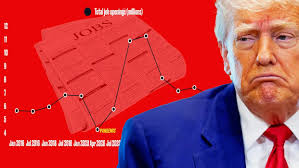
Blue Press Journal – As the Trump administration continues to tout the supposed success of its economic policies, a starkly different narrative emerges when examining the latest data on the job market. Despite the White House’s claims of a new “Golden Age,” the reality is that job openings have plummeted to their lowest level since the height of the Covid-19 pandemic in mid-2020.
According to the Labor Department’s latest report, job openings in December dropped unexpectedly, signaling a significant slowdown in hiring across various industries. This downturn is further underscored by data from the research firm Challenger, Gray and Christmas, which revealed that companies announced plans to cut over 108,000 positions in January, more than double the number of layoffs recorded in January 2025. The payroll processing firm ADP also reported a meager addition of just 22,000 private sector jobs in January, a clear indication of tepid payroll growth.
The numbers paint a concerning picture, particularly when considered in the context of the Trump administration’s boasts about the economy. While official measurements of productivity and output have been strong, polls and consumer confidence surveys have consistently shown negative sentiments among the public. A recent poll from The Economist/YouGov found that Trump trails by 14 percentage points on his handling of jobs and the economy, while a survey by the Federal Reserve Bank of New York revealed deteriorating consumer expectations regarding wage growth and finding new employment.
The disconnect between the administration’s rhetoric and the reality on the ground is striking. As RSM US Chief Economist Joe Brusuelas noted, “On the margin, firms are able to do more with less…That’s fine when you’re talking to an economist or capital markets professional; that’s hell if you’re talking to a politician or the public.” The implications for Trump are significant, as his approval ratings on the economy have already been battered by concerns over affordability, inflation, and labor market anxieties.
The Labor Department’s report also highlighted substantial declines in job opportunities across professional and business services, retail trade, and finance and insurance. As companies increasingly adopt artificial intelligence, there are growing concerns that future growth may leave workers behind. The quits rate, which reflects workers’ willingness or ability to leave their job, remains below pre-pandemic levels, suggesting a lack of confidence in the job market.
The labor market outlook is uncertain, with Wells Fargo economists warning that “the low hiring environment and subdued rate of voluntary job departures risks pushing layoffs higher.” It remains to be seen if the Trump administration’s policies will address the job market’s underlying issues.
Key Statistics:
Job openings in December dropped to their lowest level since mid-2020 (Labor Department)
Companies announced plans to cut over 108,000 positions in January (Challenger, Gray and Christmas)
Private sector firms added just 22,000 jobs in January (ADP)
Trump’s approval rating on jobs and the economy trails by 14 percentage points (The Economist/YouGov)
Consumer expectations regarding wage growth and finding new employment have deteriorated (Federal Reserve Bank of New York)
By examining the latest data and research, it becomes clear that the Trump administration’s economic policies have not delivered the promised benefits to the job market.
Washington Post layoffs and Jeff Bezos’s role in dismantling the newsroom, and how this aligns with the erosion of the First Amendment and appeasement of Donald Trump
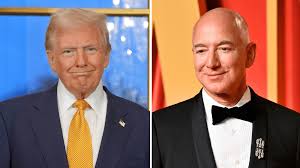
The news industry this week witnessed a seismic shift that threatens the very foundation of American democracy. The Washington Post, a nearly 150-year-old institution and a pillar of the democratic system, began a fresh wave of mass layoffs. Under the ownership of billionaire Jeff Bezos and the stewardship of publisher Will Lewis, the paper is closing its Sports department, gutting its International and Metro desks, and ending its signature podcast.
While management frames these cuts as a necessary business realignment, a closer examination reveals a more troubling narrative. These layoffs represent a systematic dismantling of the Fourth Estate’s ability to hold power accountable. When viewed alongside Bezos’s history of appeasing Donald Trump and his interference in editorial independence, it becomes clear that these cuts are not just financial—they are a direct threat to the First Amendment.
The Erosion of Institutional Integrity
The Washington Post has long been synonymous with investigative journalism, most famously exposing the Watergate scandal. However, under Jeff Bezos’s ownership, the paper has pivoted away from its role as a public watchdog toward a model that prioritizes business interests over journalistic missions.
According to a statement released by the Washington Post Guild, “Continuing to eliminate workers only stands to weaken the newspaper, drive away readers and undercut The Post’s mission.” This is not hyperbole; it is a factual assessment of the current trajectory. By decimating the Metro desk and closing the Books section, the Post is severing its connection to the local community and intellectual discourse—areas essential for a well-informed citizenry.
The human cost of these decisions is staggering. As reported by The Guardian, laid-off journalists took to social media to voice their anger. The former Cairo bureau chief revealed she was laid off alongside the “entire roster” of Middle East correspondents, while a Ukraine-based correspondent lamented losing her job “in the middle of a warzone.” When a major news outlet abandons on-the-ground reporting in conflict zones, it creates an information vacuum that authoritarianism thrives in.
Bezos, Trump, and the Politics of Appeasement
To understand the First Amendment implications of these layoffs, one must look at the broader context of Jeff Bezos’s behavior over the last two years. There is a growing trend in American media, as identified by media critics, where “media companies and other key institutions of civil society responding to Donald Trump’s efforts to bully and intimidate them by knuckling under, sucking up, and appeasing him.”
Jeff Bezos has emerged as a chief practitioner of this appeasement.
In a move that broke with decades of tradition, the Post announced it would not endorse a presidential candidate for the 2024 election—a decision made directly by Bezos. As noted by NPR, this decision resulted in the swift loss of tens of thousands of subscribers. This was not a neutral act; it was a strategic maneuver to protect Bezos’s vast business empire, including Amazon and Blue Origin, from potential retribution should Donald Trump return to power.
Furthermore, Bezos’s interference extends to the editorial pages. He previously forced the opinion section to pivot toward “personal liberties and free markets,” a move that prompted the section’s editor to resign. This editorial meddling signals to readers that the paper’s content is subject to the whims of a billionaire rather than the principles of journalistic integrity.
The Financial Fallacy and the “Puff Piece” Paradox
Critics argue that the layoffs are a response to financial struggles, yet the Post’s decline in subscribers correlates directly with Bezos’s political decisions, not a lack of demand for news. In fact, competitors like The New York Times have thrived. As reported by The New York Times itself, the paper added approximately 450,000 digital-only subscribers in the last quarter of 2025 alone. The difference? The Times continues to invest in its newsroom while the Post is slashing it.
The contradiction in Bezos’s strategy is glaring. While he cuts essential reporting staff, reports have surfaced regarding massive spending on non-journalistic projects. Critics point to the investment of tens of millions in a documentary about the First Lady—a project that serves as a “puff piece” rather than hard news. This allocation of resources suggests that Bezos is more interested in curating a favorable public image than in funding the investigative reporting that defines the Washington Post.
The First Amendment in Peril
The First Amendment guarantees freedom of the press, but that freedom is meaningless without the infrastructure to support it. A free press requires funding, staff, and the independence to report without fear of billionaire reprisal.
By gutting the International and Metro departments, Bezos is effectively shrinking the scope of information available to the American public. A democracy relies on a press that can cover local city hall meetings just as much as it covers international conflicts. When those layers of coverage are stripped away, the public is left with a superficial understanding of the world, making them more susceptible to disinformation and authoritarian rhetoric.
As former Washington Post executive editor Marcus Brauchli once noted, the paper’s value lies in its ability to provide “indispensable” coverage. If Bezos continues to view the Post solely as a financial asset to be liquidated for parts rather than a civic institution, the paper may not survive the decade.
A Call for Responsible Stewardship
The layoffs at The Washington Post are not merely a business restructuring; they are a symptom of a larger disease in American media—the consolidation of power in the hands of billionaires who prioritize self-preservation over public service.
Jeff Bezos has the wealth to sustain the Washington Post for decades, investing in the next generation of reporters and expanding coverage. Instead, he has chosen a path of austerity that weakens the paper’s ability to function as a check on power. By silencing foreign correspondents and dismantling local desks, he is aiding the efforts of those who wish to diminish the free press.
If Bezos is unwilling to be a steward of this beloved institution, he should heed the advice of critics and consider selling the Washington Post to owners who value the First Amendment over personal gain. Until then, the slow death of the Washington Post serves as a chilling warning: the freedom of the press is only as strong as the will of those who own it.
The unhinged presidency of Donald Trump has raised concerns about his mental health and authoritarian tendencies. Experts warn that his behavior is eroding American democracy and posing a threat to national security.
Blue Press Journal – As the 47th President of the United States, Donald Trump has consistently demonstrated a blatant disregard for the norms of democracy, dignity, and decency. His former White House attorney, Ty Cobb, has recently sounded the alarm, warning that Trump’s unbridled behavior in his second term may be a symptom of declining mental health (Source: Substack interview with Jim Acosta). Cobb’s concerns are not unfounded, as Trump’s erratic and authoritarian tendencies have been well-documented by reputable news sources, including The New York Times, The Washington Post, and CNN.
Cobb, who served as a White House counsel during Trump’s first administration, has accused the President of “tarnishing everything that was once dignified and sacred about America” (Source: Substack interview). He has also expressed concern that Trump is being enabled by a White House staff comprised largely of sycophants, including advisors like Stephen Miller and Russell Vought. According to Cobb, these individuals are encouraging Trump to act on his worst impulses, leading to a situation where the President is “just doing what he wants” (Source: Substack interview).
This lack of restraint has resulted in a presidency marked by chaos, controversy, and a blatant disregard for the rule of law. Trump’s actions have been widely criticized by experts, including former FBI Director James Comey, who has described the President’s behavior as “unfit” and “outside the bounds of normal human behavior” (Source: The New York Times). Furthermore, Trump’s authoritarian tendencies have been highlighted by The Atlantic, which has noted that the President’s actions are “eroding the foundations of American democracy” (Source: The Atlantic).
Cobb’s concerns about Trump’s mental health are not isolated. Psychology Today has published numerous articles examining the President’s behavior through the lens of psychology, with some experts suggesting that Trump may be exhibiting symptoms of narcissistic personality disorder (Source: Psychology Today). Additionally, The Lancet, a reputable medical journal, has published articles highlighting the potential risks of Trump’s behavior to global health and stability (Source: The Lancet).
The consequences of Trump’s actions are far-reaching and devastating. As Cobb noted, the President’s behavior has resulted in damage to the United States’ relationships with its allies, with some countries refusing to share intelligence with the US due to concerns about Trump’s ties to Russia (Source: The Washington Post). This has significant implications for national security, as highlighted by The Center for Strategic and International Studies (Source: The Center for Strategic and International Studies).
The evidence suggests that Donald Trump’s presidency is marked by a disturbing lack of restraint, a blatant disregard for the rule of law, and a worrying decline in mental health. As Cobb warned, “we are in a place we have never seen before and we need to navigate out of it as quickly as possible or we’re going down” (Source: Substack interview). It is imperative that the American people demand accountability from their leaders and take action to protect the integrity of their democracy.
The FBI’s unprecedented seizure of Georgia’s 2020 ballots raises critical questions about federal overreach, Trump’s lingering influence, and the fragile chain of custody that underpins American democracy.
Blue Press Journal – When news broke of an FBI raid at Fulton County’s central election facility in Georgia, it barely registered in the national conversation. Yet, for many observers, the January 28 operation—reportedly involving the seizure of more than 700 boxes of 2020 election materials—raises troubling questions about federal overreach and political motives behind revisiting an election that courts and recounts have already settled.
According to The New York Times and Reuters, the raid was conducted under the pretext of “protecting election integrity.” But the optics are hard to ignore. Why would federal agents intervene in a state-controlled election process nearly four years after Donald Trump lost Georgia, a defeat confirmed by multiple recounts and upheld in more than 60 court cases nationwide?
A Chain of Custody—or a Chain of Command?
Legal experts and state officials have voiced concern about the lack of transparency surrounding the operation. Fulton County election staff say they were given little explanation for the seizure, and no clear chain of custody documentation has been made public. Election law analysts note that such actions could undermine faith in the very institutions charged with safeguarding democracy.
Maine’s Secretary of State, Shenna Bellows, summed up the unease in a statement to The Associated Press:
“We maintain strict control over our ballots. If the federal government can simply seize them without explanation, it sets a dangerous precedent.”
Trump’s Shadow Over the Investigation
Trump’s continued insistence that the 2020 election was “rigged”—despite bipartisan certification and judicial rejection of fraud claims—looms over this latest development. His public comments following the raid, amplified on Truth Social, again alleged wrongdoing in Fulton County, echoing disproven narratives from his post-election campaign.
CNN and FactCheck.org have repeatedly debunked these claims, noting that Georgia conducted both a hand recount and an audit, confirming Joe Biden’s victory. Still, the former president has expressed regret that he “didn’t order the National Guard to seize voting machines,” a statement that blurs the line between political rhetoric and authoritarian impulse.
Election Integrity or Political Intimidation?
The presence of senior intelligence officials, reportedly including the Director of National Intelligence, raises another question: is this truly about election security—or about sending a message to local election workers? As one Fulton County official anonymously told The Washington Post,
“This feels like intimidation. It’s meant to make officials think twice before standing up to federal power.”
Critics argue that actions like this risk chilling effect on election staff and voters alike, particularly in diverse, high-turnout counties such as Fulton—where turnout was key to Biden’s 2020 win.
Democracy Under Scrutiny
While Trump’s allies claim the raid is part of a legitimate transparency effort, the broader context suggests a deeper pattern: using federal agencies to re-litigate political defeats. The FBI, the Department of Justice, and intelligence agencies now find themselves caught between protecting electoral systems and appearing complicit in partisan agendas.
Minneapolis Mayor Jacob Frey condemns a federal court ruling allowing Trump-era immigration raids in Minnesota, calling it an invasion undermining safety and local authority.
Blue Press Journal – Minneapolis Mayor Jacob Frey condemns a federal court ruling allowing Trump-era immigration raids in Minnesota, calling it an invasion undermining safety and local authority.
Minneapolis Mayor Jacob Frey and Minnesota officials are vowing to continue their fight against the Trump administration’s aggressive escalation of federal immigration enforcement in the Twin Cities — even after a federal judge rejected the state’s request to halt the operation.
The decision, handed down by U.S. District Judge Katherine Menendez, denied an injunction against what locals have described as an “invasion” of federal immigration officers under Operation Metro Surge. This initiative, launched during Trump’s presidency, has sent waves of heavily armed Immigration and Customs Enforcement (ICE) and Customs and Border Protection (CBP) agents into Minneapolis neighborhoods.
Mayor Frey: “This Has Brought Fear, Not Safety”
Mayor Frey issued a strong rebuke following the ruling, stating that the surge has disrupted communities, instilled fear among residents, and undermined public safety. “This decision doesn’t change the lived reality here — fear, disruption, and harm caused by a federal operation that never belonged in Minneapolis in the first place,” Frey said.
He emphasized that Minneapolis’s sanctuary city policies are designed to protect immigrant communities, fostering trust between residents and local law enforcement. Critics argue that Trump’s immigration crackdowns — often targeting sanctuary jurisdictions — were politically motivated, aiming to punish cities that refused to cooperate with federal deportation efforts.
Tragic Consequences of Federal Overreach
The lawsuit, filed by Minnesota Attorney General Keith Ellison and Twin Cities officials, gained urgency after two local residents — ICU nurse Alex Pretti and Renee Good — were killed in incidents tied to federal immigration actions. These deaths have intensified calls for accountability and raised questions about the safety and necessity of such operations in urban areas far from the border.
Researchers and immigration advocacy groups note that deploying militarized federal agents in sanctuary cities is not only legally contentious under the Tenth Amendment’s anti-commandeering doctrine, but also socially destabilizing. It can discourage crime victims from seeking help and erode trust in public institutions.
Sanctuary Cities Under Siege
Under Trump’s leadership, sanctuary cities like Minneapolis, New York, and San Francisco repeatedly faced threats of funding cuts, public shaming, and targeted enforcement surges. The administration claimed such measures upheld federal law, but critics, including the American Civil Liberties Union (ACLU), warned they were designed to intimidate immigrant communities and score political points rather than improve safety.
Mayor Frey has made it clear that Minneapolis will not serve as an arm of federal immigration enforcement. “Undocumented residents should be able to call 911 without fearing deportation,” he said, reaffirming the city’s commitment to being a “welcoming, inclusive place for all.”
Despite the setback in court, Minneapolis officials are appealing the decision, determined to hold the Trump administration accountable. The broader legal battle touches on fundamental questions about states’ rights, local autonomy, and the limits of federal power in immigration enforcement.
Blue Press Journal– As the midterm elections approach, the deepening financial turmoil experienced by American farmers has morphed into a significant political dilemma for the Republican Party. According to former Republican strategist Rick Wilson, the fallout from President Donald Trump’s economic policies is manifesting in a way that could reshape the political landscape in rural America.
In a recent Substack post, Wilson, co-founder of the anti-Trump organization The Lincoln Project, articulated a stark reality: many of Trump’s staunchest supporters are now grappling with a harsh economic truth. He stated, “Welcome to the ‘Find Out’ phase of the most expensive political experiment in American history. As we head into 2026, rural America is discovering that you can’t eat ‘owning the libs,’ and you can’t pay a mortgage with Facebook memes.”
In the 2024 election, rural Americans did more than just support Trump; they made a perilous commitment to his policies. In the nation’s 444 farming-dependent counties, Trump garnered nearly 78% of the vote. Now, these areas are witnessing the catastrophic effects of what Wilson terms “MAGA-nomics,” as multi-generational family farms face unprecedented challenges. The metaphor of “Leopards Eating People’s Faces” epitomizes the irony of voters suffering from the very policies they championed.
The Impact of Tariffs on Farmers
The Trump administration’s imposition of sweeping tariffs has severely impacted farmers’ incomes. Wilson describes the consequences succinctly: “For farmers, this wasn’t ‘winning’—it was a state-sponsored execution.” China, which once accounted for half of all U.S. soybean exports, has largely ceased buying American agricultural products. By 2026, major crop revenues faced staggering declines: corn fell by $169 per acre, soybeans by $114, and cotton nearly $400. According to projections, net farm income is expected to plummet by $41 billion this year—a staggering 23% decrease, marking one of the sharpest declines seen in decades (U.S. Department of Agriculture, 2023).
The Labor Crisis Intensified by Immigration Policies
The plight of farmers has been further exacerbated by the Trump administration’s aggressive immigration policies. As Wilson aptly noted, “If tariffs were the heart attack, immigration policy was the stroke.” The push for mass deportations resulted in a labor crisis that farmers could not ignore. With roughly 70% of farmworkers being foreign-born, the labor force rapidly dwindled. In states like New Jersey and California, crops were left to rot in the fields, and one grower reported a staggering loss of $5 million due to a lack of available labor to harvest.
Political Ramifications for the GOP
The financial fallout from these policies has transformed into a political liability for the GOP. Wilson warns, “For Republicans running in 2026, this is a slow-motion catastrophe. They’re chained to an incumbent who is bankrupting his most loyal voters.” The irony is profound: the very individuals who rallied behind Trump’s trade wars and immigration policies are now suffering the consequences. Experts had predicted these outcomes, yet the farmers who built Trump’s support base are now paying the price.
As rural America grapples with an economic crisis ignited by misguided policies, the political fallout for the GOP could be catastrophic. With the 2026 elections looming, uncertainty reigns over whether the party can extricate itself from the devastating consequences of Trump’s economic blunders or if they will be shackled to a disillusioned base that is growing ever more despondent.
CBS News is in crisis under Bari Weiss’s leadership, with a Trump-friendly agenda sparking viewer decline and staff discontent
Blue Press Journal – In a stunning display of tone-deaf leadership, CBS News editor-in-chief Bari Weiss has told staff to leave the company if they’re unwilling to conform to her vision, as the network continues its shift towards a more Trump-friendly agenda. The move comes as CBS News faces plummeting viewership and growing controversy under Weiss’s leadership.
Since taking the helm, Weiss has courted controversy with her conservative credentials and lack of TV news experience. The appointment was made after Paramount, CBS’s parent company, acquired her news blog, The Free Press, for a staggering $150 million. Weiss reports directly to Paramount CEO David Ellison, son of Trump megadonor Larry Ellison, raising concerns about the network’s editorial independence.
During a recent all-hands meeting, Weiss acknowledged the network’s poor public reception, telling staff to “earn” her trust and that of their viewers. However, her remarks did little to ease concerns about the network’s direction. Weiss likened CBS News to a “start-up,” warning of further changes and emphasizing the need for “scoops” and a “singular editorial vision,” which seems driven by a Trump-friendly agenda alienating viewers and staff alike.
The results are already evident. CBS Evening News, the network’s flagship program, has seen a 20% decline in viewership under new anchor Tony Dokoupil, a Weiss appointee. The show’s latest episode, which aired largely unchanged after a controversy surrounding Weiss’s interference, had one of the newsmagazine’s lowest ratings in its 58-year history.
In the first week under new anchor Tony Dokoupil (Jan. 5–9, 2026), the program averaged approximately 4.17 million viewers, a drop of roughly 23% from the ~5.4 million viewers during the same period in 2025.
Weiss’s leadership has raised concerns about the network’s editorial integrity. She has been accused of pulling a segment on the infamous mega-prison CECOT, where the Trump administration sends deportees, and demanding an on-camera interview with a Trump official. This was viewed as an attempt to appease the Trump agenda, leading staffers to fear retaliation for voicing opposition.
The writing is on the wall: CBS News is in crisis. With layoffs looming and staff morale at an all-time low, it’s clear that Weiss’s vision is not aligned with that of the network’s dedicated staff. As the network continues to hemorrhage viewers, one thing is certain: Bari Weiss’s tenure at CBS News is a disaster waiting to happen.






 Blue Press Journal