Tag: donald-trump

  • Donald Trump’s Christmas Meltdown: A Disturbing Sign of Mental Decline

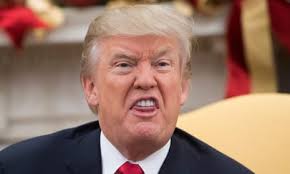
    BLUE PRESS JOURNAL – While most Americans were spending Christmas Eve with family, friends, and traditions steeped in warmth, Donald Trump was doing something else entirely: furiously posting online well past midnight. In a torrent of over 100 posts, the former president lashed out at his usual list of perceived enemies — Democrats, people of color, and anyone who dares question his legacy. He even went so far as to once again rage about the 2020 election, a grievance he has refused to let go more than three years later.

    The language was particularly ugly. Trump referred to his political opponents as “Radical Left Scum,” a phrase that, aside from its cruelty, underscores his inability to engage in the kind of unifying rhetoric expected from a national leader. It was a performance not of strength, but of bitterness, pettiness, and obsession.

    An Unraveling in Public View

    Trump’s late-night posting spree is part of a broader pattern that has become more visible over the past year: an almost compulsive need to relitigate the past, settle scores, and portray himself as a perpetual victim. Instead of presenting coherent policy ideas or offering a positive vision for the future, his public communication is increasingly dominated by personal vendettas and conspiracy-laden grievances.

    It’s not simply that these angry outbursts are unbecoming — they are politically self-destructive. Every minute spent rehashing old battles is a minute not spent persuading undecided voters, articulating solutions to real-world problems, or showing leadership in moments of national challenge. For someone seeking (or holding) high office, that’s a glaring red flag.

    The Epstein Cloud

    One of the more telling aspects of this latest meltdown is the apparent sensitivity Trump shows whenever Jeffrey Epstein’s name comes up. While public records confirm that Trump and Epstein knew each other in the late 1980s and early 1990s, Trump has since tried to distance himself. Yet, his social media eruptions suggest the mere mention of Epstein still touches a nerve. The defensiveness is striking — and it fuels curiosity about why this particular topic provokes such an intense reaction.

    Why It Matters

    Even if one sets aside the moral and ethical concerns about Trump’s rhetoric, the practical political consequences are significant. A leader who spends Christmas Eve in a rage spiral online is not projecting stability, discipline, or focus. Instead, he is reinforcing an image of someone consumed by grudges, unable to move forward, and increasingly out of step with the broader electorate.

    For his base, these moments might feel like evidence of “fighting” against the establishment. But for everyone else — including moderates and independents — they serve as a reminder of why Trump remains one of the most polarizing and exhausting figures in American politics.

    If this pattern continues, it won’t simply be a problem for Trump’s public image. It will raise deeper questions about his capacity to lead — questions that grow louder every time he chooses rage over reason.

  • Trump’s 2025 Tariffs: “Liberation Day” For Jobs… If You Mean Liberating Them Out of Existence

    BLUE PRESS JOURNAL – Remember when President Trump announced his so-called “Liberation Day” tariffs back in April 2025? He promised they’d be a shot in the arm for American workers — especially in manufacturing. The message was simple: slap big taxes on most imports, force companies to “buy American,” and watch U.S. factories roar back to life. 

    Well, fast-forward to today, and the “roaring” sounds you’re hearing are more like the groans of laid-off workers. 

    The Job Numbers Tell the Story

    Let’s start with the cold, hard math: Since the tariffs went into effect, the U.S. economy has been adding jobs at one-tenth the pace it did under President Biden. According to the Bureau of Labor Statistics (BLS), Biden’s term saw an average of around 400,000 jobs per month in 2021–2022 (BLS Jobs Data). Under Trump’s post-tariff economy in 2025, that’s closer to 40,000 per month — a stunning slowdown for a country not in a recession. 

    And manufacturing? The very sector Trump claimed he was rescuing? It’s been shrinking. Every single month since the tariffs were announced in April 2025, manufacturing employment has ticked downward. The most recent BLS data shows 67,000 fewer manufacturing jobs now than when the tariffs began (BLS Manufacturing Employment). 

    Why Tariffs Backfire

    Economists have been warning for years that tariffs don’t work the way politicians promise. Sure, they make imported goods more expensive, but they also raise costs for U.S. businesses that depend on imported parts and materials. That means higher prices for consumers and squeezed profit margins for manufacturers — the very people you’re supposedly helping. 

    Back in 2018, during Trump’s first term, the Peterson Institute for International Economics estimated that his steel and aluminum tariffs actually cost more manufacturing jobs than they preserved (PIIE Analysis). The same pattern seems to be repeating in 2025. 

    The Domino Effect on the Economy

    When manufacturers cut jobs, it doesn’t just hurt factory towns. It ripples out to suppliers, shipping companies, local restaurants, and pretty much any business that depends on those workers’ paychecks. Even sectors not directly tied to imports can get caught in the drag because tariffs slow overall economic activity. 

    And let’s not forget — these tariffs function like a tax increase on everyday Americans. When the cost of imported goods goes up, so do the prices on store shelves. That’s inflationary pressure at a time when many families are still trying to get their budgets under control. 

    The Political Spin vs. Economic Reality

    Of course, the White House is spinning this as “short-term pain for long-term gain.” The problem is, we’ve heard that before. In 2018 and 2019, Trump’s trade war with China was supposed to bring manufacturing roaring back. Instead, U.S. manufacturing output fell and job growth slowed (Federal Reserve Industrial Production Data). 

    Now in 2025, history is repeating itself — only the tariffs are broader, the job losses faster, and the excuses flimsier. You can call it “Liberation Day” if you want, but for tens of thousands of American workers, it feels more like eviction day. 

    Bottom Line

    Tariffs make for great political theater. They let a president look “tough” on trade without having to pass complicated legislation. But the economic reality is that they’re a blunt instrument — and when you swing a blunt instrument, you often hurt the very people you claim to be protecting. 

    If the goal was to “liberate” Americans, the 2025 tariffs have certainly done that — they’ve liberated them from their jobs, from stable paychecks, and in some cases, from their ability to keep the lights on.

  • Consumer Confidence Slips to Its Lowest Level Since Trump’s Tariffs Began

    BLUE PRESS JOURNAL – After a strong rally in November, U.S. consumer confidence lost steam in December, dropping to its lowest point since President Donald Trump first imposed sweeping tariffs on major trading partners. According to The Conference Board’s latest report, the consumer confidence index fell 3.8 points—sliding from a revised 92.9 in November to 89.1 last month. That reading is perilously close to the 85.7 level recorded back in April, when the administration unveiled tariffs on steel, aluminum and a host of imported goods.

    What’s behind this renewed slump in confidence? Consumers’ write-in responses to the survey shed light on two persistent worries: rising prices and inflation, and the economic fallout from trade tensions. In short, Americans are feeling squeezed by day-to-day costs even as they fret over the prospect of higher import taxes driving prices further upward.

    Although overall confidence dipped, the survey’s so-called “expectations” component—gauging short-term outlooks for income, business conditions and the job market—remained unchanged at 70.7. While stability may sound positive, the figure still sits well below the 80-point threshold many economists consider a yellow flag for an impending recession. In fact, this marks the 11th consecutive month that consumers’ expectations have lingered below that critical 80-point mark.

  • Bipartisan Firestorm Erupts Over DOJ’s Withholding of Jeffrey Epstein Files


    BLUE PRESS JOURNAL – A rare bipartisan alliance in Congress is turning up the heat on the Department of Justice (DOJ), after the agency failed to hand over all documents tied to the late convicted sex offender Jeffrey Epstein — despite a legal requirement to do so. The controversy has sparked an unusual push for “inherent contempt” proceedings against Attorney General Pam Bondi, including the threat of daily fines until the full cache of files is released.

    The Dispute Over Epstein Records

    Earlier this year, lawmakers passed legislation mandating the DOJ to make public all federal documents related to Epstein, whose death in federal custody in 2019 continues to fuel questions about his network of associates and possible enablers. The bill — backed across party lines — was seen as a step toward transparency in one of the most notorious criminal cases in recent memory.

    However, reports emerged last week that the DOJ had only delivered a portion of the mandated files, withholding several categories of records. According to congressional aides cited by Politico and The Hill, these missing documents include internal communications, investigative notes, and certain sealed grand jury materials that lawmakers say should have been reviewed for public release under the new law.

    Massie and Khanna’s Bipartisan Push

    Reps. Thomas Massie (R-Ky.) and Ro Khanna (D-Calif.) — an unlikely pairing from opposite ends of the political spectrum — co-led the original transparency bill and are now spearheading the enforcement effort. In a joint statement, they accused the DOJ of “flouting the clear will of Congress” and undermining public trust.

    Their solution: invoking Congress’s inherent contempt powers, a rarely used tool that allows lawmakers to directly penalize executive branch officials without going through the courts. Historically, this power has been employed to compel testimony or document production, though its use in the modern era is virtually unheard of.

    Under their proposal, Attorney General Bondi could face monetary fines until the DOJ hands over the full tranche of Epstein-related records.

    What Is “Inherent Contempt”?

    The inherent contempt process dates back to the 19th century, when Congress asserted its authority to enforce subpoenas by detaining or fining noncompliant witnesses. While the Supreme Court has upheld the power in principle, it has fallen out of favor in the last century, replaced by criminal contempt referrals to the DOJ itself — an awkward arrangement when the DOJ is the target.

    Massie and Khanna argue that the exceptional nature of the Epstein case warrants reviving the old enforcement mechanism. “When the agency breaking the law is the one that normally prosecutes contempt, Congress has to act for itself,” Massie said in recent interviews.

    Why It Matters

    The DOJ’s partial release has reignited public suspicion over Epstein’s connections to prominent figures in politics, finance, and entertainment. Transparency advocates say withholding the documents fuels conspiracy theories and undermines accountability for potential crimes beyond Epstein’s own convictions.

    Bondi, a former Florida attorney general appointed to lead the DOJ last year, has defended the department’s approach, saying certain materials are too sensitive to release for reasons ranging from ongoing investigations to privacy concerns for individuals not charged with wrongdoing.

    Still, with both Republicans and Democrats pressing for full disclosure — and willing to test the boundaries of congressional enforcement — the standoff could set a precedent for how lawmakers respond when executive agencies defy statutory mandates.

    What’s Next

    The Massie-Khanna resolution for inherent contempt is expected to be formally introduced in the coming weeks. If adopted, it could trigger a high-profile constitutional clash between Congress and the DOJ, potentially landing before the courts if Bondi challenges the fines.

    Political analysts note that while bipartisan cooperation on transparency is rare, the Epstein case has cut across partisan lines due to its disturbing subject matter and unanswered questions. Whether this unity holds through a drawn-out enforcement battle remains to be seen.


    Bottom line: The fight over the Epstein files is more than just a dispute over documents — it’s a test of Congress’s ability to compel compliance from the executive branch in the face of resistance. If Massie and Khanna succeed, they could revive an enforcement power unused for decades, reshaping the balance between the legislative and executive branches.

  • The Shameful Secrecy of the DOJ: Epstein Documents Vanish

    BLUE PRESS JOURNAL – In a disturbing turn of events, the Department of Justice (DOJ) has removed at least 16 files from its Jeffrey Epstein documents webpage, leaving the public with more questions than answers. The abrupt disappearance of these files is a stark reminder of the DOJ’s lack of transparency and accountability, particularly under the Trump administration.

    The removed files were already heavily redacted, which raises suspicions about the true extent of the information being withheld. The DOJ has offered no explanation for the removal, sparking outrage and frustration among those seeking justice and truth in the Epstein case. The victims and their families deserve better than this blatant disregard for transparency.

    It’s particularly egregious that this development comes after Congress passed a law requiring the full release of these documents. The law, which was meant to ensure that the public has access to all relevant information related to Epstein’s crimes, has been effectively circumvented by the DOJ’s actions. This is a clear example of the Trump administration’s disregard for the rule of law and its willingness to prioritize secrecy over transparency.

    The Jeffrey Epstein case exposes the sinister nexus of power and privilege lurking in America’s shadows. It’s an outrageous affront that a serial sex offender managed to thrive unchecked, buoyed by a network of influential accomplices. The DOJ’s shameful mishandling of this case, particularly the erasure of critical files, only reinforces the ghastly truth: the justice system is not just broken, it’s rigged to protect the elite and well-connected.

    While the claim that former President Donald Trump orchestrated the disappearance of at least 16 files related to the Jeffrey Epstein case remains unsubstantiated, it raises serious concerns about transparency and accountability in sensitive investigations. Epstein, a convicted sex offender with ties to powerful figures, became central to debates about corruption. Allegations that key officials, including those close to Trump, mishandled or suppressed evidence have fueled public distrust, particularly given Trump’s history of deflecting scrutiny. Critics argue that his administration often obstructed investigations intersecting with personal interests, as seen in the 2016 FBI probe into Hillary Clinton’s emails. While the Epstein files’ disappearance may not directly implicate Trump, it casts doubt on his administration’s accountability, compounded by his praise of Epstein and refusal to clarify their relationship. Until concrete evidence clarifies the matter, critics will demand answers about how such critical files were lost—and who benefited from their absence.

  • Trump’s Skyrocketing Disapproval Ratings in Swing State North Carolina Cast Doubt on GOP’s Midterm Chances

    BLUE PRESS JOURNAL – In a stark sign of his dwindling popularity, President Donald Trump has hit a record high in disapproval ratings in the crucial swing state of North Carolina, according to a recent poll. With only 35% of respondents in the key state expressing approval, the 2026 midterm elections are poised to become a major test for Trump and his GOP allies.

    The Elon University and YouGov survey, conducted from November 19 to December 1, paints a bleak picture for Trump, with 51% of North Carolinians voicing disapproval of his job performance. This alarming number is compounded by an additional 14% of undecided voters, a demographic that often proves decisive in close elections. The data suggests Trump’s toxic approval ratings are not only damaging his own re-election prospects but also posing significant challenges for Republicans looking to retain control of Congress.

    North Carolina’s status as a traditional swing state makes these findings particularly concerning for the GOP. Recent voter registration figures from the North Carolina State Board of Elections show a razor-thin margin between the two major parties, with Democrats holding a mere 1,200 voter advantage. This slim margin underscores the state’s impact on national electoral outcomes and underscores the importance of Trump’s performance in the region.

    Trump’s struggles in North Carolina are reflective of his broader national decline in popularity. As the President’s controversial policies and persona continue to polarize the country, many Americans are growing increasingly disaffected with his leadership. His inability to appeal to a broader cross-section of voters in key battleground states like North Carolina raises serious questions about his ability to lead a unified country and effectively represent the diverse interests of the American people.

    With the 2026 midterms fast approaching, the implications of Trump’s plummeting approval ratings in North Carolina are far-reaching and potentially disastrous for the Republican Party. If the President’s unfavorable ratings continue to soar, it could lead to a significant erosion of Republican support among key voter demographics, creating an uphill battle for the party to retain control of Congress.

    Trump’s staggering disapproval ratings in North Carolina act as a glaring alarm bell for the GOP as they gear up for the 2026 midterms. With his divisive presence continuing to redefine the political terrain, his inability to charm swing state voters like those in North Carolina could spell disaster for the Republican Party’s electoral prospects. Time is running out for Trump and his allies to reverse the tide of public sentiment, or they might just find themselves staring down the barrel of a humiliating defeat at the polls.

  • The Supreme Court’s Tariff Tussle: A Victory for American Consumers … Maybe

    Blue Press Journal – The fate of the Trump administration’s tariff regime is currently being weighed by the Supreme Court, and President Donald Trump is anxiously awaiting the outcome. However, regardless of the court’s decision, one thing is clear: tariffs are bad news for American consumers.

    The tariffs imposed by the Trump administration have been touted as a means to protect American industries and reduce the trade deficit. However, the reality is that these tariffs have resulted in increased costs for American businesses and consumers. By imposing tariffs on imported goods, the administration has essentially levied a tax on American consumers, who are forced to pay higher prices for everyday products.

    The Unintended Consequences of Tariffs

    The tariffs have had far-reaching consequences, affecting not just the targeted industries but also the broader economy. American companies that rely on imported goods have seen their costs rise, leading to higher prices for consumers and reduced competitiveness in the global market. Moreover, the tariffs have sparked retaliatory measures from other countries, harming American exporters and farmers.

    A Victory for Consumers

    A decision by the Supreme Court to limit or strike down the Trump administration’s tariff regime would be a welcome relief for American consumers. It would help to reduce the costs of goods and services, boost economic growth, and promote free trade. On the other hand, if the court upholds the tariffs, it would perpetuate a trade policy that has been detrimental to American consumers.

    As the Supreme Court weighs the fate of the Trump administration’s tariff regime, American consumers should be hoping for a decision that prioritizes their interests and promotes a more open and free trading system.

  • Trump’s Redistricting Pressure Campaign Backfires in Indiana Senate 

    Blue Press Journal – In a stunning rebuke to President Donald Trump’s heavy-handed pressure campaign, 21 out of 40 Republican state senators in Indiana voted against adopting new congressional maps that would have eliminated the state’s two Democratic-held House seats. Trump’s all-or-nothing attempts to strong-arm the senators into submission only led to further division and opposition.

    Trump unleashed a barrage of social media posts, threatening GOP Senate President Pro Tem Rodric Bray and other holdouts with fierce primary challenges if they didn’t cede to his redistricting demands. Vice President JD Vance made multiple rounds to Indianapolis to try to sway the lawmakers personally. Even the White House and House Speaker Mike Johnson (R-La.) got involved, individually calling senators to push them to flip their votes. 

    However, the blitzkrieg of intimidation, threats, and attempted violence targeting senators who opposed the effort only amplified their resolve. Instead of cowering, a majority of the GOP caucus stood united against Trump’s demands, citing concerns that mid-census redistricting was a power grab and should only occur once a decade after the census.

    Senator Eric Bassler was among those who reiterated their commitment to standing by the maps they voted for four years ago, demonstrating an unwavering commitment to principle over political pressure. “I cannot support any mid-census redistricting plan,” Bassler stated firmly. “Four years ago, my Republican colleagues and I voted for our current state and federal legislative maps. I stand by that vote and I will not support legislation to change our congressional maps.”

    This rejection for Trump is a reminder that even political titans can fall when they breach boundaries of decency. It offers hope: if lawmakers stand against bullying, honorable politics might rise from extreme partisanship. Ultimately, Trump’s reckless redistricting gamble leaves him with humiliation, confirming the importance of integrity in public service.

  • Donald Trump and the “Pencil” Problem: Why the President’s Holiday Message Misses the Mark

    Why American’s are Mad as Hell

    Blue Press Journal – Senior Political Analyst

    Published: December 12 /2025


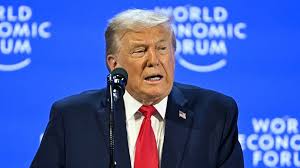
    When President Donald Trump took the podium this week in Pennsylvania to discuss “tightening belts” for the upcoming holiday season, the reaction from ordinary Americans was unmistakable: bewilderment, frustration, and a growing sense that the commander‑in‑chief is living in a reality far removed from theirs. The centerpiece of his address—a quirky, almost whimsical suggestion that families could forgo a few foreign‑made pencils in favor of domestic products—has quickly become a symbol of a deeper disconnect between the nation’s leader and the electorate he was elected to serve.

    The “Pencil” Pitch in Context

    Trump’s remarks were framed as a patriotic call to action: “You can give up certain products, you can give up pencils because under the China policy, every child can get 37 pencils. They only need one or two.” On the surface, the statement seems innocuous—a light‑hearted nod to the ongoing trade war with Beijing. Yet, when examined against the broader economic backdrop, it reveals several troubling undercurrents.

    1. Inflation Is Still a Live Issue
      One of Trump’s central campaign promises in 2024 was to “fix the inflation disaster” that he blamed on President Joe Biden’s fiscal policies. While the Consumer Price Index (CPI) has modestly cooled from its 2022 peak, core inflation remains above the Federal Reserve’s 2 % target. For families already grappling with higher grocery bills, gas prices, and rising rent, a suggestion to surrender a handful of school supplies feels tone‑deaf rather than inspiring.
    2. Supply‑Chain Realities
      The global pencil market is dominated by manufacturers in China and Indonesia, where economies of scale allow a single “pencil” to be produced for a fraction of the cost of a domestically made counterpart. By urging consumers to “give up” imported pencils, Trump implicitly dismisses the fact that many American schools and families rely on low‑cost supplies to keep classroom budgets afloat. The policy he champions—greater protectionism—has historically led to higher prices, not savings.
    3. The Symbolic vs. the Substantive
      A president’s rhetoric matters, but it must be tethered to concrete policy outcomes. Trump’s tariffs have, in some sectors, spurred short‑term gains for a handful of domestic manufacturers. However, the broader economy has seen a slowdown in export‑dependent industries, with retaliatory tariffs eroding market access for U.S. farmers and tech firms. In this light, the “pencil” anecdote is less an earnest call for patriotism than a symbolic gesture that masks the real costs of protectionist policy.

    Why Voters Are Growing Angry

    The holiday season traditionally amplifies concerns about household budgets. According to the latest Pew Research Center poll, 62 % of Americans say they expect to “tighten spending” over the next six months. When a president—especially one who campaigned on restoring economic stability—asks citizens to “give up pencils,” the reaction is not merely a chuckle; it is a genuine expression of frustration.

    • Economic Insecurity Is Not a Gimmick
      For a single‑parent household in the Midwest, the idea of swapping a cheap, imported pencil for a pricier domestic version is not a matter of patriotism but of financial necessity. The president’s comment trivializes the day‑to‑day decisions that low‑income families make: which bills to prioritize, whether to cut back on heating, or if they can afford a modest holiday gift.
    • A Disconnect From the Voter Base
      Trump’s political ascent was built on a promise to “drain the swamp” and bring a business‑savvy mindset to Washington. Yet, his current messaging reflects a leadership style that favors grandstanding over nuanced problem‑solving. The “pencil” remarks, like many of his recent speeches, suggest a preference for rhetorical fireworks rather than a detailed plan to combat the lingering effects of inflation, supply‑chain disruptions, and labor market volatility.
    • Erosion of Trust in Governance
      When elected officials appear out of step with the lived experiences of their constituents, public trust erodes. The 2025 Gallup confidence index shows a modest decline in trust toward the federal government, dropping from 35 % in 2023 to 31 % today. While many factors contribute to this decline, high‑profile missteps—such as the holiday “pencil” pitch— exacerbate the perception that the administration is disconnected from ordinary Americans.

    The Bigger Picture: Policy Over Pantomime

    Trump’s call to “surrender pencils” should be viewed through the lens of his broader trade agenda. Protectionist tariffs, when wielded without strategic nuance, can produce unintended consequences:

    • Higher Consumer Prices
      By limiting imports, domestic producers often raise prices to cover higher production costs. That means families pay more for the very goods they are being asked to “support.”
    • Retaliatory Measures
      China’s own tariffs on American agricultural products have already dented farm incomes, especially in the heartland. The ripple effects extend beyond the farm gate, touching food processing, distribution, and ultimately, grocery shelves. A good example is Trump’s 12 billion dollar farmer bailout because of his Tariffs.
    • Innovation Stagnation
      Open competition spurs innovation. Shielding domestic firms from foreign competition can create complacency, reducing the incentive to improve quality or lower costs—a risk that could ultimately harm American competitiveness on the global stage.

    What a Realistic Response Looks Like

    If the administration truly intends to help Americans navigate a tighter holiday budget, the policy playbook should include:

    1. Targeted Relief for Low‑Income Households – Expand the Child Tax Credit and supplemental nutrition assistance to offset the cost of essential school supplies and groceries.
    2. Strategic Trade Negotiations – Shift from blanket tariffs to sector‑specific agreements that protect critical industries while preserving access to affordable imports.
    3. Transparent Communication – Move away from anecdotal, symbolic exhortations and instead provide clear, data‑driven guidance on how households can stretch their dollars without compromising essential needs.
    4. Investment in Domestic Manufacturing – Support small‑ and medium‑sized enterprises through tax incentives and workforce training, ensuring that “Made‑in‑America” goods are competitive on price and quality.

    President Trump’s holiday message about “giving up pencils” may have been intended as a MAGA rallying cry for economic patriotism, but it ultimately underscores a growing chasm between Donald Trumps Oval Office and the American public. In a time when families are already feeling the pinch of lingering inflation and rising living costs, symbolic gestures ring hollow. What voters need—not a glossy sound bite about pencils—but concrete, compassionate policy that acknowledges their everyday realities.

    The presidency is, at its core, a service to the people. Trump has lost sight of the very individuals he was elected to represent, the social contract frays.

  • GOP Blocks Health Care Rescue Bill as Millions Face Soaring Premiums

    Blue Press Journal (DC) 12/11/25 – A critical bipartisan opportunity to prevent massive health insurance premium spikes has collapsed in the Senate, as Republicans overwhelmingly rejected a Democratic proposal to extend life-saving Affordable Care Act (ACA) subsidies. Despite growing alarm over the financial fallout for American families, the GOP’s refusal to support a clean, three-year extension has left millions at risk of unaffordable coverage just as enrollment for next year begins.

    The Democratic-backed bill, which aimed to continue enhanced subsidies introduced during the pandemic, received 51 votes—just enough to pass under a simple majority if not for the 60-vote threshold required under current Senate rules. Four Republican senators—Susan Collins (R-ME), Lisa Murkowski and Dan Sullivan (R-AK), and Josh Hawley (R-MO)—broke with their party to support the measure. But their bipartisan effort was not enough to overcome unified GOP opposition.

    These subsidies have been instrumental in making health insurance affordable for low- and middle-income Americans. Since their expansion, enrollment in ACA plans has surged to record levels, and average premiums have dropped significantly. Without action, those gains are poised to vanish overnight. Experts project that monthly premiums could increase by hundreds of dollars for millions of Americans, particularly those earning just above the poverty line.

    The consequences are not hypothetical. For a family of four in a mid-sized city, the loss of subsidies could mean paying an extra $5,000 or more annually for coverage. For many, that burden will force impossible choices: pay for health insurance or afford rent, groceries, or prescription medications.

    And yet, the Republican response has been marked by inaction and disarray. While Senate Republicans blocked the Democratic bill, House Republicans remain deeply divided on any alternative solution. There is no unified GOP plan—no proposal with policy details, no cost estimates, no pathway to enactment. Their silence speaks volumes: rather than crafting a solution, the party has chosen political obstruction over human consequence.

    This isn’t just about policy disagreements. It’s about priorities. At a moment when Americans are still grappling with the economic aftermath of a pandemic and enduring high costs for essentials like food, gas, and housing, the Republican leadership has decided that protecting working families from skyrocketing health care costs is not worth their support. Their refusal to act, again and again, underscores a broader abandonment of the very constituents they claim to serve.

    Make no mistake: the bottom line is clear. Republicans—and Donald Trump, whose influence over the party remains profound—have repeatedly demonstrated that they do not care about the affordability and accessibility of health care for ordinary Americans. They have rejected pragmatic, bipartisan compromise not because of policy concerns, but because of political calculation.