Blue Press Journal – The prevailing economic conditions under the Trump administration have resulted in numerous Americans facing significant difficulties in securing their basic needs. The sobering truth is that both essential commodities and substantial expenditures are becoming progressively out of reach for a considerable segment of the population.
Recent findings from The POLITICO Poll, conducted by Public First, shed light on the gravity of the situation. Nearly half of Americans reported difficulties in affording essential expenses such as groceries, utility bills, healthcare, housing, and transportation. The consequences of these affordability pressures are far-reaching, with 27% of respondents admitting to having skipped a medical check-up due to costs within the last two years. Furthermore, 23% stated that they had skipped a prescription dose for the same reason.
These statistics reveal a shocking truth about the economic nightmare many Americans endure. The fact that so many can’t even afford basic necessities screams that current economic policies are failing a vast majority of the population. As the nation pushes ahead, it is absolutely crucial that policymakers wake up and recognize how their decisions are crushing the most vulnerable among us. We need a bold, comprehensive strategy to tackle these crippling affordability issues, or else we risk condemning countless Americans to a life devoid of the essentials they need to survive, let alone thrive.
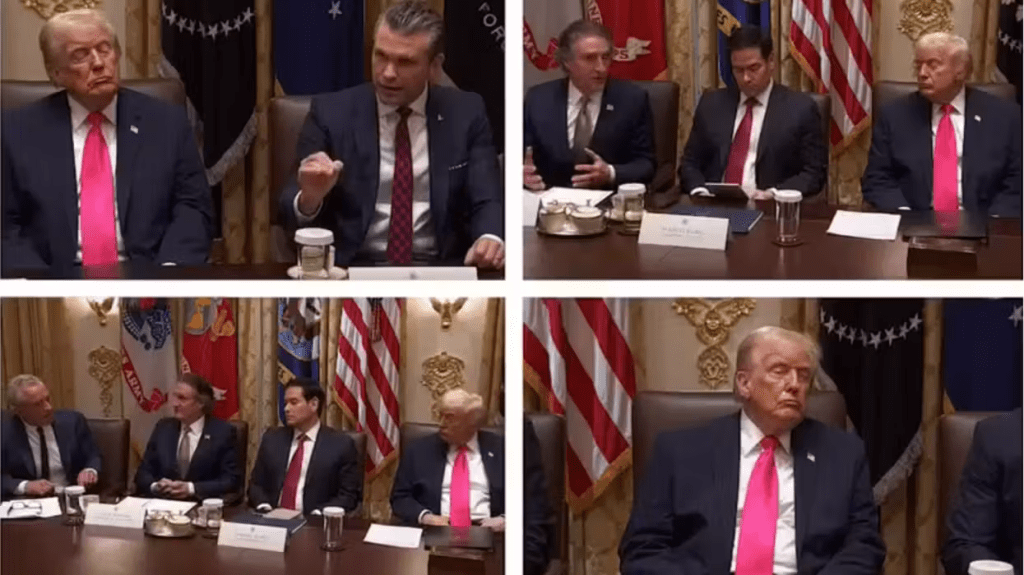
One could argue that Trump has completely dozed off at the helm while America spirals into chaos.
Blue Press Journal – In a bold and unprecedented move, the United States has seized an oil tanker off the coast of Venezuela, according to President Donald Trump. The incident has sparked controversy and raised questions about the legality of the action under international law. As tensions between the US and Venezuela continue to escalate, the move has been met with scrutiny from lawmakers and legal experts.
The seizure, which was carried out by US forces, is seen as the Trump administration’s latest effort to pressure Venezuelan President Nicolás Maduro, who has been charged with narcoterrorism in the US. The US has been building up its military presence in the region, and has launched a series of deadly strikes on alleged drug-smuggling boats in the Caribbean Sea and eastern Pacific Ocean.
But was the seizure of the oil tanker a legitimate act, or does it constitute piracy on the high seas? The International Maritime Organization (IMO) defines piracy as “any illegal acts of violence or detention, or any act of depredation, committed for private ends by the crew or the passengers of a private ship or a private aircraft” against a ship or aircraft on the high seas.
In this case, the US Navy’s seizure of the oil tanker appears to be a state-sponsored act, rather than a private act of piracy. However, the question remains as to whether the action was lawful under international law. The United Nations Convention on the Law of the Sea (UNCLOS) governs the use of force at sea, and permits the use of naval force in certain circumstances, such as self-defense or with the consent of the flag state.
In this instance, it is unclear whether the US had the consent of the flag state or whether the seizure was justified as an act of self-defense. Trump’s comment that “we keep it, I guess” when asked what would happen to the oil aboard the tanker, has raised further questions about the motivations behind the seizure.
Sen. Chris Van Hollen, a member of the Senate Foreign Relations Committee, has expressed concerns that the seizure casts doubt on the administration’s stated reasons for the military buildup and boat strikes in the region. “This action raises more questions than answers,” Van Hollen said.
Some legal experts have also questioned the legality of the seizure, arguing that it may have violated the laws governing the use of deadly military force. The use of force at sea is subject to strict rules and regulations, and any action that is deemed to be unlawful could have serious consequences under international law.
The seizure of the oil tanker is a significant escalation of the US’s campaign to pressure Maduro’s government, and has raised the stakes in the region. Venezuela is a major oil producer, and the state-owned oil company sells most of its output to refiners in China. The US sanctions have locked the country out of global oil markets, and the seizure of the tanker is likely to exacerbate the situation.
As the situation unfolds, it remains to be seen if the US will face consequences under international law. The seizure of the oil tanker has added complexity to US-Venezuela relations and raised important questions about state power on the high seas.
Blue Press Journal (DC) – In a sharply worded dissent, U.S. Supreme Court Justice Elena Kagan has cautioned that the Court’s recent decision to greenlight Texas’s new congressional map could undermine constitutional protections for voters—particularly those from racial minority communities. Earlier this week, the Court’s conservative majority allowed Texas to implement its redrawn districts for upcoming elections, despite a lower court’s finding that the map was likely drawn with impermissible racial considerations.
The lower court had determined that the map—crafted by the Republican-controlled state legislature—split communities along racial lines in ways that could diminish the political power of Black and Latino voters. Such a move, the court said, potentially violates both the 14th Amendment’s guarantee of equal protection and the 15th Amendment’s prohibition against racial discrimination in voting.
Justice Kagan, joined by Justices Sonia Sotomayor and Ketanji Brown Jackson, accused the majority of rushing to judgment without fully grappling with the evidence. “Today’s decision,” Kagan wrote, “disregards the careful, thorough analysis conducted by the district court and replaces it with a hasty greenlight for a map that may well be unconstitutional.” She emphasized that the lower court’s examination had been not only extensive but grounded in testimony, demographic data, and a deep review of the legislative process.
Kagan also warned that the Court’s intervention sends a troubling message about how voting rights cases will be handled going forward. “When this Court short-circuits lower court processes,” she noted, “it risks both the constitutional rights at stake and the public’s trust in the judiciary’s commitment to protecting them.”
The ruling is expected to have ripple effects beyond Texas. Redistricting battles are already underway in several states, including California, where a newly approved map is projected to favor Democrats. Some legal analysts believe the Texas decision could embolden partisan mapmakers elsewhere, knowing they may face fewer judicial roadblocks.
Critics of the ruling argue that it diminishes the role of trial courts in independently scrutinizing maps for racial bias and weakens long-standing protections designed to ensure fair representation.
The timing of the decision—so close to upcoming elections—adds to the controversy. Historically, the Supreme Court has been cautious about altering election rules too near a vote, citing the potential for confusion. In this case, however, the majority opted to leave the disputed map in place. For voters in Texas’s affected districts, the consequence is immediate: they will cast ballots in districts whose boundaries remain hotly contested.
As the 2026 election cycle intensifies, the Supreme Court’s posture on redistricting and voter rights will be under even closer scrutiny. Justice Kagan’s dissent underscores the stakes: “Our Constitution promises equal political voice to all citizens, regardless of race. Today’s decision risks breaking that promise.”
Blue Press Journal – As the calendar pages dwindle, a palpable sense of urgency – and mounting frustration – is spreading through a segment of the House Republican conference. The looming expiration of enhanced ObamaCare tax credits is creating a stark dilemma for moderate Republicans, many of whom fear that a failure to act could have significant, negative repercussions for the party’s slim majority in the crucial 2026 midterm elections.
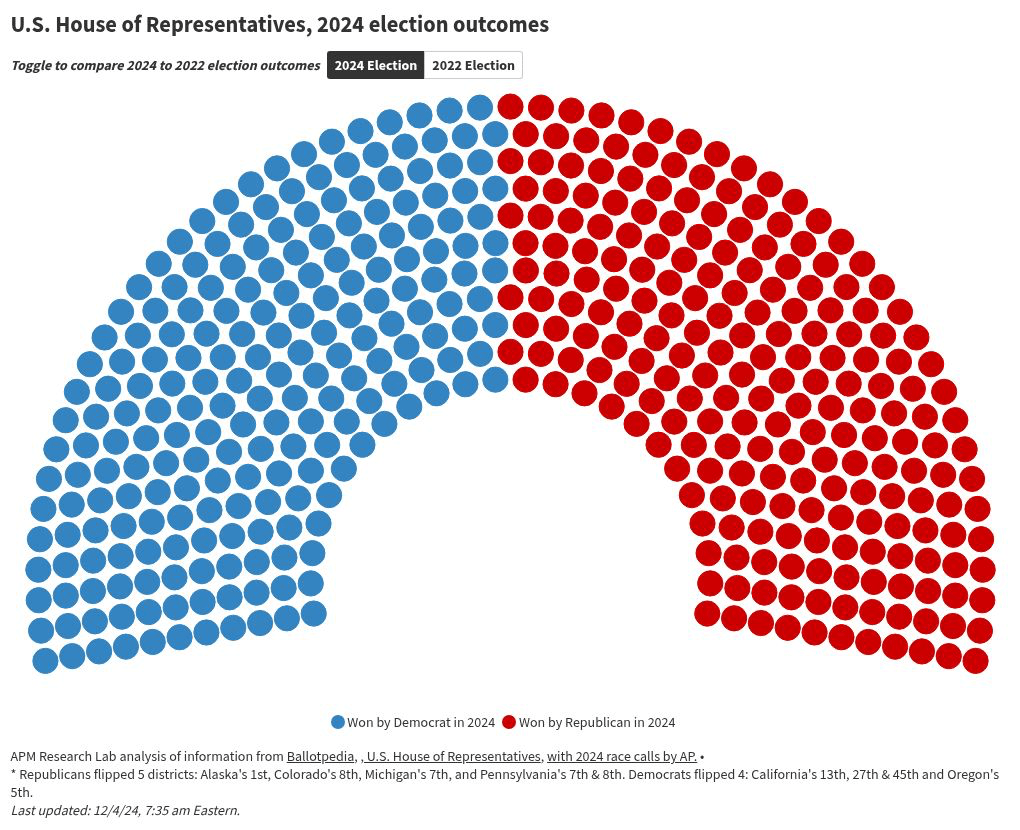
With less than ten legislative days remaining before millions of Americans brace for substantial increases in their health insurance premiums, a vocal group of centrist GOP lawmakers is making a strong case for extending these subsidies. Currently, these credits are a lifeline for over 20 million individuals, making healthcare more affordable. However, their pleas are encountering stiff resistance from Speaker Mike Johnson (R-La.) and a more conservative wing of the party. These members view the subsidies as a fundamental flaw within the Affordable Care Act and are largely opposed to any extension. Republicans currently hold 219 seats while the Democrats have 213.
The path forward is cluttered with competing ideas. Proposals range from one- to two-year extensions, with some attempting to incorporate restrictions like income caps or the elimination of zero-premium plans. Yet, despite these varying approaches, a consensus remains elusive, and none of the proposed plans have secured a commitment for a floor vote.
Leading the charge for a pragmatic solution are Representatives like Don Bacon (R-Neb.), Jeff Hurd (R-Colo.), and Brian Fitzpatrick (R-Pa.), who are advocating for a two-year extension. Simultaneously, a bipartisan framework spearheaded by Representatives Jen Kiggans (R-Va.) and Josh Gottheimer (D-N.J.) has garnered some traction, but has been met with a firm rejection from top Republican leadership.
For these moderate Republicans, the principle of ideological purity is clashing with the realities of effective governance. As Representative Jeff Van Drew (R-N.J.) put it, the current inaction is akin to “buffoonery,” highlighting both the potential political fallout and the very real human cost of allowing healthcare premiums to skyrocket. Others, such as Representative Kevin Kiley (R-Calif.), are emphasizing the broad agreement that exists across different factions to at least pass a temporary fix, thereby averting public anger and protecting vulnerable Republican incumbents.
Even the White House weighed in, proposing a two-year extension that included some conservative-leaning reforms. However, this initiative was quickly withdrawn amidst internal Republican opposition. Speaker Johnson has publicly committed to presenting a leadership-backed plan before the end of the year, but the specifics of this proposal remain shrouded in uncertainty.
As internal Republican party tensions escalate, the clock is relentlessly ticking. The decision made in the coming days – or lack thereof – on extending these vital ObamaCare tax credits will undoubtedly carry significant weight, impacting not only the health and financial well-being of millions of Americans but also the political fortunes of Republican lawmakers fighting for their seats in a challenging electoral landscape.
Blue Press Journal – As the economic landscape of the United States continues to evolve, the influence of policies, particularly those of Donald Trump, remains a critical topic of discussion. Promising to combat inflation “on day one” of his presidency, Trump’s economic policies aimed to create a vigorous and prosperous economy. However, a closer examination reveals a contrasting reality, marked by persistent inflation and declining consumer sentiment.
Inflation Trends Under Trump’s Policies
Inflation in the U.S. has remained stubbornly high, recently reported at 3%, a figure that represents a significant trend upward since April 2025. This uptick coincided with Trump’s announcement of his tariff program, a keystone of his economic strategy. Tariffs were intended to protect American industries by taxing imports, thereby making domestically produced goods potentially more competitive. However, a side effect of such measures has been an increase in prices, as businesses often pass on the costs of tariffs to consumers.
Despite Trump’s assertion that there is “virtually no inflation” during his presidency, the reality has proved otherwise. In a bid to highlight the achievements of his administration, Trump often pointed to positive economic indicators, such as low unemployment rates and stock market performance, neglecting to address the inflationary pressures that were beginning to mount. As businesses grappled with increased costs, many consumers were left to shoulder the burden through higher prices on goods and services.
The Disconnect Between Policy and Consumer Experience
Trump’s commitment to ending inflation was a significant part of his campaign rhetoric, promising a return to “better economic times.” Yet, as inflation has persisted, many Americans find themselves increasingly discontent with their financial situations. According to a recent report by Bloomberg News, consumer sentiment has plummeted to near-record lows, with personal finance perceptions at their dimmest since 2009.
The ongoing inflation crisis is deeply intertwined with consumer sentiment. As prices rise, the purchasing power of the average American decreases, causing anxiety and frustration. Insights from Bloomberg indicate that concerns over the high cost of living and job security are growing; the probability of personal job loss has reached its highest level since July 2020. Such anxiety can fuel a negative feedback loop, where consumer confidence wanes, leading to reduced spending and potential economic stagnation.
The Implications for Future Economic Stability
While proponents highlight the initial gains in employment and stock performance, the issues of rising inflation and consumer dissatisfaction cannot be overlooked. The tariffs, while intended to protect American interests, may have inadvertently contributed to the inflationary pressures felt by consumers today.
As policymakers and economists examine the lessons learned from the Trump administration, it is crucial to recognize the multifaceted nature of economic management. Addressing inflation requires a holistic approach that considers both production costs and consumer behavior.
Trump’s Policies
The economic policies of Donald Trump, marked by a decisive shift toward protectionism and rhetoric promising to curb inflation, have not yielded the desired outcomes for many Americans. With inflation lingering and consumer sentiment at a low ebb, it is evident that the path to robust economic recovery is fraught with challenges. The ongoing saga of inflation and consumer confidence serves as a reminder that economic policies must be adaptable, responsive, and focused on the well-being of all citizens.
Blue Press Journal – In the high-stakes arena of presidential politics, image is everything. The perception of strength, vitality, and unwavering attention is a currency more valuable than almost any other. Just over a year ago, this perception was weaponized effectively against one candidate. Now, with the roles reversed, the same weapon seems to have lost its edge, raising critical questions about media narratives and political hypocrisy.
The issue is one of basic alertness. Multiple reports have surfaced detailing instances where President Donald Trump has appeared to doze off during his own criminal trial—a proceeding that concerns his personal and political future. This follows a pattern observed during his presidency. As one report noted, “while his secretaries went around the table, the 79-year-old president might have looked to some as though he may have dozed off a few times, eyes closed, head nodding down at this weeks cabinet meeting” Furthermore, it’s clear his schedule is often shortened to just five hours of work each day.
So why are we talking about this? The reason is not a shallow fixation on a presidents energy levels. It is, instead, a matter of consistency and the standards we set for the most powerful office on earth.
“Well, it’s something that Trump himself made a central issue on the campaign trail a year ago.”
This is the crux of the matter. The Donald Trump relentlessly attacked President Biden’s age and mental acuity, making the idea of an enfeebled leader a cornerstone of his campaign rhetoric. He positioned himself as a paragon of energy and sharpness. The emergence of these reports, therefore, creates a stark contrast. “Obviously there’s like a level of hypocrisy here about, you know, his own ability to remain really alert and awake, as in performing his duties.”
This leads to the most frustrating question for many observers: “There’s a lot of frustration among Democrats about why isn’t this sort of thing sticking with Trump when it’s stuck with Biden?”
The disparity in coverage from the main news media and public perception is undeniable. For one candidate, a moment of fatigue becomes a weeks-long narrative about cognitive decline. For the other, it is often dismissed as a momentary lapse or ignored altogether. This isn’t about defending one or attacking another; it is about applying a single, consistent standard to anyone who seeks the immense responsibility of the presidency.
We must move beyond the political gamesmanship. This is not a trivial matter. The presidency demands relentless focus, comprehension of complex global issues, and the ability to make swift, critical decisions under pressure. Clearly, age is affecting Trump’s performance, and it is a non-partisan issue that deserves honest discussion from all sides.
Let’s remember the old political ad that asked who you wanted answering the 3 a.m. phone call, their finger on the nuclear button. The image of a leader asleep at the table, whether metaphorical or literal, should give every voter pause. The integrity of the office demands that we hold every candidate to the same high standard of alertness and engagement, regardless of party. Our national security depends on it.
THE MAIN STREET MEDIA CAN NOT GIVE A PASS TO TRUMP…THEY NEED TO COVER IT THE SAME WAY THAT THEY DID JOE BIDEN.
60 percent of Americans disapprove of the job Trump’s doing
Blue Press Journal – A new Gallup poll released on Friday has revealed a dismal picture for President Donald Trump, with his approval rating sinking to 36 percent, just one point higher than its lowest point since taking office. The poll, which comes as Trump nears the midpoint of his term, shows that 60 percent of Americans disapprove of the job he’s doing, a stark reminder that his policies and actions are facing intense scrutiny from the public.
Trump’s numbers have been underwhelming since his return to the Oval Office in January, with his approval rating stuck between 40 percent and 41 percent in the intervening months. The latest poll suggests that his policies on immigration and the economy, two key areas he’s focused on, are not resonating with voters. His approval rating on these issues stands at 37 percent and 36 percent, respectively, while his handling of healthcare policy has earned a meager 30 percent approval rating.
The pollsters noted that Trump’s standing with the American people has been damaged by the longest shutdown of the federal government, Republican Party losses in the 2025 elections, and concerns about affordability. The combined effect of these factors “could be a sign of trouble for Republicans in next year’s midterm elections,” Gallup warned, as the GOP tries to maintain control of the federal government.
Trump’s response to criticism has been to lash out at the press, exemplified by his bizarre outburst earlier this month when he told an ABC News reporter to “Quiet, piggy” while she asked about the Justice Department’s release of files related to convicted sex offender Jeffrey Epstein. This behavior only adds to the perception that Trump is out of touch with the concerns of ordinary Americans.
As the midterm elections draw near, Trump’s plummeting approval rating and the GOP’s mounting electoral defeats are transforming into an undeniable burden for the party. The signs are unmistakable: Trump’s policies and outrageous behavior are failing to connect with the electorate, and it is high time for Republicans to engage in a serious introspection about their path forward.
Donald J. Trump has leveraged his brand, his political apparatus, and even the vestiges of his former office to amass unprecedented personal wealth. But even as the public eye focuses on multi-million dollar deals involving crypto tokens and foreign entities, a deeper and perhaps more cynical mechanism of self-enrichment continues unabated: the direct funneling of Republican donor money into his own cash registers via the political committees he controls.
A recent analysis of Federal Election Commission (FEC) data reveals a stark pattern of political spending being used primarily to prop up the former president’s private businesses, confirming the suspicion that for Trump, the political process is a profoundly effective business model.
In the 10 months since he returned to the spotlight following his exit from office, Trump’s hotels and country clubs have collected approximately $1.1 million from Republican candidates and committees. Crucially, nearly four-fifths of that sum—a staggering $857,246—originated from entities that Trump himself dictates and manages.
Leading the charge is the Republican National Committee (RNC), which has poured at least $796,513 into Trump properties. Additionally, MAGA Inc., Trump’s primary Super PAC, added $60,733 to that tally. In effect, major GOP fundraising engines, fueled by grassroots donations meant to elect Republicans nationwide, are instead serving as the former president’s captive clients.
Grifting in Plain Sight
This highly formalized process of self-dealing, which converts political contributions into corporate revenue, has drawn sharp rebuke from ethics watchdogs.
Jordan Libowitz, head of communications for Citizens for Responsibility and Ethics in Washington (CREW), highlighted the significance of these continuous smaller drains on donor funds. “When Trump rakes in tens of millions of dollars from crypto deals, it’s easy to miss when he grifts hundreds of thousands of dollars from his political apparatus, but those numbers add up,” Libowitz stated. “Ask an average American if they think pocketing $800,000 is a big deal or chump change.”
The transparency of the transaction is perhaps the most audacious element. Campaign funds, gathered under the banner of political necessity, are being used to pay for overhead, events, and stays at resorts that perpetually carry the Trump name—a move that virtually guarantees the highest possible margin of profit for the owner. There is no competitive bidding process, only the implicit mandate that political activity supporting Trump must also financially benefit him.
Algorithms of Loyalty
This continuous revenue stream relies on the unshakeable loyalty of Trump’s base and the strategic effectiveness of his fundraising machine.
One anonymous GOP consultant familiar with the operation confirmed that the success is highly systematic, driven not by fresh political messaging, but by refined methods aimed at dedicated followers. “It is all algorithms that are paying off,” the consultant noted, suggesting that the committees are exploiting established formulas and scripts that reliably drain small-dollar donations, which are then routed to the Trump Organization.
A Pattern of Monetizing Power
This dedicated use of political committees as profit centers fits seamlessly into Trump’s broader, aggressive strategy of monetizing the influence derived from his public life.
The funneling of nearly $860,000 in committee funds is merely the tip of an ice-cold pattern of financial opportunism. Trump recently used the imprimatur of the White House—which he occupied years ago—to stage a dinner honoring the largest purchasers of his deeply controversial crypto “meme” coins.
Furthermore, his willingness to use taxpayer funds to promote his private interests is well-documented. Last year, he spent an estimated $10 million of taxpayer funds to speak at the grand opening of his golf course in Aberdeen, Scotland, an event the White House was inappropriately pressured to publicize.
Perhaps most troubling are the apparent quid pro quo arrangements involving foreign nations. Earlier this year, Trump reportedly solicited a $400 million luxury Boeing 747 from Qatar for temporary use as Air Force 1 before it is supposedly handed over to his presidential library. This request came only after Qatar was granted significant military concessions, including permission to use an Air Force Base in Idaho and a powerful, NATO-like security guarantee should the nation be attacked.
Make Tump Rich Again (MTRA)
These combined strategies—from using committees to pay exorbitant hotel fees to soliciting massive gifts from countries receiving favorable foreign policy treatment—paint a clear picture: Donald Trump views the political sphere less as a venue for public service and more as the ultimate vehicle for personal, unrestricted wealth accumulation. The political apparatus that donors assume is working to secure victory for the Republican cause is, in reality, ensuring the financial security of one man’s private empire.
BLUE PRESS JOURNAL – The Trump administration’s tenure has been marked by a relentless pursuit of retribution against perceived political opponents, a campaign promise that has become a defining characteristic of his governance. A thorough Reuters analysis has revealed that at least 470 individuals, organizations, and institutions have been targeted, averaging over one target per day, either by name or as part of broader purges. This systematic approach to punishment has raised concerns about the erosion of norms in US governance and the weaponization of executive power.
The administration’s actions have taken various forms, including punitive measures such as firings and suspensions, threats of investigations and penalties, and coercion to force organizations to roll back diversity initiatives. At least 36 orders have been issued, targeting over 100 individuals and entities with punitive actions. The firing of prosecutors who investigated Trump’s attempts to overturn the 2020 election, penalizing media organizations and law firms tied to opponents, and sidelining civil servants who questioned his policies are stark examples of this retribution.
However, the Trump administration disputes the notion that it is driven by a desire for revenge, instead framing its actions as necessary to enforce the electoral mandate and hold individuals accountable for wrongdoing. This justification, however, is contested by experts who argue that the scale and systematic nature of Trump’s retribution efforts represent a significant departure from long-standing norms in US governance. The parallels drawn to former President Richard Nixon’s quest for vengeance are particularly striking, highlighting the alarming implications of Trump’s actions.
Many of Trump’s targets have challenged their punishments as illegal, filing administrative appeals or legal challenges claiming wrongful termination. While these actions have been cheered by Trump’s staunchest backers, who view them as a necessary response to perceived injustices against Trump, they raise serious concerns about the rule of law and the independence of institutions.
The Trump administration’s retribution efforts have significant implications for the US governance system. By wielding executive power to punish perceived foes, the administration is undermining the principles of accountability and transparency that underpin democratic governance. The systematic nature of these efforts suggests a calculated attempt to intimidate and silence opponents, rather than a legitimate effort to enforce the law.
The Trump administration’s pursuit of retribution against perceived political opponents is a troubling trend that threatens the foundations of US democracy. As the administration continues to wield executive power to punish its foes, it is imperative that the courts and other institutions remain vigilant in defending the rule of law and upholding the principles of accountability and transparency.
BLUE PRESS JOURNAL – The special election in Tennessee’s 7th Congressional District, initially considered a safe Republican seat after Donald Trump won it by over 22% in 2024, has unexpectedly become intensely competitive. Both Republicans and Democrats are heavily investing funds, with Republicans fearing that Trump’s current unpopularity and the off-year timing could lead to an upset loss for their candidate, Matt Van Epps, against Democrat Aftyn Behn.
This tightening race aligns with a national trend where Democrats have consistently overperformed in special elections since Trump’s return to office. Recognizing the severe implications, Donald Trump has personally intervened, urging his supporters to vote for Van Epps.
The outcome of this election carries serious consequences for the Republican Party’s narrow majority in the U.S. House of Representatives. A loss for Van Epps would reduce the GOP’s majority to a bare minimum of 218 seats. With the impending resignation of Republican Rep. Marjorie Taylor Greene in January, the party could potentially lose its majority altogether before the 2026 midterms. Internally, there is growing discontent among House Republicans towards Speaker Mike Johnson for his unwavering defense of Trump, with some predicting more resignations and even Johnson losing his gavel due to low morale. Regardless of the final result, a close contest in a historically safe Republican district like Tennessee’s 7th is a grim indicator for the GOP’s prospects in the 2026 midterms, signaling potential widespread losses if they struggle to defend such seats.




 Blue Press Journal