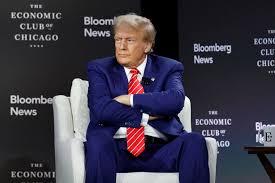
Blue Press Journal – As the economic landscape of the United States continues to evolve, the influence of policies, particularly those of Donald Trump, remains a critical topic of discussion. Promising to combat inflation “on day one” of his presidency, Trump’s economic policies aimed to create a vigorous and prosperous economy. However, a closer examination reveals a contrasting reality, marked by persistent inflation and declining consumer sentiment.
Inflation Trends Under Trump’s Policies
Inflation in the U.S. has remained stubbornly high, recently reported at 3%, a figure that represents a significant trend upward since April 2025. This uptick coincided with Trump’s announcement of his tariff program, a keystone of his economic strategy. Tariffs were intended to protect American industries by taxing imports, thereby making domestically produced goods potentially more competitive. However, a side effect of such measures has been an increase in prices, as businesses often pass on the costs of tariffs to consumers.
Despite Trump’s assertion that there is “virtually no inflation” during his presidency, the reality has proved otherwise. In a bid to highlight the achievements of his administration, Trump often pointed to positive economic indicators, such as low unemployment rates and stock market performance, neglecting to address the inflationary pressures that were beginning to mount. As businesses grappled with increased costs, many consumers were left to shoulder the burden through higher prices on goods and services.
The Disconnect Between Policy and Consumer Experience
Trump’s commitment to ending inflation was a significant part of his campaign rhetoric, promising a return to “better economic times.” Yet, as inflation has persisted, many Americans find themselves increasingly discontent with their financial situations. According to a recent report by Bloomberg News, consumer sentiment has plummeted to near-record lows, with personal finance perceptions at their dimmest since 2009.
The ongoing inflation crisis is deeply intertwined with consumer sentiment. As prices rise, the purchasing power of the average American decreases, causing anxiety and frustration. Insights from Bloomberg indicate that concerns over the high cost of living and job security are growing; the probability of personal job loss has reached its highest level since July 2020. Such anxiety can fuel a negative feedback loop, where consumer confidence wanes, leading to reduced spending and potential economic stagnation.
The Implications for Future Economic Stability
While proponents highlight the initial gains in employment and stock performance, the issues of rising inflation and consumer dissatisfaction cannot be overlooked. The tariffs, while intended to protect American interests, may have inadvertently contributed to the inflationary pressures felt by consumers today.
As policymakers and economists examine the lessons learned from the Trump administration, it is crucial to recognize the multifaceted nature of economic management. Addressing inflation requires a holistic approach that considers both production costs and consumer behavior.
Trump’s Policies
The economic policies of Donald Trump, marked by a decisive shift toward protectionism and rhetoric promising to curb inflation, have not yielded the desired outcomes for many Americans. With inflation lingering and consumer sentiment at a low ebb, it is evident that the path to robust economic recovery is fraught with challenges. The ongoing saga of inflation and consumer confidence serves as a reminder that economic policies must be adaptable, responsive, and focused on the well-being of all citizens.
 Blue Press Journal
Leave a comment